
Cat owners often observe their feline companions pressing their paws rhythmically into soft surfaces—blankets, pillows, laps—before settling down for a nap. This behavior, commonly referred to as \"kneading,\" is both endearing and puzzling. While it may look like your cat is making dough, the reasons behind this action are deeply rooted in biology, emotion, and instinct. Understanding why cats knead blankets before sleeping offers insight into their psychological well-being and evolutionary past.
Kneading typically involves alternating front paws pushing in and out against a soft surface, sometimes accompanied by purring or half-closed eyes. Though most prevalent in kittens, the behavior persists into adulthood across many breeds and temperaments. Far from being random, kneading serves multiple purposes that reflect comfort, security, and even communication.
The Evolutionary Roots of Kneading
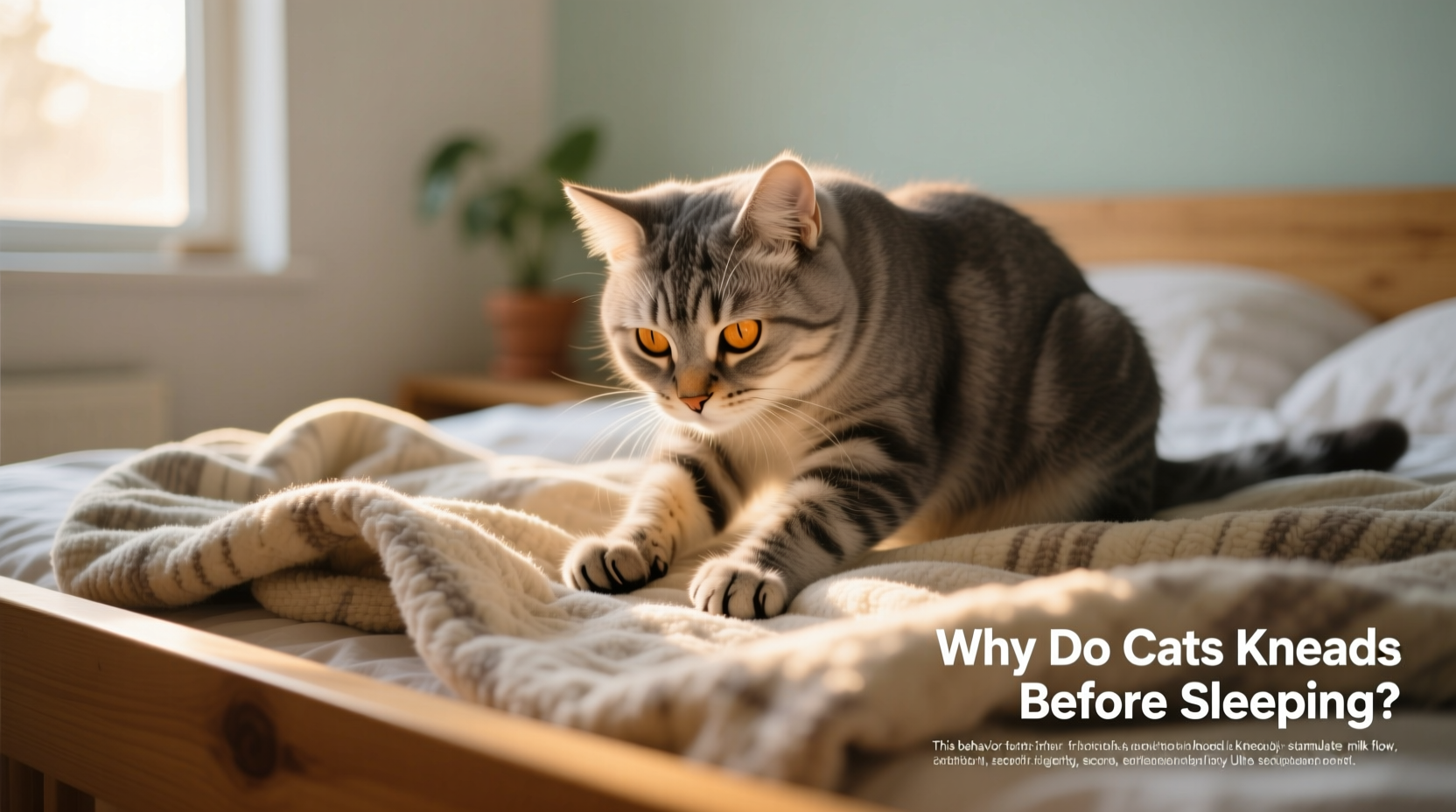
To understand adult cat behavior, we must first examine its origins in kittenhood. From the moment they’re born, kittens knead their mother’s mammary glands to stimulate milk flow during nursing. This early association links kneading with nourishment, warmth, and safety—the foundation of emotional bonding.
As cats mature, the physical need for milk disappears, but the emotional connection remains. The act becomes a self-soothing mechanism, triggered when a cat feels relaxed or content. Even without nutritional purpose, the muscle memory persists because it was so strongly reinforced during a critical developmental stage.
Wild ancestors of domestic cats also used paw manipulation to prepare sleeping areas. By tamping down grass, leaves, or snow, they created a safe, insulated nest—free of hidden threats and predators. This nesting instinct survives in modern housecats, who may knead blankets not only for comfort but also to “shape” their resting spot, mimicking ancestral behaviors.
“Kneading is a throwback to survival instincts, repurposed over time into a sign of trust and relaxation.” — Dr. Lena Torres, Feline Behavior Specialist, American Veterinary Ethology Society
Emotional and Psychological Triggers
Beyond instinct, kneading is closely tied to a cat’s emotional state. When a cat chooses to knead on your lap or favorite quilt, it’s often a signal of deep contentment. The behavior releases endorphins—natural feel-good chemicals—that help the cat transition into a calm, sleep-ready mindset.
Stress reduction plays a key role. Cats are sensitive to environmental changes: new pets, loud noises, or shifts in routine can trigger anxiety. In such cases, kneading acts as a coping strategy, allowing them to regain a sense of control and familiarity. It’s similar to how humans might rock, hum, or engage in repetitive motions when feeling uneasy.
Additionally, cats have scent glands in the pads of their paws. Each press transfers pheromones onto the surface, marking it as part of their personal territory. When your cat kneads a blanket before sleeping, they’re not just getting comfortable—they’re claiming the space as safe and familiar. This olfactory signaling reinforces emotional security, especially important in multi-pet households or unfamiliar environments.
Physiological Benefits of Kneading
The physical motion of kneading isn’t just symbolic—it has measurable benefits for feline health. The repetitive flexing of muscles in the shoulders, forelimbs, and paws promotes circulation and joint mobility, particularly in older cats prone to stiffness.
For indoor cats with limited opportunities for natural scratching or climbing, kneading provides mild exercise and muscle engagement. It can also aid digestion; gentle abdominal pressure during the motion may stimulate intestinal movement, especially after eating—a reason some cats knead shortly after meals.
Interestingly, the rhythmic nature of kneading mirrors other self-regulating behaviors seen across species, including grooming and slow blinking. These actions follow a predictable pattern that helps regulate the nervous system, shifting the body from alertness to restfulness. In this way, kneading functions as a pre-sleep ritual, much like humans brushing their teeth or reading before bed.
When Kneading Signals Health or Behavioral Concerns
While kneading is generally normal and healthy, sudden changes in frequency, intensity, or context may indicate underlying issues. Excessive kneading—especially if accompanied by vocalization, drooling, or disorientation—can point to medical conditions such as hyperesthesia syndrome or cognitive dysfunction in senior cats.
Likewise, if a previously non-kneading cat begins doing so intensely, consider recent environmental stressors: a move, new family member, or illness. Increased kneading could be an attempt to self-soothe amid uncertainty.
On the flip side, abrupt cessation of kneading warrants attention too. Painful arthritis, injury, or neurological problems may make the motion uncomfortable. A vet evaluation is recommended if your cat avoids using their paws normally or shows signs of discomfort during typical activities.
| Behavior Pattern | Potential Cause | Action Recommended |
|---|---|---|
| New onset of intense kneading | Stress, anxiety, or medical issue | Assess environment; consult veterinarian |
| Kneading with biting or aggression | Overstimulation or redirected frustration | Limit handling duration; create quiet zones |
| Sudden stop in kneading | Pain, injury, or aging-related decline | Veterinary exam advised |
| Excessive drooling during kneading | Strong positive association (common) or seizure activity (rare) | Monitor; seek vet if convulsions occur |
Real-Life Example: Bella’s Adjustment Period
Bella, a 3-year-old rescue tabby, was adopted into a home with two dogs and young children. Initially withdrawn, she spent most days hiding under furniture. Her new owner noticed one evening that Bella began kneading an old sweater left on the couch—firmly and repeatedly—for several minutes before curling up to sleep.
Over time, this behavior increased in frequency. The owner placed a soft fleece blanket in a quiet corner specifically for Bella. Within weeks, she started sleeping there every night, always preceded by her signature kneading ritual. Gradually, Bella became more social, playful, and confident.
In this case, kneading served as both a grounding mechanism and a marker of progress. As Bella claimed her space through scent marking and tactile comfort, she rebuilt her sense of safety. The consistent pre-sleep routine gave her predictability in an otherwise overwhelming environment.
How to Support Healthy Kneading Behavior
Supporting your cat’s natural tendencies enhances their quality of life. Rather than discouraging kneading—especially if claws are involved—redirect the behavior constructively. Here’s how:
- Provide appropriate surfaces: Offer plush blankets, pet beds, or padded mats where kneading is encouraged.
- Trim nails regularly: Prevent damage to fabrics and skin while preserving the ability to knead safely.
- Use nail caps: Soft vinyl caps reduce scratching risks without interfering with natural motion.
- Respect boundaries: Avoid pulling away abruptly if your cat kneads on you. Gently place a cloth barrier between paw and skin if needed.
- Encourage consistency: Maintain a stable routine so your cat feels secure enough to express comforting behaviors freely.
Checklist: Supporting Your Cat’s Kneading Habit
- ✅ Designate a soft, washable blanket for kneading
- ✅ Keep claws trimmed or fitted with soft caps
- ✅ Observe for changes in frequency or intensity
- ✅ Minimize household stressors (noise, chaos)
- ✅ Reward calm behavior with quiet praise
- ✅ Schedule annual vet checkups to rule out pain
Frequently Asked Questions
Is kneading a sign of affection?
Yes, kneading is widely interpreted as a sign of trust and emotional attachment. Since cats typically reserve this behavior for safe environments and trusted individuals, it indicates they feel secure and bonded with you.
Why does my cat drool when kneading?
Drooling during kneading is common and usually harmless. It stems from extreme relaxation and strong positive associations with kittenhood. However, if drooling occurs outside of these contexts or is excessive, consult your veterinarian to rule out oral health issues.
Should I stop my cat from kneading on furniture?
Instead of stopping the behavior, redirect it. Provide acceptable alternatives like pet-friendly cushions or blankets. Punishing kneading can increase anxiety and erode trust, whereas redirection supports natural instincts without damaging belongings.
Conclusion: Embracing a Natural Feline Ritual
Kneading blankets before sleeping is far more than a quirky habit—it’s a complex behavior woven from survival, emotion, and physiology. From stimulating milk flow as newborns to marking territory and preparing nests, cats carry ancient instincts into modern homes. When your cat pushes softly into a blanket, they’re not just getting cozy; they’re expressing comfort, security, and connection.
By understanding the layers behind this simple act, you deepen your bond with your pet and create an environment where they can thrive emotionally and physically. Instead of viewing kneading as a nuisance, recognize it as a window into your cat’s inner world—one shaped by trust, memory, and instinct.




 浙公网安备
33010002000092号
浙公网安备
33010002000092号 浙B2-20120091-4
Comments
No comments yet. Why don't you start the discussion?