
Cat owners often find themselves puzzled—and sometimes pleasantly tickled—when their feline companion starts rhythmically pushing their paws into a soft blanket, pillow, or even their lap. This behavior, known as kneading, is common across cats of all breeds and ages. While it may look like a quirky habit, kneading is deeply rooted in biology, emotion, and instinct. Understanding why your cat kneads can deepen your bond and provide insight into their psychological well-being. Is it a sign of affection? A remnant of kittenhood? Or something more complex? The answer lies at the intersection of nature and nurture.
The Biological Origins of Kneading
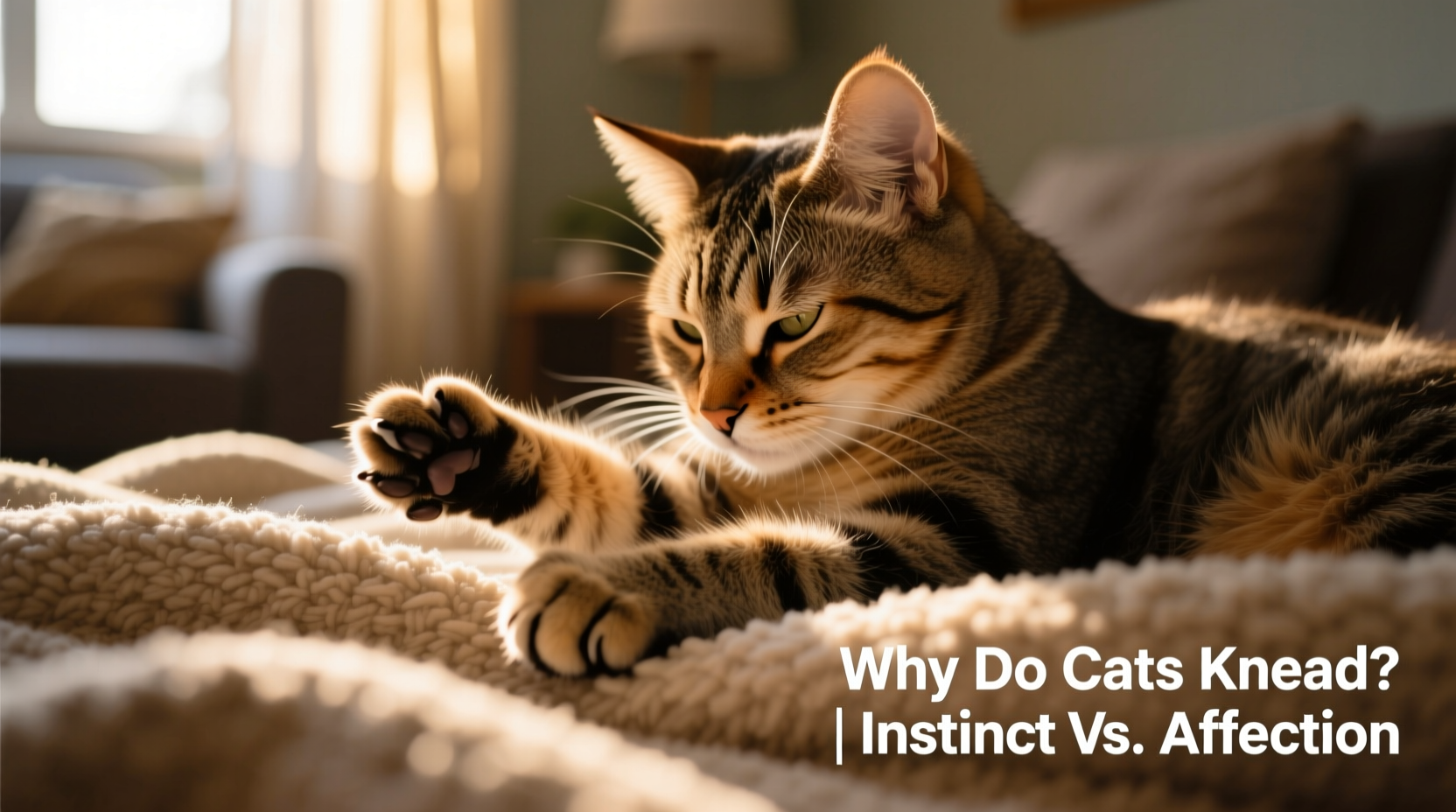
Kneading begins in the earliest days of a cat’s life. Newborn kittens instinctively press their tiny paws against their mother’s mammary glands to stimulate milk flow. This motion is essential for survival and becomes strongly associated with warmth, nourishment, and comfort. Because this action is so closely tied to positive early experiences, it imprints on the kitten’s memory and nervous system.
As cats mature, they no longer need to stimulate milk production. However, the physical sensation of kneading remains linked to feelings of safety and contentment. When an adult cat kneads a soft surface, it often enters a relaxed, almost trance-like state. This suggests that the behavior triggers a neurological echo of those early moments of care and closeness.
“Kneading is one of the clearest examples of a fixed action pattern in cats—a behavior so hardwired that it persists long after its original function has faded.” — Dr. Sarah Thompson, Feline Behavior Specialist
The persistence of this infantile behavior into adulthood is an example of neoteny, where juvenile traits are retained throughout life. In evolutionary terms, neoteny helps strengthen social bonds between cats and humans, making domesticated cats appear more endearing and less threatening.
Affection vs. Instinct: What Does Kneading Really Mean?
While kneading originates from a survival mechanism, in adult cats, it serves multiple purposes—some emotional, some territorial, and some purely habitual. Determining whether your cat is expressing affection or acting on instinct requires observing context, body language, and accompanying behaviors.
When a cat kneads while purring, nuzzling, or lying close to you, it’s likely expressing trust and emotional attachment. These cats often associate their human caregivers with the same security they felt with their mother. In this context, kneading becomes a form of bonding behavior—an intimate gesture that says, “I feel safe with you.”
On the other hand, kneading can also occur without direct interaction. A cat might knead a blanket on an empty couch or a sun-warmed cushion. In such cases, the act is more reflexive than relational. It’s not necessarily about you—it’s about the cat recreating a familiar sensation that brings comfort.
Additional Reasons Cats Knead
Beyond early conditioning and emotional connection, several other factors contribute to kneading behavior:
- Scent Marking: Cats have scent glands in the pads of their paws. When they knead, they deposit pheromones onto the surface, marking it as safe and familiar. This is a subtle form of territorial behavior, especially common in multi-cat households.
- Nesting Instinct: Female cats, particularly unspayed ones, may knead more frequently during heat cycles. The behavior mimics nest preparation, even in indoor environments where nesting isn’t necessary.
- Muscle Relaxation: The rhythmic motion may help loosen tight muscles or soothe mild discomfort, similar to how humans stretch or massage sore areas.
- Memory Triggers: Soft textures that resemble fur or bedding can trigger nostalgic responses, prompting kneading even in older cats with no recent exposure to kittens or nursing.
In some cases, excessive kneading may be linked to stress or displacement behavior. If a cat feels uncertain or anxious, it may fall back on familiar routines like kneading to self-soothe. Sudden increases in frequency or intensity should be monitored, especially if accompanied by vocalization or avoidance.
Do’s and Don’ts of Cat Kneading
| Behavior | Recommended Action (Do) | What to Avoid (Don’t) |
|---|---|---|
| Kneading on your lap gently | Pet softly, speak calmly, allow the behavior | Push the cat away abruptly or punish the action |
| Kneading with claws out | Place a thick blanket between cat and skin; trim claws regularly | Yell or grab the paws aggressively |
| Excessive or obsessive kneading | Check for stressors; consult a vet if sudden change occurs | Ignore possible medical or behavioral issues |
| Kneading on inappropriate surfaces (e.g., food bags, electronics) | Redirect to a designated soft mat or toy | Use sprays or scents that harm cats to deter behavior |
How to Respond to Kneading: A Step-by-Step Guide
If you want to encourage healthy kneading behavior while minimizing discomfort or damage, follow this practical sequence:
- Observe the Context: Note when and where your cat kneads. Is it during relaxation, before sleep, or when seeking attention?
- Assess Comfort Level: Determine if the kneading is gentle or painful (especially if claws are involved).
- Provide Alternatives: Offer a plush mat, fleece blanket, or cat bed specifically for kneading. Rub it on your clothing first to transfer your scent.
- Trim Claws Regularly: Use cat-safe clippers every 1–2 weeks to prevent scratches without affecting the cat’s ability to knead.
- Reinforce Positive Associations: Reward calm kneading with quiet praise or treats to reinforce the behavior in appropriate settings.
- Monitor Changes: Sudden shifts in kneading habits—either increase or cessation—may signal health or emotional concerns.
This approach balances respect for natural instincts with practical household management. Over time, your cat will learn which surfaces are best suited for kneading, reducing wear on furniture and personal items.
Real-Life Example: Luna and the Heirloom Quilt
Sophia adopted a rescue cat named Luna, who had been separated from her mother at just three weeks old. From day one, Luna would knead obsessively—on pillows, towels, and even Sophia’s arm during evening cuddles. Concerned about the intensity, Sophia consulted a veterinary behaviorist.
The expert explained that Luna’s early separation likely intensified her reliance on kneading as a coping mechanism. Without the full nursing experience, the act became a substitute for missing emotional regulation. The solution wasn’t to stop the behavior, but to redirect it.
Sophia introduced a soft, washable quilt made from old baby clothes—textured, warm, and rich with human scent. She placed it near Luna’s favorite window perch and gently guided her toward it whenever she began kneading elsewhere. Within weeks, Luna consistently chose the quilt. The behavior didn’t disappear, but it became focused and peaceful. For Sophia, the quilt became a symbol of healing—not just for Luna, but for their relationship.
Frequently Asked Questions
Is kneading a sign that my cat loves me?
Often, yes. When combined with purring, head-butting, or relaxed body language, kneading is one of the most genuine expressions of feline affection. It indicates that your cat associates you with safety and comfort, much like their mother.
Why does my cat drool when kneading?
Drooling during kneading is common and typically harmless. It’s another throwback to kittenhood, when sucking and kneading triggered saliva production in anticipation of milk. In adult cats, it’s a sign of deep relaxation and contentment.
Should I discourage my cat from kneading?
Generally, no. Kneading is a natural, healthy behavior. Only intervene if it causes injury (e.g., deep scratches), damages property, or appears compulsive. In such cases, redirection and environmental enrichment are better solutions than punishment.
Creating a Kneading-Friendly Environment: A Checklist
To support your cat’s instinctual needs while protecting your home and skin, use this checklist:
- ✅ Provide at least one soft, washable surface dedicated to kneading (e.g., fleece blanket, padded mat)
- ✅ Trim your cat’s claws every 10–14 days using proper tools
- ✅ Place kneading zones in warm, quiet areas where your cat feels secure
- ✅ Use pheromone diffusers (like Feliway) if your cat seems anxious or overstimulated
- ✅ Rotate textured materials (knit, faux fur, cotton) to keep interest high
- ✅ Avoid punishing or startling your cat during kneading episodes
- ✅ Monitor for signs of pain or arthritis, especially in older cats who may struggle with the motion
By meeting your cat’s instinctual needs in thoughtful ways, you foster both emotional stability and harmonious coexistence.
Conclusion: Embracing the Purr-fect Habit
Kneading is far more than a curious quirk—it’s a living bridge between a cat’s wild ancestry and its domesticated life. Whether driven by leftover instinct, emotional attachment, or a blend of both, this behavior reveals a deep capacity for comfort-seeking and bonding. Rather than suppress it, consider how you can honor it.
Next time your cat climbs onto your lap and begins the rhythmic push-pull of their paws, pause and appreciate the moment. You’re witnessing a ritual older than domestication itself—one that speaks of trust, memory, and love in the quietest of ways.




 浙公网安备
33010002000092号
浙公网安备
33010002000092号 浙B2-20120091-4
Comments
No comments yet. Why don't you start the discussion?