
Cats are naturally curious, agile, and intelligent animals. Their behaviors often stem from instincts developed over thousands of years of evolution. One of the most common—and frustrating—habits among domestic cats is knocking objects off countertops, tables, and shelves. While it may seem like random mischief, there’s usually a method behind the madness. Understanding the root causes of this behavior is essential to addressing it effectively. This article explores the psychological and environmental reasons behind counter-knocking, backed by animal behavior research, and provides actionable strategies to manage and reduce the behavior without compromising your cat’s well-being.
The Science Behind the Swat: Why Cats Knock Things Down
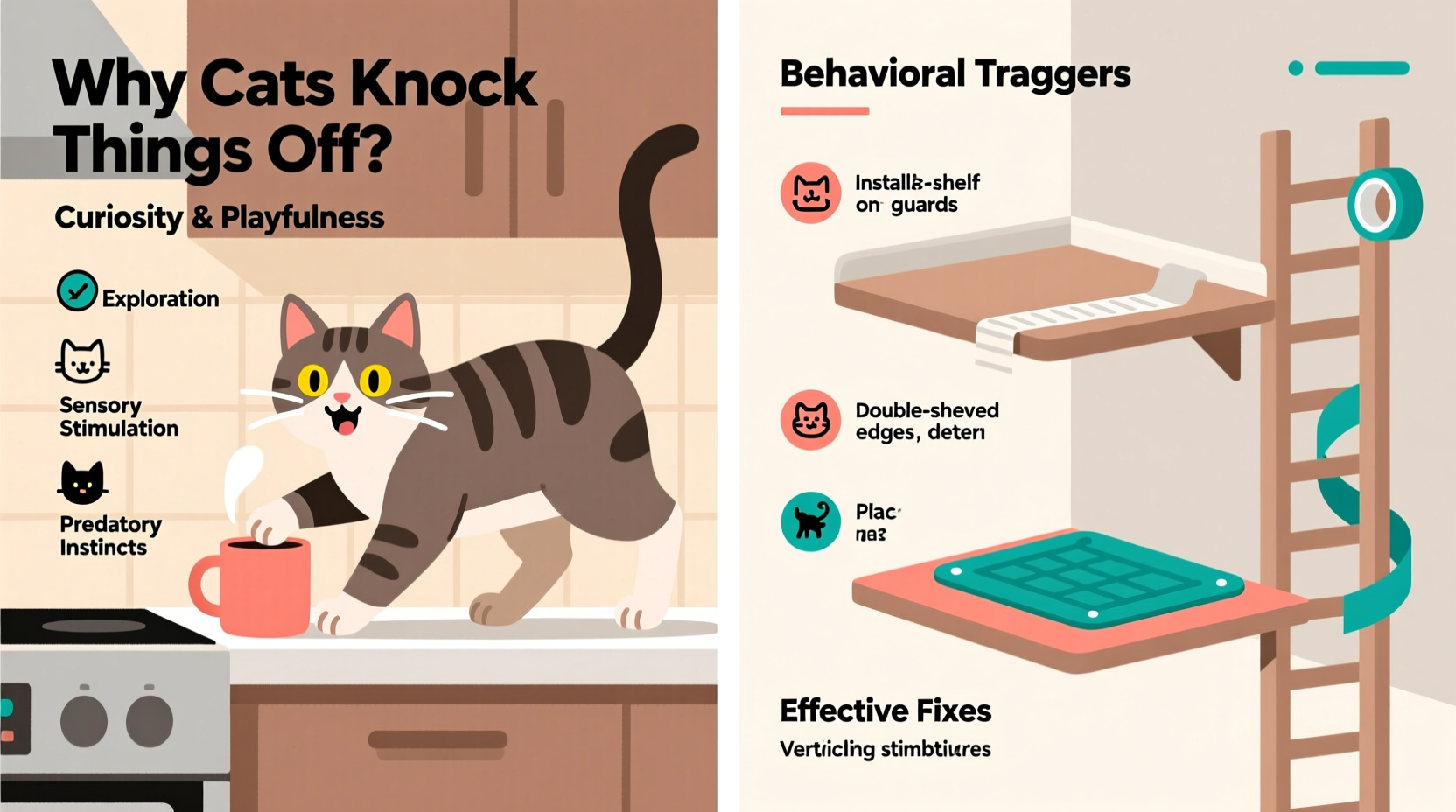
Cats don’t knock items off surfaces purely out of malice or boredom. Their actions are typically driven by instinctual behaviors that served their wild ancestors. In the wild, felines rely on their paws and senses to explore, hunt, and survive. When your cat bats a water glass off the counter, it’s not trying to annoy you—it’s responding to deeply ingrained impulses.
One primary reason is **sensory investigation**. Cats have highly sensitive paws and use them to gather information about their environment. A dangling spoon or a wobbly coaster triggers their curiosity. By nudging an object, they assess its texture, weight, and movement—essentially conducting a tactile experiment.
Another key factor is **hunting simulation**. Even well-fed indoor cats retain predatory instincts. Objects that move unpredictably when touched mimic prey-like behavior. The sound of a ceramic mug hitting the floor can resemble rustling leaves or scurrying rodents, reinforcing the action through auditory feedback. Each successful “hunt” (i.e., knockdown) rewards the cat with stimulation, making repetition more likely.
Social interaction also plays a role. Many cats quickly learn that knocking things down elicits a reaction—whether it’s surprise, laughter, or scolding. For attention-seeking cats, this becomes a reliable way to engage their humans, even if the interaction is negative.
“Cats are problem solvers by nature. When they interact with objects, they’re testing cause and effect. Knocking something off a surface is both exploration and entertainment.” — Dr. Sarah Ellis, Feline Behavior Scientist, University of Lincoln
Common Triggers and Environmental Influences
While instinct drives the behavior, the home environment often amplifies it. Certain conditions make counter-knocking more frequent or intense:
- High foot traffic areas: Counters near kitchens or entryways are hotspots for activity. Cats positioned above observe movement and may interact with nearby objects to participate.
- Lack of enrichment: Cats in under-stimulated environments seek novelty. Without toys, climbing structures, or interactive play, household objects become targets.
- Elevated perches: Cats love height. If your cat spends time on counters, bookshelves, or cabinets, any loose item within paw’s reach becomes fair game.
- Unpredictable objects: Items that dangle, swing, or wobble (like oven mitts hanging from handles or half-empty bottles) are especially enticing.
Do’s and Don’ts: What Not to Do (and What to Try Instead)
Many owners react instinctively—shouting, spraying water, or physically removing the cat—only to find the behavior persists or worsens. Punishment rarely works with cats and can damage trust. Instead, focus on redirection and environmental management.
| Do’s | Don’ts |
|---|---|
| Provide daily interactive play sessions with wand toys to satisfy hunting instincts | Yell at or physically punish your cat after knocking something down |
| Use double-sided tape or aluminum foil on counters to deter jumping | Leave tempting objects (keys, glasses, small decor) unattended on edges |
| Offer puzzle feeders and treat-dispensing toys for mental engagement | Ignore the behavior completely if it's frequent and destructive |
| Create vertical spaces like cat trees or window perches to redirect climbing | Use citrus sprays or loud noises as deterrents without offering alternatives |
| Reinforce calm behavior with treats and praise when your cat ignores objects | Assume the behavior will “grow out of” without intervention |
Step-by-Step Guide to Reducing Counter-Knocking
Changing feline behavior requires consistency, patience, and environmental adjustments. Follow this five-step plan to gradually reduce unwanted knocking:
- Clear and secure surfaces. Remove all non-essential items from countertops and ledges. Use adhesive putty or non-slip mats to stabilize necessary objects like salt shakers or soap dispensers.
- Block access selectively. If your cat jumps on counters frequently, use temporary barriers like plastic runners with nubs facing up or motion-activated air sprayers (e.g., Ssscat) to discourage landing.
- Increase environmental enrichment. Introduce at least two new enrichment activities daily: a 10-minute wand toy session, a food puzzle, or a cardboard box obstacle course. Rotate items every few days.
- Redirect attention. When you catch your cat investigating an object, gently interrupt with a toy toss or a chirp to draw focus elsewhere. Reward with a treat when they disengage.
- Reinforce alternative behaviors. Train your cat to go to a designated perch or mat on cue using clicker training or verbal cues paired with treats. Over time, this creates a positive association with staying off counters.
“Behavior modification in cats works best when you make the right choice the easiest one. Give them better options, and they’ll take them.” — Jackson Galaxy, Animal Behaviorist and Host of *My Cat from Hell*
Real-Life Example: Fixing Bella’s Knob Habit
Bella, a 3-year-old tuxedo cat, lived with her owner Maria in a small apartment. Every morning, Maria would find remote controls, pens, and even her coffee mug shattered on the kitchen floor. Initially, she assumed Bella was acting out of spite. After consulting a veterinary behaviorist, Maria learned that Bella wasn’t being destructive—she was bored.
Maria implemented several changes: she installed a wall-mounted cat shelf near the kitchen window, started two daily play sessions with a feather wand, and replaced loose countertop items with weighted containers. She also began using a treat-dispensing ball during breakfast to keep Bella engaged.
Within three weeks, the knocking incidents dropped by 80%. By week six, they had stopped entirely. Maria realized Bella wasn’t misbehaving—she just needed more mental and physical outlets. The solution wasn’t restriction, but redirection.
Checklist: How to Stop Your Cat From Knocking Things Off Counters
Use this practical checklist to evaluate and improve your home environment:
- ✅ Remove loose or breakable items from elevated surfaces
- ✅ Provide at least 20 minutes of interactive play per day (split into sessions)
- ✅ Install cat shelves, perches, or window beds to offer alternative vantage points
- ✅ Use deterrents like double-sided tape or aluminum foil on off-limits surfaces
- ✅ Introduce puzzle toys or food-dispensing gadgets to stimulate problem-solving
- ✅ Avoid reacting emotionally when items are knocked down—stay neutral
- ✅ Reward calm behavior with treats or affection when your cat ignores tempting objects
- ✅ Consult a vet or certified behaviorist if the behavior escalates or seems compulsive
Frequently Asked Questions
Is my cat knocking things down because it’s angry with me?
No, cats don’t act out of revenge or anger in the human emotional sense. While they can feel stress or frustration, knocking things over is more likely a response to boredom, curiosity, or a desire for interaction. It’s a behavior shaped by consequences (like getting your attention), not emotional retaliation.
Will my kitten grow out of this habit?
Some kittens do become less prone to knocking things over as they mature, especially if their energy is properly channeled. However, if the behavior is reinforced—by attention, exciting sounds, or lack of alternatives—it can persist into adulthood. Early intervention increases the chances of long-term improvement.
Are certain breeds more likely to do this?
Yes. Breeds known for high intelligence and activity levels—such as Siamese, Bengals, and Abyssinians—are more prone to manipulative and exploratory behaviors. These cats require more mental stimulation and structured play to stay satisfied indoors.
Conclusion: Understanding Leads to Harmony
Your cat isn’t trying to drive you crazy. Every swipe, nudge, and crash is a form of communication—a blend of instinct, curiosity, and sometimes, a cry for engagement. By understanding the motivations behind counter-knocking, you can replace frustration with empathy and punishment with effective solutions. The goal isn’t to suppress natural feline behavior, but to guide it toward healthier expressions. With consistent enrichment, clear boundaries, and positive reinforcement, you can protect your belongings while nurturing a happier, more balanced cat.




 浙公网安备
33010002000092号
浙公网安备
33010002000092号 浙B2-20120091-4
Comments
No comments yet. Why don't you start the discussion?