
Cat owners often invest in high-quality scratching posts, only to return home and find claw marks marring their walls. It’s frustrating, confusing, and sometimes feels like a personal affront. But before you blame your feline companion for being stubborn or poorly trained, understand that scratching is not misbehavior—it’s instinctual. When your cat chooses the wall over the post, it’s not defiance; it’s communication. The real question isn’t “Why won’t my cat use the post?” but rather, “What is my cat trying to tell me by choosing the wall?” Addressing this issue begins with understanding feline instincts, environmental needs, and subtle behavioral cues.
The Biology Behind Scratching
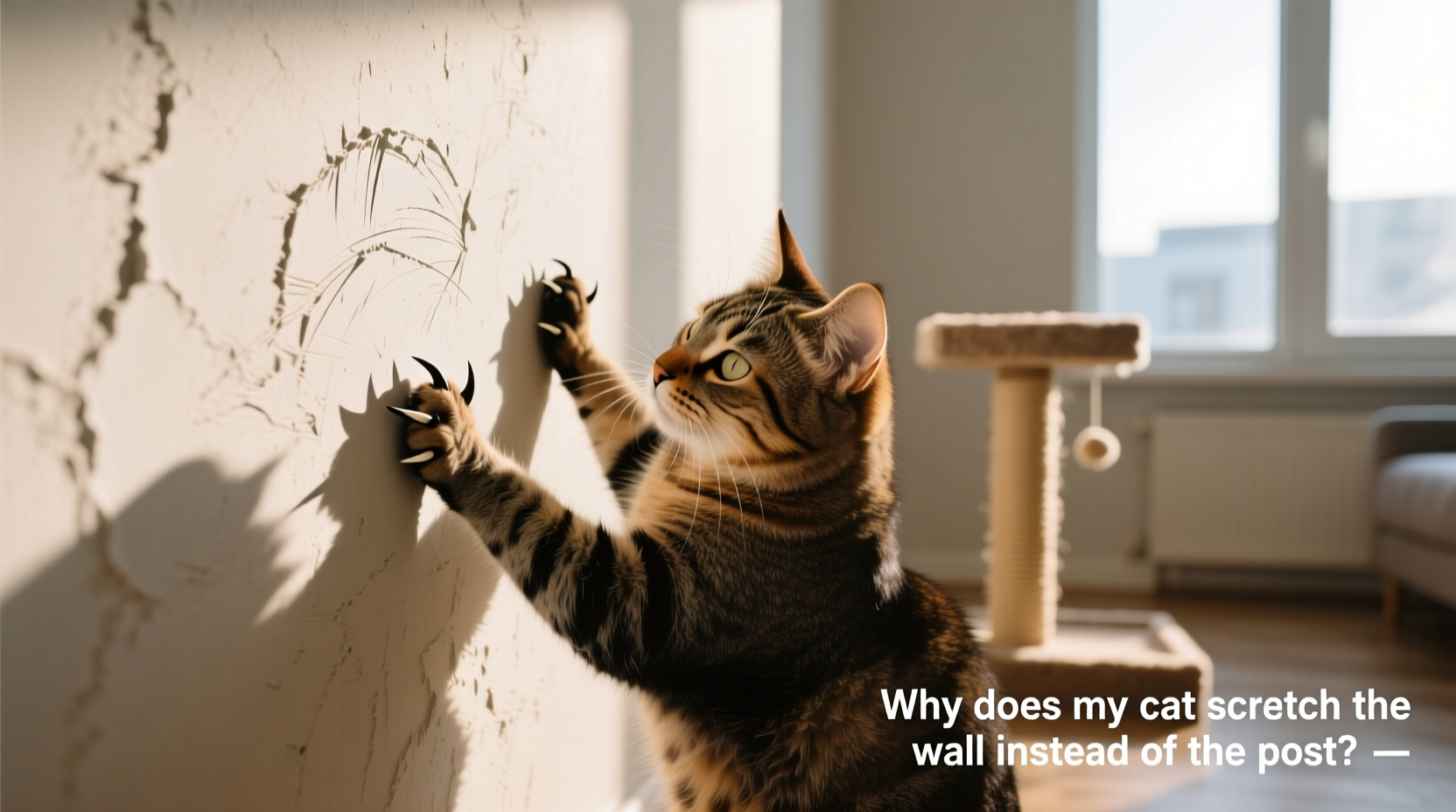
Cats scratch for reasons deeply rooted in biology. This behavior serves multiple essential functions: marking territory, maintaining claw health, stretching muscles, and managing stress. Unlike humans, cats have scent glands located in their paw pads. When they dig their claws into a surface, they leave behind pheromones—chemical signals that mark the area as familiar and safe. This olfactory messaging is just as important as visual signs.
Physically, scratching helps shed the outer layer of a cat’s claws, revealing sharper, healthier ones underneath. It also provides a full-body stretch, engaging the shoulders, back, and legs—especially after naps. For indoor cats, who may lack opportunities for natural hunting or climbing, scratching becomes a vital outlet for both physical and emotional well-being.
“Scratching isn’t destructive behavior—it’s self-care for cats. Preventing it can lead to anxiety and inappropriate elimination.” — Dr. Sarah Thompson, DVM, Feline Behavior Specialist
Why the Wall Wins Over the Post
If scratching is natural, why does your cat bypass the expensive sisal-wrapped tower and go straight for the drywall? The answer lies in design, placement, and feline preferences. Most commercially available scratching posts fail to meet cats’ instinctual criteria. Here are the most common reasons walls become preferred targets:
- Height and Stability: Many scratching posts are too short or wobble when used. Cats prefer tall, sturdy surfaces that allow them to stretch fully without fear of collapse.
- Texture: Sisal, cardboard, and carpet each appeal to different cats. If your post is covered in soft fabric but your cat prefers rough textures, the wall’s paint or wallpaper might feel more satisfying.
- Location: Cats often scratch upon waking or after meals. If the post isn’t near sleeping or feeding areas, it’s ignored. Walls near beds, doorways, or sunlit spots are prime real estate.
- Lack of Vertical Space: Multi-story homes or homes with limited floor space may push cats toward vertical wall scratching simply because there’s no alternative.
- Unintentional Reinforcement: Reacting loudly when your cat scratches the wall—even if scolding—can be interpreted as attention, reinforcing the behavior.
Choosing the Right Scratching Surface
Not all scratching posts are created equal. What works for one cat may be ignored by another. The key is customization based on your cat’s habits. Consider these factors when selecting or upgrading scratching furniture:
| Feature | Recommended | Avoid |
|---|---|---|
| Height | At least 30 inches (taller for large breeds) | Short, table-top models |
| Stability | Heavy base or wall-mounted | Wobbly or lightweight units |
| Material | Sisal rope, corrugated cardboard, natural wood | Plush fabric, thin carpet |
| Orientation | Vertical, horizontal, and angled options | Only one orientation |
| Placement | Near resting areas, windows, or entry points | Isolated corners or basements |
Some cats favor horizontal scratching—dragging their claws across the floor—while others need a tall post to stretch upward. Offering multiple types increases the chance one will appeal to your cat.
Step-by-Step Guide to Redirect Wall Scratching
Changing scratching behavior takes patience and consistency. Follow this timeline to guide your cat toward appropriate surfaces:
- Week 1: Observation & Assessment
Track when and where your cat scratches. Note duration, posture, and mood. Identify high-use wall zones. - Week 2: Strategic Placement
Install a suitable scratching post directly in front of or beside the scratched wall area. Ensure it’s tall and stable. - Week 3: Encouragement & Attraction
Sprinkle catnip on the post, dangle toys nearby, or use silver vine powder. Play near the post to build positive associations. - Week 4: Discourage Wall Access
Use double-sided tape, aluminum foil, or plastic guards on the wall. These textures are unpleasant but harmless. - Ongoing: Positive Reinforcement
Reward your cat with treats or affection immediately after using the post. Never punish scratching.
Consistency is critical. It may take several weeks for new habits to form, especially if the wall has long been a favored spot.
Real-Life Example: Bella and the Living Room Wall
Maria adopted Bella, a 2-year-old tabby, six months ago. Within weeks, she noticed deep gouges forming along the living room wall near the window. Despite buying two scratching posts, Bella ignored them. Concerned about damage and confused by the rejection, Maria consulted a feline behaviorist.
The assessment revealed three issues: the posts were only 18 inches tall, placed in a quiet hallway, and covered in soft carpet. Bella, an energetic cat who loved sunbathing by the window, needed height, stability, and a rough texture. The behaviorist recommended a 36-inch sisal post positioned vertically in front of the window, secured to the wall for stability.
Maria added catnip and played with a feather wand near the new post daily. Within ten days, Bella began using it regularly. After three weeks, wall scratching ceased entirely. The change wasn’t due to training—but to better understanding Bella’s needs.
Common Mistakes That Worsen the Problem
Well-meaning owners often unintentionally reinforce wall scratching or discourage proper use of posts. Avoid these pitfalls:
- Punishing the Cat: Yelling or spraying water creates fear and distrust. It doesn’t stop scratching—it just drives it underground or shifts it to hidden areas.
- Using Ineffective Deterrents: Citrus sprays may work temporarily but lose effectiveness. Strong smells can also stress sensitive cats.
- Providing Only One Option: Cats are individuals. Limiting choices reduces success rates.
- Placing Posts in Low-Traffic Areas: A post in the basement won’t help if your cat lives on the main floor.
- Ignoring Nail Trimming: Long claws increase damage potential. Regular trimming (every 2–3 weeks) reduces wall impact without stopping scratching.
FAQ: Common Questions About Scratching Behavior
Can I train an older cat to stop scratching walls?
Yes. While kittens learn faster, adult and senior cats can adapt with patience. Focus on making the right option more appealing than the wall. Age doesn’t eliminate the need to scratch—only change how we manage it.
Is declawing a solution to wall scratching?
No. Declawing is a surgical amputation of the last bone in each toe. It causes pain, long-term mobility issues, and behavioral problems like biting or litter box avoidance. Banned in many countries, it’s strongly opposed by veterinary associations worldwide.
My cat only scratches one specific wall—why?
This likely indicates territorial marking. If the wall faces outside (e.g., near a window), your cat may be responding to outdoor stimuli—stray cats, birds, or movement. In multi-cat households, wall scratching can signal dominance or stress. Address underlying anxiety with environmental enrichment.
Checklist: How to Stop Wall Scratching for Good
Use this actionable checklist to create a cat-friendly environment that naturally discourages wall damage:
- ✅ Assess current scratching posts: Are they tall, stable, and textured appropriately?
- ✅ Place at least one suitable post near every high-traffic or rest area.
- ✅ Offer multiple types (vertical, horizontal, angled) to match preferences.
- ✅ Use catnip, toys, or treats to lure your cat to the post.
- ✅ Protect walls with temporary barriers (double-sided tape, plastic covers).
- ✅ Trim claws every 2–3 weeks to minimize damage.
- ✅ Reward desired behavior immediately and consistently.
- ✅ Monitor progress and adjust placement or materials as needed.
Conclusion: Understanding, Not Correction
Your cat isn’t ruining your walls out of spite. Every scratch is a message—a call for a taller post, a stabler surface, or a more convenient location. By shifting from frustration to empathy, you transform conflict into connection. The goal isn’t to stop scratching, but to guide it wisely. With the right tools, placement, and patience, your cat can enjoy healthy scratching habits while your walls remain intact.




 浙公网安备
33010002000092号
浙公网安备
33010002000092号 浙B2-20120091-4
Comments
No comments yet. Why don't you start the discussion?