
Cats are creatures of mystery and habit. One moment they're aloof, the next they’re squeezing themselves into a shipping box barely large enough to hold their tail. But why do cats consistently choose to sit in boxes—especially ones much larger than their bodies? It’s not just about fitting inside; it’s about security, instinct, and comfort. This seemingly whimsical behavior has deep roots in feline psychology and biology. Understanding it offers insight into how cats perceive safety, manage stress, and interact with their environment.
Whether your cat climbs into an empty Amazon container or perches atop a cardboard fortress three times its size, there’s more going on than meets the eye. From thermoregulation to territorial instincts, multiple factors explain this widespread phenomenon. Let’s explore the reasons behind one of the most endearing quirks of cat ownership—and what it reveals about your pet’s emotional and physical needs.
The Instinct for Enclosed Spaces
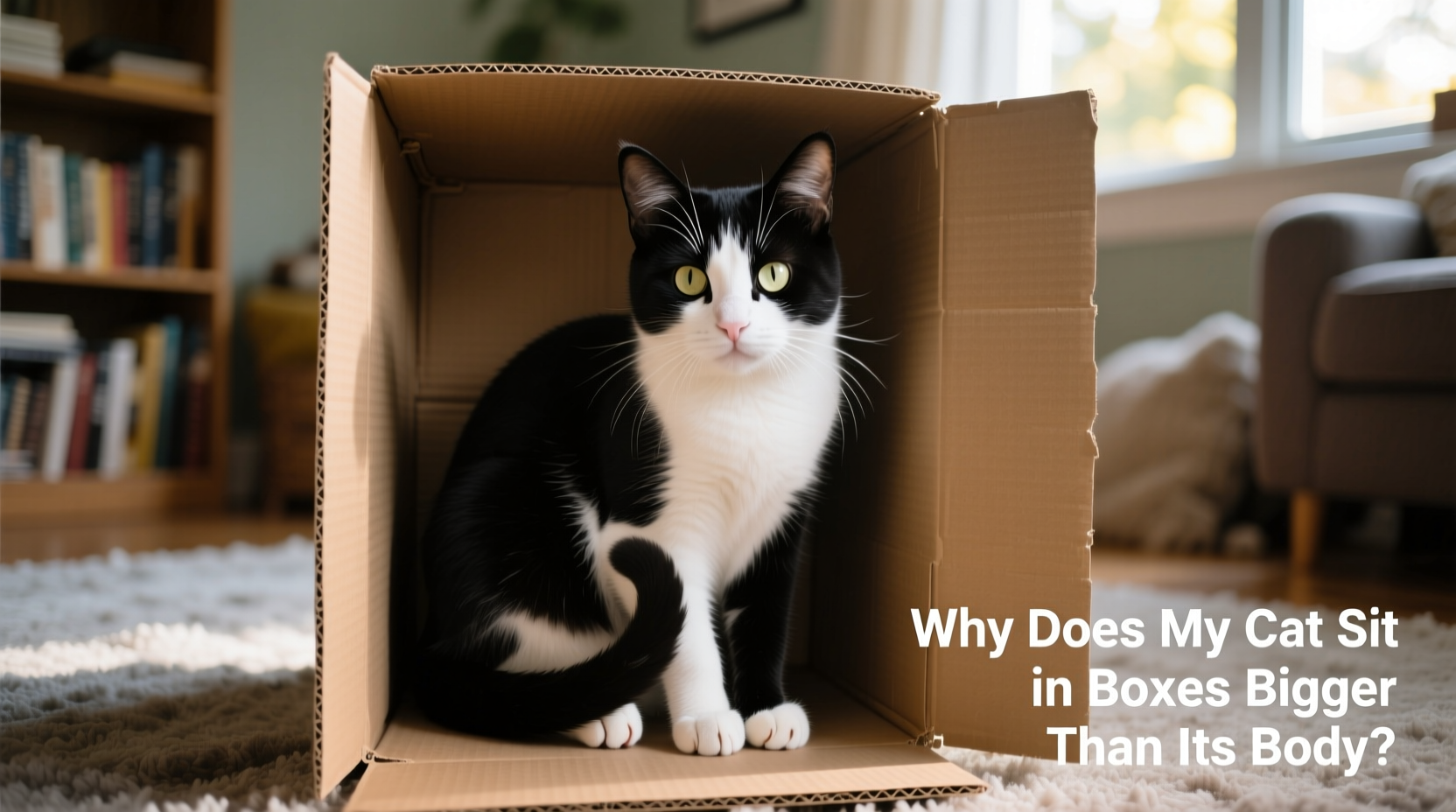
In the wild, cats are both predators and prey. Even domesticated cats retain ancestral behaviors shaped by survival. A key survival tactic is finding sheltered spots where they can observe without being seen. Boxes—regardless of size—offer visual barriers and a sense of enclosure that mimic natural hiding places like hollow logs or dense underbrush.
Enclosed spaces reduce exposure to potential threats. When a cat sits in a box, even if it doesn’t fully fit, the psychological benefit comes from the perception of containment. The walls provide a buffer between the cat and its surroundings, creating a “safe zone” where they feel protected from sudden movements, loud noises, or unfamiliar people.
Thermoregulation and Warmth
Cats prefer warmer environments than humans do. The ideal ambient temperature for a cat ranges between 86°F and 97°F (30°C–36°C). Cardboard is a poor conductor of heat, making boxes excellent insulators. Once a cat settles in, their body heat gets trapped within the confined space, raising the internal temperature.
This explains why cats often curl up tightly inside boxes—even oversized ones. By minimizing surface area exposed to cooler air, they conserve warmth. In fact, studies conducted at the Utrecht University Clinic for Companion Animals found that shelter cats given access to boxes adapted faster to new environments and showed lower stress levels than those without.
“Access to hiding places is critical for reducing stress in cats. A simple cardboard box can significantly improve a cat’s sense of security.” — Dr. Claudia Vinke, Veterinary Ethologist, Utrecht University
Stress Reduction and Environmental Control
Cats are highly sensitive to changes in their environment. Moving homes, introducing new pets, or even rearranging furniture can trigger anxiety. A box acts as a controllable micro-environment—a personal command center where the cat dictates visibility, access, and proximity.
Sitting in a large box allows a cat to:
- Elevate slightly for better observation
- Retreat quickly if startled
- Maintain a consistent sensory boundary
- Mark the space with scent from facial glands when rubbing against edges
Even when the box is too big to snuggle into snugly, the act of occupying it reinforces territorial ownership. Cats use scent marking extensively, and simply lounging in a box transfers their pheromones onto the surface, turning it into “theirs.”
Play, Exploration, and Cognitive Stimulation
Beyond comfort and safety, boxes fulfill a cognitive need. Cats are curious animals driven to investigate novel objects. A new box represents uncharted territory—an opportunity to explore, manipulate, and master. This mental engagement is vital for preventing boredom-related behaviors like over-grooming or aggression.
The size of the box may actually enhance play value. Larger boxes allow room for stretching, rolling, pawing at corners, or partial concealment games. Some cats treat oversized boxes like stages—partially hidden but still visible, giving them control over social interaction.
| Behavior | Possible Reason | What It Suggests About Your Cat |
|---|---|---|
| Sits facing outward in a large box | Vigilance, desire to monitor surroundings | Confident but alert; wants to stay informed |
| Hides completely, only eyes visible | High sensitivity or recent environmental change | May be stressed or adjusting |
| Scratches or paws at box interior | Exploration or instinctual nest-building | Curious, tactile learner |
| Brings toys into the box | Territorial marking or simulated hunting den | Strong predatory drive, playful |
| Ignores small boxes but uses large ones | Preference for flexible space with options | Values freedom within boundaries |
Do’s and Don’ts When Providing Boxes for Cats
Not all boxes are equally appealing—or safe—for cats. Follow these guidelines to support healthy feline behavior while avoiding risks.
| Action | Do | Don’t |
|---|---|---|
| Selecting boxes | Choose clean, dry cardboard with low sides for easy entry | Avoid taped-shut containers or ones with sharp edges |
| Placement | Put boxes in quiet areas near windows or favorite resting spots | Don’t place directly in high-traffic zones or drafty hallways |
| Enrichment | Add soft bedding or catnip to encourage use | Never force a cat into a box—they must choose it freely |
| Rotation | Swap out boxes weekly to maintain novelty | Don’t leave soiled or damp boxes out indefinitely |
| Safety | Remove staples, tape, and plastic liners before offering | Don’t use chemical-treated packaging materials |
Real Example: How Boxes Helped a Rescue Cat Adjust
Luna, a two-year-old domestic shorthair adopted from a municipal shelter, arrived at her new home trembling and withdrawn. Her owners placed several medium and large boxes around the living room and bedroom, each lined with a fleece blanket and lightly sprayed with synthetic feline facial pheromones (Feliway).
Within hours, Luna entered the largest box—a former appliance container—and positioned herself at the front edge, watching family activity without engaging. Over the next five days, she gradually spent longer periods in the box, eventually sleeping through the night inside it. By day ten, she began jumping onto the couch—but always returned to her box after meals or loud events like vacuuming.
Her veterinarian noted that the box served as an “emotional anchor,” allowing Luna to regulate stress while acclimating. After six weeks, she stopped using the box daily but would return to it during thunderstorms or when visitors arrived. This case illustrates how accessible enclosures support behavioral resilience in cats undergoing transition.
Step-by-Step: Creating the Ideal Feline Hideaway
If you want to encourage safe, enriching box use in your home, follow this practical sequence:
- Source clean cardboard boxes – Use undamaged boxes from deliveries or groceries. Avoid printed ink-heavy packaging if possible.
- Prepare the box – Remove all tape, labels, and plastic inserts. Cut down tall sides if necessary for easier access.
- Choose strategic locations – Place boxes near sunny windows, beside cat trees, or in quieter rooms where your cat already likes to rest.
- Add comfort elements – Line the bottom with a washable cushion, old sweater, or heated pad (pet-safe model only).
- Introduce gradually – Sprinkle silvervine or catnip inside to spark interest. Never push your cat into it.
- Monitor usage patterns – Note time of day, duration, and behavior before/after use to assess emotional impact.
- Rotate regularly – Replace or reposition boxes every 5–7 days to maintain novelty and hygiene.
Frequently Asked Questions
Is it normal for my cat to sit in boxes much larger than itself?
Yes, absolutely. Size doesn’t negate the psychological benefits of enclosure. Even partially bounded spaces offer a sense of protection. As long as the cat feels secure and isn’t showing signs of distress, this behavior is perfectly normal.
Should I be concerned if my cat suddenly starts hiding in boxes more often?
An increase in hiding behavior can signal stress, illness, or discomfort. Monitor for other symptoms like appetite loss, litter box avoidance, or vocalization. If changes persist beyond a few days, consult your veterinarian.
Can I use plastic storage bins instead of cardboard?
Plastic bins can work, but they lack breathability and insulation. Opt for opaque bins with one side removed to simulate an open-front hideout. Always ensure proper ventilation and avoid slippery surfaces that could cause falls.
Conclusion: Embrace the Box Habit
The sight of a cat lounging in a box far too large to wrap around them might seem illogical—but for the cat, it makes perfect sense. That box represents safety, warmth, control, and stimulation all in one. Far from a quirky accident, this behavior reflects deep-seated instincts honed over millennia.
By understanding why cats choose boxes—regardless of fit—you gain valuable insight into their emotional world. You also unlock a simple, cost-free way to improve their well-being. A cardboard box costs nothing, yet offers immense psychological value. In a world full of unpredictable stimuli, it gives your cat a space they can truly call their own.




 浙公网安备
33010002000092号
浙公网安备
33010002000092号 浙B2-20120091-4
Comments
No comments yet. Why don't you start the discussion?