
Cats are creatures of mystery, and their behaviors often leave owners both amused and puzzled. One of the most iconic feline quirks—watching your cat squeeze into a box far too small for its body—is widely celebrated online. But what about when your cat chooses to sit in a box that’s actually larger than itself? It may seem less amusing or even counterintuitive, but this behavior is surprisingly common. More importantly, pet owners often wonder: Is this a normal preference, or could it be a subtle sign of stress or anxiety?
Understanding why cats interact with boxes the way they do requires insight into feline psychology, evolutionary instincts, and environmental needs. This article explores the reasons behind this behavior, evaluates whether oversized box-sitting indicates emotional distress, and offers practical guidance for ensuring your cat feels safe and mentally balanced.
The Evolutionary Roots of Box-Sitting Behavior
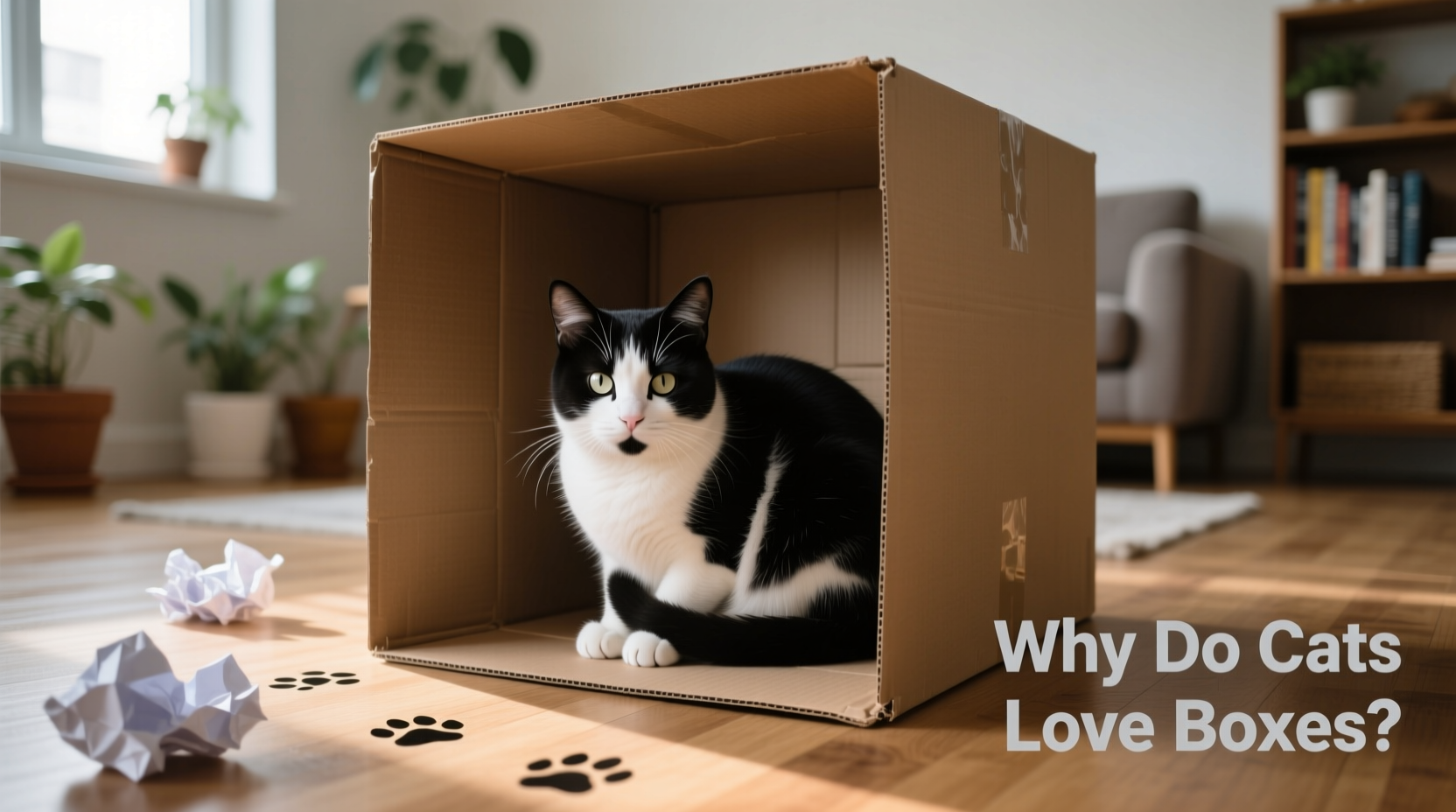
Cats, even domesticated ones, retain strong instincts from their wild ancestors. In nature, small predators like wildcats seek out enclosed spaces to rest, hide from threats, and stalk prey. These spaces offer protection from above and around—critical for survival in environments where birds of prey or larger animals pose risks.
A cardboard box, regardless of size, mimics the qualities of a natural den: four walls, limited visibility from outside, and a sense of enclosure. Even if the box is larger than the cat, the mere presence of boundaries creates a psychological buffer zone. The cat doesn’t need to touch all sides to feel secure; the perception of containment is enough.
Dr. Sarah Ellis, a feline behavior expert at the University of Lincoln, explains:
“Enclosed spaces provide cats with a sense of control over their environment. This control reduces perceived threats and helps regulate stress—even in seemingly safe homes.” — Dr. Sarah Ellis, Feline Behavior Scientist
This instinctual drive explains why many cats prefer sleeping in drawers, under beds, or inside laundry baskets. A box—large or small—functions as a symbolic shelter, not necessarily a physical fit.
Thermoregulation and Comfort: The Warmth Factor
Another compelling reason cats are drawn to boxes is temperature regulation. Cats maintain a higher body temperature than humans—around 101–102.5°F (38–39°C)—and prefer warm resting spots. Cardboard is an excellent insulator, trapping body heat and creating a cozy microclimate.
Even in a large box, a cat can curl up in one corner, tuck its paws, and minimize heat loss. The surrounding empty space doesn’t diminish the thermal benefit; in fact, it may allow airflow while still providing insulation on three or four sides. This setup prevents cold drafts from reaching vulnerable areas like the belly or ears.
Is Sitting in Large Boxes a Sign of Anxiety?
While box-sitting is typically normal, context matters. A cat consistently hiding in boxes—especially large ones positioned in isolated areas—may be exhibiting signs of stress. However, occasional use of a spacious box isn't inherently concerning.
Anxiety-related behaviors usually come with additional red flags:
- Excessive grooming or barbering (over-grooming until skin is exposed)
- Avoidance of people or other pets
- Elimination outside the litter box
- Hissing, growling, or swatting when approached
- Changes in appetite or sleep patterns
If your cat uses a large box as a regular napping spot but remains playful, eats normally, and interacts socially, the behavior is likely rooted in comfort, not fear. But if the cat retreats into the box whenever there's noise, visitors, or routine changes, it may be using the space as a coping mechanism.
Distinguishing Normal vs. Stress-Induced Box Use
| Behavior | Normal Use | Potential Anxiety Indicator |
|---|---|---|
| Frequency | Occasional or daily naps | Spends >80% of time hidden |
| Location | Near family activity (e.g., living room) | Isolated area (e.g., closet, basement) |
| Response to Interaction | Looks up, purrs, greets owner | Flees or hisses when approached |
| Body Language | Relaxed posture, slow blinking | Tense muscles, flattened ears, dilated pupils |
Environmental Enrichment: Creating a Balanced Space
Cats thrive in environments where they can express natural behaviors safely. While a single box might suffice temporarily, long-term well-being depends on variety and predictability.
Consider that a cat sitting in a large box may be seeking options: elevated perches, hiding nooks, scratching surfaces, and quiet zones. When these aren’t available, the box becomes the default refuge—even if oversized.
Step-by-Step Guide to Cat-Friendly Environment Design
- Assess current layout: Identify high-traffic zones, noise sources (appliances, doors), and existing resting spots.
- Add vertical space: Install shelves or cat trees near windows to satisfy climbing instincts.
- Provide multiple hideaways: Use covered beds, tunnels, or repurposed furniture (e.g., ottomans with entry holes).
- Rotate resources: Change bedding materials or toy locations weekly to stimulate curiosity.
- Respect territorial boundaries: In multi-cat homes, ensure each cat has private access to food, water, litter, and rest areas.
Real Example: Luna the Apartment Cat
Luna, a 3-year-old tabby living in a busy urban apartment, began spending increasing time inside a shipping box left after a delivery. Her owner, Mark, worried she was stressed by city noises and frequent visitors.
After consulting a veterinary behaviorist, Mark observed Luna’s behavior closely. He noted that she used the box mainly during daytime naps, emerged readily for meals, and purred when petted. The box was placed in the living room, close to where Mark worked from home.
Rather than removing the box, the behaviorist recommended enhancing her environment. Mark added a heated cat bed near the balcony door, installed a wall-mounted shelf, and introduced a pheromone diffuser. Over two weeks, Luna continued using the box occasionally but also began using the new perch and bed.
The conclusion? The box wasn’t a symptom of anxiety—it was a preferred resting option among others. By expanding choices, Mark gave Luna the freedom to switch between spaces based on mood and temperature, reducing dependency on any single refuge.
Checklist: Is Your Cat’s Box Habit Healthy?
- ✅ Your cat enters and exits the box voluntarily
- ✅ They eat, drink, and use the litter box regularly
- ✅ Body language appears relaxed (tail up, eyes half-closed)
- ✅ They engage in play or social interaction daily
- ✅ No sudden changes in vocalization or aggression
- ✅ Multiple alternative resting spots are available
If all items apply, your cat’s box-sitting is likely a harmless preference. If several are unchecked, consider a vet visit to rule out medical or psychological issues.
When to Seek Professional Help
Sometimes, seemingly innocent behaviors mask deeper issues. Chronic stress in cats can lead to urinary tract problems, gastrointestinal disorders, or dermatological conditions due to over-grooming.
Veterinary professionals recommend intervention when:
- The cat refuses to leave the box for extended periods
- There are accidents outside the litter tray without medical cause
- New reclusive behavior follows a change (new pet, move, loss)
In such cases, treatment may include environmental modifications, pheromone therapy (e.g., Feliway), or, in severe cases, anti-anxiety medication prescribed by a vet.
FAQ
Can I stop my cat from sitting in boxes?
You shouldn’t try to stop this behavior unless it’s linked to anxiety. Boxes are low-cost enrichment tools. Instead of discouraging use, offer alternatives and monitor for signs of distress.
Why does my cat sit in a large box but not smaller ones?
Larger boxes may offer better airflow, more comfortable positioning, or proximity to stimuli like light or sound. Size alone doesn’t determine appeal—context and location matter more.
Should I remove the box if my cat seems obsessed with it?
Not immediately. Sudden removal may increase stress. Gradually introduce competing options (heated beds, window perches) and observe shifts in preference before phasing out the box.
Conclusion: Understanding, Not Judging, Feline Instincts
Cats sitting in boxes larger than themselves is neither odd nor alarming—it’s a reflection of deep-seated instincts shaped by evolution. Whether driven by warmth, security, or simple preference, this behavior is generally a sign of a cat attempting to self-regulate its environment.
The key for owners lies in observation. A cat that freely chooses a large box among other options is likely content. One that hides persistently, avoids interaction, or shows physical symptoms may need support. By combining empathy with environmental enrichment, you can ensure your cat feels both safe and stimulated.




 浙公网安备
33010002000092号
浙公网安备
33010002000092号 浙B2-20120091-4
Comments
No comments yet. Why don't you start the discussion?