
It’s a familiar holiday scene: lights aglow, ornaments shimmering, the scent of pine filling the air—and your cat perched proudly inside a flattened cardboard box while ignoring the elaborate $200 Christmas tree you spent hours assembling. You may laugh, sigh, or even feel slightly offended on behalf of the tree. But behind this seemingly quirky choice lies a complex web of feline psychology, instinctual behavior, and environmental preferences that explain exactly why your cat has chosen cardboard over conifer.
Cats don’t make random decisions—especially when it comes to where they rest. Their behaviors are deeply rooted in survival mechanisms developed over thousands of years. What looks like whimsy is actually calculated preference. Understanding why your cat favors the box isn't just amusing—it offers valuable insight into their emotional and physical well-being during periods of change, such as the holidays.
The Allure of Enclosed Spaces
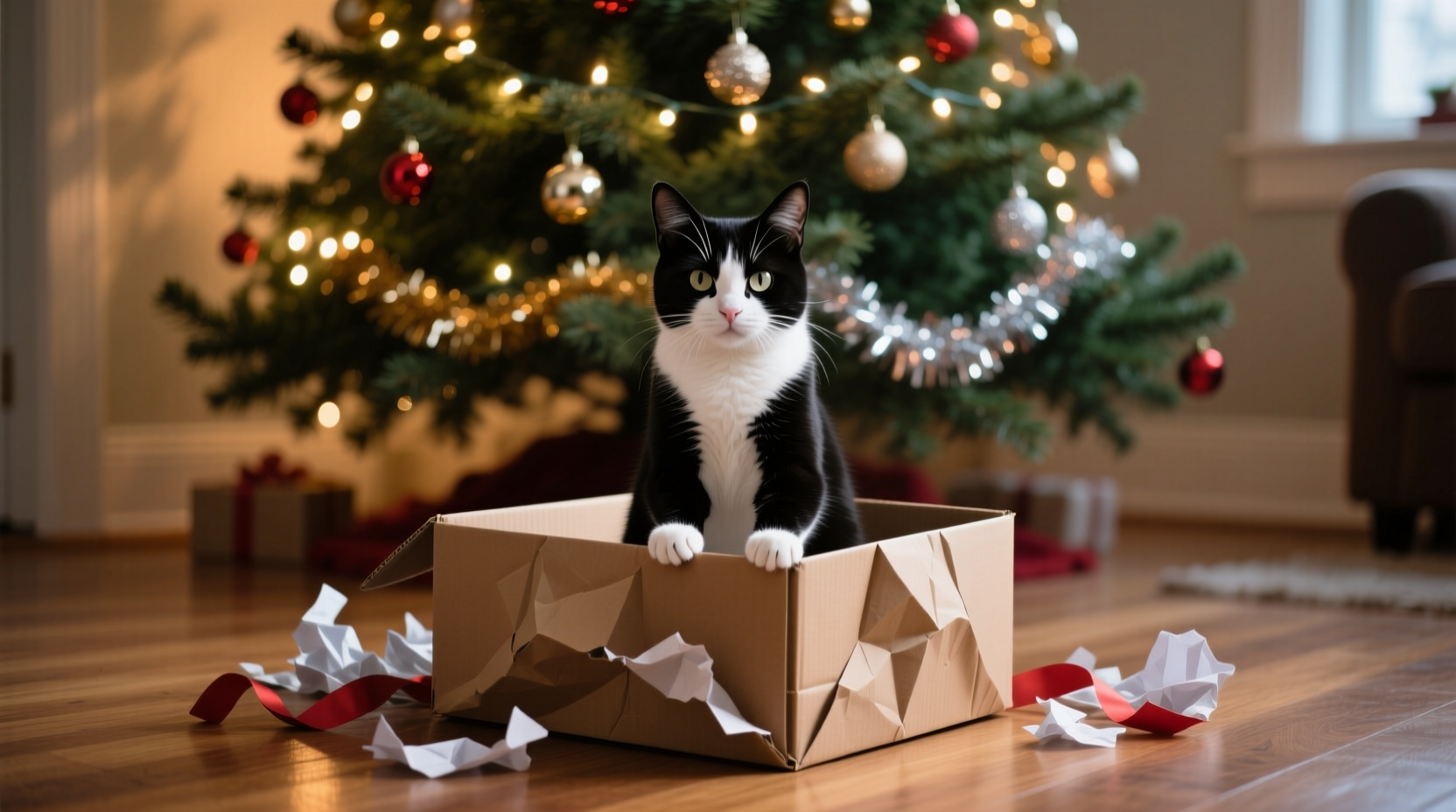
Cats are natural hunters and prey animals simultaneously. In the wild, small, enclosed spaces provide protection from predators and an ideal vantage point for observing surroundings without being seen. This duality shapes much of their domestic behavior. An empty box—even one with flaps partially open—creates a den-like environment that satisfies their need for security.
Research supports this instinct. A 2014 study published in *Applied Animal Behaviour Science* found that shelter cats given access to hiding boxes adjusted to new environments faster and exhibited lower stress levels than those without. The conclusion? Hiding reduces anxiety. For your cat, the Christmas box isn’t just “a box”—it’s a safe zone amid the sensory overload of holiday decorations, guests, music, and altered routines.
Sensory Overload: The Tree vs. The Box
While humans see beauty in twinkling lights and shiny baubles, cats experience the Christmas tree as a chaotic sensory bombardment. Reflective surfaces bounce light unpredictably. Ornaments swing with the slightest vibration. Tinsel crinkles with movement. Even the smell of real pine can be overwhelming to a creature with a sense of smell up to 14 times more sensitive than ours.
In contrast, the empty box emits no strong odors (unless taped with sticky residue), produces no noise, and reflects minimal light. It’s predictable, neutral, and controllable—three qualities cats value highly. The box also retains body heat efficiently, creating a warm microclimate ideal for conserving energy, which is essential for a species evolved in temperate climates.
Moreover, once the novelty of climbing wears off, trees offer little functional benefit. They’re unstable, drafty at the top, and lack back support. Boxes, however, have walls that allow cats to press against them—a behavior linked to reduced cortisol levels. Pressure provides comfort, much like swaddling does for infants.
Behavioral Enrichment and Territory Marking
Cats are territorial by nature. When new objects enter their domain—like a towering evergreen—they must be investigated, claimed, and integrated into their mental map of safe space. Sitting in the box isn’t passive; it’s an active assertion of ownership. By occupying the box, your cat leaves behind scent markers via glands in their paws and cheeks, effectively saying, “This is mine.”
Interestingly, many cats will rotate between multiple boxes during the season, treating each as a distinct territory within their larger home range. This rotational behavior mimics how wild cats use multiple dens across a territory to avoid parasite buildup and increase survival odds.
“Cats seek control in their environment. A simple box becomes a psychological anchor when everything else changes.” — Dr. Sarah Ellis, Feline Behavior Researcher, University of Lincoln
Do’s and Don’ts: Managing Holiday Cat Stress
| Do | Don’t |
|---|---|
| Provide alternative hiding spots away from foot traffic | Force your cat out of preferred hiding places |
| Use pheromone diffusers (e.g., Feliway) near common areas | Decorate with tinsel or string-like materials accessible to pets |
| Maintain regular feeding and play schedules | Introduce too many guests at once without cat-free zones |
| Offer vertical spaces like cat shelves or perches | Place fragile ornaments on lower tree branches |
A Mini Case Study: Bella and the Cardboard Kingdom
Bella, a 4-year-old domestic shorthair living in suburban Chicago, had always been curious but reserved. Each December, her owners decorated a six-foot Fraser fir with heirloom glass ornaments and LED lights. In previous years, Bella would sniff the tree briefly before retreating under the couch for days.
Last holiday season, her owners decided to leave several large moving boxes unpacked in the living room, intending to recycle them later. To their surprise, Bella immediately claimed one positioned behind the sofa. She rearranged it daily, folding flaps inward and dragging blankets inside. Over two weeks, she only left the box to eat, use the litter box, or briefly interact with family members.
What changed? Her owners realized the box was located farther from the TV and main entryway—reducing noise and foot traffic. They added a soft cushion and placed a Feliway diffuser nearby. Within days, Bella began exploring the tree base cautiously, eventually batting at dangling ribbons (non-toxic, securely fastened). By Christmas Eve, she sat beside—not in—the tree, watching presents being wrapped.
The takeaway: Bella wasn’t rejecting the holiday spirit. She needed a secure base camp before engaging with novelty. Once her anxiety decreased, curiosity emerged naturally.
Step-by-Step: Creating a Cat-Friendly Holiday Environment
Instead of viewing your cat’s box preference as defiance, treat it as feedback. Use these steps to create a balanced space where both traditions and feline comfort coexist:
- Assess your cat’s baseline behavior: Note signs of stress—hiding, reduced appetite, excessive grooming, or vocalization—before introducing decorations.
- Designate a quiet zone: Choose a low-traffic room or corner with familiar bedding, food, water, and a litter box. Include at least one enclosed hideout (box, igloo bed, etc.).
- Introduce changes gradually: Set up the tree frame first, then add lights after a few days, followed by ornaments. Allow your cat supervised time to investigate.
- Make the tree less tempting (and safer): Avoid tinsel, chocolate, or toxic plants like poinsettias. Secure the tree to a wall to prevent tipping if climbed.
- Enrich alternatives: Place toys, puzzle feeders, or catnip-infused items near—but not on—the tree to redirect attention.
- Respect boundaries: Never force interaction. Let your cat approach the tree at their own pace. Reward calm behavior with treats or gentle praise.
Frequently Asked Questions
Is it normal for my cat to ignore the Christmas tree completely?
Absolutely. Not all cats are interested in trees. Some view them as foreign intrusions rather than attractions. As long as your cat is eating, drinking, using the litter box, and showing no signs of distress, disinterest is perfectly normal.
Should I be worried if my cat sleeps in boxes often?
No—regular use of hiding spots is healthy. However, sudden increases in hiding duration, especially when paired with lethargy or appetite loss, may signal illness or chronic stress. Consult your veterinarian if behavioral shifts persist beyond seasonal changes.
Can I encourage my cat to enjoy the tree more?
You can try, but never force it. Some cats respond well to interactive toys hung high (outside reach of breakable ornaments), bird videos playing nearby, or cat-safe “presents” filled with treats. Remember: enjoyment looks different for cats. Quiet observation may be their version of celebration.
Final Thoughts: Embracing the Quirks
Your cat sitting in the empty Christmas box isn’t a rejection of your efforts—it’s an affirmation of trust. They feel safe enough to claim space openly, even if that space is made of corrugated fiberboard. In a world full of flashing lights and unfamiliar scents, the box represents consistency, warmth, and autonomy.
Rather than seeing this behavior as humorous or inconvenient, consider it an invitation to observe your cat more closely. What makes them feel secure? How do they respond to change? These insights build deeper bonds and lead to better care year-round.
This holiday season, instead of moving the box aside, maybe place a tiny ornament on its side—just for fun. After all, tradition isn’t just about rituals we create for ourselves. It’s also about making room for the ones who share our homes, even if their favorite decoration folds flat.




 浙公网安备
33010002000092号
浙公网安备
33010002000092号 浙B2-20120091-4
Comments
No comments yet. Why don't you start the discussion?