
Cats are creatures of habit, but their habits often leave us puzzled. One moment they’re curled up on your lap, the next they’ve claimed your bathroom sink as their personal throne. If you’ve ever walked into the bathroom to find your cat perched in the dry bathtub or crouched beside a dripping faucet, you’re not alone. This seemingly odd behavior is more common than you might think—and it’s rarely random. Behind every sink-sitting cat lies a blend of instinct, comfort, and subtle communication. Understanding why cats choose these unusual spots can deepen your bond and even improve their well-being.
The Allure of Cool, Smooth Surfaces
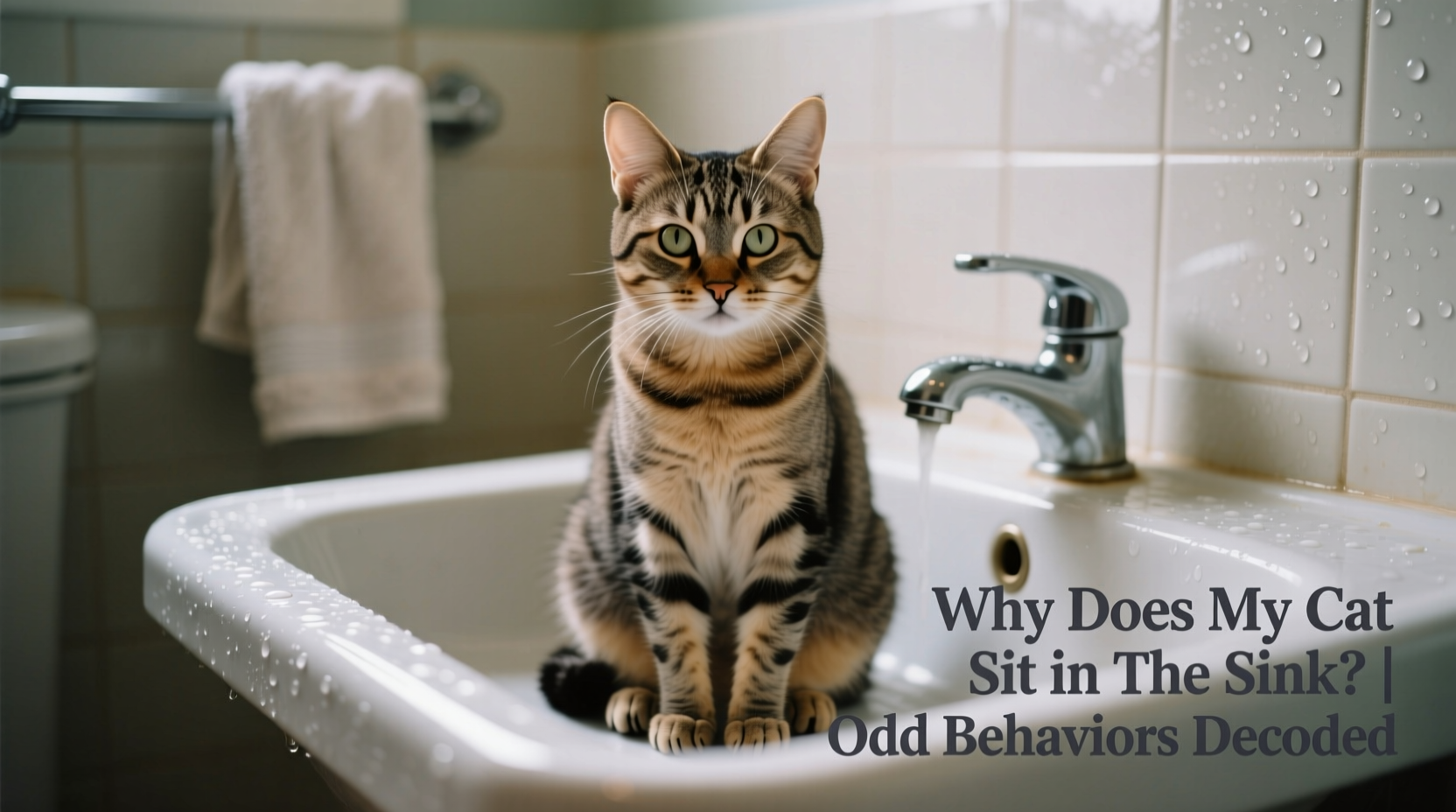
Cats are highly sensitive to temperature and texture. The porcelain or enamel of sinks and bathtubs retains coolness far longer than carpet, wood, or fabric. On warm days—or for older cats who struggle with body heat regulation—these surfaces offer a natural cooling effect. Unlike humans, cats don’t sweat efficiently; they rely on limited sweat glands in their paws and behavioral adaptations to manage heat.
The smooth, non-porous material of bathroom fixtures also provides a clean, predictable surface. Cats are fastidious groomers, and many prefer areas that feel “clean” by their standards. A stainless steel or ceramic sink doesn’t trap odors or loose fibers like upholstery might, making it an appealing retreat.
Access to Water: A Feline Fascination
Running water holds a magnetic appeal for many cats. In the wild, moving water signals freshness and safety—stagnant pools may harbor bacteria or parasites. Your bathroom faucet mimics this natural preference. Even if your cat doesn’t drink from it regularly, the sound and motion attract curiosity.
Some cats will dip their paws into the sink or watch the drip intently. Others sit nearby, ready to pounce when someone turns on the tap. This behavior isn’t just about hydration—it’s rooted in instinctual caution and sensory engagement.
“Cats are hardwired to prefer flowing water. It’s cleaner, safer, and more stimulating than still water in a bowl.” — Dr. Lena Torres, Feline Behavior Specialist
If your cat spends time in the sink primarily when the faucet is running, they may be waiting for a chance to drink. Consider investing in a cat water fountain to satisfy this preference in a more convenient location.
Safety, Elevation, and Observation
Bathtubs and sinks aren’t just cool—they’re elevated and enclosed. From a cat’s perspective, these spaces function like natural lookout posts. A sunken tub offers partial enclosure, which provides a sense of security. At the same time, the height allows them to survey the room for movement, sounds, or potential threats.
This duality—protection plus visibility—is ideal for a species that evolved as both predator and prey. In multi-pet households or busy homes, the bathroom often becomes a quiet sanctuary. Fewer footfalls, less noise, and predictable lighting make it a low-stress zone where cats can relax without interruption.
| Feature | Why Cats Like It | Human-Friendly Alternative |
|---|---|---|
| Cool surface | Helps regulate body temperature | Ceramic tile mat or cooling pad |
| Elevated position | Provides vantage point for observation | Window perch or cat shelf |
| Enclosed space | Offers sense of safety | Cozy cat cave or covered bed |
| Proximity to water | Attracts interest due to movement and sound | Indoor water fountain |
| Low traffic area | Reduces stress and disturbances | Quiet corner with soft bedding |
Attention-Seeking and Habit Formation
Let’s not overlook the social dimension: some cats learn that sitting in the sink gets results. Maybe you laugh, pick them up, or talk to them when you find them there. To a clever feline, this is positive reinforcement. Over time, the behavior becomes a ritual—a way to initiate interaction.
Other cats develop routines based on household patterns. If you brush your teeth every night at 9 PM, and your cat jumps into the sink each time, they may associate the location with your presence. The sink becomes part of their daily social calendar.
In one documented case, a Siamese cat named Milo began spending hours in the upstairs bathroom sink after his owners adopted a second, more dominant cat. The original cat, once free-roaming, started retreating to high, enclosed spaces. The sink offered elevation, separation, and auditory privacy. Once the household dynamics stabilized—with dedicated feeding zones and vertical spaces—Milo gradually returned to lower-level lounging areas.
This mini case study illustrates how environmental stress can manifest in unexpected behaviors. What appears quirky may actually be a coping mechanism.
Medical and Behavioral Red Flags
While occasional sink-sitting is normal, sudden or obsessive behavior warrants attention. A cat that refuses to leave the bathtub, drinks excessively from the faucet, or seems lethargic could be showing signs of underlying health issues.
- Kidney disease: Increased thirst (polydipsia) often leads cats to seek out water sources beyond their bowls.
- Hyperthyroidism: Can cause restlessness, increased metabolism, and heat intolerance—prompting cats to seek cooler zones.
- Anxiety or pain: A cat in discomfort may isolate in quiet, confined areas like bathrooms.
If your cat’s sink habit is new, intense, or accompanied by changes in appetite, grooming, or litter box use, consult your veterinarian. Early detection of medical conditions significantly improves outcomes.
Step-by-Step Guide: Redirecting Sink-Sitting Behavior
If you’d prefer your cat spend less time in plumbing fixtures, follow this gradual redirection plan:
- Assess motivation: Is it temperature, water access, or safety? Observe when and how your cat uses the sink.
- Provide alternatives: Place a soft bed near a cool tile floor, install a window perch, or set up a water fountain in a quiet corner.
- Make the sink less appealing: Keep the faucet off, cover the sink with a towel, or place an upside-down laundry basket over it temporarily.
- Reinforce desired behavior: Reward your cat with treats or affection when they use the alternative spot.
- Be consistent: It may take weeks for new habits to form. Avoid scolding—redirect calmly and repeatedly.
Common Myths About Cats and Bathrooms
Misconceptions persist about why cats love bathrooms. Let’s clarify a few:
- Myth: Cats like sinks because they want to be close to toilets.
Truth: Most cats avoid toilet water unless desperate. The attraction is usually the sink or tub. - Myth: Only indoor cats do this.
Truth: Outdoor-access cats also exhibit sink-sitting, especially in hot weather or during transitions between seasons. - Myth: It means your cat dislikes you.
Truth: Quite the opposite. Choosing a space you frequent suggests attachment, not rejection.
Frequently Asked Questions
Is it safe for my cat to sit in the sink or bathtub?
Yes, as long as the surfaces are clean and no harsh chemicals have been used recently. Avoid leaving cleaning products within reach, and ensure drain stoppers or sharp tools aren’t left behind.
Why does my cat only sit in the sink at night?
Nighttime activity aligns with a cat’s natural crepuscular rhythm—most active at dawn and dusk. The house is quieter, temperatures may drop, and dripping faucets become more noticeable in silence. Your cat may also be following your routine if you use the bathroom before bed.
How can I keep my cat out of the sink if I need to use it?
Use gentle deterrents like placing a rubber mat (the texture often discourages sitting) or keeping the faucet covered. Never punish your cat—instead, redirect them to a preferred spot with toys or treats. Consistency and patience yield better long-term results.
Checklist: Creating a Cat-Friendly Home Beyond the Bathroom
- ✅ Provide multiple water sources, including a filtered fountain
- ✅ Offer elevated resting spots near windows or doorways
- ✅ Ensure at least one quiet, low-traffic area for relaxation
- ✅ Rotate toys and scratching posts to maintain enrichment
- ✅ Monitor changes in behavior or routine closely
- ✅ Schedule annual vet checkups, especially for senior cats
- ✅ Use pheromone diffusers in high-stress zones if needed
Conclusion: Embracing Quirks with Understanding
Your cat’s decision to lounge in the sink isn’t defiance or absurdity—it’s a calculated choice shaped by biology, environment, and emotion. Whether driven by a need to cool down, a fascination with water, or a desire for a secure vantage point, this behavior reveals how deeply attuned cats are to their surroundings. Rather than discouraging it outright, consider what your cat is telling you. Are they seeking comfort? Hydration? Peace?
By responding with empathy and offering thoughtful alternatives, you honor their instincts while guiding them toward safer, more convenient spaces. The goal isn’t to eliminate quirks, but to understand them. After all, it’s these little mysteries that make living with cats endlessly fascinating.




 浙公网安备
33010002000092号
浙公网安备
33010002000092号 浙B2-20120091-4
Comments
No comments yet. Why don't you start the discussion?