
Cats are full of mysteries—pouncing on invisible prey, staring into the void, and suddenly deciding that a plain cardboard box is the most luxurious bed in the house. If you’ve ever found your cat curled up in an empty shipping container while ignoring their expensive cat bed, you’re not alone. This seemingly odd behavior has deep roots in biology, psychology, and environmental adaptation. Far from being random, a cat’s preference for cardboard boxes is a well-documented phenomenon backed by scientific research and behavioral studies.
Understanding why cats seek out these makeshift shelters offers more than just amusement—it can improve how we care for our feline companions. By recognizing what drives this instinct, owners can create safer, more comforting environments that align with natural feline needs.
The Evolutionary Instinct: Safety and Security
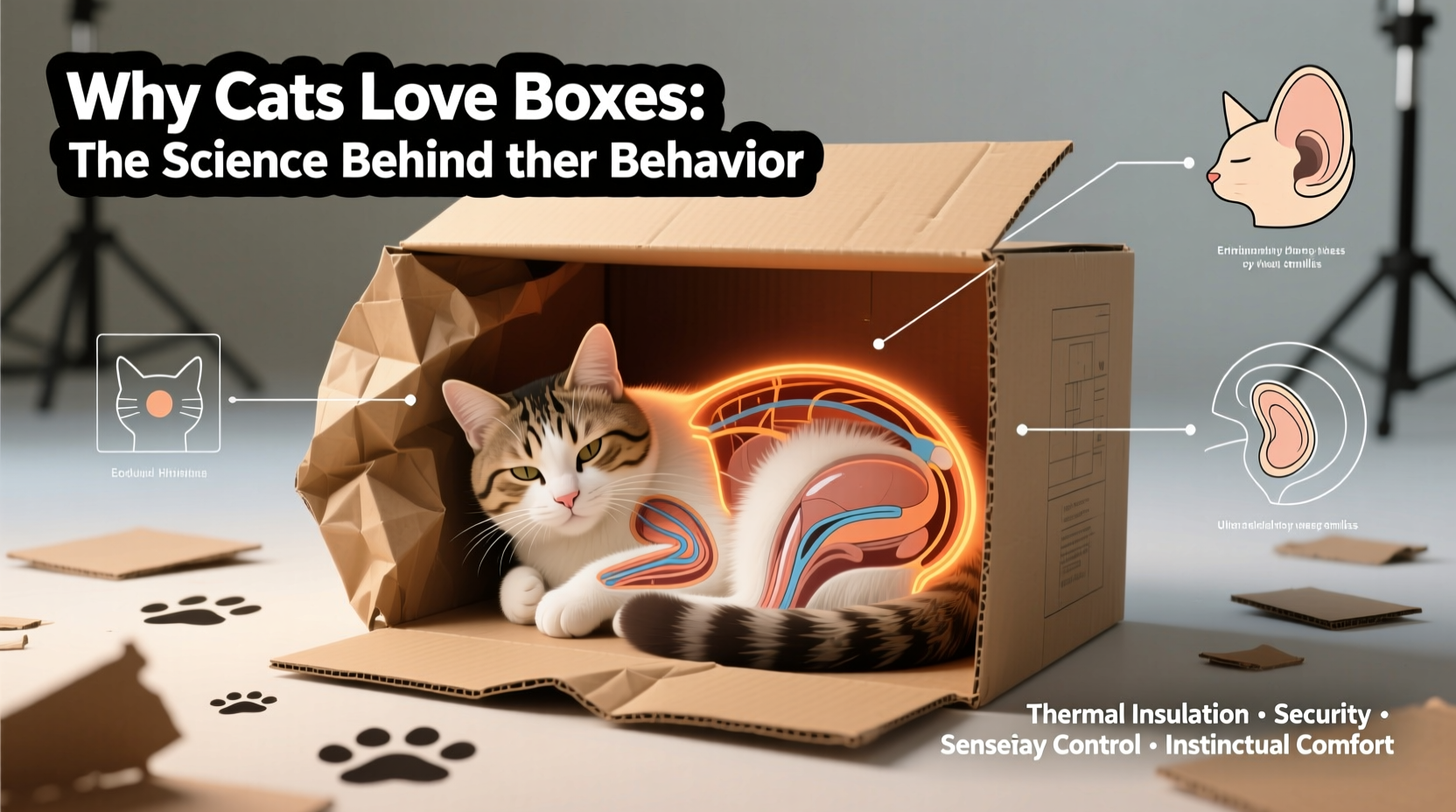
In the wild, cats are both predators and prey. Even though domesticated cats don’t face the same survival pressures as their ancestors, their instincts remain finely tuned. One of the strongest drivers behind box-sleeping behavior is the need for concealment and protection.
Enclosed spaces like cardboard boxes mimic the burrows or dense underbrush where wild cats would hide from larger predators. These spaces offer a vantage point to observe surroundings without being seen—a critical advantage for an animal that relies on stealth and vigilance.
A 2014 study conducted at Utrecht University in the Netherlands examined stress levels in shelter cats given access to hiding boxes versus those without. The results were clear: cats with boxes adapted to their new environment significantly faster and showed lower cortisol (stress hormone) levels. This demonstrates that enclosed spaces aren’t just preferred—they’re essential for emotional regulation.
“Hiding is a coping mechanism for cats under stress. A simple box can provide a sense of control in an unpredictable environment.” — Dr. Claudia Vinke, Veterinarian and Feline Behavior Researcher, Utrecht University
This instinct doesn’t disappear in the safety of a home. Even in secure households, sudden noises, visitors, or changes in routine can unsettle cats. A cardboard box becomes a sanctuary—an instant refuge where they feel insulated and in control.
Thermoregulation: Warmth and Energy Conservation
Cats have a higher thermoneutral zone—the range of temperatures where they don’t need to expend extra energy to maintain body heat—than humans. While we’re comfortable around 70°F (21°C), cats prefer ambient temperatures between 86°F and 97°F (30–36°C).
Cardboard is a surprisingly effective insulator. Its fluted inner structure traps air, creating a thermal barrier that helps retain body heat. When a cat curls up inside a box, their own warmth builds up within the confined space, turning it into a cozy microclimate.
This warmth is especially valuable for kittens, older cats, or breeds with thin coats who struggle to regulate body temperature. Sleeping in a box allows them to conserve energy, which is crucial for healing, digestion, and overall health.
Sensory Comfort and Environmental Enrichment
Beyond physical needs, cardboard boxes fulfill important sensory and psychological roles. The texture of cardboard provides tactile feedback that many cats find satisfying. Some scratch the sides, others knead the bottom—behaviors linked to kittenhood and nesting instincts.
The smell of fresh cardboard also plays a role. Untreated cardboard emits neutral, earthy odors that don’t compete with a cat’s sensitive sense of smell. Unlike synthetic materials, which may carry chemical residues or strong perfumes, cardboard is olfactorily “safe” and non-threatening.
Moreover, boxes introduce novelty into a cat’s environment. Cats thrive on mental stimulation, and a new box represents an opportunity for exploration, play, and territorial marking. Once the initial investigation phase ends, the box transitions from toy to trusted retreat.
This dual function—as both entertainment and safe haven—makes cardboard uniquely versatile in feline enrichment strategies. Animal shelters often use boxes to reduce anxiety during intake, proving their value beyond household curiosity.
Behavioral Benefits: Stress Reduction and Recovery
Stress in cats manifests subtly—through hiding, over-grooming, reduced appetite, or litter box avoidance. Unlike dogs, cats rarely display overt signs of distress, making prevention vital.
Access to hiding spots like cardboard boxes has been shown to accelerate recovery in veterinary settings. Post-operative or injured cats placed in enclosures with boxes exhibit calmer behavior and require less sedation. The sense of enclosure reduces perceived vulnerability, allowing the nervous system to shift from “alert” to “rest and digest” mode.
At home, introducing boxes after major life events—such as moving, introducing a new pet, or returning from the vet—can ease transitions. Even daily stressors like vacuuming or loud music become more manageable when a cat knows there’s a secure escape route.
| Situation | Benefit of Box Access | Observed Behavioral Change |
|---|---|---|
| New Home | Reduces orientation stress | Faster exploration, improved confidence |
| Veterinary Visit | Lowers post-travel anxiety | Quicker return to normal eating/sleeping |
| Multi-cat Household | Provides personal territory | Decreased aggression, fewer conflicts |
| Noisy Environment | Dampens sound perception | Less startle response, longer rest periods |
Mini Case Study: Shelter Cat Adaptation
In a municipal animal shelter in Portland, Oregon, staff implemented a “Box Program” for incoming cats. Each cat received a standard-sized cardboard box upon arrival, placed in the back of their cage. Over six months, staff tracked acclimation time, vocalization frequency, and engagement with caregivers.
The results were striking. Cats with boxes began interacting with humans an average of 2.3 days earlier than those without. Vocalizations decreased by 40%, and feeding resumed within 24 hours in 78% of box-equipped cats, compared to 52% in the control group. Staff reported easier handling and increased adoption rates, attributing much of the success to the simple addition of cardboard shelters.
How to Use Boxes Safely and Effectively
While cardboard boxes are generally safe, not all boxes are suitable. To maximize benefits and minimize risks, follow these guidelines:
- Remove tape and staples: Adhesives and metal fasteners pose ingestion and injury hazards.
- Avoid ink-heavy or chemically treated boxes: Some printing inks contain solvents; food-grade or plain brown boxes are safest.
- Size matters: The box should be large enough for the cat to turn around but snug enough to provide a sense of enclosure.
- Replace when soiled or damaged: Wet or torn boxes lose insulating properties and can harbor bacteria.
- Don’t force usage: Let the cat choose. Forcing interaction increases stress.
Checklist: Creating the Ideal Cat Box Environment
- ✅ Choose a clean, undamaged cardboard box
- ✅ Remove all tape, labels, and plastic liners
- ✅ Place in a quiet, low-traffic area
- ✅ Add a soft, washable liner (optional)
- ✅ Monitor for chewing or excessive scratching
- ✅ Rotate boxes weekly to maintain novelty
- ✅ Provide multiple boxes in multi-cat homes
FAQ: Common Questions About Cats and Cardboard Boxes
Is it safe for cats to chew on cardboard?
Occasional nibbling is usually harmless, but ingesting large pieces can cause gastrointestinal blockages. If your cat frequently eats cardboard, consult a veterinarian—this could indicate pica, a condition linked to nutritional deficiencies or stress.
Why does my cat only use the box right after it arrives?
Novelty plays a big role. Cats are drawn to new scents and textures. Once the box loses its “newness,” interest may wane. Refreshing the environment by rotating boxes or placing them in new locations can reignite curiosity.
Can I use plastic containers instead of cardboard?
Plastic bins may seem sturdier, but they lack breathability and insulation. They can also amplify sound and retain odors, making them less appealing. If used, ensure adequate ventilation and line with absorbent material.
Conclusion: Respecting Natural Instincts for a Happier Cat
The next time you catch your cat napping in a box meant for recycling, resist the urge to shoo them out. That humble container is doing far more than saving space—it’s supporting your cat’s mental well-being, helping them regulate stress, and fulfilling deep-seated instincts honed over millennia.
By embracing this quirky habit, we honor the complexity of feline nature. Simple, low-cost solutions like cardboard boxes can have profound effects on quality of life, especially in unpredictable or stimulating environments. You don’t need fancy gear or expensive toys to make your cat feel safe—sometimes, the best thing you can offer is a quiet corner and a modest box.




 浙公网安备
33010002000092号
浙公网安备
33010002000092号 浙B2-20120091-4
Comments
No comments yet. Why don't you start the discussion?