
Cats are naturally curious creatures, but when your feline companion suddenly begins fixating on an empty wall with intense focus, it can be unsettling. You might wonder: Is my cat seeing something I can’t? Could this be a sign of illness? Or is it just another quirky cat moment? While occasional odd behaviors are normal, persistent or abrupt staring episodes warrant attention. Veterinary professionals have identified several underlying reasons for this behavior—ranging from medical conditions to subtle environmental cues. Understanding the science behind your cat’s gaze can help you determine whether it’s harmless or a signal that veterinary care is needed.
Understanding Feline Sensory Perception
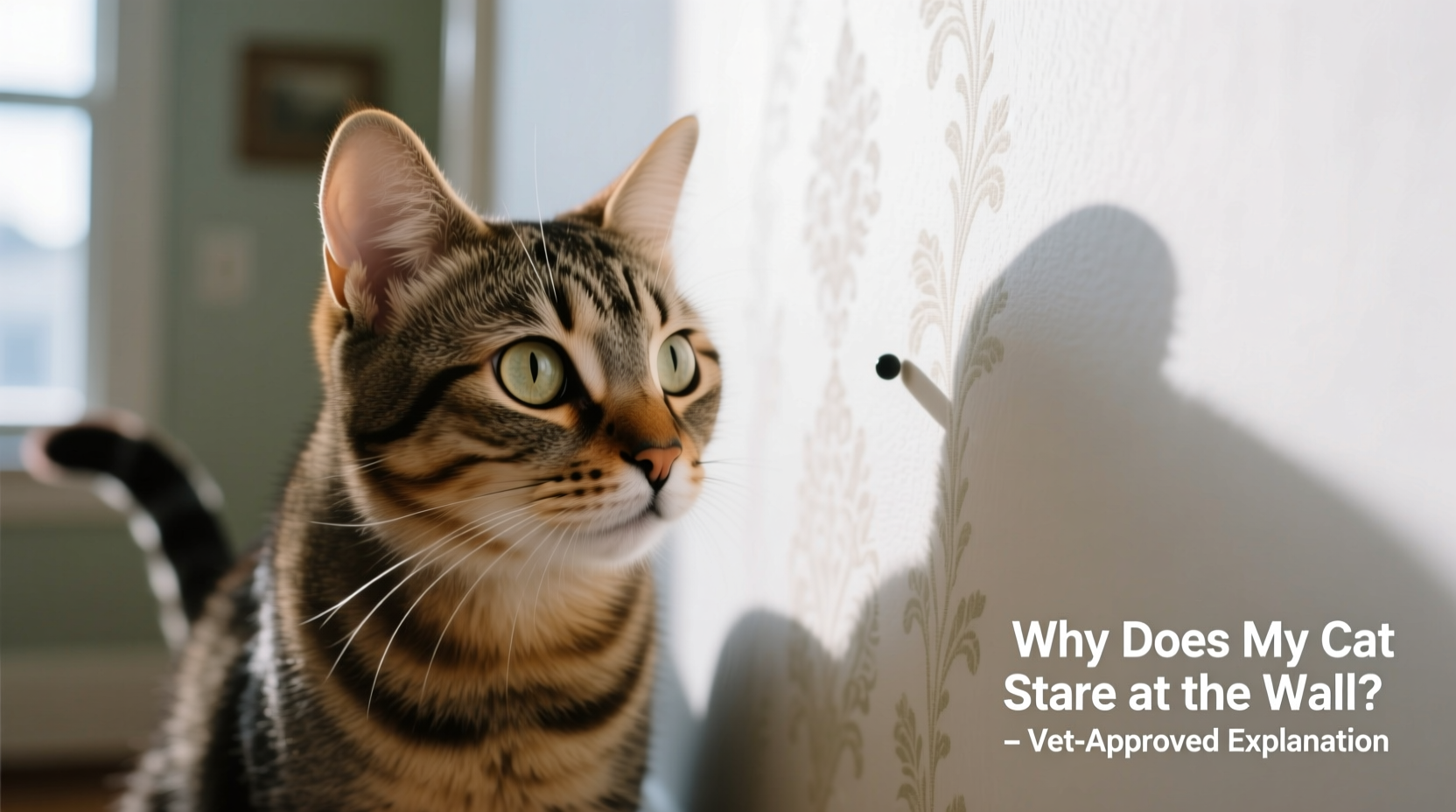
Cats possess sensory capabilities far beyond human perception. Their hearing detects ultrasonic frequencies, their night vision captures minimal light, and their whiskers sense air currents. What appears to be a blank wall to you may not be so to your cat. Insects like silverfish or spiders may crawl behind baseboards, creating vibrations or faint sounds imperceptible to humans. Tiny movements in wallpaper patterns or dust particles catching light can also capture a cat’s attention.
Moreover, cats are hardwired to detect motion. Even a flicker from a poorly shielded LED light or a shadow cast by a passing cloud outside a window can trigger a hunting response. This instinctual vigilance explains why your cat might appear to \"zone out\" while actually monitoring what it perceives as potential prey.
Medical Causes Behind Wall-Staring Behavior
Sudden onset of wall-staring, especially if accompanied by other unusual symptoms, may indicate an underlying health issue. Veterinarians emphasize that neurological, ocular, or cognitive disorders can manifest through repetitive or vacant-looking behaviors.
Epilepsy and Seizure Activity
Feline epilepsy can present subtly. Unlike dramatic convulsions, some seizures are partial or focal, causing a cat to freeze, twitch, or stare into space. These episodes may last seconds to minutes and are often mistaken for daydreaming. A cat experiencing a focal seizure might appear alert but unresponsive, fixating on a point without blinking.
“Cats can have complex partial seizures where they seem awake but are mentally absent. Owners often describe them as ‘staring at nothing’—but in reality, their brain is misfiring.” — Dr. Laura Bennett, Veterinary Neurologist
Vision Problems and Hallucinations
Retinal diseases, cataracts, or high blood pressure affecting the eyes can lead to visual disturbances. Cats with declining vision may perceive phantom shapes or lights. Similarly, hyperthyroidism and hypertension can cause retinal detachment, resulting in sudden changes in behavior, including disorientation and fixation on walls.
Cognitive Dysfunction Syndrome (CDS)
Common in senior cats (typically over 10 years), CDS resembles dementia in humans. Symptoms include confusion, altered sleep cycles, vocalization at night, and repetitive behaviors such as pacing or staring. A cat with CDS may look at a wall for extended periods, seemingly unaware of its surroundings.
Behavioral and Environmental Triggers
Not all wall-staring is medically concerning. Many cases stem from psychological or environmental factors. Cats thrive on routine and can become stressed by changes in their environment, leading to displacement behaviors like excessive grooming or obsessive staring.
Boredom and Lack of Stimulation
Indoor cats with limited enrichment may develop compulsive habits. Without adequate play, climbing structures, or interactive toys, a cat might fixate on minor stimuli simply because there’s nothing else to do. This is particularly common in multi-cat households where competition for attention exists.
Anxiety and Stress Responses
Moves, new pets, loud noises, or even construction work can elevate a cat’s stress levels. Some cats respond by withdrawing or exhibiting repetitive actions. Staring at a wall could be a self-soothing mechanism—an attempt to block out overwhelming stimuli by focusing on a neutral object.
Response to Sounds and Smells
Cats hear frequencies up to 64 kHz (humans cap at 20 kHz). Rodents nesting in walls, electrical buzzing from outlets, or even HVAC systems can emit high-pitched noises that attract a cat’s attention. Similarly, odors from mold, pests, or cleaning products absorbed into drywall might prompt investigative staring.
| Potential Trigger | Signs to Watch For | What You Can Do |
|---|---|---|
| Insects in walls | Scratching at baseboards, ear twitching, sudden alertness | Inspect for pest signs; consult exterminator if needed |
| Electrical hums | Head tilting, pawing near outlets, anxiety | Use white noise; check wiring safety |
| Visual illusions | Following moving shadows, blinking rapidly | Adjust lighting; close blinds during peak sun |
| Scent residues | Nose twitching, rubbing face on wall | Clean with pet-safe odor neutralizers |
When to Seek Veterinary Help: A Step-by-Step Guide
Occasional staring isn’t necessarily alarming. However, sudden, frequent, or prolonged episodes should prompt a structured assessment. Follow this timeline to determine if professional evaluation is necessary:
- Day 1–2: Document the behavior. Note duration, frequency, time of day, and any triggers (e.g., after feeding, during storms).
- Day 3: Eliminate environmental causes. Check for pests, repair flickering lights, reduce background noise, and increase playtime.
- Day 5: Monitor for additional symptoms. Look for twitching, loss of balance, vocalization, urination accidents, or changes in appetite.
- Day 7: Schedule a vet visit if behavior persists. Bring your notes and video recordings if possible.
- Week 2: Follow diagnostic recommendations. Your vet may suggest blood tests, blood pressure screening, eye exams, or referral to a neurologist.
“Video evidence is invaluable. A 30-second clip showing the episode helps us differentiate between behavioral quirks and neurological events.” — Dr. Marcus Tran, Feline Internal Medicine Specialist
Mini Case Study: Bella, the 12-Year-Old Tabby
Bella, a 12-year-old domestic shorthair, began staring at the hallway wall every evening around 8 PM. Her owner, Sarah, initially dismissed it as aging-related oddity. Over three weeks, the episodes lengthened from 30 seconds to over five minutes, and Bella started bumping into furniture.
Concerned, Sarah recorded a video and visited her veterinarian. Bloodwork revealed elevated T4 levels indicating hyperthyroidism, and a blood pressure reading of 190 mmHg (normal is under 160) signaled hypertensive retinopathy. After starting medication for thyroid regulation and blood pressure control, Bella’s staring episodes ceased within ten days. Follow-up exams confirmed improved vision and neurological function.
This case underscores how a seemingly benign behavior can mask serious systemic disease—especially in older cats.
Do’s and Don’ts: Managing Wall-Staring Episodes
| Do’s | Don’ts |
|---|---|
| Observe quietly without startling the cat | Yell at or physically interrupt the cat mid-episode |
| Record the behavior for your vet | Assume it’s “just being weird” without investigation |
| Provide mental stimulation daily | Overlook changes in litter box habits or appetite |
| Keep a consistent routine | Use strong chemical cleaners near frequented areas |
| Schedule annual senior blood panels (for cats 7+) | Delay vet visits if episodes increase in frequency |
Prevention and Enrichment Strategies
Proactive care reduces the likelihood of both behavioral and medical causes of wall-staring. Environmental enrichment plays a crucial role in maintaining mental health.
- Interactive toys: Rotate puzzle feeders, wand toys, and treat-dispensing balls to keep your cat engaged.
- Vertical space: Install cat shelves or perches near windows to encourage natural surveillance behavior in a healthy context.
- Sound management: Play calming music designed for cats or use white noise machines to mask disruptive household sounds.
- Diet and hydration: Ensure your cat receives balanced nutrition. Omega-3 fatty acids support brain health, especially in seniors.
- Regular vet checkups: Biannual exams for cats over seven years old help catch issues like kidney disease, hyperthyroidism, or hypertension early.
Frequently Asked Questions
Is it normal for cats to stare at walls?
Occasional brief staring can be normal, especially if triggered by sound or movement. However, sudden, repeated, or prolonged fixation—particularly in older cats—should be evaluated by a veterinarian to rule out medical causes.
Can cats see ghosts or spirits?
There is no scientific evidence that cats perceive supernatural entities. What may seem paranormal is usually explained by superior senses detecting stimuli invisible or inaudible to humans, such as rodents, drafts, or electromagnetic fields.
How long should I wait before taking my cat to the vet for staring behavior?
If the behavior is new, lasts more than a minute, occurs multiple times a week, or is paired with other symptoms (twitching, disorientation, crying), seek veterinary advice within 3–5 days. Early diagnosis improves outcomes significantly.
Conclusion: Trust Your Instincts and Act Early
Your cat’s sudden habit of staring at the wall may seem mysterious, but it’s rarely without cause. Whether driven by heightened senses, environmental stress, or an underlying medical condition, this behavior deserves thoughtful attention. As a responsible pet owner, your observations are the first step toward ensuring your cat’s well-being. Don’t dismiss changes in behavior as mere quirks—especially in aging cats, where subtle signs often precede serious illness.
By combining careful monitoring, environmental adjustments, and timely veterinary consultation, you can protect your cat’s health and peace of mind. If in doubt, always err on the side of caution. After all, the most loving thing you can do for your feline companion is to listen—even when they’re silent.




 浙公网安备
33010002000092号
浙公网安备
33010002000092号 浙B2-20120091-4
Comments
No comments yet. Why don't you start the discussion?