
There’s nothing more frustrating during the holiday season than stringing up your favorite Christmas lights, plugging them in, and watching them flicker—only for the fuse to blow moments later. This recurring issue doesn’t just ruin the festive mood; it can also signal underlying electrical problems that, if ignored, may pose safety risks. Understanding why your Christmas light strand keeps blowing fuses is the first step toward a reliable, safe, and sparkling display.
Fuses in Christmas light strands are small but critical components designed to protect the circuit from overcurrent. When they blow repeatedly, it’s not just bad luck—it’s a warning sign. Whether you're dealing with traditional incandescent mini-lights or newer LED strings, repeated fuse failures point to specific causes ranging from simple overload to damaged wiring. This guide breaks down the most common reasons behind blown fuses, offers practical troubleshooting steps, and helps you prevent future issues—so your holiday lights shine brightly without interruption.
Understanding How Fuses Work in Christmas Lights
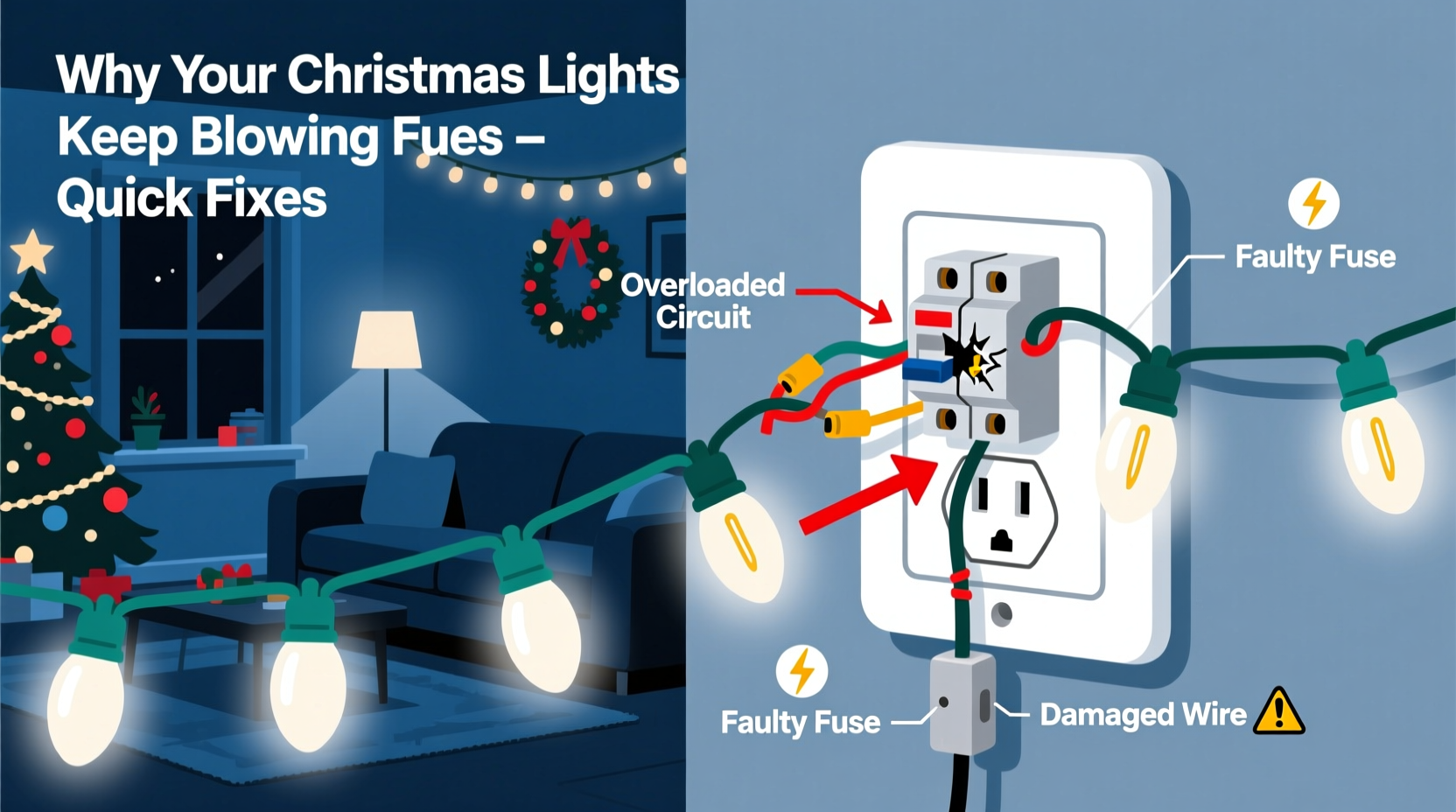
Most plug-in Christmas light strands come with two tiny fuses housed inside the male plug. These fuses act as built-in circuit breakers, cutting off power when excessive current flows through the wires. They’re typically rated between 3 and 5 amps and are designed to fail before the wiring overheats, preventing fire hazards.
When one or both fuses blow, the entire strand goes dark. Replacing them with identical-rated fuses (usually included as spares in the plug) often restores function—but if the new fuses blow immediately or shortly after, there’s an unresolved problem in the system.
“Fuses are sacrificial components—they’re meant to fail first to protect everything else. Repeated failure means something downstream is drawing too much current.” — Mark Reynolds, Electrical Safety Consultant
It's important not to bypass or replace fuses with higher amperage ratings. Doing so defeats their protective purpose and increases the risk of melted wires, damaged outlets, or even electrical fires.
Common Causes of Blown Fuses in Light Strands
Repeated fuse failures rarely stem from a single cause. Instead, multiple factors often combine to create conditions that exceed the fuse’s capacity. Below are the most frequent culprits:
- Overloading the Circuit: Connecting too many light strands together exceeds the manufacturer’s recommended “maximum connectable” limit, increasing current draw beyond safe levels.
- Damaged or Pinched Wires: Cracks, cuts, or crushed insulation expose conductors, leading to short circuits that trigger immediate fuse failure.
- Mismatched Bulbs or Aftermarket Replacements: Using bulbs with higher wattage than specified alters resistance and increases heat and current flow.
- Moisture Intrusion: Water entering sockets or connectors creates unintended current paths, especially in outdoor setups exposed to rain or snow.
- Faulty Plugs or Outlets: Corroded contacts, loose prongs, or worn outlets generate resistance and heat, distorting normal current flow.
- Aged or Degraded Wiring: Older light sets develop brittle insulation and internal wire corrosion, increasing the chance of shorts.
Step-by-Step Troubleshooting Guide
If your Christmas lights keep blowing fuses, follow this systematic approach to identify and resolve the root cause:
- Unplug Everything Immediately – Safety first. Never work on live circuits.
- Inspect the Fuse(s) – Open the fuse compartment in the plug. Use a magnifying glass to examine the metal filament. If it’s broken or blackened, the fuse has blown.
- Replace With Correct Fuses Only – Use only fuses with the same voltage and amperage rating (typically 3A or 5A, 125V). Never substitute with household fuses.
- Check for Physical Damage – Run your hands along the entire length of the wire. Look for cuts, kinks, melted insulation, or cracked sockets.
- Examine All Bulbs – Remove each bulb and inspect for darkening, bent filaments, or corroded bases. Replace any questionable bulbs with exact manufacturer-specified replacements.
- Test Individual Sections (if possible) – Some modern strands have segmented circuits. Test each section separately by powering them individually to isolate faulty segments.
- Verify Power Source – Plug the strand into a different outlet on a separate circuit. Avoid using extension cords initially to rule out voltage drop or poor connections. <8> Limit Daisy-Chaining – Disconnect all other strands. Test the problematic set alone. If it works, reconnect others one at a time until the fault reappears.
- Use a Multimeter (Optional) – Set to continuity mode and test across the fuse holder or along the wire for shorts. A beep where there shouldn't be indicates a short circuit.
This methodical process eliminates guesswork and ensures you address actual faults rather than symptoms.
Do’s and Don’ts When Handling Blown Fuses
| Do’s | Don’ts |
|---|---|
| Use only manufacturer-recommended replacement fuses. | Never use aluminum foil or nails to bypass a fuse. |
| Store lights carefully in dry containers after the season. | Don’t yank lights off trees or railings—this damages wires. |
| Label strands with year and condition for tracking. | Don’t mix old and new light sets on the same run. |
| Inspect every strand annually before use. | Don’t plug indoor lights into outdoor outlets without weatherproofing. |
| Keep spare fuses and bulbs on hand. | Don’t ignore flickering or intermittent operation—it precedes failure. |
Real-World Example: A Case of Repeated Fuse Failure
John, a homeowner in Vermont, installed his usual 10-string icicle light setup along his roofline each December. One year, the fuses blew within minutes of plugging in—even after replacement. He assumed the lights were defective and bought a new set, only for the same thing to happen.
After consulting an electrician, he discovered the real issue: moisture had seeped into the end connector of the last strand due to improper sealing. The water created a low-resistance path between conductors, causing a short circuit. Additionally, John had unknowingly exceeded the maximum connectable load by linking 12 strands instead of the recommended 5.
The solution involved replacing the damaged end plug, reducing the chain to five sets, and using a GFCI-protected outdoor outlet. Since then, his display has worked flawlessly for three consecutive years.
Prevention Checklist for Long-Term Reliability
To avoid future fuse issues, adopt these proactive habits:
- ✅ Inspect all light strands for damage before installation each year.
- ✅ Replace missing or worn fuses during storage season—not when needed.
- ✅ Follow the manufacturer’s “max connectable” limit strictly.
- ✅ Use LED lights where possible—they consume less power and generate less heat.
- ✅ Invest in timers or smart plugs to reduce runtime and thermal stress.
- ✅ Store lights on reels or cardboard forms to prevent tangling and wire strain.
- ✅ Keep original packaging with specifications and spare parts.
- ✅ Upgrade older incandescent sets over 5 years old—wiring degrades over time.
“LED Christmas lights draw up to 90% less current than incandescent ones. Switching reduces fuse stress significantly.” — National Fire Protection Association (NFPA) Holiday Safety Bulletin
Frequently Asked Questions
Can I use a car fuse instead of the one in my Christmas lights?
No. Automotive fuses are physically and electrically incompatible. Christmas light fuses are low-voltage, slow-blow types designed for delicate circuits. Using a car fuse could result in delayed tripping and overheating.
Why do my fuses blow only when it rains?
Moisture likely penetrates a damaged socket, connector, or cracked wire insulation, creating a short circuit. Check all outdoor connections and seal them with dielectric grease or waterproof covers.
Is it safe to keep replacing blown fuses?
Only if the underlying issue is resolved. Continuously replacing fuses without diagnosing the cause increases fire risk. If a fuse blows twice in succession, retire the strand.
Final Thoughts and Call to Action
Blown fuses in Christmas light strands are more than a seasonal annoyance—they’re indicators of potential electrical hazards. By understanding how fuses function, identifying common failure points, and applying consistent maintenance practices, you can enjoy a safe, reliable, and radiant holiday display year after year.
Don’t wait until the night before guests arrive to discover your lights won’t stay on. Take inventory of your current light collection, perform inspections now, and upgrade outdated sets. Your future self—and your peace of mind—will thank you when the holidays roll around again.




 浙公网安备
33010002000092号
浙公网安备
33010002000092号 浙B2-20120091-4
Comments
No comments yet. Why don't you start the discussion?