
Bringing a fresh Christmas tree into your home is one of the most cherished holiday traditions. The scent of pine, the soft glow of lights through its branches—there’s nothing quite like it. But if your tree starts shedding needles within three days, turning brittle and brown before the festivities even begin, something has gone wrong. A healthy tree should last four weeks or more with proper care. When it dries out prematurely, it’s not just disappointing—it can also be a fire hazard. Understanding why this happens and knowing how to respond quickly can save your tree and restore the magic of the season.
The Science Behind Tree Hydration
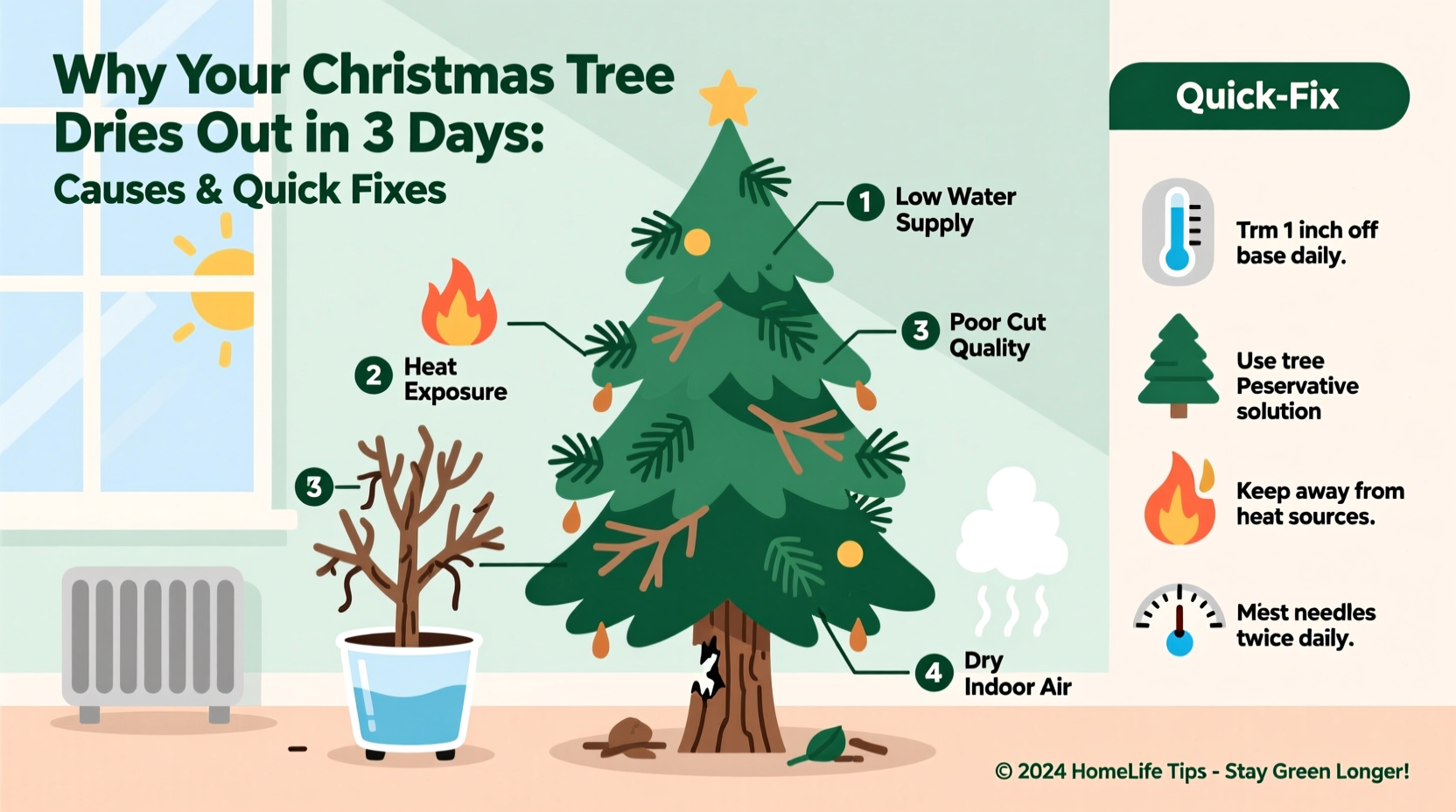
Evergreen trees like firs, spruces, and pines continue to respire after being cut. Their cells still function, drawing water up through the trunk to keep needles plump and green. This process relies on capillary action: water moves from the base of the trunk upward through microscopic tubes called xylem. For this system to work, two conditions must be met: a clean, unobstructed cut at the base of the trunk and consistent access to water.
When either condition fails, the tree cannot absorb moisture efficiently. Within hours of being cut, the exposed stump begins to seal over with sap, especially in species like Fraser fir or balsam fir. Once that seal forms, water uptake drops dramatically—even if the tree is later placed in a stand. That’s why timing and preparation are critical.
“Once a cut surface seals, it’s like trying to drink through a clogged straw. No amount of water will help unless you make a fresh cut.” — Dr. Laura Thompson, Arborist and Holiday Tree Specialist, University of Vermont Extension
Top 5 Causes of Rapid Drying
Several factors contribute to early dehydration. Some are preventable; others stem from simple oversight. Here are the most common culprits behind a tree that dries out in just three days:
- Delayed or improper cutting: If the bottom of the trunk wasn’t freshly cut before placing it in the stand, or if it sat for more than six hours without water, absorption may have already failed.
- Dry indoor environments: Central heating reduces humidity significantly. Indoor air during winter often drops below 30% relative humidity, accelerating moisture loss from needles.
- Inadequate watering: Many stands hold less than a quart of water—insufficient for a large tree that can drink up to a gallon per day initially.
- Heat sources nearby: Placing the tree near radiators, fireplaces, or vents increases transpiration, causing needles to dry out faster.
- Poor species selection: Some trees, like Scotch pine, tend to retain moisture better than others, such as Colorado blue spruce, which dries faster under suboptimal conditions.
Quick Fixes to Revive a Drying Tree
If your tree is already showing signs of stress—brittle branches, excessive needle drop, dry bark—don’t give up yet. Immediate action can sometimes reverse early dehydration.
Step-by-Step Recovery Plan
- Remove the tree from its stand carefully. Place it safely outside or in a garage to avoid mess.
- Re-cut the base with a handsaw or pruning saw. Make a straight, horizontal cut about ½ inch from the original. Avoid angled cuts—they reduce surface area for water uptake.
- Place the trunk immediately into a bucket of warm water. Warmth helps open the xylem channels. Let it soak for at least two hours before returning it to the stand.
- Use a larger-capacity stand. Ensure it holds at least one quart of water for every inch of trunk diameter. Refill daily—don’t let the reservoir run dry.
- Add commercial tree preservatives sparingly. While plain water works best, some studies show that certain additives (like those with sugars and biocides) can extend freshness by a few days. Avoid DIY mixes with aspirin, bleach, or soda—these often do more harm than good.
- Relocate the tree away from heat sources. Move it at least 6 feet from radiators, vents, or fireplaces.
- Boost ambient humidity. Use a cool-mist humidifier nearby or lightly mist the branches once a day with room-temperature water (not too heavily—excess moisture encourages mold).
Real Example: The Johnson Family’s Near-Loss Tree
The Johnsons bought a 7-foot noble fir on a Friday evening. By Sunday morning, needles were littering the floor. Alarmed, they checked the stand—it was bone dry. They had forgotten to refill it after setup. Following emergency advice from their local nursery, they removed the tree, made a fresh cut, soaked the base overnight in a plastic tub, and returned it to a larger stand. They also began using a humidifier in the living room. Within 48 hours, needle drop slowed dramatically. The tree remained green and fragrant through New Year’s Eve—proving that timely intervention works.
Prevention Checklist: How to Keep Your Tree Fresh All Season
Prevention is always better than cure. Follow this checklist when selecting and caring for your tree:
- ✅ Choose a fresh tree: Shake the branch gently—fewer than 10–15 falling needles indicates freshness.
- ✅ Cut the trunk fresh: Do this yourself or confirm the vendor did it within 4–6 hours before transport.
- ✅ Get it into water within 6 hours of cutting.
- ✅ Use a stand that holds enough water (e.g., 1-gallon capacity for a 7-foot tree).
- ✅ Check water levels twice daily for the first week.
- ✅ Keep the tree away from heat sources and direct sunlight.
- ✅ Maintain indoor humidity above 40% if possible.
- ✅ Avoid hanging heavy ornaments on outer branches—they increase stress and breakage.
Do’s and Don’ts: Common Myths vs. Best Practices
| Do’s | Don’ts |
|---|---|
| Cut ½ inch off the base before placing in stand | Use an old, sealed cut—this blocks water absorption |
| Refill water daily, especially first 7 days | Assume weekly refills are sufficient |
| Keep tree away from heating vents and fireplaces | Place tree next to a radiator “for ambiance” |
| Mist branches lightly if air is very dry | Soak the tree heavily—can promote fungal growth |
| Use LED lights—they emit less heat | String old incandescent bulbs close to foliage |
| Dispose of tree responsibly before it becomes a hazard | Burn it indoors or leave it standing past January 15 |
Frequently Asked Questions
How much water should my tree drink each day?
A freshly cut tree can consume up to a gallon of water in the first 24 hours. After that, consumption typically decreases to about a quart per day. Never assume the stand is full—check it twice daily, especially during the first week. Even a few hours without water can cause the cut to seal.
Can I add anything to the water to help the tree last longer?
Most experts recommend plain tap water. While commercial tree preservatives exist, research from North Carolina State University shows minimal benefit over water alone. Avoid home remedies like sugar, aspirin, or vodka—these can encourage bacterial growth that clogs the trunk and reduces water uptake.
Is there a type of Christmas tree that lasts the longest?
Yes. Species vary widely in longevity. The longest-lasting include:
- Noble Fir – excellent needle retention, slow drying
- Frasier Fir – aromatic, holds water well
- Balsam Fir – classic scent, good moisture retention
When It’s Too Late: Knowing When to Let Go
Sometimes, despite your best efforts, a tree cannot be saved. If more than 50% of the needles are brown, the trunk is cracked, or the scent has turned musty, it’s time to remove it. A severely dried tree poses a fire risk, especially with lights and decorations still attached. Most municipalities offer curbside pickup or recycling programs in early January. Consider replacing it with a potted living tree you can plant afterward—or switch to a high-quality artificial tree for future years.
Conclusion: A Fresh Tree Is Within Reach
Your Christmas tree shouldn’t dry out in three days. With the right knowledge, you can prevent premature dehydration and enjoy a lush, fragrant centerpiece throughout the holidays. From making a fresh cut to maintaining daily water levels and controlling indoor climate, small actions yield big results. Whether you're reviving a struggling tree or preparing for next year, these strategies ensure your holiday tradition stays vibrant and safe.




 浙公网安备
33010002000092号
浙公网安备
33010002000092号 浙B2-20120091-4
Comments
No comments yet. Why don't you start the discussion?