
A leaning Christmas tree can be more than just a minor eyesore—it’s a safety hazard, a frustration during setup, and a recurring problem for many households. Despite careful trimming, perfect placement, and hours spent decorating, the tree slowly tilts, threatening ornaments and stability alike. The good news is that most causes of a leaning tree are preventable and fixable with the right knowledge and tools.
This guide breaks down the common reasons behind an unstable tree, offers practical solutions you can apply immediately, and shares expert-backed methods to ensure your tree stays upright from setup to takedown. Whether you have a real fir or an artificial model, these insights will help you maintain a balanced, beautiful centerpiece for your holiday celebrations.
Common Causes of a Leaning Christmas Tree
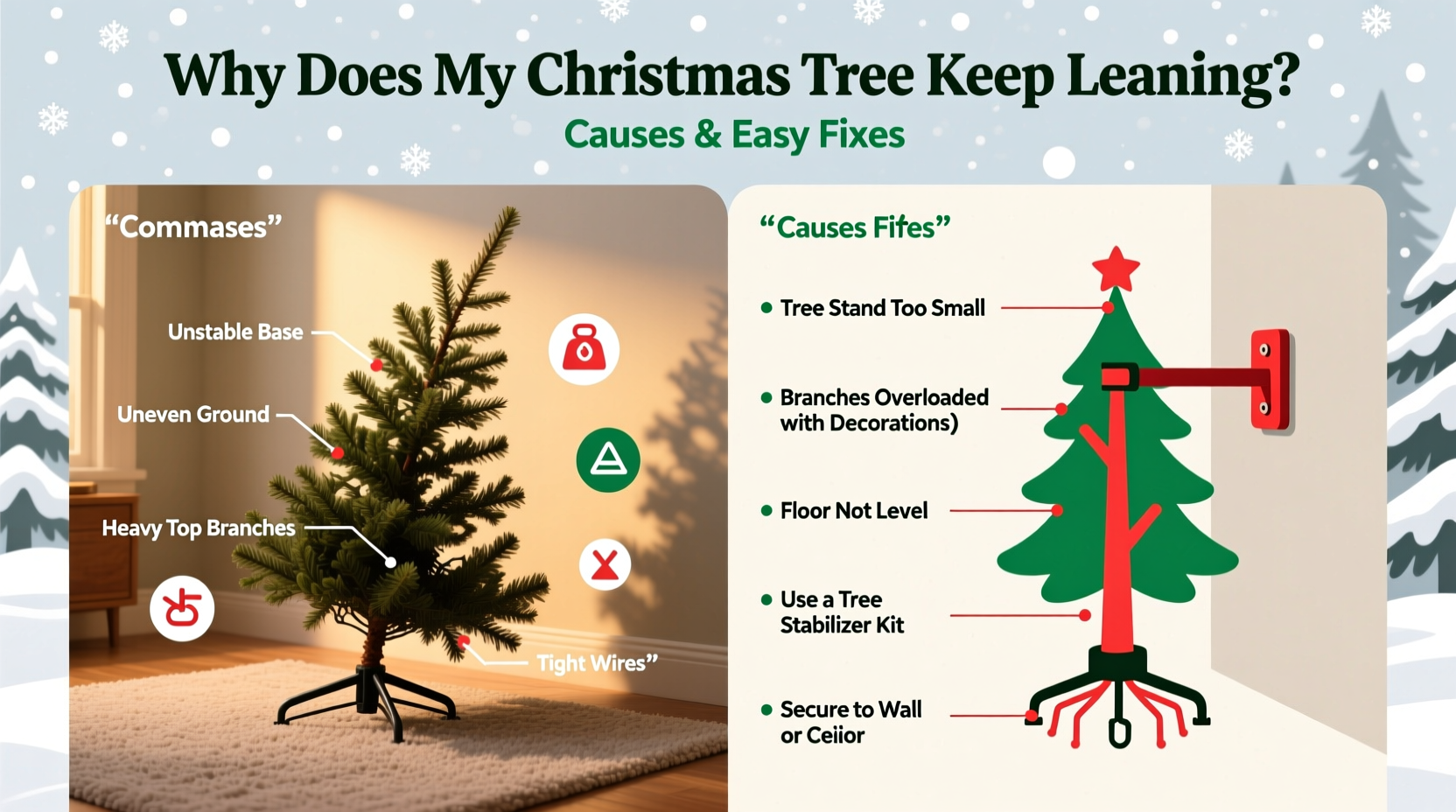
The first step in solving any problem is understanding its root cause. A leaning tree rarely results from a single issue—more often, it’s a combination of poor setup, environmental factors, and equipment flaws. Below are the most frequent culprits:
- Unbalanced tree stand: Many stands do not distribute weight evenly, especially if the base is warped or damaged.
- Improper trunk cut (for real trees): A jagged or angled cut prevents the trunk from sitting flush in the stand, leading to instability.
- Uneven floor surface: Carpets, hardwood slopes, or tiles with slight inclines can tilt the entire setup.
- Overloading one side with decorations: Heavy ornaments, lights, or garlands concentrated on one side create torque that pulls the tree off-center.
- Poor water absorption (real trees): As a real tree dries out, its trunk shrinks slightly, loosening the grip in the stand.
- Low-quality or undersized stand: Stands not rated for your tree’s height or weight are prone to tipping.
Step-by-Step Guide to Stabilizing Your Tree
Correcting a leaning tree isn’t complicated—but doing it right requires attention to detail. Follow this timeline to ensure maximum stability from the moment you set up your tree.
- Assess the floor surface: Place a level tool or smartphone app on the ground where the tree will go. If the surface is uneven by more than 1/8 inch over 12 inches, consider using shims or relocating the tree.
- Cut the trunk straight (real trees only): Use a handsaw to make a fresh, horizontal cut about 1–2 inches from the bottom. This improves water uptake and ensures flat contact with the stand.
- Inspect and adjust the stand: Tighten all screws and bolts. Test each support arm—when closed, they should press firmly into the trunk without wobbling.
- Insert the tree and center it: Have a second person hold the tree vertically while you secure it. Use a plumb line or smartphone level to verify alignment before tightening.
- Add water (real trees): Fill the reservoir immediately and check daily. A well-hydrated tree maintains structural integrity and resists shrinkage.
- Decorate symmetrically: Alternate heavy and light ornaments on opposite sides. Avoid clustering large items at the top or outer edges.
- Recheck after 24 hours: Trees often settle within the first day. Loosen, re-center, and retighten the stand if needed.
Do’s and Don’ts: Tree Stability Checklist
Use this checklist as a quick reference when setting up or troubleshooting your tree. Print it or save it on your phone for easy access.
| Do | Don’t |
|---|---|
| Use a stand rated for your tree’s height and species | Use a stand designed for smaller trees |
| Make a fresh, straight cut on real tree trunks | Leave the original angled cut from harvesting |
| Check water levels daily (real trees) | Let the reservoir run dry even once |
| Distribute decorations evenly by weight and volume | Hang all heavy ornaments on one side |
| Secure tall trees to a wall anchor or ceiling hook | Rely solely on the stand for stability in high-traffic areas |
Expert Insight: What Arborists and Decorators Recommend
Professionals who install and maintain holiday trees emphasize proactive measures over reactive fixes. Their advice combines horticultural knowledge with decades of hands-on experience.
“Most leaning trees fail due to improper hydration and inadequate anchoring. A real tree can lose up to a quart of water per day—neglecting refills leads to shrinkage and instability.” — Dr. Laura Simmons, Urban Forester & Holiday Tree Consultant
“Even artificial trees need structural checks. Over time, hinges wear out, and poles loosen. Inspect every component annually like you would winter tires.” — Marcus Reed, Commercial Holiday Display Designer
These insights highlight that both real and artificial trees require maintenance beyond simple assembly. Treating your tree as a dynamic structure—not just a decoration—makes all the difference in longevity and safety.
Real-Life Example: The Johnson Family’s Fix
The Johnsons in Minneapolis had struggled with their 7-foot Fraser fir leaning toward the living room window for three consecutive years. Each December, the tree would start upright but gradually tilt within days, forcing them to dismantle half the decorations to reposition it.
After consulting a local nursery, they discovered two key issues: their stand’s support screws were stripped, and the tree’s trunk had a residual angle from the farm cut. They replaced the stand with a heavy-duty model featuring rubber-jaw clamps and made a fresh horizontal cut at home. They also began checking water twice daily and used a smartphone level app during setup.
Result: The tree remained perfectly vertical for 32 days—longer than ever before. “We finally figured out it wasn’t bad luck,” said Sarah Johnson. “It was just small details we kept overlooking.”
Advanced Fixes for Persistent Leaning
If basic adjustments aren’t enough, consider these stronger stabilization methods—especially useful for tall trees, high-traffic homes, or pets and children nearby.
Wall Anchoring System
For trees over 6 feet, attach soft nylon cords from the upper third of the trunk to wall hooks. Use screw-in anchors into studs for maximum strength. Keep tension minimal—just enough to prevent sway.
Weighted Base Enhancement
Add sandbags or water-filled containers around the base of the stand. Conceal them under a tree skirt. This lowers the center of gravity and resists tipping forces.
Double-Stand Technique (Artificial Trees)
Some wide-bottom artificial trees come with secondary support legs. Deploy them fully and ensure all contact points touch the floor. For older models, consider building a custom wooden platform to level the base.
Trunk Reinforcement (Real Trees)
If the trunk is soft or splitting, wrap a wide vinyl-coated cable tie around it just above the stand. This acts as a collar to prevent compression and lateral movement. Do not overtighten—allow room for natural expansion.
Frequently Asked Questions
Can I fix a leaning tree without taking it down?
Yes, in many cases. Gently pull the tree back to center and retighten the stand screws. Add temporary guy lines (like fishing line) from the top to ceiling hooks to hold it steady while adjusting. Remove once stable.
Why does my artificial tree lean even when assembled correctly?
Over time, the central pole may warp or the hinge joints in the branches may degrade, shifting the center of gravity. Inspect each section for bends or warping. Rotate sections to balance weight distribution or replace faulty parts.
Is it safe to use adhesives or nails to secure the tree?
No. Nails damage floors and walls, and permanent adhesives can void warranties or harm finishes. Use only non-invasive methods like weighted bases, soft ties, or adjustable stands. Safety should never compromise property integrity.
Final Tips for a Stable, Safe Holiday Display
Preventing a leaning Christmas tree starts before you bring it indoors. Choose a high-quality stand with positive reviews for stability. Measure your space and avoid placing the tree near vents, fireplaces, or doors that create air currents. Educate family members—especially children—to avoid hanging on branches or bumping the base.
For real trees, remember: hydration equals stability. A freshly cut tree absorbs water best in the first 24 hours. Never let the reservoir drop below the base of the trunk. For artificial trees, store sections in labeled bins to prevent misassembly, which can throw off balance.
Finally, perform weekly stability checks. Push gently on the trunk at shoulder height. If it moves more than an inch, investigate and correct immediately.
Conclusion: Stand Tall This Season
Your Christmas tree deserves to stand proudly—not propped up or perpetually crooked. With the right setup, consistent care, and a few smart modifications, you can eliminate leaning for good. These fixes take minutes but deliver weeks of worry-free enjoyment.
Apply these strategies this year and transform your holiday display from frustrating to flawless. Share your success story, pass along tips to friends, and enjoy a safer, more beautiful season.




 浙公网安备
33010002000092号
浙公网安备
33010002000092号 浙B2-20120091-4
Comments
No comments yet. Why don't you start the discussion?