
Bringing home a Christmas tree is one of the most cherished holiday traditions. The scent of pine, the soft glow of lights through the branches—everything feels magical. But that magic can fade fast when you notice your tree shedding needles just days after setup. If your Christmas tree is losing needles rapidly, it’s not necessarily bad luck. More often than not, it's a sign of environmental stress, improper care, or an already-declining tree.
Needle drop in evergreens isn’t always avoidable—after all, trees are cut from their root systems and placed in less-than-ideal conditions. However, excessive shedding within the first few days is a red flag. With the right knowledge, you can diagnose the issue, apply corrective measures, and significantly extend your tree’s freshness throughout the holiday season.
Understanding Why Fresh Trees Shed Needles
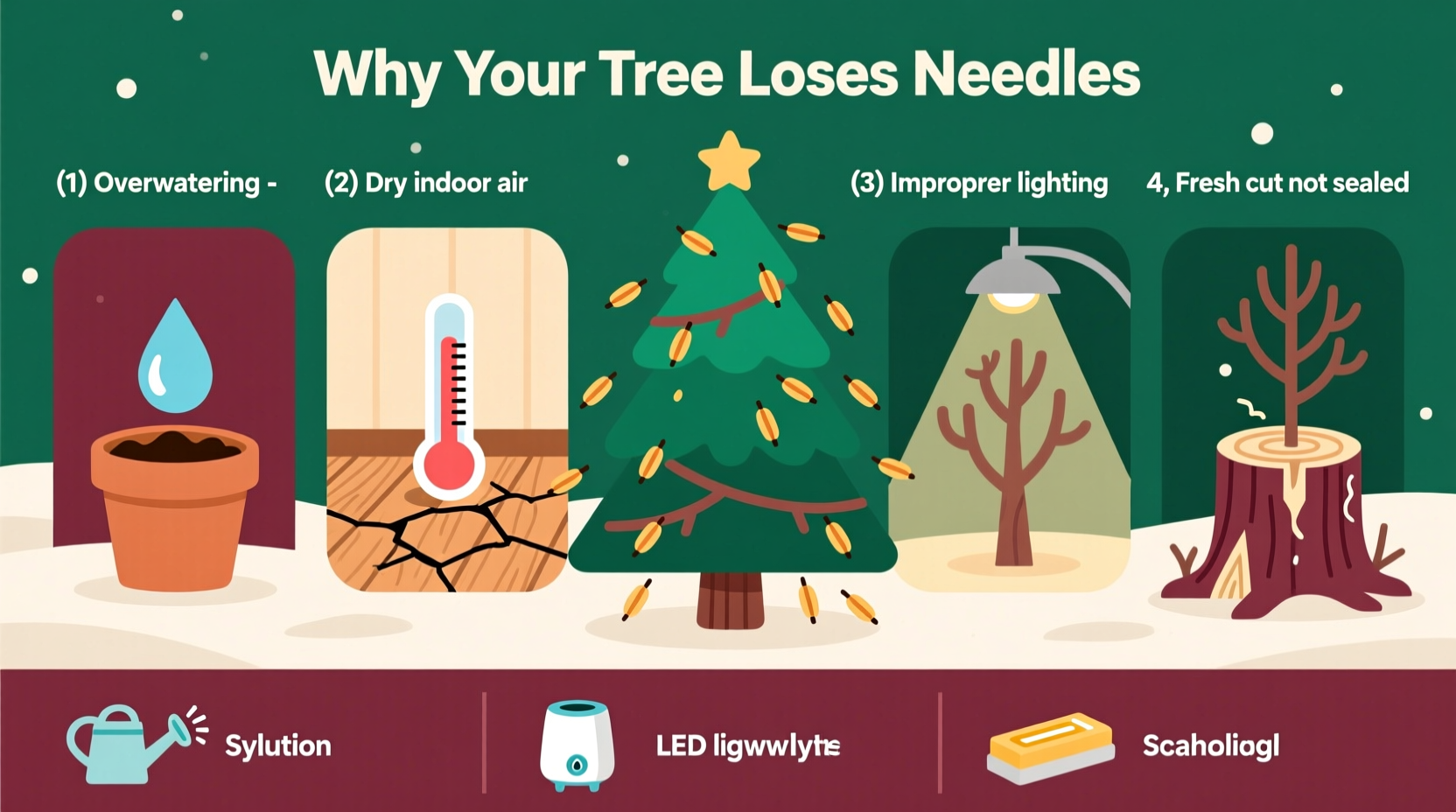
Evergreen trees like firs, spruces, and pines naturally retain their needles for several years while growing. Once cut, however, they begin a slow process of dehydration and deterioration. A healthy tree should last four to six weeks indoors with proper care. When needle loss happens within days, something has accelerated this decline.
The primary reason trees shed needles early is moisture loss. Evergreens rely on constant water uptake to stay hydrated. Without roots, they depend entirely on the cut stem absorbing water from a stand. If that absorption is blocked or insufficient, the tree dries out quickly, causing browning and needle drop.
Other factors include temperature extremes, low humidity, physical damage during transport, or purchasing a tree that was already stressed before being cut.
“Trees begin to deteriorate the moment they’re cut. The key to longevity is minimizing moisture loss from the start.” — Dr. Laura Simmons, Arborist and Holiday Tree Specialist, University of Vermont Extension
Common Causes of Rapid Needle Loss (And How to Fix Them)
Not all Christmas trees are created equal—and neither are the environments they’re placed in. Below are the most frequent culprits behind premature needle shedding, along with practical solutions.
1. Delayed Watering After Cutting
When a tree is cut, its stump forms a seal within hours if not placed in water. This seal prevents water absorption, essentially starving the tree. Many people buy pre-cut trees from lots where they’ve been sitting for days without water.
This removes the sealed layer and opens up the vascular system, allowing immediate water uptake. If you can’t set up the tree right away, store it horizontally in a bucket of water until ready.
2. Insufficient Water in the Stand
Christmas trees drink surprising amounts of water—especially in the first few days. A large tree can consume over a quart per day. If the water level drops below the cut, the stump reseals, and hydration stops.
- Check water levels twice daily, especially during the first week.
- Use a stand with a reservoir capacity of at least one gallon for full-sized trees.
- Never let the stand go dry, even for a few hours.
3. Indoor Heat and Dry Air
Most homes are too warm and dry for a living tree. Heating systems reduce indoor humidity to 10–20%, far below the 40–50% ideal for tree health. Dry air pulls moisture from needles faster than the tree can replace it.
Solution: Increase ambient humidity with a humidifier near the tree. Avoid placing the tree near heat sources like radiators, fireplaces, or vents. Even a few feet of distance can make a difference.
4. Poor Tree Species Selection
Not all species hold their needles equally well. Some, like the White Pine or Colorado Blue Spruce, are prone to drying out quickly indoors. Others, like the Fraser Fir or Balsam Fir, are known for excellent needle retention.
| Tree Type | Needle Retention | Best For |
|---|---|---|
| Fraser Fir | Excellent | Warm homes, long display |
| Balsam Fir | Very Good | Aromatic appeal, moderate climates |
| Noble Fir | Good | Heavy ornamentation |
| White Pine | Poor | Cool rooms, short-term use |
| Colorado Spruce | Fair | Dry ornaments, infrequent watering |
Choose wisely based on your home environment and expected display duration.
5. Physical Damage During Transport
Rough handling, dragging, or dropping the tree can damage the trunk and disrupt water-conducting tissues. Even minor cracks near the base can impair absorption.
To minimize risk, have the seller net-wrap the tree securely. Carry it horizontally in your vehicle, supported at multiple points. Never drag it by the trunk.
Step-by-Step Guide to Reviving and Maintaining Your Tree
If your tree is already shedding, don’t give up yet. Follow this timeline to assess, revive, and maintain it.
- Day 1 – Immediate Action
Make a fresh ½-inch cut at the base. Place immediately into a filled stand. Use room-temperature water—it absorbs faster than cold. - Day 1–3 – Monitor Water Levels
Check every 12 hours. Refill as needed. Do not let water drop below the cut. - Day 2 – Assess Hydration
Bend a few branches. Healthy needles should be flexible, not brittle. Lift a branch—if many needles fall with light shaking, the tree may be too far gone. - Day 3–7 – Optimize Environment
Move away from heat sources. Use a humidifier. Consider turning down the thermostat at night. - Ongoing – Daily Checks
Top off water, inspect for mold or algae in the stand, clean as needed. Remove lights before refilling to avoid electrical hazards.
Some people add substances like sugar, aspirin, or commercial preservatives to the water. While these may help slightly, plain water remains the most effective and safest option. Additives can promote bacterial growth, which clogs the stem and reduces absorption.
Tips to Maximize Needle Retention From Day One
Prevention is always better than revival. These best practices ensure your tree starts strong and stays fresh.
- Buy locally and freshly cut. Trees sold at local farms or nonprofit lots are often cut within days of sale, unlike big-box stores that may carry stock for weeks.
- Shake the tree before purchase. Reputable sellers will shake it over a tarp to remove loose, dead needles. If dozens fall off, consider another tree.
- Look for signs of freshness. Needles should be pliable, not dry or crumbly. Bark should be moist, not cracked. Lift a branch—it should spring back, not droop.
- Transport with care. Keep it covered and horizontal. Avoid leaving it in a hot car for extended periods.
- Set up quickly. Get the tree in water within 4–6 hours of cutting or purchase.
Real Example: The Case of the Dying Douglas Fir
Julie from Columbus, Ohio, bought a Douglas Fir from a roadside lot two weeks before Christmas. By day three, the floor under the tree was covered in brown needles. She hadn’t made a fresh cut, assuming the lot had done it. The stand held only half a gallon, and she checked water once a day.
After reading about proper care, Julie took action: she recut the base, moved the tree away from a nearby radiator, upgraded to a larger stand, and began checking water twice daily. Within 48 hours, needle drop slowed dramatically. Though the tree never fully recovered its original lushness, it stabilized and lasted through New Year’s.
Her experience highlights how multiple small oversights—delayed cutting, undersized stand, poor placement—can combine to create rapid decline. Correcting even one factor can make a meaningful difference.
Do’s and Don’ts of Christmas Tree Care
Avoid common pitfalls with this quick-reference guide.
| Do | Don’t |
|---|---|
| Make a fresh cut before placing in water | Use a dull saw that crushes the trunk |
| Keep water level above the cut at all times | Let the stand go dry overnight |
| Place the tree away from heat sources | Put it next to a fireplace or vent |
| Use a humidifier to boost moisture | Rely on misting—ineffective and temporary |
| Buy a tree with good species-specific retention | Assume all evergreens perform the same indoors |
FAQ: Common Questions About Needle Loss
Is some needle drop normal?
Yes. All cut trees shed some interior needles—especially older ones deep within the branches. This is natural. Excessive shedding of green, outer needles within days is not.
Can I revive a completely dry tree?
Once a tree is fully dehydrated and brittle, revival is unlikely. Focus instead on prevention. If the tree still has flexible branches and hasn’t dropped more than 30% of needles, corrective steps may help slow further loss.
Does spraying the tree with water help?
Misting provides minimal benefit. It doesn’t replace internal hydration and evaporates quickly. It may slightly cool the surface but won’t prevent needle drop. Focus on root-level watering instead.
Final Checklist Before You Set Up Your Tree
Use this actionable checklist to ensure your tree gets the best possible start.
- ☐ Choose a species known for good needle retention (e.g., Fraser Fir)
- ☐ Buy within 7–10 days of display date
- ☐ Shake the tree to check for loose needles
- ☐ Make a fresh ½-inch cut before placing in stand
- ☐ Use a stand with at least 1-gallon capacity
- ☐ Fill stand immediately with room-temperature water
- ☐ Place tree away from heat sources and direct sunlight
- ☐ Check water twice daily for the first week
- ☐ Use a humidifier if indoor air is very dry
- ☐ Avoid hanging heavy ornaments on weak branches
Conclusion: Keep Your Tree Fresh and Festive All Season
Your Christmas tree shouldn’t turn into a needle-covered disaster by the weekend. With attention to detail and consistent care, you can enjoy a vibrant, fragrant centerpiece for weeks. The key lies in understanding that a cut tree is a living organism in survival mode—one that depends entirely on you for hydration and environmental stability.
Start with a fresh, well-chosen tree. Handle it gently. Prioritize water above all else. Adjust your home environment to support its needs, not work against them. Small efforts make a dramatic difference in longevity and appearance.




 浙公网安备
33010002000092号
浙公网安备
33010002000092号 浙B2-20120091-4
Comments
No comments yet. Why don't you start the discussion?