
It’s a familiar holiday heartbreak: You haul home a fragrant, full-foliaged Fraser fir or noble pine, spend hours trimming, watering, and decorating—only to wake up the next morning to a carpet of green needles and a brittle, dusty tree. When needle drop begins before Day Two, it’s not just disappointing—it’s a clear signal that something went wrong long before the first ornament was hung. This isn’t normal seasonal shedding; it’s acute stress response rooted in biology, logistics, and often, well-intentioned but misinformed care. Understanding the precise triggers—and applying targeted, evidence-based interventions—can transform your tree from a short-lived liability into a resilient centerpiece that holds its needles for four weeks or more.
The Biology Behind the Blitz: Why Trees Shed So Fast
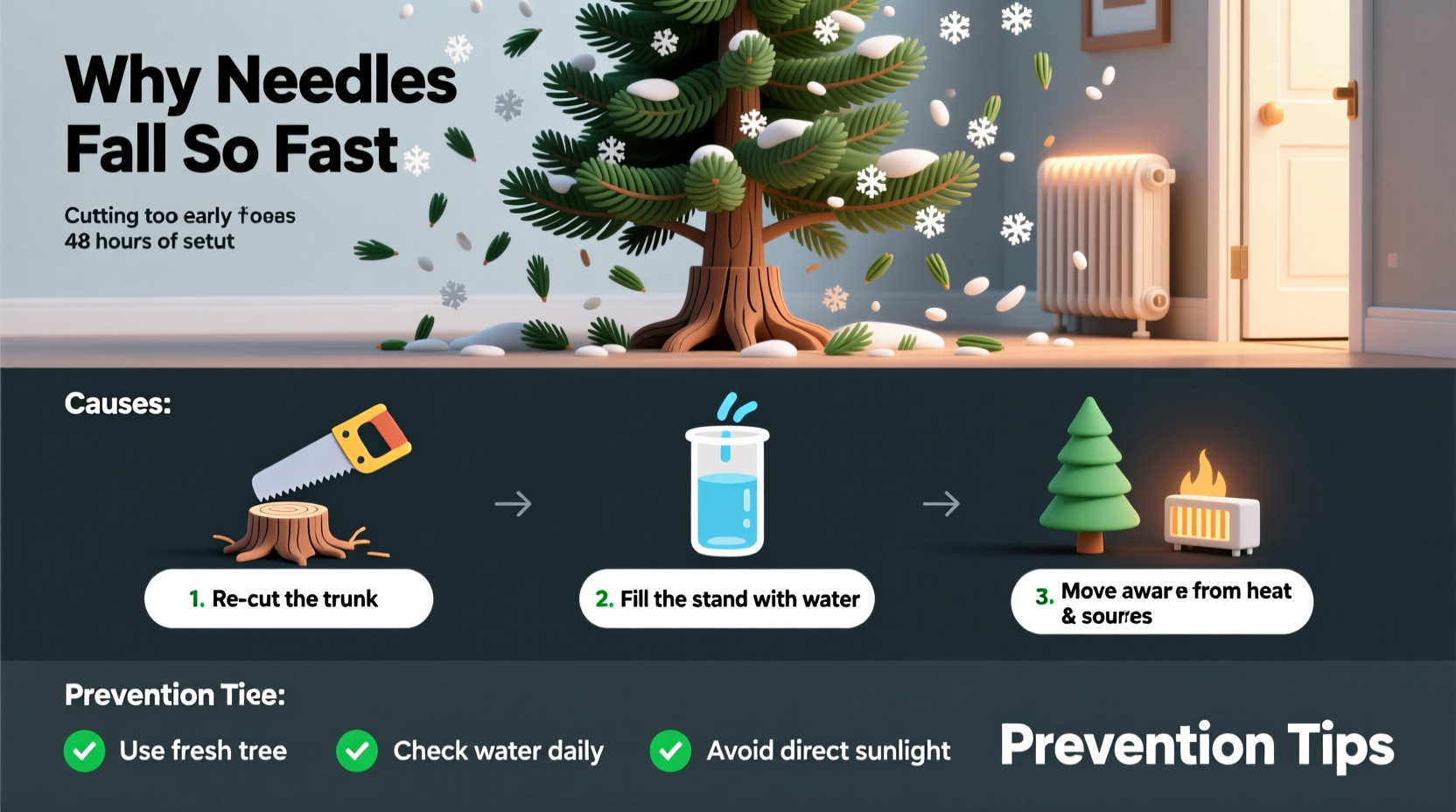
Christmas trees are conifers—evergreens adapted to conserve water and nutrients year-round. Their needles aren’t “designed” to fall off en masse. Instead, rapid shedding is an emergency response triggered when the tree perceives irreversible damage or severe physiological disruption. The key mechanism is abscission: a hormone-regulated process where cells at the base of each needle weaken and detach. In healthy, well-hydrated trees, this process remains suppressed. But when moisture loss exceeds uptake—or when cellular integrity is compromised—the tree accelerates abscission as a survival tactic: shedding foliage reduces surface area and water demand, buying time until conditions improve. If those conditions never arrive—due to dehydration, temperature shock, or vascular blockage—the tree essentially gives up, dropping needles in waves.
This explains why timing matters critically. A freshly cut tree has intact xylem (water-conducting tissue), but that tissue begins sealing over with resins and air bubbles within hours if not properly rehydrated. Once sealed, no amount of water in the stand will penetrate. That’s why the first 6–12 hours after cutting are decisive—not just for longevity, but for whether the tree ever truly “drinks” again.
Top 5 Causes of 48-Hour Needle Shed—and What They Really Mean
Most early shedding stems from one or more of these five interrelated causes. Crucially, they’re rarely random—they’re predictable outcomes of specific decisions made during selection, transport, and setup.
- Pre-cut dryness: Trees harvested days or weeks before sale, stored without refrigeration or misting, lose internal moisture before you even see them. Surface frost or a waxy sheen on needles? That’s evaporative loss already underway.
- Delayed first cut & water immersion: If your tree was cut more than 6 hours before placing it in water—or if the cut wasn’t fresh (i.e., you didn’t recut the base)—resin seals the xylem. No water enters. Ever.
- Warm indoor temperatures + low humidity: Homes averaging above 70°F (21°C) with humidity below 30% accelerate transpiration 3–5× faster than outdoor winter conditions. The tree dehydrates faster than its compromised vascular system can replenish.
- Contaminated or shallow water: Sap, debris, or algae in the reservoir clog the cut surface. Worse, if water depth is less than 2 inches below the cut, the exposed wood dries and seals—halting uptake permanently.
- Physical trauma during transport or setup: Dropping, dragging, or forcing the trunk into a tight stand fractures xylem vessels. One study found trees subjected to impact stress showed 40% higher needle loss in the first 48 hours—even with optimal watering.
What Works (and What Doesn’t): Evidence-Based Fixes
Myth-busting is essential here. Many widely repeated “solutions” lack empirical support—or actively worsen the problem.
| Intervention | Does It Work? | Why / Why Not |
|---|---|---|
| Adding sugar, aspirin, or commercial additives to water | No | Peer-reviewed studies (e.g., NC State Extension, 2021) show zero improvement in needle retention vs. plain water. Sugars promote bacterial growth, accelerating stem clogging. |
| Drilling holes in the trunk base | No | Creates lateral wounds that seal faster than the main cut. Reduces functional xylem area by up to 60%, worsening uptake. |
| Using warm water for initial hydration | No | Warm water increases sap flow temporarily—but also encourages microbial growth and doesn’t improve long-term absorption. Cold water (35–40°F) is optimal for slowing resin coagulation. |
| Recutting 1/2 inch off the base *immediately* before placing in water | Yes | Removes sealed tissue, exposing fresh xylem. Must be done within minutes of cutting and placed in water within 30–60 seconds. |
| Misting needles 2–3x daily | Yes (as supplemental support) | Reduces transpiration rate by 15–20% in controlled trials—most effective when combined with cool room temps and deep water. |
A Real-World Case Study: The Portland Fir Incident
In December 2022, a Portland family purchased a 7-foot Douglas fir from a reputable lot on a Friday afternoon. They admired its dense, blue-green needles and strong citrus scent. By Saturday evening, the floor around the tree was thick with fallen needles—over 200 visible on the rug alone. They’d followed standard advice: added aspirin to the water, kept the tree near a sunny window, and topped off the reservoir each morning.
An arborist consulted by the local extension office examined the tree and discovered three critical failures: First, the lot had cut the tree Tuesday morning—72 hours before purchase—with no refrigeration or misting. Second, the family hadn’t recut the base; the original cut was visibly resin-sealed and darkened. Third, their living room averaged 74°F with forced-air heating running constantly. The arborist performed a simple test: She recut 3/4 inch off the base, submerged it in cold water for 10 minutes, then moved the tree to a cooler (62°F), north-facing room with no direct heat sources. Within 24 hours, needle drop slowed to fewer than 10 per day. Over the next 21 days, total loss remained under 3%—well within normal seasonal range.
This case underscores a vital truth: Early shedding is rarely about the tree’s inherent quality. It’s almost always about the chain of care—and every link in that chain is actionable.
Your 48-Hour Rescue & Prevention Protocol
If your tree is already shedding heavily, act immediately—but understand: true recovery requires halting further damage, not reversing what’s already occurred. Follow this step-by-step sequence precisely.
- Assess viability (Day 0, Hour 0): Gently bend several needles. If they snap crisply like dry twigs, the tree is likely too far gone. If they bend without breaking, intervention may still succeed.
- Recut and rehydrate (within 15 minutes): Using a sharp handsaw, remove ¾ inch from the base. Place the trunk immediately into a bucket of cold tap water (not warmer than 40°F). Let soak for 4–6 hours—no exceptions. Do not add anything to the water.
- Relocate strategically (same day): Move the tree to the coolest room in your home (ideally 60–65°F), away from heat vents, fireplaces, radiators, and direct sunlight. Close doors to isolate the space.
- Optimize the stand (Day 0, evening): Fill the stand with at least 4 inches of cold water—ensuring the cut remains fully submerged at all times. Check water level twice daily; top off before it drops below 2 inches.
- Supplemental misting (Days 1–3): Use a clean spray bottle with cold water to mist branches lightly 2–3 times daily—especially in the morning and before bed. Avoid soaking ornaments or electrical cords.
“Needle retention is 80% determined before the tree leaves the lot. But the final 20%—the difference between 2 days and 25 days—is entirely in the consumer’s control through temperature management and immediate, proper hydration.” — Dr. Robert Kuserk, Senior Horticulturist, National Christmas Tree Association Research Division
Prevention Checklist: Before You Even Pick a Tree
Don’t wait until needles start falling. Build resilience from the start with this field-tested checklist:
- ✅ Select late in the season: Trees cut in mid-to-late November retain moisture longer than early cuts. Ask the lot when the tree was harvested.
- ✅ Test needle flexibility: Grasp a branch and slide your hand toward the tip. Healthy needles stay attached; weak ones detach easily.
- ✅ Check trunk moisture: Scratch bark near the base with your thumbnail. Green, damp cambium = good. Brown, dry, or cracked = avoid.
- ✅ Transport covered and upright: Use a tarp or old sheet to shield from wind and sun during transit. Never drag or lean horizontally.
- ✅ Prepare your stand ahead of time: Ensure reservoir holds at least 1 gallon of water and has a wide, stable base. Clean it thoroughly—remove old sap or mold.
- ✅ Plan your location: Identify the coolest, most humid room *before* bringing the tree in. Avoid kitchens, sunrooms, and rooms with ceiling fans.
FAQ: Your Most Pressing Questions Answered
Can I save a tree that’s already lost 30% of its needles in 24 hours?
Realistically, no. That level of loss indicates systemic vascular failure or extreme desiccation. The tree cannot recover sufficient hydraulic function. Remove it safely and replace it—applying the prevention checklist this time. Continuing to water it wastes resources and risks fire hazard from excessive dryness.
Does the species really matter—or is care everything?
Care is paramount, but species sets the ceiling. Fraser firs average 4–5 weeks needle retention with ideal care; Arizona cypress may last only 2–3 weeks even under perfect conditions. For reliability, prioritize Fraser fir, Balsam fir, or Nordmann fir—species with naturally high resin viscosity and slower abscission triggers.
Should I drill drainage holes in the bottom of my water stand?
No. Stands are designed to hold water, not drain it. Holes defeat the purpose and create spill hazards. If water overflows, you’re overfilling—or your tree isn’t drinking. Monitor consumption: A healthy 6-foot tree drinks 1–2 quarts daily. If your stand stays full for >24 hours, suspect a sealed cut or poor placement.
Conclusion: Your Tree Deserves Better Than a 48-Hour Lifespan
A Christmas tree isn’t disposable decor—it’s a living organism that spent 8–12 years growing in soil, sun, and snow. Its abrupt collapse in your living room isn’t inevitable. It’s a symptom of disrupted physiology, often preventable with knowledge, intention, and timely action. The science is clear: rapid needle drop signals distress—not destiny. By recognizing the warning signs before purchase, executing the critical first cut and hydration window, and maintaining cool, humid conditions, you reclaim control over the experience. You transform frustration into quiet pride as your tree stands full and fragrant through Advent, Christmas Eve, and well into the New Year. That resilience isn’t magic. It’s horticultural literacy applied with care.




 浙公网安备
33010002000092号
浙公网安备
33010002000092号 浙B2-20120091-4
Comments
No comments yet. Why don't you start the discussion?