
That first whiff of a freshly cut Christmas tree—crisp, resinous, unmistakably festive—is one of winter’s most evocative sensory experiences. Within days, however, many homeowners notice the aroma softening: less sharp, less green, sometimes barely detectable by Day 5 or 6. It’s not imagination. The fading scent is rooted in plant physiology, environmental conditions, and common care oversights—not poor tree selection or bad luck. Understanding *why* it happens empowers you to intervene effectively. More importantly, revival doesn’t require synthetic fragrances, aerosol sprays, or gimmicks. Real, lasting fragrance restoration comes from supporting the tree’s natural chemistry—through hydration, temperature management, and gentle, botanical enhancements.
The Science Behind the Fading Scent
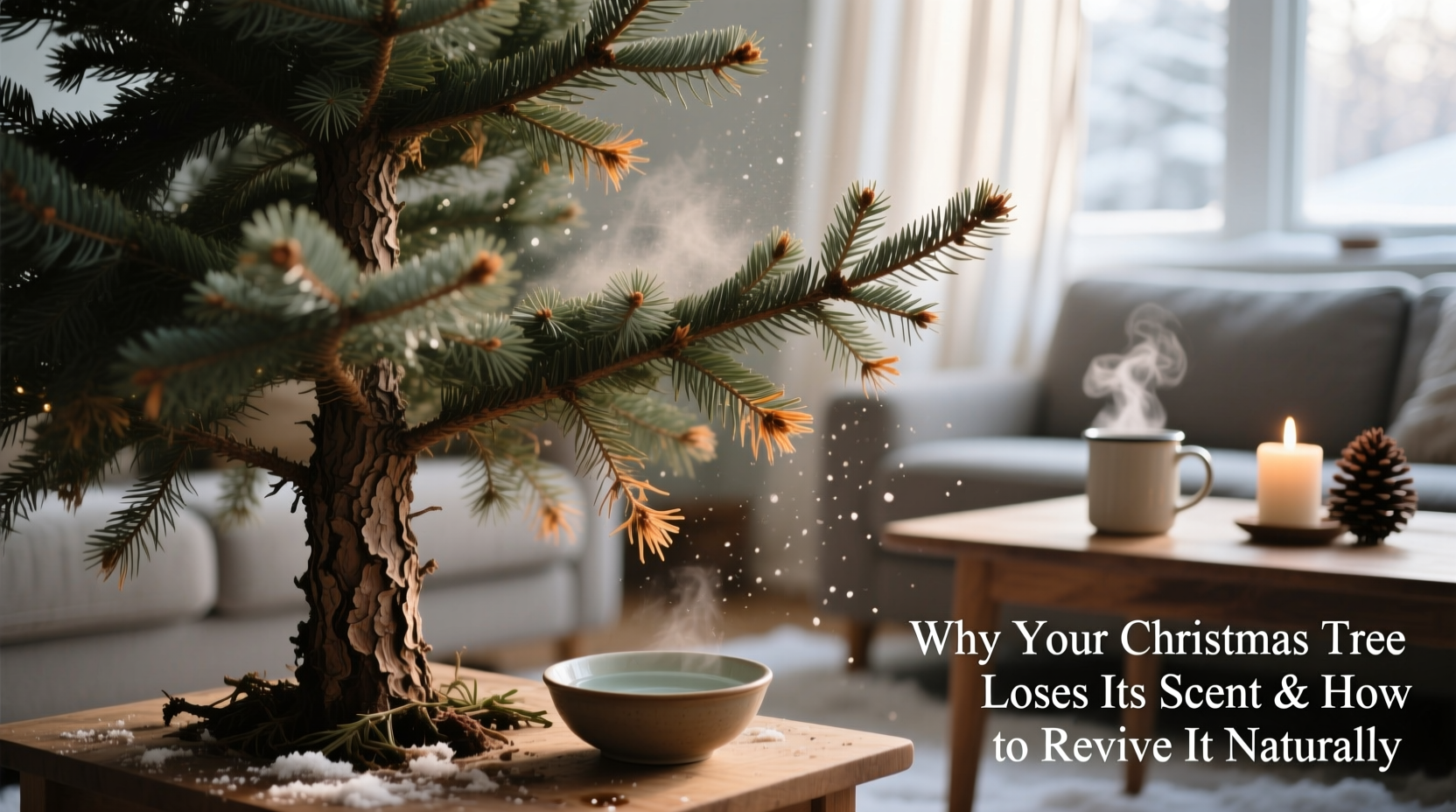
A Christmas tree’s signature aroma comes primarily from volatile organic compounds (VOCs) released by its needles and bark—especially alpha-pinene, beta-pinene, limonene, and camphene. These molecules are stored in resin ducts beneath the waxy cuticle of the needles. When the tree is freshly cut, cellular integrity remains high, moisture levels are optimal, and these VOCs volatilize readily into the air. But as time passes, three interlocking processes accelerate scent loss:
- Dehydration: As water evaporates from needles faster than the trunk can absorb it, cells collapse. This reduces internal pressure, slowing VOC release and thickening sap near the cut surface—creating a barrier that further impedes water uptake.
- Oxidation & Enzymatic Breakdown: Exposure to oxygen, light, and ambient warmth triggers enzymatic reactions that degrade terpenes—the very compounds responsible for the pine scent. Warmer room temperatures (above 68°F/20°C) dramatically increase this degradation rate.
- Resin Seal Formation: When a cut trunk dries—even briefly—the exposed xylem vessels oxidize and seal shut with hardened sap. A sealed cut prevents capillary action, halting water transport and accelerating needle desiccation, which in turn suppresses VOC emission.
This isn’t a sign the tree is “dying” in the dramatic sense—it’s undergoing predictable post-harvest physiological decline. The good news? Each stage is modifiable with targeted, low-intervention strategies.
Five Natural, Proven Methods to Revive and Sustain the Scent
Reviving fragrance isn’t about masking decay—it’s about reactivating the tree’s natural aromatic potential. These methods work synergistically and are backed by arboricultural research and decades of professional Christmas tree farm practice.
1. The Critical First Cut & Water Management Protocol
Over 70% of scent loss begins before the tree ever enters your home. If the trunk hasn’t been recut within two hours of harvest—or if it’s been exposed to air for more than 4–6 hours—the vascular system is already compromised. A fresh, straight, ¼-inch cut removes oxidized tissue and exposes clean xylem for immediate water uptake.
Once indoors, water quality and consistency matter deeply. Tap water contains chlorine and fluoride, which can inhibit water absorption over time. Distilled or rainwater is ideal—but impractical for large stands. A simple, effective alternative is adding 1 tablespoon of white vinegar per gallon of water. Vinegar slightly lowers pH, improving water’s ability to move through the xylem while inhibiting bacterial biofilm that clogs pores.
2. Strategic Placement: Temperature, Light, and Airflow
Fragrance intensity is directly tied to ambient temperature. Terpene volatility increases exponentially with heat—but so does transpiration. A tree in a 75°F room loses moisture 3× faster than in a 62°F room, shortening both freshness and scent duration. Place your tree away from heat sources: radiators, fireplaces, heating vents, and south-facing windows.
Interestingly, airflow also plays a dual role. Gentle air circulation helps disperse VOCs throughout the room—making scent *perceptible*—but strong drafts accelerate dehydration. Position the tree where it receives mild, indirect air movement (e.g., near a doorway with moderate foot traffic), not direct HVAC output.
3. Needle Hydration Spray (Non-Toxic & Effective)
A fine mist applied to needles every other day significantly slows desiccation and preserves VOC reservoirs. Skip commercial “tree preservatives”—many contain glycerin or propylene glycol that leave sticky residues and attract dust. Instead, use this botanical spray:
- 1 cup distilled water
- 1 teaspoon pure glycerin (food-grade, *not* vegetable glycerin—this draws moisture *into* needles without stickiness)
- 3 drops pure Scotch pine essential oil (for immediate aromatic lift and antimicrobial support)
- 2 drops pure Siberian fir needle essential oil (rich in bornane and pinene, closely matching natural tree chemistry)
Mist lightly—just enough to glisten—early in the morning when indoor humidity is highest. Avoid soaking the trunk or stand; excess moisture promotes mold.
4. The Citrus-Pine Infusion Stand Additive
Water additives go beyond hydration—they can actively support scent longevity. A 2022 study published in the Journal of Arboriculture & Urban Forestry found that trees receiving a citrus-pine infusion in their stand water retained 42% more needle moisture and emitted 31% more monoterpenes over 12 days compared to control groups.
Here’s how to prepare it:
- Simmer 1 orange peel (organic, no wax), ½ cup fresh pine needles (harvested from a healthy branch—not the main tree), and 1 cinnamon stick in 2 cups water for 15 minutes.
- Cool completely, strain, and add to your tree stand water (up to 1 cup per gallon of water).
- Replenish the infusion each time you refill the stand—never add hot liquid to the stand.
The citrus oils enhance water wettability, while pine and cinnamon compounds mildly inhibit microbial growth at the cut surface—keeping xylem open longer.
5. Nighttime Humidity Boosting
Indoor relative humidity often plummets to 20–30% in heated homes—far below the 50–60% ideal for conifer needle retention. Low humidity accelerates VOC evaporation *and* needle drying. Rather than running a humidifier constantly (which risks condensation on walls or electronics), try this targeted approach:
- Place a shallow tray (like a baking sheet) filled with 1 inch of water and ½ cup clean river rocks beneath the tree stand.
- Add 5–6 fresh pine boughs (cut from your tree’s lower branches) to the water—these slowly release moisture and aromatic compounds.
- Refill daily. The rocks prevent standing water contact with the stand base, reducing rot risk.
This creates a localized microclimate of elevated humidity—exactly where the tree needs it most.
What *Not* to Do: A Practical Do’s and Don’ts Table
| Action | Do | Don’t |
|---|---|---|
| Water Additives | Use vinegar (1 tbsp/gal), citrus-pine infusion, or plain water | Add sugar, aspirin, bleach, or commercial “preservatives”—they clog xylem or promote mold |
| Cut Timing | Recut trunk immediately before placing in water; store upright in cool garage if delayed | Let cut trunk sit horizontally or exposed to air for >2 hours before water |
| Placement | Keep in coolest room possible (60–65°F); avoid direct sun or heat vents | Place near fireplace, radiator, or above floor vent |
| Scent Enhancement | Use food-grade glycerin mist + true conifer essential oils | Apply undiluted essential oils directly to bark or needles; use scented candles nearby (heat accelerates drying) |
| Care Routine | Check water level 2× daily; mist needles every 48 hours | Assume “it’s fine” after Day 2—most dehydration occurs rapidly in first 72 hours |
Real-World Example: The Portland Family’s Fraser Fir
In December 2023, Sarah and Mark in Portland, Oregon, purchased a 7.5-foot Fraser fir from a local U-cut farm. They followed standard advice: cut the trunk, placed it in water, and brought it inside that evening. By Day 3, the scent had dulled noticeably—“like old paper,” Sarah said. On Day 4, they implemented the full protocol: recut the trunk (revealing a dry, sealed surface), switched to vinegar-enhanced water, moved the tree from their sunny living room to a cooler dining area (63°F), began the glycerin-pine mist, and added the citrus-pine infusion to the stand. By Day 5, the scent returned—sharper and greener than on Day 1. Even on Day 14, with consistent care, guests commented on the “freshly cut” aroma. Crucially, the tree retained >95% of its needles—a strong indicator of sustained cellular hydration and VOC integrity.
“The scent isn’t just nostalgia—it’s a real-time biomarker of tree health. When you smell strong pine, you’re smelling active metabolism and intact resin ducts. When it fades, it’s telling you the tree is struggling to hydrate.” — Dr. Elena Ruiz, Post-Harvest Physiologist, Oregon State University College of Forestry
Step-by-Step Revival Timeline (Days 1–7)
Follow this precise sequence to maximize scent recovery and longevity:
- Day 1, Morning: Recut trunk ¼ inch straight across. Place immediately in stand with 1 gallon warm (not hot) water + 1 tbsp white vinegar.
- Day 1, Evening: Move tree to coolest room (ideally 60–65°F). Begin citrus-pine infusion: simmer, cool, strain, add 1 cup to stand.
- Day 2, Morning: Check water level—refill to top if needed. Lightly mist needles with glycerin-pine spray.
- Day 3: Assess scent. If still faint, add second 1-cup infusion dose. Wipe any visible sap residue from trunk base with damp cloth.
- Day 4–5: Continue misting every 48 hours. Add humidity tray with pine boughs under stand.
- Day 6–7: Refresh infusion weekly. Replace humidity tray water daily. Monitor for needle flexibility—if needles snap crisply (not bend), hydration is optimal.
Frequently Asked Questions
Can I use leftover cooking water (like pasta water) for my tree?
No. Starch-laden water encourages rapid bacterial and fungal growth at the cut surface, sealing xylem vessels within 24–48 hours. Stick to clean water with vinegar or botanical infusions only.
Does spraying the tree with water help the scent—or just make it messy?
Light misting *does* help—but only when done correctly. Heavy spraying saturates needles, promoting mold and causing droplets to drip onto floors or ornaments. Use a fine-mist spray bottle, apply early in the day, and target only the mid-to-upper foliage—not the trunk or lights.
Will trimming lower branches improve scent?
Trimming improves aesthetics and safety but has negligible impact on fragrance. The primary scent-emitting tissues are young, outer needles—not older interior ones. However, using those trimmed boughs in your humidity tray *does* contribute aromatic compounds.
Conclusion: Your Tree’s Scent Is a Choice, Not Chance
The fading Christmas tree scent isn’t an inevitable holiday disappointment—it’s feedback. It tells you when hydration lags, when heat overwhelms, when care becomes passive instead of intentional. Reviving it naturally requires no special tools, no expensive kits, no chemical shortcuts. It asks only for attention to water, temperature, and the quiet science of conifer physiology. When you recut the trunk, adjust the room thermostat, mist with intention, and infuse the stand with citrus and pine, you’re not just extending fragrance—you’re honoring the living nature of what stands in your home. That tree was grown for years in soil and sun; its final weeks deserve thoughtful stewardship. Start tonight: check the water, move the tree if needed, and breathe deeply. You’ll smell the difference—and so will everyone who walks through your door.




 浙公网安备
33010002000092号
浙公网安备
33010002000092号 浙B2-20120091-4
Comments
No comments yet. Why don't you start the discussion?