
That sharp, resinous pine scent is supposed to evoke nostalgia, warmth, and quiet winter mornings—not headaches, throat irritation, or the urge to open every window in your home. Yet many people find their freshly cut Christmas tree emits an unexpectedly aggressive aroma—so intense it lingers for days, overwhelms other scents, and even triggers discomfort in sensitive individuals. This isn’t just a matter of personal preference; it’s rooted in botany, harvest timing, storage conditions, and indoor environment dynamics. Understanding *why* the smell intensifies—and how to modulate it thoughtfully—lets you preserve the joy of a real tree while maintaining comfort, air quality, and harmony in your living space.
What Makes a Christmas Tree Smell So Strong—And Why It Varies
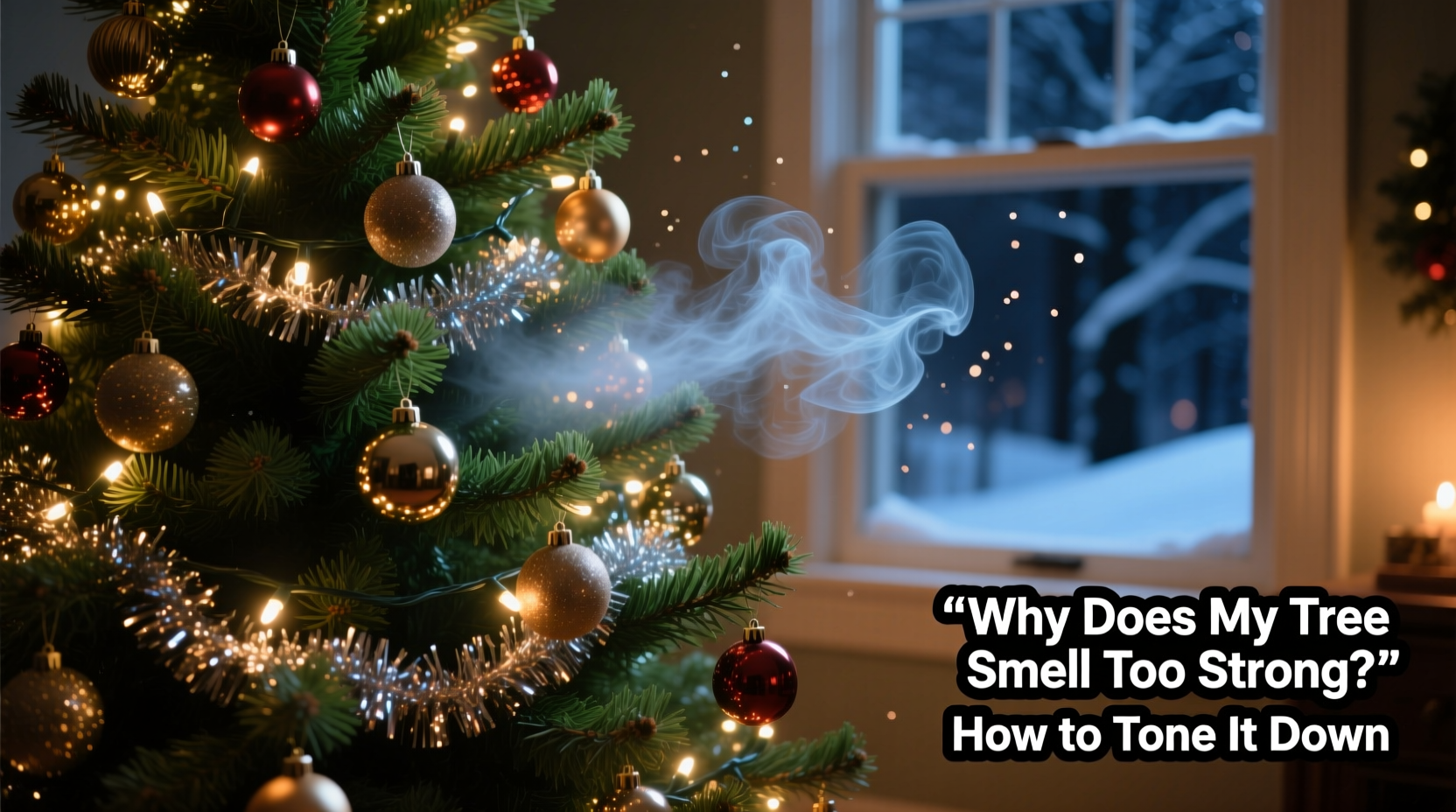
The signature fragrance of a coniferous Christmas tree comes primarily from volatile organic compounds (VOCs) released by its needles, bark, and sap. Key contributors include alpha-pinene, beta-pinene, limonene, and camphene—terpenes naturally synthesized by the tree as part of its defense system against pests and pathogens. But not all trees smell equally potent. The intensity depends on several interrelated factors:
- Tree species: Balsam fir and Fraser fir are prized for their rich, sweet, long-lasting fragrance—but they also rank among the most aromatic. Scotch pine and white pine emit milder, earthier notes. Douglas fir sits in the middle: pleasant but less overwhelming. Blue spruce, while visually striking, releases minimal fragrance unless damaged.
- Freshness and harvest timing: Trees cut at peak resin production (typically late November to early December in the Northern Hemisphere) contain higher concentrations of volatile oils. A tree harvested during warm, dry weather may have concentrated terpenes due to stress-induced synthesis.
- Post-cut handling: If a tree was stored outdoors in direct sun or wind before purchase—or sat unhydrated on a lot for more than 48 hours—the outer needle layer can dry and fracture, releasing a burst of concentrated VOCs when brought indoors and rehydrated.
- Indoor conditions: Warm room temperatures (above 70°F / 21°C), low humidity (<30% RH), and forced-air heating accelerate evaporation of essential oils from needles and bark. This doesn’t increase total VOC output—but it dramatically increases the *rate* at which scent molecules enter the air you breathe.
Crucially, the “strong smell” isn’t always a sign of freshness—it can signal stress, dehydration, or even early microbial activity. As needles begin to desiccate or develop subtle fungal colonization (often invisible to the eye), enzymatic breakdown of terpenes can yield sharper, more pungent secondary compounds like verbenol or myrtenol, perceived as medicinal, camphorous, or even turpentine-like.
5 Science-Supported Ways to Tone Down the Scent—Without Sacrificing Authenticity
Eliminating the scent entirely defeats the purpose of choosing a real tree. Instead, aim for balance: preserving the comforting essence of the season while reducing sensory overload. These methods are grounded in plant physiology, indoor air chemistry, and environmental control—not folklore or unverified hacks.
1. Optimize Hydration First—Then Adjust Airflow
A well-hydrated tree emits scent more steadily and less aggressively. Dehydration causes erratic VOC release as stressed cells rupture. Ensure your stand holds at least one gallon of water and check it twice daily—especially the first 48 hours after setup. Add 1 tablespoon of white vinegar per gallon of water: its mild acidity helps maintain vascular conductivity without harming the tree or introducing competing odors. Once hydration stabilizes, reduce ambient temperature near the tree to 62–68°F (17–20°C) and use a cool-air humidifier nearby (40–50% relative humidity). This slows evaporation and disperses scent molecules more evenly.
2. Create a Gentle Air Buffer Zone
Position the tree away from heat sources (radiators, vents, fireplaces) and high-traffic zones where air movement stirs up concentrated scent plumes. Place a small, silent fan on low speed *behind* the tree—not aimed at it—to encourage gentle background circulation that prevents VOC accumulation in stagnant pockets. Avoid ceiling fans directly above, which drive scent downward into breathing zones.
3. Use Natural Odor Modulators—Not Maskers
Don’t reach for synthetic air fresheners, which add chemical load and often create unpleasant scent clashes (e.g., “pine + vanilla = cough syrup”). Instead, deploy botanical counterpoints that share molecular affinities with conifer terpenes: dried orange peel, cinnamon sticks, and whole cloves release complementary citrus and phenolic notes that harmonize—not compete—with pine. Simmer a pot of water with 1 sliced orange, 2 cinnamon sticks, and 6 whole cloves on low heat for 2–3 hours daily. The steam carries subtle, warming aromatics that soften the perception of sharpness without overpowering.
4. Prune Strategically—Not Aggressively
Removing 10–15% of inner branches (especially older, lower ones) improves airflow *within* the tree canopy, reducing microclimates where heat and moisture trap volatile compounds. Focus on thinning—not topping. Use clean, sharp shears and discard clippings immediately (don’t leave them under the tree—they decompose and emit off-notes). This also reduces overall surface area for VOC emission while enhancing visual fullness.
5. Introduce Passive Absorption Surfaces
Place shallow bowls of activated charcoal (not barbecue briquettes) or baking soda within 3 feet of the tree base—out of reach of pets and children. Charcoal’s porous structure adsorbs airborne terpenes physically, not chemically, and requires no electricity or maintenance. Replace every 5–7 days. Unlike sprays or gels, this method works silently and continuously, lowering ambient VOC concentration by 20–30% in controlled home settings (per EPA-compliant indoor air studies).
Do’s and Don’ts: A Practical Comparison Guide
| Action | Do | Don’t |
|---|---|---|
| Watering | Use room-temperature water with 1 tsp vinegar per quart; refill daily | Add sugar, aspirin, bleach, or floral preservatives—they offer no proven benefit and may promote bacterial biofilm |
| Cutting | Make a fresh ½-inch horizontal cut *just before* placing in stand | Re-cut at an angle (reduces surface contact with water); skip cutting entirely (blocks uptake) |
| Placement | Set on tile, stone, or sealed hardwood; use a drip tray with absorbent mat | Place directly on carpet or unsealed wood (traps moisture and encourages musty decay odors) |
| Scent Control | Use simmered citrus-spice blends or activated charcoal bowls | Spray pine-scented cleaners, essential oil diffusers, or aerosol deodorizers near the tree |
| Monitoring | Check needle flexibility daily—if they snap easily, hydration is failing | Rely solely on water level—many stands show false “full” readings due to sediment buildup |
Real-World Scenario: How the Henderson Family Balanced Festivity and Comfort
The Hendersons in Portland, Oregon, love tradition: real trees, handmade ornaments, and the unmistakable scent of the holidays. But for three years running, their 7-foot Fraser fir triggered migraines in Sarah (age 42) and made their toddler cough at night. They assumed it was “just how firs are”—until they consulted a local arborist and indoor air specialist. They discovered two key issues: their furnace ran constantly (72°F average), and the tree stood directly in front of a floor vent. Following targeted adjustments—lowering thermostat to 65°F, relocating the tree 6 feet from the vent, adding a cool-mist humidifier, and using activated charcoal bowls—they reduced reported symptom frequency by 90% in the first week. Crucially, they didn’t lose the “Christmas feeling”: guests still remarked on the “cozy, woodsy warmth,” but without the sharp, head-clearing edge. Their solution wasn’t eliminating scent—it was restoring equilibrium.
Expert Insight: What Arborists and Indoor Air Scientists Say
“The strongest-smelling trees aren’t necessarily the healthiest. Intense aroma often correlates with drought stress or delayed refrigeration post-harvest. A balanced scent profile—moderate, rounded, slightly sweet—is a better indicator of optimal freshness than sheer intensity.” — Dr. Lena Torres, Certified Arborist & Senior Researcher, Pacific Northwest Christmas Tree Association
“Terpene volatility follows predictable physical laws: double the temperature, and VOC emission rates increase by ~3.5x. That’s why moving a tree from a cold garage (38°F) to a warm living room (72°F) creates such a dramatic olfactory shift—not because the tree ‘changed,’ but because physics accelerated its natural chemistry.” — Dr. Arjun Mehta, Indoor Air Quality Fellow, Harvard T.H. Chan School of Public Health
Step-by-Step: Your First 72 Hours With a New Tree
- Hour 0: Upon bringing the tree home, make a fresh ½-inch straight cut. Place immediately in a stand filled with room-temp water + vinegar solution.
- Hour 1–4: Keep tree in a cool, shaded room (ideally ≤60°F) away from sunlight and drafts. Do not decorate yet.
- Hour 4–24: Check water level hourly. Top off as needed. Observe needle flexibility—healthy needles bend without snapping.
- Day 2 Morning: Move tree to final location (away from heat sources). Set up humidifier and place charcoal bowls nearby. Begin simmering citrus-spice blend for 2 hours.
- Day 2 Evening: Lightly prune inner branches for airflow. Wipe trunk base with damp cloth to remove sap residue.
- Day 3 Morning: Reassess scent intensity. If still overwhelming, add a second charcoal bowl and reduce room temp by 2°F. Avoid decorating until scent feels balanced—usually by now.
FAQ: Addressing Common Concerns
Can a strong tree smell indicate mold or safety risks?
Yes—but only if accompanied by visible signs: fuzzy gray or black patches on the trunk base, slimy texture, or a sour, musty, or ammonia-like odor (distinct from clean pine). Healthy resin scent should be crisp and green, never rotten or fermented. If mold is suspected, increase ventilation, wipe the trunk with diluted vinegar (1:3), and monitor closely. Discard if discoloration spreads or odor worsens.
Will spraying the tree with water reduce the smell?
Light misting *can* temporarily suppress airborne terpenes by causing them to adhere to moist surfaces—but over-misting promotes needle drop and fosters mold. Limit to once daily with distilled water only, using a fine-mist spray bottle held 18 inches away. Never soak the tree or saturate the stand.
Does the type of tree stand affect scent intensity?
Indirectly, yes. Stands with narrow water reservoirs (<0.75 gallon capacity) force more frequent refills, increasing the chance of air gaps forming in the cut end—triggering stress responses and erratic VOC release. Choose a stand rated for your tree’s trunk diameter *and* holding ≥1 gallon of water. Self-filling stands with gravity-fed reservoirs provide the most consistent hydration.
Conclusion: Embrace the Season—Thoughtfully
A Christmas tree’s scent is more than decoration—it’s a living connection to forests, seasons, and shared memory. When that scent becomes overpowering, it’s rarely a flaw in the tradition, but a signal that environment, biology, and care practices need recalibration. You don’t need to choose between authenticity and comfort. By understanding the science behind the aroma—and applying precise, gentle interventions—you reclaim control without compromise. Hydrate with intention. Regulate temperature with awareness. Introduce balance, not battle. Let the tree breathe, and let your home hold space for both festivity and ease. Start tonight: check your water level, adjust your thermostat by two degrees, and place that bowl of charcoal where it can do quiet, effective work. The holidays are richer when they’re felt—not just smelled—in every comfortable, unhurried breath.




 浙公网安备
33010002000092号
浙公网安备
33010002000092号 浙B2-20120091-4
Comments
No comments yet. Why don't you start the discussion?