
A perfectly decorated Christmas tree can elevate the spirit of the season. Yet nothing undermines that festive perfection quite like a crooked or wobbling tree topper—especially when you’ve taken the precaution of using a stabilizing pin. You follow the instructions, insert the pin into the topmost branch, balance the star or angel carefully, and still, it sways at the slightest movement. The question remains: why does this happen, and more importantly, how can you fix it for good?
The answer lies not in faulty craftsmanship alone, but in a combination of structural, environmental, and design factors. Understanding these elements reveals that a stabilizing pin is just one component of a larger system meant to keep your topper steady. When any part of that system fails, the entire balance is compromised.
Understanding the Role of the Stabilizing Pin
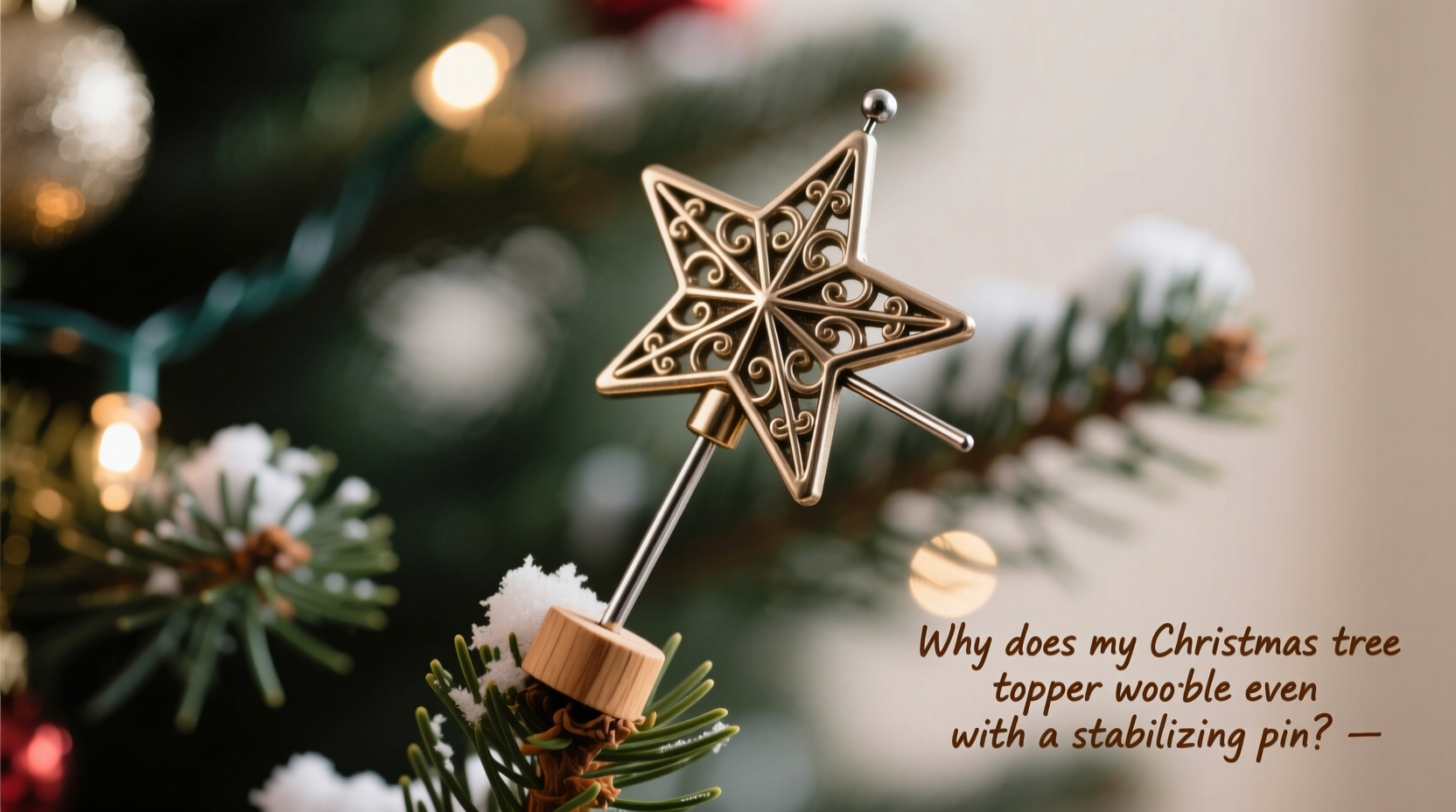
The stabilizing pin—often a small metal or plastic rod extending from the base of the topper—is designed to anchor the ornament into the central trunk or top branch of the tree. In theory, this should prevent lateral movement and rotation. However, its effectiveness depends on several conditions:
- The pin must be long enough to reach deep into stable wood or dense branch structure.
- The insertion point must offer resistance; soft or hollow tips won’t hold securely.
- The weight distribution of the topper must align with the support provided.
Many modern artificial trees feature hollow PVC trunks with only a thin outer shell. When the pin meets this surface, it may not penetrate deeply enough to achieve real stability. Similarly, real trees often have brittle or split tops after cutting, especially if trimmed poorly or left unattended before setup.
“Even the best stabilizing pin is only as effective as the structure it anchors into.” — Daniel Reeves, Holiday Display Engineer and Designer
Common Causes of Wobble Despite a Stabilizing Pin
Wobbling isn’t always due to user error. More often, it’s a symptom of mismatched components or overlooked physical principles. Below are the most frequent culprits behind persistent instability.
1. Inadequate Trunk Support
Artificial trees made with lightweight materials often lack internal reinforcement at the top. The central pole may taper sharply, leaving little room for the pin to grip. If the hole at the top of the trunk is oversized or worn from previous use, the pin rattles loosely instead of locking in place.
2. Topper Weight and Balance Issues
Heavier toppers—such as large stars with embedded lights or ornate angels with extended wings—create leverage that amplifies any weak point in the connection. A slight imbalance in weight distribution causes torque, leading to gradual tilting or sudden tipping.
3. Poor Tree Assembly or Alignment
If the top section of the tree isn’t fully seated or twisted slightly off-axis during assembly, the mounting surface becomes uneven. This misalignment forces the topper to rest at an angle, increasing stress on the stabilizing pin and reducing contact points.
4. Environmental Disturbances
Airflow from HVAC systems, ceiling fans, or foot traffic can generate subtle vibrations. While these seem negligible, they continuously nudge an already precarious topper. Over time, repeated micro-movements dislodge even well-secured ornaments.
5. Wear and Tear on Components
Repeated use wears down both the pin and the receiving socket. Plastic pins may bend or crack, while metal ones corrode or lose rigidity. On the tree side, the top cap or plug can become loose or deformed, compromising fit.
Solutions for a Stable, Wobble-Free Topping
Fixing a wobbly topper requires more than tightening a screw—it demands a holistic approach. Consider each element of the setup as part of an integrated system. Here’s how to reinforce every link.
Reinforce the Insertion Point
If the trunk is too soft or hollow, augment it with internal support. For artificial trees, insert a short dowel or rolled-up cardboard tube into the top of the central pole. Secure it with hot glue or tape so it doesn’t shift. Then press the stabilizing pin into this reinforcement rather than relying solely on the original material.
For live trees, check whether the cut surface is flat and centered. Trim the very tip if necessary to create a clean, horizontal plane. Avoid cutting too much, as this reduces available height for the pin.
Improve Weight Distribution
Lighten the load where possible. Remove unnecessary embellishments or switch to lighter materials (e.g., foam instead of metal). Alternatively, redistribute weight symmetrically. If your star leans forward, add small counterweights—like hidden beads or washers—on the backside to balance it.
Use Secondary Anchoring Methods
Never rely on the pin alone. Supplement it with discreet secondary supports:
- Fishing line ties: Attach clear fishing line from the arms of the topper to higher branches, creating invisible guy wires.
- Floral wire framing: Wrap sturdy floral wire around the top branches and loop it through the topper’s base for added rigidity.
- Adhesive putty: Use museum-grade putty under the base to increase friction without damaging surfaces.
Secure the Tree Itself
A shaky tree means a shaky topper. Ensure the stand is tightened properly and placed on a level surface. Use anti-slip pads under the stand if flooring is slick. For tall trees, consider tethering the trunk to a wall anchor with nearly invisible nylon cord—especially important in homes with pets or active children.
“In professional displays, we assume nothing is stable until tested under simulated conditions—like walking nearby or turning on the fan.” — Lila Montgomery, Seasonal Installation Specialist
Step-by-Step Guide to Installing a Secure Tree Topper
Follow this sequence to maximize stability and minimize post-installation adjustments.
- Inspect the tree’s top section. Confirm the final branch is intact, straight, and fully attached. Adjust alignment if needed.
- Prepare the central shaft. Insert a reinforcing dowel if the top feels weak or hollow. Let adhesives cure completely before proceeding.
- Test-fit the stabilizing pin. Insert it gently to assess depth and snugness. If loose, wrap the lower portion with electrical tape to bulk it up slightly.
- Briefly attach the topper. Hold it in place and observe how it sits. Note any tilt or imbalance.
- Add counterweights if necessary. Attach small weights inside the rear of the topper to correct forward lean.
- Install secondary supports. Tie fishing line from multiple points on the topper to strong upper branches. Keep tension even.
- Finalize placement. Press the topper down firmly and give the tree a gentle shake. Make micro-adjustments until no movement occurs.
- Monitor over 24 hours. Recheck after temperature changes or airflow exposure, especially if near vents.
Do’s and Don’ts: A Quick Reference Table
| Do | Don't |
|---|---|
| Use a reinforcing dowel in hollow tree trunks | Force a bent pin into the socket |
| Balance heavy toppers with hidden counterweights | Attach toppers before securing the tree in its stand |
| Supplement the pin with fishing line or wire | Place the tree directly under a ceiling fan |
| Check alignment after decorating | Use super glue or permanent adhesives on delicate finishes |
| Inspect components annually for wear | Ignore small wobbles—they worsen over time |
Mini Case Study: The Office Lobby Star That Wouldn’t Stay Put
A corporate office in Chicago installed a 12-foot artificial tree each December, topped with a 15-inch illuminated star weighing nearly two pounds. Despite using the included stabilizing pin, the star consistently leaned to one side within days. Maintenance staff re-centered it weekly, but the issue persisted.
An investigation revealed three problems: the central pole was hollow and dented at the top, the pin had bent during storage, and the tree stood directly beneath a return air vent. Cold bursts from the HVAC system created constant vibration.
The solution involved replacing the pin, inserting a wooden dowel into the pole, and rerouting the star’s power cord to serve as a secondary support line anchored to a ceiling beam. After these changes, the star remained perfectly upright throughout the season—with no manual adjustments needed.
FAQ
Can I make my own stabilizing pin if the original is broken?
Yes. A sturdy metal rod such as a coat hanger segment or threaded bolt can work. File the end to a point for easier insertion, and ensure the diameter matches the socket. Wrap the base with tape to prevent slippage.
Is there a weight limit for tree toppers?
Generally, toppers heavier than 1 pound require additional support beyond the standard pin. Always refer to your tree manufacturer’s guidelines. Many artificial trees specify maximum topper weights in their manuals—often between 8 and 16 ounces for unassisted mounting.
Why does my topper stay straight at first but start wobbling later?
This usually indicates gradual loosening due to vibration, thermal expansion, or settling of materials. The initial tight fit relaxes over time. Using adhesive putty or secondary tethers helps maintain consistent pressure and position.
Conclusion: Stability Starts with Smart Setup
A wobbling Christmas tree topper isn’t a minor annoyance—it’s a sign that the foundational aspects of your holiday display need attention. The stabilizing pin is a helpful tool, but it’s not a standalone solution. True stability comes from understanding the interplay between design, structure, and environment.
By reinforcing weak points, balancing weight, and using smart anchoring techniques, you can enjoy a flawless, photograph-ready tree all season long. These fixes take little time but deliver lasting results—year after year.




 浙公网安备
33010002000092号
浙公网安备
33010002000092号 浙B2-20120091-4
Comments
No comments yet. Why don't you start the discussion?