
Circuit breakers are essential safety devices designed to protect your home’s electrical system from damage due to overloads, short circuits, or ground faults. When a breaker trips repeatedly, it's not just an inconvenience—it's a warning sign. Ignoring frequent tripping can lead to damaged appliances, fire hazards, or even electrical shocks. Understanding the root causes and knowing how to respond appropriately is crucial for maintaining a safe and functional household electrical system.
Understanding How Circuit Breakers Work
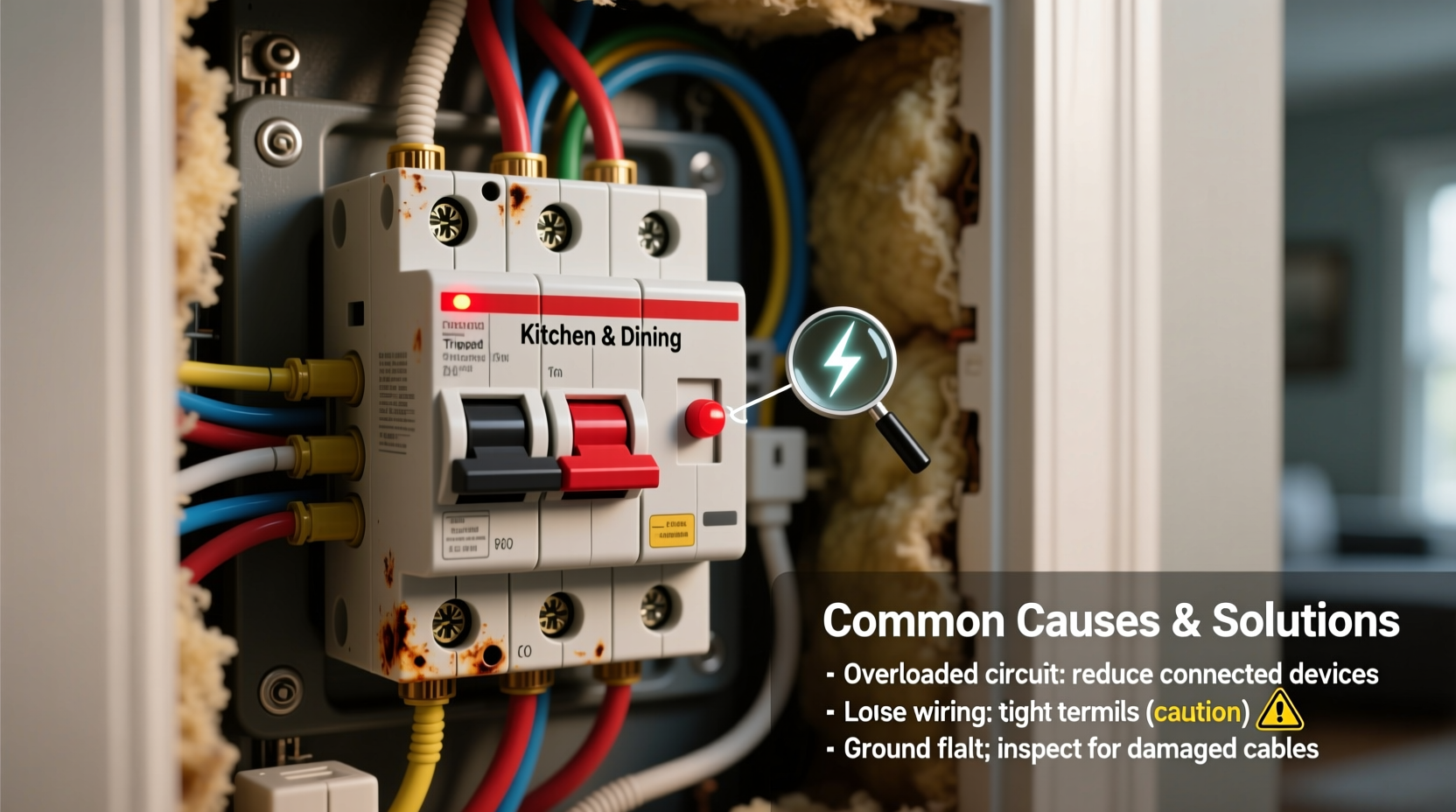
A circuit breaker functions as an automatic switch that cuts off power when it detects unsafe electrical conditions. Inside your electrical panel, each breaker corresponds to a specific circuit in your home—such as lighting, kitchen outlets, or HVAC systems. When current flow exceeds the breaker’s rated capacity (typically 15, 20, or 30 amps), it “trips” to prevent overheating and potential fire.
There are three primary types of trips:
- Overload: Too many devices drawing power on one circuit.
- Short Circuit: A hot wire touches a neutral wire, causing a sudden surge.
- Ground Fault: A hot wire contacts a ground wire or conductive surface, often in damp areas like bathrooms or kitchens.
Each type produces distinct symptoms and requires different troubleshooting approaches.
Common Causes of Repeated Circuit Breaker Tripping
Frequent tripping rarely stems from a single isolated issue. More often, it’s the result of cumulative electrical stress or underlying faults. Below are the most prevalent causes homeowners encounter:
1. Overloaded Circuits
This is the most common reason. Modern homes run multiple high-wattage appliances simultaneously—microwaves, space heaters, hair dryers, and gaming consoles. When their combined draw exceeds the circuit’s capacity, the breaker trips.
2. Short Circuits
A short occurs when a live (hot) wire makes direct contact with a neutral wire. This creates a low-resistance path, causing a massive current spike. Signs include burning smells, discolored outlets, or audible buzzing near switches.
Common culprits: damaged cords, faulty appliances, or rodent-chewed wiring inside walls.
3. Ground Faults
Similar to shorts but involving the grounding system. These are especially dangerous in wet locations. For example, a frayed hair dryer cord touching a wet sink can trigger a ground fault interrupter (GFCI) and trip the main breaker.
4. Aging or Faulty Breakers
Like any mechanical component, breakers wear out. Units older than 15–20 years may become hypersensitive or fail to reset properly. Corrosion, loose connections, or internal damage can cause nuisance tripping even under normal load.
5. Poor Electrical Workmanship
Improper wiring—such as reversed polarity, loose terminals, or undersized wires—can create resistance and heat buildup. DIY electrical jobs without permits or inspections often lead to chronic issues.
“Repeated breaker trips are never normal. They’re your system’s way of saying something is wrong—sometimes dangerously so.” — James Rutherford, Master Electrician & NEC Consultant
Step-by-Step Guide to Diagnose and Fix the Issue
Before calling an electrician, perform these checks to narrow down the cause. Always prioritize safety: turn off power at the main panel before inspecting any components.
- Unplug all devices on the affected circuit. Start with a clean slate.
- Reset the breaker. Flip it fully to “off,” then back to “on.” If it trips immediately, there’s likely a short or ground fault.
- Inspect outlets and switches. Look for scorch marks, warmth, or buzzing sounds.
- Plug in devices one at a time. Wait a few minutes between each. If the breaker trips after plugging in a specific appliance, that device is likely faulty.
- Check for shared circuits. High-draw appliances like refrigerators or washing machines should be on dedicated lines.
- Test GFCI outlets. Press “test” and “reset” buttons. Replace if they don’t function.
- Monitor usage patterns. Do trips happen during peak times (e.g., morning routines)? That suggests overload.
If the breaker still trips with nothing plugged in, the problem lies within the wiring or the breaker itself. At this point, professional evaluation is required.
Do’s and Don’ts: What to Avoid When Dealing with Tripping Breakers
| Do’s | Don’ts |
|---|---|
| Label your electrical panel clearly for quick identification. | Never tape a breaker in the “on” position. |
| Use power strips with built-in surge protection and overload indicators. | Don’t daisy-chain multiple extension cords. |
| Hire a licensed electrician for recurring or unexplained trips. | Don’t ignore burning smells or sparks. |
| Upgrade old panels if your home is over 25 years old. | Don’t replace a breaker with a higher amp rating without rewiring. |
Real-Life Example: The Case of the Constantly Tripping Kitchen Breaker
Sarah, a homeowner in Portland, noticed her kitchen breaker tripped every time she used the toaster oven and microwave together. Initially, she assumed the breaker was faulty and considered replacing it herself. Instead, she followed a systematic approach: unplugged all kitchen devices, reset the breaker, and reintroduced appliances one by one.
The breaker held until both the microwave (1,200W) and toaster oven (1,500W) were on simultaneously. Combined, they drew 2,700W—exceeding the 15-amp circuit’s 1,800W safe limit. Sarah relocated the toaster oven to a dining room outlet on a separate circuit. The tripping stopped immediately.
This case illustrates how modern appliance demands can overwhelm older circuits—a growing issue in homes built before the 2000s.
When to Call a Professional Electrician
While some issues can be resolved independently, certain situations demand expert intervention:
- The breaker trips repeatedly with no load.
- You smell burning plastic or see charring near outlets.
- Breakers feel warm or vibrate when operating.
- Your home has aluminum wiring or a Federal Pacific panel (known fire risks).
- You plan to add major appliances or renovate.
Licensed electricians can perform thermal imaging, continuity tests, and load calculations to identify hidden dangers. They’ll also ensure compliance with the National Electrical Code (NEC), which helps maintain insurance coverage and resale value.
Frequently Asked Questions
Can a tripped breaker cause a fire?
Yes, if the underlying issue isn’t fixed. A breaker that trips protects against fire, but repeated arcing or overheating in faulty wiring can ignite surrounding materials. Never ignore persistent tripping.
Is it safe to reset a breaker multiple times?
Resetting once or twice to test is acceptable. Repeated resets without resolving the cause increase the risk of damage. If it won’t stay on, stop trying and call an electrician.
Why does only one breaker trip while others are fine?
Each breaker protects its own circuit. A problem isolated to one area—like a malfunctioning dishwasher or overloaded bedroom outlets—will only affect its corresponding breaker.
Final Thoughts and Action Steps
A tripping circuit breaker is more than a minor annoyance—it’s a signal from your home’s electrical system that something needs attention. Whether it’s an overloaded outlet, a failing appliance, or outdated wiring, timely diagnosis prevents costly repairs and enhances safety.
Start by assessing your power usage habits, inspecting visible components, and eliminating simple causes. Use the checklist below to guide your initial response:
- Unplug all devices on the tripped circuit.
- Reset the breaker completely.
- Check for signs of damage (smell, discoloration, noise).
- Reconnect devices one at a time to isolate the culprit.
- Contact a licensed electrician if the problem persists.
Your home’s electrical integrity impacts everything from daily comfort to long-term safety. Don’t wait for a spark or smoke to act. Take control today—inspect, test, and when in doubt, consult a professional. Your peace of mind is worth the investment.




 浙公网安备
33010002000092号
浙公网安备
33010002000092号 浙B2-20120091-4
Comments
No comments yet. Why don't you start the discussion?