
The holiday season often brings a sensory celebration into the home—pine boughs, cinnamon sticks simmering on the stove, and warm vanilla candles flickering on mantels. Many people enhance this ambiance with essential oil diffusers, aiming to deepen the coziness with calming or invigorating scents. Yet, sometimes, instead of blending seamlessly, your diffuser’s aroma seems to fight with the natural pine scent of your Christmas tree. Rather than creating harmony, the combination produces an unpleasant, chemical-like odor that feels more like a headache trigger than a holiday delight.
This clash isn’t random—it stems from fundamental differences in scent chemistry, volatility, and olfactory perception. Understanding why these two seemingly festive scents don’t get along can help you create a more balanced, enjoyable atmosphere without sacrificing either your aromatherapy routine or your beloved tree.
The Science Behind Scent Interference
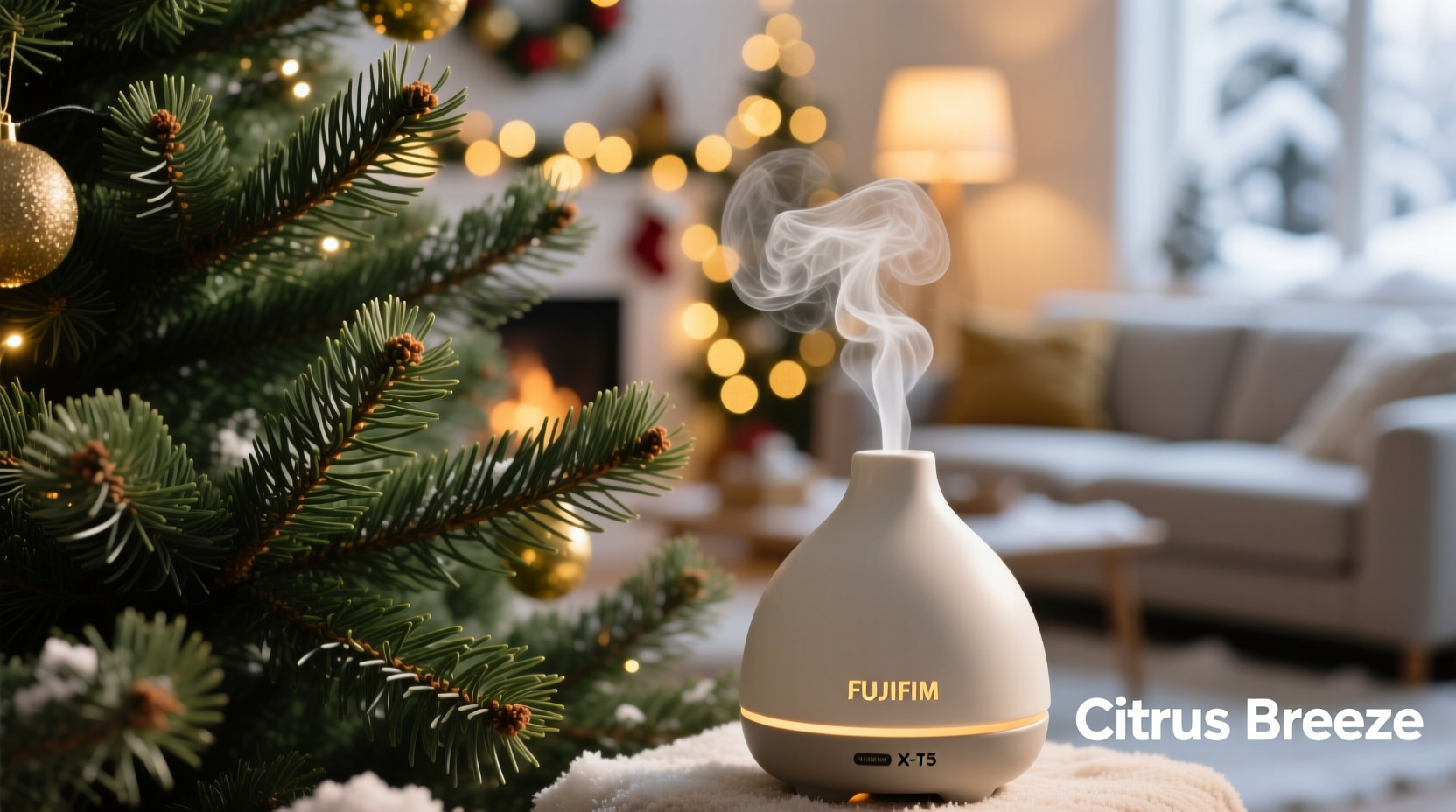
Fragrance interaction is governed by principles of volatile organic compounds (VOCs), molecular weight, and receptor response in the human nose. When you diffuse essential oils, you’re releasing tiny aromatic molecules into the air. These molecules bind to olfactory receptors, which then send signals to the brain for interpretation. The same process occurs when you smell a real pine tree—the resinous scent comes from terpenes like alpha-pinene and limonene released naturally from the needles and bark.
Problems arise when multiple VOCs occupy the same air space. Some molecules compete for receptor sites, while others chemically interact in ways that alter perceived scent profiles. For example, citrus oils high in limonene may amplify the sharpness of pine, making it smell overly medicinal. Meanwhile, floral or spicy notes like lavender or clove can become muddled or sour when layered over strong coniferous base notes.
“Scent blending is as much science as art. Terpenes in pine are highly reactive and can distort softer essential oils, especially in confined spaces.” — Dr. Lena Torres, Olfactory Chemist at Aroma Research Institute
Additionally, the intensity of fresh pine increases over time as the tree dries and releases more resin. If your diffuser runs continuously, the overlapping concentration of airborne particles can overwhelm the senses, leading to olfactory fatigue—a condition where the nose stops distinguishing individual notes and registers only a harsh, indistinct odor.
Common Culprits: Which Diffuser Oils Clash Most with Pine?
Not all essential oils conflict with pine, but certain categories tend to create discordant combinations. Below is a breakdown of common diffuser oils and their compatibility with Christmas tree scent:
| Oil Type | Compatibility with Pine | Why It Clashes (or Works) |
|---|---|---|
| Lavender | Poor | Floral notes turn soapy or metallic when mixed with pine’s sharp terpenes. |
| Eucalyptus | Fair | Both are camphoraceous; can blend if used sparingly, but often creates a hospital-like smell. |
| Citrus (Lemon, Orange) | Good | Citrus shares limonene with pine; enhances freshness when balanced. |
| Cinnamon or Clove | Excellent | Warm spices complement pine, mimicking traditional holiday potpourri. |
| Peppermint | Mixed | Can feel overwhelming or toothpaste-like when combined with pine. |
| Frankincense | Good | Earthy depth supports pine without competing; evokes sacred winter spaces. |
The key takeaway is that not every “holiday-scented” oil plays well with real pine. Artificial blends labeled as “Christmas Tree” or “Winter Forest” often contain synthetic stabilizers that further distort natural aromas when diffused nearby.
Environmental Factors That Amplify the Clash
Beyond chemistry, your home environment influences how scents interact. Several factors can intensify the conflict between your diffuser and pine tree:
- Room size and ventilation: Small, poorly ventilated rooms concentrate VOCs faster, increasing the chance of olfactory overload.
- Diffuser placement: Running a diffuser near or under the tree forces direct mixing of scents before they disperse naturally.
- Tree location: Trees placed near heat sources (radiators, fireplaces) dry out faster, releasing more intense pine aroma in a short time.
- Diffusion duration: Continuous diffusion overwhelms the air. Intermittent cycles allow scent layers to settle.
A common mistake is treating scent like background music—assuming more is better. In reality, fragrance should be subtle, evolving, and spatially aware. Overlapping strong top notes from a diffuser with the persistent base note of pine creates a sensory imbalance similar to playing two songs at once.
Mini Case Study: The Overpowered Living Room
Sarah in Portland decorated her living room with a freshly cut Douglas fir, proud of its rich, woodsy aroma. To promote relaxation during holiday hosting, she added a reed diffuser with lavender and vanilla in the corner. Within hours, guests complained of headaches. Sarah noticed a sharp, almost chemical smell she couldn’t pinpoint.
After consulting an aromatherapist, she realized the vanilla’s synthetic carrier oil was reacting with the tree’s alpha-pinene, producing an acrid off-gas. She removed the reed diffuser and switched to occasional 15-minute bursts of orange and clove in a nebulizing diffuser—only when guests arrived. The result? A warm, inviting scent that enhanced rather than fought the tree.
How to Harmonize Your Diffuser with Pine: A Step-by-Step Guide
You don’t have to choose between your essential oil routine and your Christmas tree. With mindful planning, you can enjoy both. Follow this timeline to create a balanced scent environment:
- Day 1: Assess your tree’s strength. Smell the tree up close. Is the pine scent mild, moderate, or very strong? Stronger trees need lighter diffuser support.
- Day 2: Choose compatible oils. Use citrus (sweet orange, grapefruit), warm spices (cinnamon leaf, clove bud), or resins (frankincense, myrrh). Avoid florals, mints, and synthetic blends.
- Day 3: Test one oil at a time. Run your diffuser for 10 minutes with just sweet orange. Wait 30 minutes. Does it blend or clash? Adjust accordingly.
- Day 4: Position strategically. Place the diffuser in an adjacent room or at least 8 feet from the tree. Let scents mingle gradually through airflow.
- Day 5: Limit diffusion time. Use 15–20 minute intervals, no more than twice daily. This prevents saturation.
- Day 6: Monitor guest feedback. Ask visitors how the air feels. Headaches, stuffiness, or complaints signal imbalance.
- Day 7: Refresh as needed. As the tree dries, reduce diffuser use. By week three, you may not need any supplemental scent.
This gradual integration allows both scents to coexist without dominating each other. Think of it as pairing wine with food—complementing, not overpowering.
Practical Checklist: Scent Harmony During the Holidays
- ☐ Identify your tree’s scent strength before adding diffuser oils
- ☐ Choose pine-friendly oils: citrus, spice, resin
- ☐ Avoid lavender, peppermint, and artificial blends near the tree
- ☐ Place diffuser away from the tree (minimum 6–8 feet)
- ☐ Use intermittent diffusion (10–20 min sessions)
- ☐ Ensure room ventilation with periodic window opening
- ☐ Hydrate your tree daily to slow resin release
- ☐ Stop diffusing if anyone reports headaches or irritation
Frequently Asked Questions
Can I use a pine-scented essential oil with my real Christmas tree?
It’s not recommended. Adding concentrated pine oil amplifies terpene levels rapidly, increasing the risk of respiratory irritation and scent fatigue. The natural tree usually provides enough aroma on its own.
Why do some people not notice the clash?
Olfactory sensitivity varies widely. Some individuals adapt quickly to mixed scents (a phenomenon called olfactory habituation), while others—especially those with sensitivities or conditions like migraines—are more affected. Children and pets may also react differently, even if adults don’t notice.
Is the scent clash harmful, or just unpleasant?
For most people, it’s primarily unpleasant. However, high concentrations of terpenes like pinene can react with ozone in indoor air to form formaldehyde and other irritants, especially in poorly ventilated spaces. Prolonged exposure may worsen asthma or allergies. If you experience coughing, eye irritation, or headaches, reassess your scent strategy.
Expert Insight: Respecting Natural Aromas
“The Christmas tree is already a powerful aromatic centerpiece. Instead of competing with it, let it lead. Use diffusers to add subtle accents—like a pinch of nutmeg in eggnog—not as the main flavor.” — Naomi Reed, Certified Aromatherapist and Home Wellness Consultant
This philosophy shifts the mindset from layering scents to curating them. Your tree is not a blank canvas; it’s a living, breathing source of fragrance that evolves daily. Respect its presence by using diffusers as supporting players, not headliners.
Conclusion: Creating a Cozy, Conflict-Free Holiday Atmosphere
The friction between your diffuser and Christmas tree pine scent isn’t a flaw in your taste—it’s a natural consequence of unbalanced olfactory design. By understanding the chemistry of scent, choosing compatible oils, and adjusting your diffusion habits, you can enjoy a harmonious, health-conscious holiday environment.
Start simple: turn off the diffuser for a few days and appreciate the pure scent of your tree. Then, introduce one complementary oil at a time, using short bursts and careful placement. Observe how your body and space respond. You may find that less is more—and that the true spirit of the season doesn’t need enhancement, just space to breathe.




 浙公网安备
33010002000092号
浙公网安备
33010002000092号 浙B2-20120091-4
Comments
No comments yet. Why don't you start the discussion?