
It's 3 a.m., the house is silent, and suddenly your dog erupts into a series of sharp barks—no intruder, no noise, no visible trigger. You check every window, call their name, maybe even offer a treat, but the behavior persists. This scenario is more common than you might think, and while it can be frustrating, it’s rarely about defiance. Dogs don’t bark without reason—even when the cause isn’t obvious to us.
Dogs have heightened senses, different sleep cycles, and emotional needs that often go unmet in modern household environments. Barking at 3 a.m. may seem irrational, but for your dog, it could be a response to subtle stimuli or an expression of underlying distress. Understanding the root causes is the first step toward restoring peace—for both you and your pet.
Understanding Canine Sleep Patterns and Sensory Perception
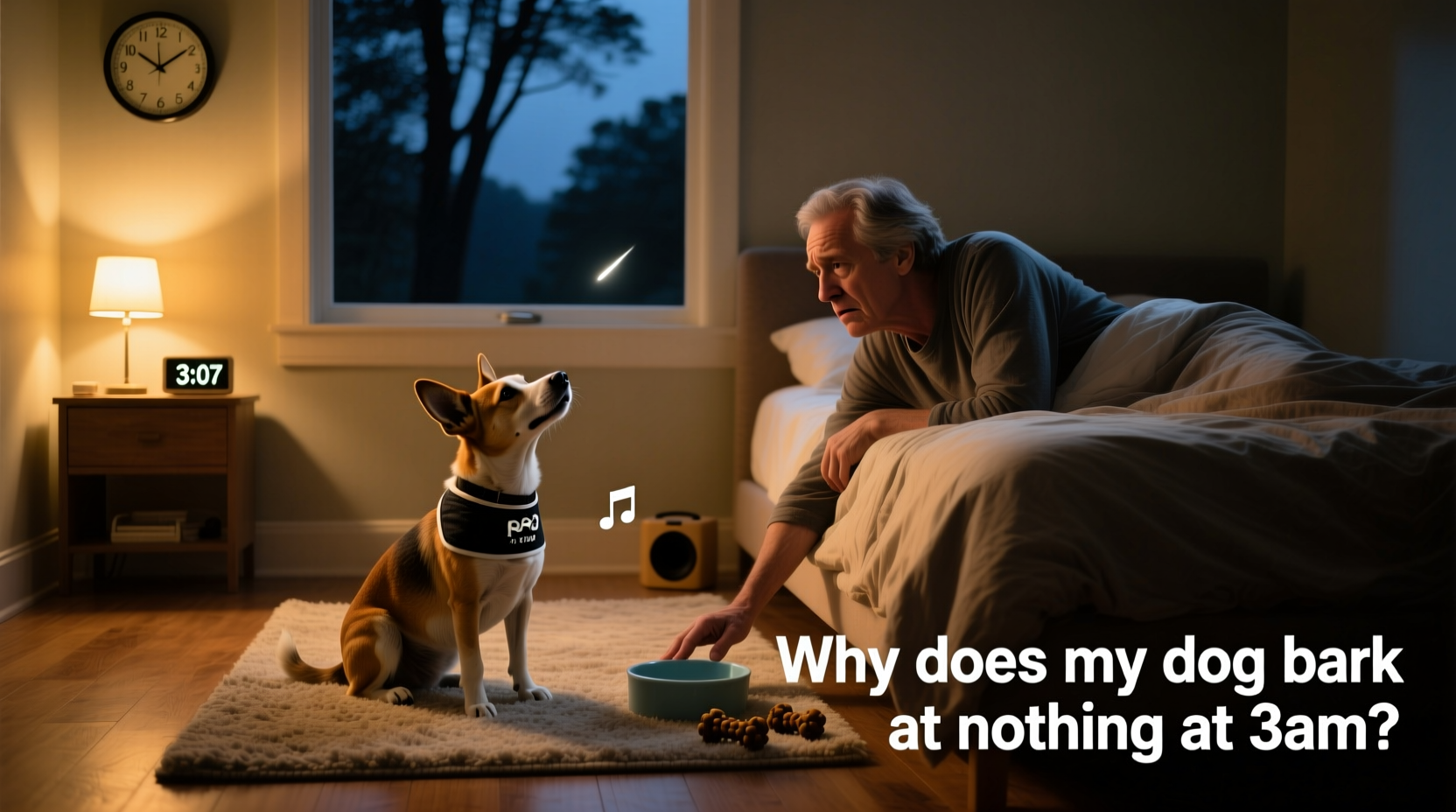
Dogs don’t experience sleep the same way humans do. While we enjoy long stretches of uninterrupted REM sleep, dogs cycle through lighter stages more frequently. They’re biologically wired to stay alert, especially during quiet hours when predators or threats might approach. This evolutionary trait means they wake easily and react quickly to changes in their environment—even faint ones.
A dog’s hearing range extends up to 65,000 Hz, compared to the human limit of around 20,000 Hz. That means sounds completely inaudible to you—like high-pitched rodent movements in walls, distant animal calls, or electrical hums from appliances—can be startlingly clear to your dog. Similarly, their sense of smell and night vision far surpass ours. What appears as “nothing” to you may be a vivid sensory event for them.
Consider this: a raccoon climbing a tree two blocks away, a neighbor turning on a basement freezer, or wind shifting a loose shutter might register as significant events in your dog’s world. These stimuli are fleeting and often dismissed by owners, but they can trigger alert barking—especially if the dog feels responsible for guarding the home.
Possible Causes Behind 3 a.m. Barking Episodes
Barking at 3 a.m. is rarely random. It usually stems from one or more identifiable causes, ranging from environmental factors to medical conditions. Below are the most common explanations:
1. Heightened Environmental Stimuli
Even in urban or suburban homes, nighttime brings unique auditory and olfactory inputs. Dogs may react to:
- Faint scurrying of rodents inside walls
- Wind causing doors or fences to rattle
- Nearby animals (coyotes, cats, owls) communicating
- Distant sirens or vehicle engines
- Changes in barometric pressure before storms
2. Anxiety and Separation Distress
Some dogs suffer from nocturnal anxiety, particularly if they sleep apart from their family. The isolation of early morning hours can amplify feelings of vulnerability. Rescue dogs or those with past trauma may associate silence with danger, triggering hypervigilance.
3. Cognitive Dysfunction in Senior Dogs
Dogs over the age of 7, especially small breeds, can develop Canine Cognitive Dysfunction (CCD)—similar to dementia in humans. Symptoms include disorientation, confusion at night (“sundowning”), aimless wandering, and vocalization without apparent cause.
“Older dogs may bark at shadows or corners not because they see something, but because their brain misinterprets normal stimuli due to neural degradation.” — Dr. Laura Chang, Veterinary Behaviorist
4. Lack of Mental or Physical Stimulation
An under-stimulated dog stores excess energy, which can manifest as restlessness or obsessive behaviors at night. If your dog spends the day alone or inactive, the 3 a.m. barking could be a release of pent-up frustration.
5. Learned Attention-Seeking Behavior
If barking has ever resulted in attention—even negative feedback like scolding—the dog may have learned that vocalizing gets a reaction. Over time, this becomes a conditioned habit, especially during vulnerable hours when the owner is most likely to respond.
Effective Calm Solutions to Reduce Nighttime Barking
Addressing 3 a.m. barking requires a multi-pronged strategy. Reacting emotionally or punishing the behavior will only increase anxiety and worsen the issue. Instead, focus on prevention, environmental management, and emotional regulation.
Step-by-Step Guide to Quieter Nights
- Conduct a Night Audit: Spend three consecutive nights observing your dog between 2–4 a.m. Note what happens before, during, and after the barking. Use a notebook or voice memo app. Look for patterns—does it follow a noise? A specific time? A movement?
- Eliminate or Mask Triggers: If outside noises are suspected, use white noise machines, fans, or calming music designed for dogs (e.g., Through a Dog’s Ear). Close windows, draw blinds, and consider soundproofing thin walls.
- Adjust Sleeping Arrangements: Allow your dog to sleep closer to you, especially if separation anxiety is suspected. Even placing their bed just outside your bedroom door can reduce stress.
- Establish a Wind-Down Routine: Begin 30 minutes before bedtime with dimmed lights, gentle petting, and low-stimulation activities. Avoid play or feeding right before sleep.
- Incorporate Daytime Enrichment: Ensure your dog gets adequate physical exercise and mental challenges during the day. Puzzle toys, scent games, and training sessions tire the mind more effectively than walks alone.
- Consult Your Veterinarian: Rule out medical issues such as pain, thyroid imbalance, or CCD. Blood work and behavioral assessments can guide treatment options, including medication if necessary.
Do’s and Don’ts When Responding to Midnight Barking
| Do | Don’t |
|---|---|
| Stay calm and avoid loud reactions | Yell, shout, or physically punish |
| Use a quiet command like “quiet” if trained | Repeat commands multiple times or engage in conversation |
| Redirect with a soft toy or blanket | Turn on bright lights or make sudden movements |
| Gradually desensitize to known triggers | Reinforce barking by giving attention immediately |
| Track episodes to identify patterns | Assume it’s “just behavior” without investigating causes |
Real Example: How One Owner Solved Her Dog’s 3 a.m. Barking
Sarah, a dog owner in Portland, struggled for months with her 5-year-old Border Collie, Max, who would bark intensely every night around 3:15 a.m. She tried everything—scolding, ignoring, moving his bed—but nothing worked. After tracking the behavior for a week, she noticed the barking coincided with the neighbor’s security light turning off. The sudden shift from light to darkness triggered Max’s alertness.
She installed blackout curtains in the room where Max slept and began playing soft classical music at night. Within five days, the barking stopped entirely. “I never would’ve guessed a light change was the culprit,” Sarah said. “But once I saw the pattern, the fix was simple.”
This case highlights how seemingly insignificant environmental shifts can deeply affect sensitive dogs. Observation and patience led to a non-invasive, lasting solution.
Checklist: Action Plan to Stop 3 a.m. Barking
Use this checklist over the next two weeks to address and reduce nighttime disturbances:
- ✅ Observe and log barking episodes (time, duration, possible triggers)
- ✅ Evaluate your dog’s daily exercise and mental stimulation
- ✅ Introduce white noise or calming music at bedtime
- ✅ Adjust sleeping location to reduce isolation
- ✅ Consult your vet to rule out medical causes
- ✅ Implement a consistent pre-sleep routine
- ✅ Use pheromone diffusers or calming supplements (if recommended)
- ✅ Avoid reinforcing barking with attention or treats
- ✅ Gradually desensitize to known triggers using positive reinforcement
- ✅ Reassess progress weekly and adjust strategies as needed
Frequently Asked Questions
Can dogs see ghosts or spirits at night?
There’s no scientific evidence that dogs perceive supernatural entities. However, their superior senses allow them to detect subtle movements, sounds, or odors that humans miss. What some interpret as “seeing ghosts” is more likely acute awareness of real, albeit imperceptible, stimuli.
Is it normal for older dogs to bark at night for no reason?
No—it’s not “normal” in the sense of being healthy. While more common in senior dogs, nighttime barking can signal cognitive decline, discomfort, or sensory confusion. Early intervention improves quality of life and slows progression of conditions like CCD.
Should I wake my dog if they start barking at 3 a.m.?
Only if they appear distressed or stuck in a loop of anxiety. Otherwise, avoid interaction. Waking them reinforces the idea that barking leads to engagement. Instead, use passive calming tools like background noise or pheromones to ease transitions back to sleep.
Conclusion: Restore Peace with Patience and Insight
Your dog isn’t barking at nothing—they’re responding to a world richer in sensation than we can perceive. Dismissing their behavior as nuisance ignores their instincts, needs, and emotional reality. By approaching 3 a.m. barking with curiosity instead of frustration, you open the door to deeper understanding and connection.
The solutions aren’t always immediate, but they are within reach. Whether adjusting the environment, enriching daily routines, or seeking veterinary support, each step moves you closer to restful nights and a calmer, more confident dog. This isn’t just about stopping noise—it’s about honoring your dog’s experience and meeting them where they are.




 浙公网安备
33010002000092号
浙公网安备
33010002000092号 浙B2-20120091-4
Comments
No comments yet. Why don't you start the discussion?