
It’s a familiar holiday scene: you’ve just finished decorating the Christmas tree, lights twinkling, ornaments shimmering—and your dog starts barking at it like it’s an intruder. Confusion, concern, or even frustration might follow. But this behavior is far more common—and understandable—than many pet owners realize. Dogs don’t come with built-in knowledge that a pine-scented, glitter-covered structure in the living room is a seasonal symbol of joy. To them, it’s new, strange, and possibly threatening.
Understanding why dogs react this way requires insight into canine senses, instincts, and environmental perception. From sudden changes in scent and sound to visual movement and territorial awareness, multiple factors contribute to a dog’s first-time reaction to a Christmas tree. More importantly, knowing how to respond can transform stress into calm, fear into curiosity, and chaos into harmony during the holidays.
The Canine Perspective: A World of Senses
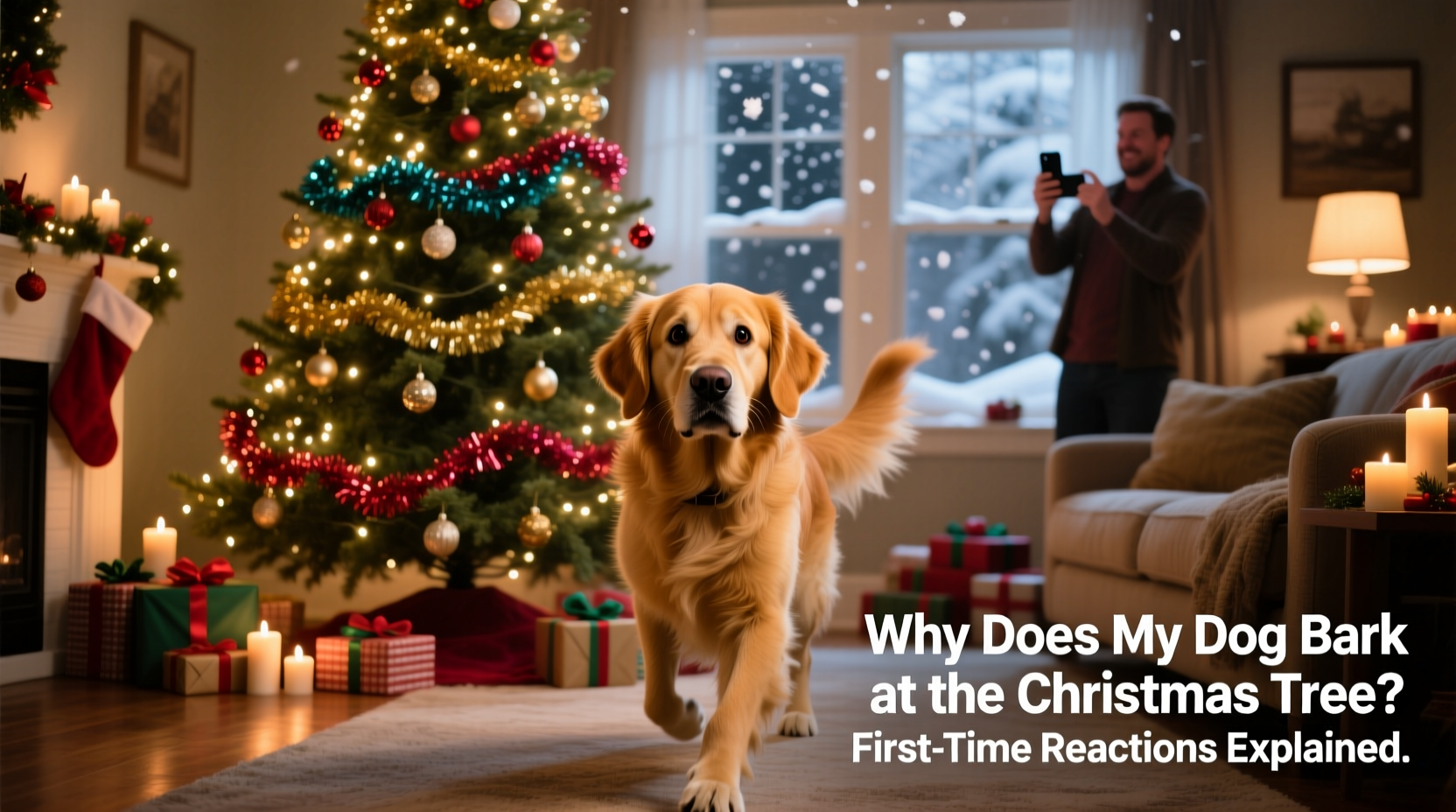
Dogs experience their environment primarily through smell, hearing, and movement detection—far beyond what humans perceive. When a Christmas tree appears overnight, it introduces a sensory overload:
- Smell: Evergreen trees emit strong terpenes—aromatic compounds that are completely foreign to most indoor environments. For dogs with highly sensitive noses (up to 300 million olfactory receptors), this sudden change can be alarming or intriguing.
- Sight: Shiny ornaments reflect light unpredictably. As people walk by or lights flicker, these reflections create moving stimuli that resemble prey-like motion, triggering alertness or chase instincts.
- Sound: Ornaments clink when brushed. Tinsel rustles. Even subtle vibrations from nearby footsteps can cause delicate decorations to shift slightly—each noise registering as potentially significant to a dog’s acute hearing.
- Space Invasion: The tree occupies prime territory—often the center of the home. Dogs are territorial animals; any alteration in layout may prompt investigation or defensive behavior.
This combination makes the Christmas tree not just a decoration but a full-scale environmental disruption from a dog’s point of view.
Instinctual Triggers Behind the Barking
Barking at the tree isn’t misbehavior—it’s communication. Your dog is expressing confusion, alarm, or even playfulness. Several instinctual drivers explain this reaction:
1. Territorial Alertness
Dogs are naturally vigilant about changes in their domain. A large object appearing without warning activates their guard instinct. Barking serves as a warning: “Something new is here—I’m watching it.” This is especially true in breeds bred for guarding or herding.
2. Prey Drive Activation
Flickering lights, dangling ornaments, and fluttering tinsel mimic small, fast-moving creatures. Breeds with high prey drive—like Terriers, Border Collies, or Australian Shepherds—may perceive these as targets worth chasing or attacking.
3. Fear-Based Reactivity
If the tree emits unfamiliar scents or makes unexpected noises, some dogs interpret it as dangerous. Fear-based barking is defensive, often accompanied by lowered body posture, wide eyes, or attempts to retreat after barking.
4. Curiosity and Play Initiation
Not all barking is negative. Some dogs bark to initiate interaction: “Hey, what’s this thing? Can I sniff it? Is it fun?” In these cases, barking may be higher-pitched and followed by playful bows or gentle pawing.
“Dogs don’t see the symbolism of a Christmas tree—they see novelty, movement, and scent disruption. Their response depends on temperament, past experiences, and breed tendencies.” — Dr. Lena Torres, Veterinary Behaviorist
Real Example: Max the Rescue Beagle’s First Tree Encounter
Max, a three-year-old rescue Beagle adopted six months before the holidays, had never seen a Christmas tree. When his family brought one home, he froze at the doorway, ears forward, tail low. After five minutes of silent observation, he began barking sharply every time the lights blinked.
His owners initially thought he was being stubborn. But using gradual exposure techniques—first letting him sniff the base of the unplugged tree, then introducing soft lighting over several days—they helped Max associate the tree with calmness rather than threat. Within a week, Max would lie near the tree, occasionally nudging fallen pine needles with his nose—but no longer barking.
This case illustrates how patience and understanding can shift reactivity into acceptance.
Step-by-Step Guide: Helping Your Dog Adjust to the Christmas Tree
Managing your dog’s reaction requires proactive, structured adjustment. Follow this timeline in the days leading up to full decoration:
- Day 1–2: Introduce the Stand or Bare Tree
Set up the tree stand or a plain, undecorated tree. Let your dog approach freely. Reward calm behavior with treats or praise. Do not force interaction. - Day 3–4: Add Lights (Unplugged First)
Attach lights while off. Allow exploration. After 24 hours, turn them on briefly during low-traffic times. Monitor your dog’s reaction. - Day 5–6: Introduce Non-Reflective Ornaments
Use fabric or wooden decorations first—avoid shiny or noisy ones. Place them higher up initially, out of reach. - Day 7+: Gradually Add Full Decorations
Introduce tinsel, bells, and glass ornaments only when your dog shows consistent calmness. Always supervise early interactions. - Ongoing: Manage Access and Reinforce Calmness
Use baby gates or leashes if needed. Reward quiet behavior near the tree daily. Redirect attention if barking begins.
This phased method reduces sensory shock and builds positive associations.
Do’s and Don’ts: Managing Dog-Tree Interactions
| Action | Do | Don't |
|---|---|---|
| Introduction | Allow sniffing and slow acclimation over several days | Rush setup or leave dog unsupervised immediately |
| Decorating | Use pet-safe, non-toxic ornaments; secure tree to wall | Hang edible treats or fragile items within reach |
| Reinforcement | Offer treats when dog remains calm near tree | Yell or punish barking—this increases anxiety |
| Supervision | Use barriers when away from home | Leave dog unattended with lights on or loose tinsel |
| Response to Barking | Calmly redirect with a command like “sit” or “leave it” | Engage in prolonged eye contact or escalate tone |
Checklist: Preparing Your Dog for Holiday Decor
Before setting up your tree, ensure you’re ready to support your dog’s transition:
- ✅ Choose a stable, anchored tree stand to prevent tipping
- ✅ Select shatterproof, non-toxic ornaments
- ✅ Plan a gradual introduction schedule (3–7 days ideal)
- ✅ Stock up on high-value treats for positive reinforcement
- ✅ Install a gate or barrier for unsupervised times
- ✅ Remove hazardous items like electrical cords from floor level
- ✅ Identify a quiet retreat space for your dog (e.g., bed in another room)
FAQ: Common Questions About Dogs and Christmas Trees
Why does my dog only bark when the lights are on?
Flickering lights create dynamic visual stimuli that mimic movement. Dogs, especially those with high arousal thresholds or prey drive, react to these changes. Try switching to steady LED lights or dimmer settings to reduce stimulation.
Is it safe to let my dog near the tree?
Only under supervision. Risks include ingesting pine needles (which can cause gastrointestinal blockages), chewing electrical cords, or knocking over the tree. Always anchor the tree securely and remove tempting items.
Could barking at the tree be a sign of deeper anxiety?
Potentially. If your dog shows additional signs—panting, pacing, hiding, or refusing food—around the tree, they may be experiencing heightened stress. Consider consulting a certified animal behaviorist if avoidance or fear persists beyond two weeks.
Conclusion: Turning Reaction into Calm Acceptance
Your dog’s barking at the Christmas tree isn’t defiance—it’s perception. They’re responding to a world that suddenly smells different, looks unpredictable, and sounds unfamiliar. With empathy, structure, and consistency, you can guide them from alarm to acceptance.
The holiday season should be joyful for the entire household—including your four-legged members. By respecting your dog’s instincts and adjusting your approach accordingly, you create not only a safer environment but also a more inclusive celebration. Start early, stay patient, and remember: today’s barking watchdog might become tomorrow’s peaceful tree-side napper.




 浙公网安备
33010002000092号
浙公网安备
33010002000092号 浙B2-20120091-4
Comments
No comments yet. Why don't you start the discussion?