
For many dog owners, the holiday season brings joy, warmth, and festive decorations — especially the glowing Christmas tree. But for some dogs, that same twinkling centerpiece becomes a source of stress, confusion, or even alarm. If your dog barks persistently at the Christmas tree lights, you're not alone. This behavior is more common than you might think, and it stems from a mix of instinct, sensory sensitivity, and environmental change.
Dogs perceive their world differently than humans. What we see as cozy ambiance, they may interpret as erratic movement, flashing threats, or unfamiliar energy in their territory. Understanding the root causes behind this reaction is the first step toward creating a peaceful environment for both you and your pet. More importantly, there are proven strategies to reduce anxiety, prevent barking, and help your dog coexist calmly with holiday decor.
Why Dogs React to Christmas Tree Lights: The Science Behind the Barking
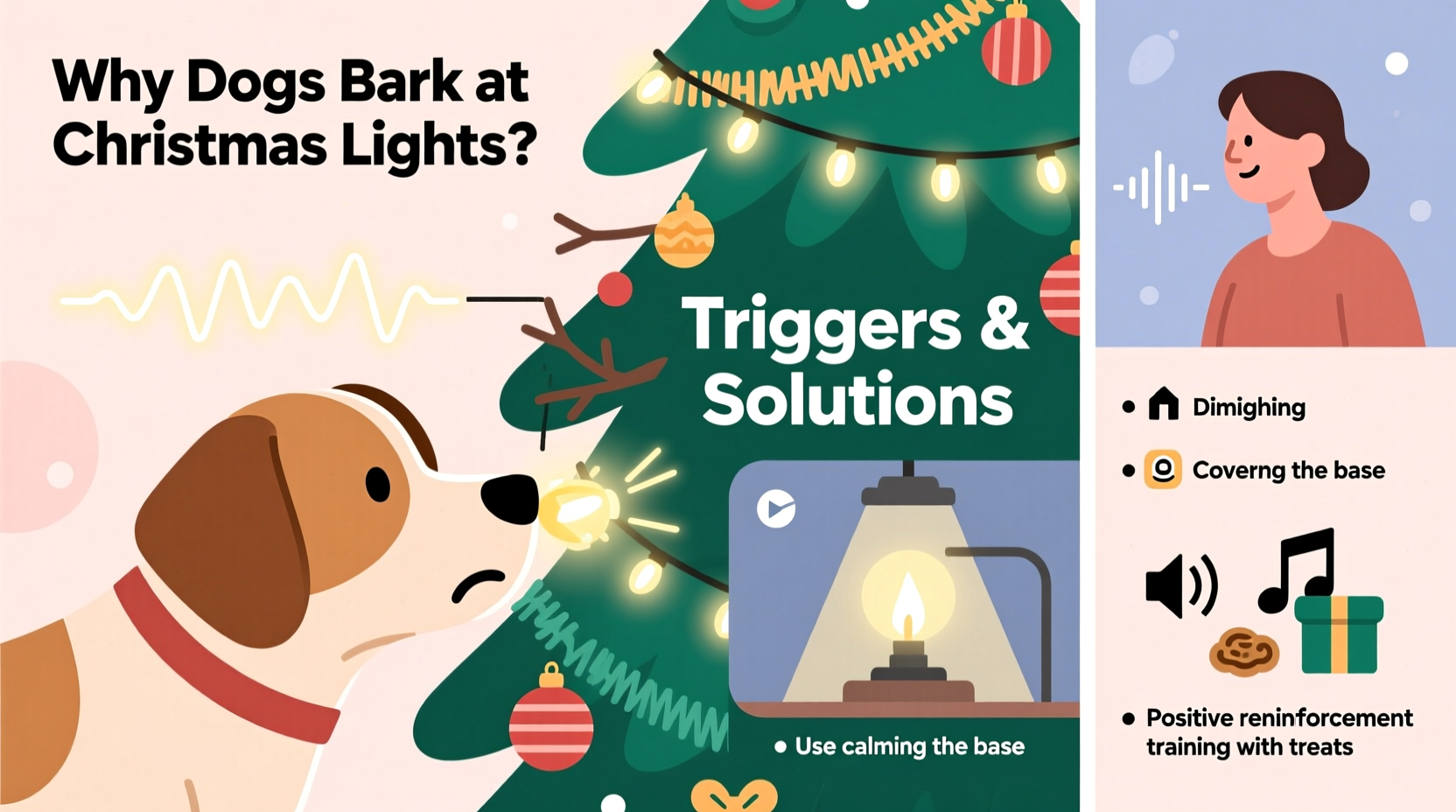
Dog barking at Christmas tree lights isn’t misbehavior — it’s communication. Your dog is responding to stimuli based on natural instincts and sensory input. Several factors contribute to this reaction:
- Movement sensitivity: Even subtle flickering or reflections off shiny ornaments can mimic motion, triggering a prey drive or alert response.
- Sudden changes in environment: Introducing a large, brightly lit object into a familiar space disrupts a dog’s sense of security.
- Unfamiliar sounds: Some light sets emit faint buzzing or humming noises, which fall within a dog’s broader hearing range and may be irritating.
- Territorial instinct: Dogs may view the tree as an intruder, especially if it occupies a central area they normally guard.
- Past negative experiences: A previous scare involving lights (e.g., a bulb popping or a fallen strand) can create lasting associations.
Dr. Karen Overall, a board-certified veterinary behaviorist, explains: “Dogs don’t generalize well. Something novel in their environment — particularly something that moves or flashes — is automatically suspect. Their job, evolutionarily speaking, is to notice anomalies.”
“Flashing lights can overstimulate a dog’s visual cortex, especially in low-light settings where contrast is high. This isn’t just annoyance — it can be genuinely distressing.” — Dr. Sarah Jones, Canine Neurobehavioral Researcher
Common Triggers That Set Off Barking Behavior
Not all dogs react the same way, but certain features of Christmas tree lighting consistently provoke reactions. Identifying the specific trigger helps tailor the solution.
| Trigger | Why It Affects Dogs | Signs of Distress |
|---|---|---|
| Flickering or twinkle modes | Mimics unpredictable movement; activates alert system | Staring, stiff posture, low growling, sudden barking |
| Bright LED intensity | Overloads sensitive retinas, especially in dim rooms | Squinting, turning away, pawing at eyes |
| Hanging ornaments reflecting light | Casts moving spots like laser pointers | Chasing reflections, snapping at air |
| Noise from electrical components | High-frequency hums in power adapters or transformers | Head tilting, ear flicking, pacing |
| Unstable placement of tree | Tree sways when bumped, increasing perceived threat | Continuous monitoring, barking when movement occurs |
Small breeds and herding dogs — such as Border Collies, Shelties, and Terriers — are often more reactive due to higher arousal thresholds and stronger visual tracking instincts. Puppies and young dogs may also bark out of curiosity rather than fear, mistaking lights for toys.
Step-by-Step Guide to Reducing Light-Induced Barking
Calming your dog around the Christmas tree doesn’t require removing all festivity. Instead, use gradual desensitization and environmental control to build tolerance.
- Introduce the tree without lights
Set up the tree during daylight hours with no ornaments or lights. Allow your dog to investigate freely while rewarding calm behavior with treats or praise. - Add lights gradually
Turn on the lights for short intervals (5–10 minutes) while your dog is relaxed — perhaps after a walk or meal. Use steady, non-flickering modes only at first. - Pair lights with positive experiences
Feed meals near the tree, play calming music, or offer a stuffed Kong nearby. This builds positive associations. - Increase exposure slowly
Extend lighting duration by 5-minute increments daily. Monitor body language closely — stop if signs of stress appear. - Add ornaments carefully
Use fewer reflective balls. Avoid tinsel, which can look like snakes or moving prey. Opt for fabric or wooden decorations. - Control access when unsupervised
Use baby gates or close doors to limit access to the room. Prevent reinforcement of barking when no one is present. - Maintain routine
Stick to regular feeding, walking, and sleeping schedules. Predictability reduces overall anxiety during seasonal changes.
Practical Solutions and Preventive Measures
Beyond training, practical adjustments make a significant difference in how your dog perceives the tree.
Consider using smart bulbs with dimming capabilities so you can adjust brightness remotely. Placing a sheer curtain between the tree and common dog pathways can diffuse glare without sacrificing aesthetics.
If noise is a factor, test your light set near your dog before decorating. Hold it close to listen for buzzing. Replace older strands with newer, low-emission models. Battery-powered lights eliminate transformer hum entirely and are safer around curious paws.
For highly reactive dogs, try redirecting attention. Provide a designated “safe zone” — a bed or crate with white noise or calming pheromone diffusers (like Adaptil) — located away from the tree. Rotate special chew toys only during tree-light hours to shift focus.
Mini Case Study: Luna, the Reactive Beagle
Luna, a 3-year-old Beagle in Portland, began barking intensely whenever her family turned on the living room Christmas tree. Her owners initially thought she wanted to play, but the behavior escalated to nightly outbursts and sleep disruption.
After consulting a trainer, they discovered Luna was reacting to tiny reflections cast by a glass ornament onto the ceiling — invisible to human eyes in the dark but clearly visible to her. By replacing the ornament and switching to steady, dimmed lights, Luna’s barking stopped within three days. The family now uses a “reflection check” each year before finalizing decor.
Checklist: Dog-Friendly Holiday Lighting Setup
- ✅ Choose steady, non-flickering light modes
- ✅ Use warm-white LEDs instead of cool or multicolor
- ✅ Test lights for buzzing or humming sounds
- ✅ Position tree away from dog’s main resting areas
- ✅ Avoid mirrors or shiny surfaces nearby that amplify reflections
- ✅ Supervise initial interactions and reward calm behavior
- ✅ Install barriers to prevent unsupervised access
- ✅ Offer alternative enrichment (chews, puzzles) during lighting hours
Frequently Asked Questions
Is it normal for dogs to bark at Christmas lights?
Yes, especially if the lights flicker, reflect, or represent a sudden change in the home. Many dogs bark out of alertness or confusion, not aggression. With proper introduction and management, most adapt within a few days.
Can Christmas lights hurt my dog’s eyes?
While typical holiday lights won’t cause physical damage, prolonged exposure to intense or flashing LEDs may lead to visual fatigue or headaches in sensitive dogs. If your dog avoids the room, squints, or shows signs of discomfort, reduce brightness or limit exposure time.
Should I cover the tree when I’m not home?
Yes, especially if your dog has shown obsessive or destructive behavior around it. Use a lightweight, breathable tree cover or gate off the room. This prevents rehearsal of unwanted behaviors like barking or chewing cords.
Expert Insight: Long-Term Behavioral Adjustment
Consistency is key when modifying a dog’s reaction to environmental stimuli. Dr. Ian Dunbar, veterinarian and animal behavior specialist, emphasizes: “You’re not just managing a momentary reaction — you’re reshaping your dog’s emotional response. That takes repetition, patience, and avoiding punishment.”
“Never scold a dog for barking at something frightening. You risk increasing anxiety and eroding trust. Instead, change the meaning of the stimulus through positive association.” — Dr. Lila Torres, Certified Animal Behavior Consultant
For dogs with deep-seated fear, consider working with a certified professional. In extreme cases, temporary use of calming aids — such as weighted blankets, thunder shirts, or vet-approved supplements — can support behavioral modification.
Conclusion: Creating Harmony During the Holidays
The Christmas tree should be a symbol of joy for the entire household — including your dog. Barking at lights isn’t defiance; it’s a signal that your pet needs guidance through a changing environment. By identifying triggers, applying gradual exposure, and making thoughtful decor choices, you can transform stress into calm.
This holiday season, take a moment to see the tree through your dog’s eyes. A few simple adjustments can make all the difference in helping them feel safe, secure, and included in the festivities. Start today — your dog’s peace of mind is worth the effort.




 浙公网安备
33010002000092号
浙公网安备
33010002000092号 浙B2-20120091-4
Comments
No comments yet. Why don't you start the discussion?