
Every December, thousands of pet owners face the same urgent, heart-stopping moment: walking into the living room to find their dog gnawing on a strand of Christmas lights—wires exposed, bulbs cracked, saliva glistening on frayed insulation. It’s not just inconvenient—it’s dangerous. Electrical shock, internal burns, intestinal obstruction, and even death are real risks. Yet this behavior persists year after year, often mislabeled as “just being festive” or “puppy mischief.” The truth is more nuanced: chewing Christmas lights is rarely random. It’s a symptom—a convergence of instinct, environment, physiology, and unmet needs. Understanding the root causes is the first step toward lasting prevention—not just for this holiday season, but for every one to come.
The Five Core Reasons Your Dog Targets Christmas Lights
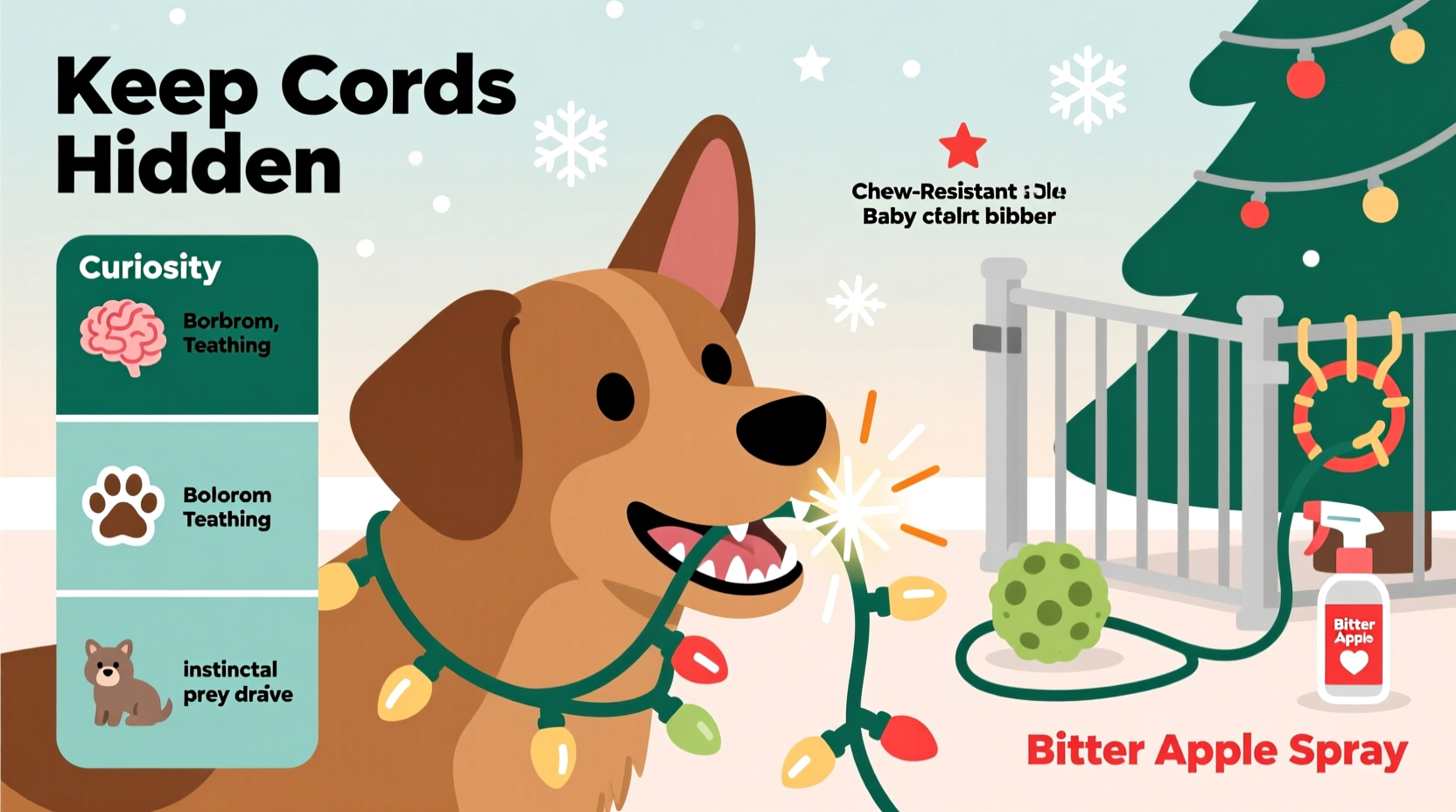
Dogs don’t chew lights because they’re “drawn to the sparkle” in any mystical sense. Their motivation stems from observable, addressable drivers—some behavioral, some developmental, some medical. Here’s what veterinary behaviorists and certified dog trainers consistently identify:
- Teething discomfort (especially in puppies under 7 months): Puppies experience intense gum pressure as adult teeth erupt. Flexible, cool, slightly textured cords mimic the relief of chew toys—but with far greater risk.
- Boredom and under-stimulation: Holiday routines shift dramatically—more guests, altered schedules, less outdoor time. A dog left alone for hours near unsecured decorations becomes an opportunistic chewer.
- Anxiety triggers: The combination of unfamiliar scents (pine, cinnamon, wax), sudden noises (popcorn machines, carols at high volume), and visual overstimulation (flashing lights, moving ornaments) can spike cortisol. Chewing releases endorphins—a self-soothing mechanism gone awry.
- Positive reinforcement history: If your dog once chewed lights and received attention—even negative attention like shouting or chasing—the behavior was reinforced. Dogs learn quickly that certain actions reliably produce human interaction.
- Medical or nutritional factors: Pica (compulsive non-food eating) can signal underlying issues—iron-deficiency anemia, pancreatic insufficiency, or gastrointestinal distress. Chronic nausea or oral pain may also drive dogs to chew unusual objects for sensory distraction.
Crucially, these reasons often overlap. A 5-month-old rescue puppy with separation anxiety may chew lights not only to soothe stress but also because his teething gums ache and he hasn’t learned appropriate alternatives. Effective intervention requires addressing all active contributors—not just the most obvious one.
Immediate Safety Measures: What to Do *Right Now*
If your dog has already shown interest—or worse, has chewed lights—prioritize safety before attempting behavior modification. Electricity doesn’t wait for training plans.
Next, conduct a full environmental audit:
- Inspect every cord for nicks, exposed copper, or bite marks. Discard any compromised strand immediately—even if it still “works.”
- Route wires behind furniture, inside cord covers, or along baseboards using adhesive clips—not tape (which dogs lick off).
- Elevate trees at least 3 feet from walls and anchor them securely to prevent toppling if bumped or leaned on.
- Use battery-operated LED lights for lower branches and pet-accessible zones. They generate no heat and carry zero electrocution risk.
Remember: Prevention isn’t about restricting joy—it’s about preserving life. One study published in the Journal of Veterinary Behavior found that 73% of electrical injuries in dogs occurred when owners assumed “he’s never done it before” or “he only does it when I’m not looking.” Assumptions have consequences.
A Step-by-Step Behavior Modification Plan (Weeks 1–4)
Changing this behavior requires consistency—not perfection. Follow this phased approach, adjusting pace based on your dog’s temperament and progress:
- Week 1: Observe & Redirect
Track when and where chewing occurs (e.g., “10 a.m., unattended 12 minutes, near tree base”). Keep a high-value chew toy (like a frozen KONG stuffed with pumpkin and peanut butter) within arm’s reach. Every time your dog approaches lights, calmly say “Leave it,” then immediately offer the toy. Reward calm interaction with the toy—not just taking it. - Week 2: Build the “Go to Mat” Cue
Teach your dog to settle on a designated mat near the tree (but out of light range). Start with 10 seconds, rewarding stillness with quiet praise and soft treats. Gradually extend duration while adding low-level distractions (e.g., turning on a nearby lamp). This creates a safe, rewarded alternative location. - Week 3: Introduce Controlled Exposure
With lights unplugged, let your dog investigate the tree area on leash. If he sniffs cords, mark with a quiet “Yes!” and reward with a treat *away* from the cord. If he lunges or mouths, gently redirect to his mat or a chew toy—no punishment, no tension on the leash. Goal: associate proximity with positive outcomes, not restriction. - Week 4: Add Realistic Conditions
Plug in lights *only during supervised sessions*. Keep sessions short (3–5 minutes initially). Use a baby gate to limit access to the tree zone if needed. Reinforce calm observation—no need to interact. Celebrate stillness. If chewing resumes, pause the plan for 3 days and revisit Week 2 fundamentals.
This method works because it replaces fear-based correction (“No! Bad dog!”) with confidence-building choice. As Dr. Sarah Heath, a European Veterinary Specialist in Behavioural Medicine, explains:
“Dogs don’t understand ‘naughty’ or ‘festive.’ They understand consequence, predictability, and safety. When we respond to chewing with panic or punishment, we amplify the very anxiety driving the behavior. Calm redirection builds trust—and trust is the foundation of reliable impulse control.” — Dr. Sarah Heath, BVSc, DACVB, DECVBM-CA
Do’s and Don’ts: A Practical Decision Guide
Conflicting advice floods pet forums and social media. Cut through the noise with this evidence-informed table—based on peer-reviewed canine learning research and clinical veterinary behavior practice:
| Action | Do | Don’t |
|---|---|---|
| Chew Toy Strategy | Offer multiple textures daily (rubber, rope, food-stuffed, frozen) rotated every 48 hours to maintain novelty and dental benefit. | Give only one toy for weeks on end—or use rawhide/chews that splinter easily and cause choking or GI blockage. |
| Training Language | Use consistent, neutral cues (“Leave it,” “Go to mat”) paired with immediate, tangible rewards (treats, play, access to yard). | Yell, spray with water, or use shock/lemon-spray deterrents—these increase fear, erode trust, and often worsen compulsive behaviors. |
| Environmental Management | Install motion-activated air canisters (like Ssscat) *near—but not on—the tree base* to startle *before* contact, paired with a “Go to mat” cue. | Rely solely on bitter apple spray on cords—most dogs habituate within 3–5 applications, and licking it off introduces toxins. |
| Veterinary Collaboration | Schedule a wellness exam *before* holiday decorating begins—especially if chewing is new, escalating, or accompanied by drooling, lethargy, or appetite changes. | Assume “it’s just a phase” without ruling out dental disease, parasites, or nutrient deficiencies—particularly in senior dogs or those on homemade diets. |
Real Example: How Maya Stopped Her Rescue Terrier Mix From Chewing Lights
Maya adopted Leo, a 10-month-old Jack Russell–Cairn mix, in early November. Within days, he’d bitten through two strands of lights and knocked over the tree twice. His vet ruled out medical causes, but noted mild gingivitis—suggesting oral discomfort contributed. Maya followed the four-week plan but added three key adaptations:
- She used a lightweight, washable “tree skirt” made of tightly woven canvas—too dense to chew, yet soft enough to sit on. She placed Leo’s favorite mat directly atop it, making the zone feel like his space—not forbidden territory.
- She installed a timed feeder near the tree that dispensed kibble every 20 minutes during peak activity hours (4–7 p.m.), reducing anticipatory arousal around guest arrivals.
- She recorded audio of gentle holiday music played at low volume *during walks* for two weeks before decorating—desensitizing Leo to seasonal sounds without overwhelming him.
By December 15th, Leo would trot to his mat, lie down, and watch the lights blink—tail thumping softly. No shocks. No vet visits. No ruined decorations. His success wasn’t magic—it was methodical, compassionate, and grounded in understanding his biology and history.
FAQ: Quick Answers to Pressing Questions
Can I use citrus sprays or cayenne pepper on cords?
No. While temporarily aversive, these substances pose inhalation and ingestion risks—especially for dogs who lick surfaces or have sensitive airways. Citrus oils can cause liver toxicity in small breeds; cayenne irritates mucous membranes and may trigger panic. Safer alternatives include commercial pet-safe deterrents labeled for electrical cords (e.g., Grannick’s Bitter Apple *specifically formulated for wiring*)—but always pair with positive reinforcement, not reliance.
My dog only chews lights when I’m on video calls—why?
This points strongly to attention-seeking behavior amplified by your altered routine. Video calls often mean you’re seated longer, facing away, and less responsive—creating a perfect window for your dog to “interrupt” with high-impact behavior. Instead of reacting to chewing, proactively engage him *before* calls begin: give a long-lasting chew, initiate a short training session, or set up a puzzle feeder. Predictability reduces the need for attention grabs.
Is crate training the answer?
Crate training *can* be part of a solution—but only if your dog is fully crate-conditioned *before* the holidays and views the crate as safe, not punitive. Forcing a stressed dog into confinement during peak stimulation often increases anxiety and may lead to destructive chewing *inside* the crate. Better to use baby gates for zone management while building voluntary relaxation skills elsewhere.
Conclusion: Make This the Last Year You Worry
Your dog isn’t trying to ruin your holidays. He’s communicating—through teeth, tail, and timing—that something is out of balance: his energy, his comfort, his sense of security, or his understanding of boundaries. Chewing Christmas lights isn’t defiance. It’s data. And now you know how to read it.
You don’t need perfect execution—you need committed observation, compassionate consistency, and the willingness to adjust. Start today: unplug one strand, place a chew toy beside the sofa, and spend five minutes practicing “Go to mat” with quiet praise. Small actions compound. By New Year’s Eve, you won’t just have intact lights—you’ll have deeper trust, clearer communication, and a calmer, more confident companion.




 浙公网安备
33010002000092号
浙公网安备
33010002000092号 浙B2-20120091-4
Comments
No comments yet. Why don't you start the discussion?