
Every year, as homes fill with twinkling lights and festive decor, emergency vet visits spike—not from holiday feasts or wrapping paper mishaps, but from a surprisingly common culprit: Christmas tinsel. Dogs are drawn to the shimmering strands like moths to a flame, often leading to serious health risks. If your dog has ever lunged at tinsel or you’ve found shredded metallic pieces near the tree, you’re not alone. Understanding why dogs chew tinsel—and how to stop it—is essential for a joyful, safe holiday season.
Tinsel may seem harmless, but when ingested, it can cause intestinal blockages, perforations, and even life-threatening complications requiring surgery. The good news? With proactive management, environmental adjustments, and behavioral training, you can protect your dog without sacrificing holiday cheer.
Why Dogs Are Attracted to Christmas Tinsel
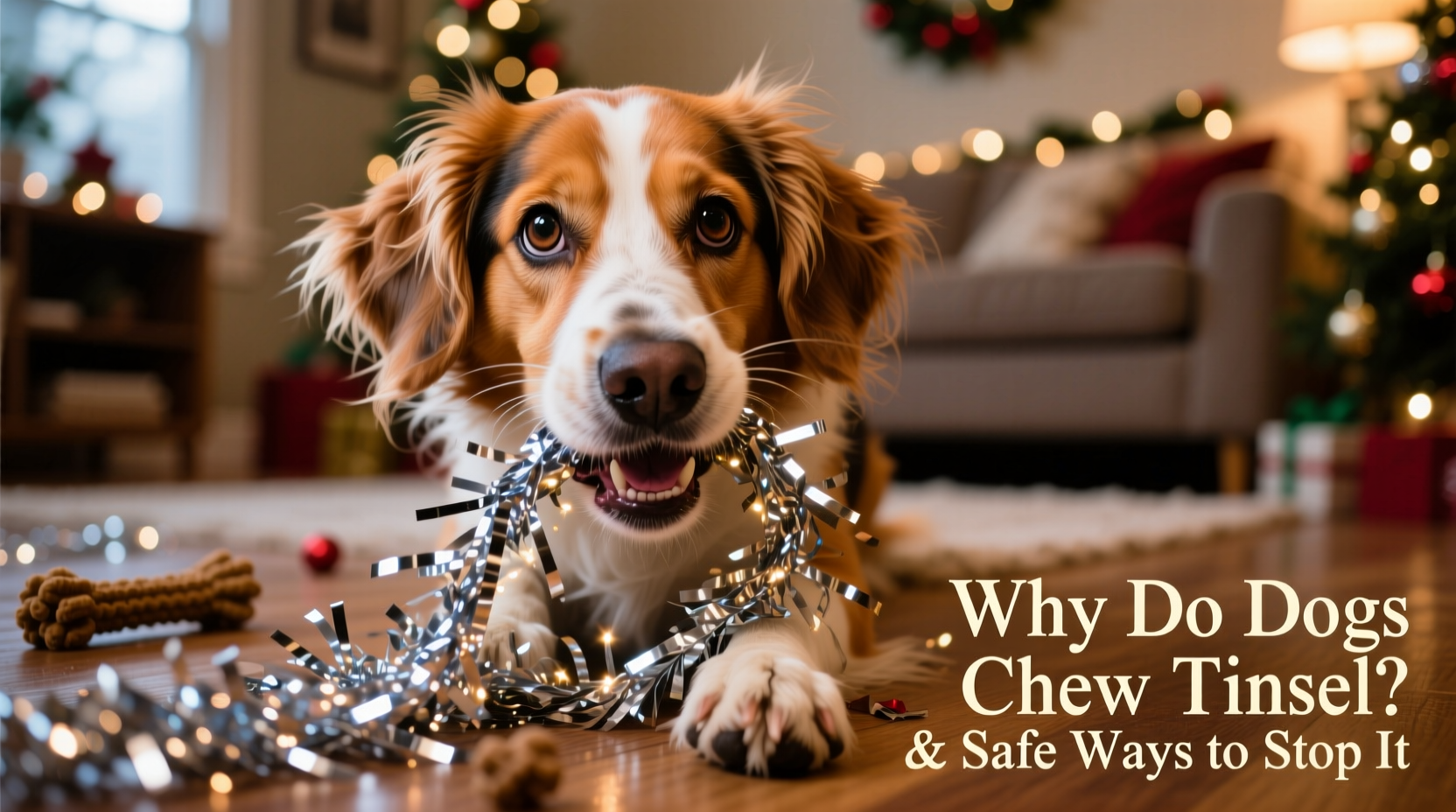
Dogs don’t chew tinsel out of malice or mischief—they do it because their instincts interpret it as something worth investigating. Several factors drive this behavior:
- Movement and Reflection: Tinsel sways gently and reflects light in unpredictable patterns, mimicking prey-like motion. This visual stimulation triggers a dog’s predatory instinct, especially in high-energy or toy-driven breeds.
- Texture and Sound: The crinkly noise and slippery texture make tinsel feel like a toy. Many dogs enjoy the tactile feedback of chewing or batting at it, similar to playing with plastic bags or foil.
- Scent Curiosity: If tinsel has been handled by multiple people or stored near food, it may carry faint odors that pique a dog’s interest.
- Boredom or Anxiety: During the holidays, routines shift, guests arrive, and dogs may experience stress. Chewing provides sensory relief and mental distraction, making tinsel an easy target.
Puppies and young dogs are particularly prone to mouthing unfamiliar objects, but even well-trained adult dogs can be tempted by the novelty of seasonal decor.
“Tinsel is one of the most hazardous non-food items dogs ingest during December. Its linear shape makes it especially dangerous—it can ‘bunch up’ in the intestines and cause severe damage.” — Dr. Lena Peterson, DVM, Veterinary Emergency Specialist
The Hidden Dangers of Ingested Tinsel
Unlike swallowing a sock or a small toy, ingesting tinsel poses unique medical risks due to its physical properties. When a dog eats a long, thin object like tinsel, it becomes a “linear foreign body.” As the digestive tract contracts, the anchored ends of the tinsel can pull against intestinal walls, causing them to fold over or tear—a condition known as “razor-wiring.”
Symptoms of tinsel ingestion include:
- Vomiting (especially persistent or projectile)
- Lethargy or reluctance to move
- Loss of appetite
- Abdominal pain (dog may arch back or resist belly touch)
- Diarrhea or constipation
- Drooling or excessive licking
If any of these signs appear after suspected tinsel exposure, seek veterinary care immediately. Delaying treatment increases the risk of peritonitis, sepsis, or surgical intervention.
How to Prevent Tinsel Chewing: A Step-by-Step Guide
Prevention is always safer and less stressful than treatment. Follow this timeline to secure your home before temptation strikes.
- Assess Your Dog’s Risk Level (Week 1): Consider your dog’s age, breed, chewing history, and curiosity level. Puppies, herding breeds (like Border Collies), and terriers are typically higher-risk.
- Choose Safer Decor Alternatives (Week 2): Replace traditional tinsel with pet-friendly options such as fabric garlands, felt ornaments, or wooden decorations hung out of reach.
- Secure the Tree Area (Week 3): Use a baby gate or playpen to block access to the tree when unsupervised. Even a well-trained dog can act impulsively if left alone with tempting decor.
- Elevate and Anchor Decorations (Ongoing): Hang ornaments and tinsel at least 3 feet off the ground—or higher if your dog jumps. Avoid placing shiny or dangling items near the tree’s base.
- Supervise and Redirect (Throughout Holiday Season): When your dog shows interest in tinsel, calmly redirect with a toy or command. Reinforce calm behavior with treats or praise.
Consistency is key. Training won’t work overnight, but repeated redirection builds new associations over time.
Do’s and Don’ts of Holiday Pet Safety
| Do | Don’t |
|---|---|
| Use pet-safe, non-toxic decorations | Use tinsel, ribbon, or string-like decor within reach |
| Keep the tree water covered or use a barrier | Leave tree water exposed (may contain bacteria or preservatives) |
| Provide plenty of chew toys and mental stimulation | Leave your dog unattended near the tree |
| Train “leave it” and “drop it” commands early | Scold or punish after the fact—this creates fear, not learning |
| Check floors daily for fallen decor | Assume all decorations are secure—even sturdy setups fail |
Real Example: How One Family Prevented a Crisis
The Thompson family learned the hard way. Their two-year-old Labrador, Daisy, had never shown interest in decorations—until Christmas Eve. While the family was wrapping gifts, Daisy slipped past the open living room door and began tugging at the tinsel-laden tree. By the time they noticed, she’d already swallowed a 12-inch strand.
Daisy seemed fine at first, but by midnight she was vomiting and refusing food. An urgent vet visit confirmed partial intestinal obstruction. Surgery was required to remove the tinsel, costing over $3,200 and leaving Daisy with a recovery period of two weeks.
The following year, the Thompsons took a different approach: they replaced tinsel with a red-and-white crocheted garland, installed a decorative gate around the tree, and trained Daisy using positive reinforcement to stay behind a boundary line. They also increased her puzzle toy rotation during the holidays. The result? A peaceful, incident-free season.
Training Tips to Discourage Chewing Behavior
Behavioral training isn’t just about obedience—it’s about teaching your dog what to do instead of what not to do. Focus on reinforcing desirable behaviors rather than punishing curiosity.
- Teach the “Leave It” Command: Hold a treat in a closed fist. When your dog sniffs or paws, wait silently. The moment they back away, say “leave it” and reward with a different treat. Repeat until they respond reliably, then practice near low-value temptations before advancing to tinsel-like objects.
- Use Positive Redirection: Keep durable chew toys nearby. When your dog approaches tinsel, toss a favorite toy a few feet away and reward engagement with it.
- Practice Controlled Exposure: During training sessions, dangle a piece of fake tinsel (or aluminum foil) while commanding “leave it.” Reward compliance. Gradually increase difficulty as your dog improves.
Alternative Decorations That Are Dog-Safe
You don’t have to give up festive flair to keep your dog safe. Consider these stylish, pet-friendly alternatives:
- Felt or Fabric Garlands: Soft, washable, and available in holiday colors. Can be hand-sewn or purchased ready-made.
- Wooden Ornaments: Smooth, painted wood shapes (avoid small parts that could be chewed off).
- Paper Chains: Classic and biodegradable—just ensure your dog doesn’t eat large quantities.
- LED Fairy Lights (Low to Ground): Wrap them around the base of the tree or mantle—keep cords secured and out of reach.
- Scented Pinecones or Cinnamon Sticks: Add natural fragrance without toxicity (avoid essential oil diffusers, which can be harmful).
For dogs with extreme curiosity, consider skipping traditional tree decor altogether and focus on wall hangings, wreaths above eye level, or outdoor lighting.
FAQ: Common Questions About Dogs and Tinsel
Can a small amount of tinsel hurt my dog?
Yes. Even a short piece can become lodged or irritate the digestive tract. Linear objects are particularly dangerous regardless of size because of how they interact with intestinal contractions.
My dog ate tinsel—what should I do?
Contact your veterinarian immediately. Do not wait for symptoms to appear. Provide details about the type and estimated length of tinsel ingested. Your vet may recommend X-rays, monitoring, or intervention depending on risk factors.
Are there tinsel alternatives that look similar but are safe?
While no substitute perfectly mimics tinsel’s shine, some companies offer biodegradable or fabric-based “eco-tinsel” made from paper or cotton. These are less hazardous if ingested in small amounts, though still best kept out of reach.
Final Checklist: Holiday-Proof Your Home
Before decorating, run through this checklist to minimize risks:
- ✅ Remove or replace all tinsel and string-like decorations
- ✅ Secure the Christmas tree to prevent tipping
- ✅ Cover tree water reservoir with a lid or mesh guard
- ✅ Install a physical barrier (gate or pen) around the tree
- ✅ Hang breakable or attractive ornaments high or on upper branches
- ✅ Train and reinforce “leave it” and “drop it” commands
- ✅ Increase daily exercise and mental enrichment during the busy season
- ✅ Perform nightly checks for fallen decor or loose wires
Conclusion: Celebrate Safely With Your Furry Family Member
The holidays are a time for joy, connection, and tradition—but they shouldn’t come at the cost of your dog’s safety. Tinsel may add sparkle to your tree, but it adds real danger to your pet’s world. By understanding your dog’s instincts, replacing hazardous decor, and applying consistent training, you can create a festive environment that’s beautiful for you and safe for them.
Start today: evaluate your current setup, choose safer alternatives, and invest a few minutes each day in prevention. Your dog can’t read warning labels, but with your guidance, they can enjoy a happy, healthy holiday season—free from emergency vet visits and hidden hazards.




 浙公网安备
33010002000092号
浙公网安备
33010002000092号 浙B2-20120091-4
Comments
No comments yet. Why don't you start the discussion?