
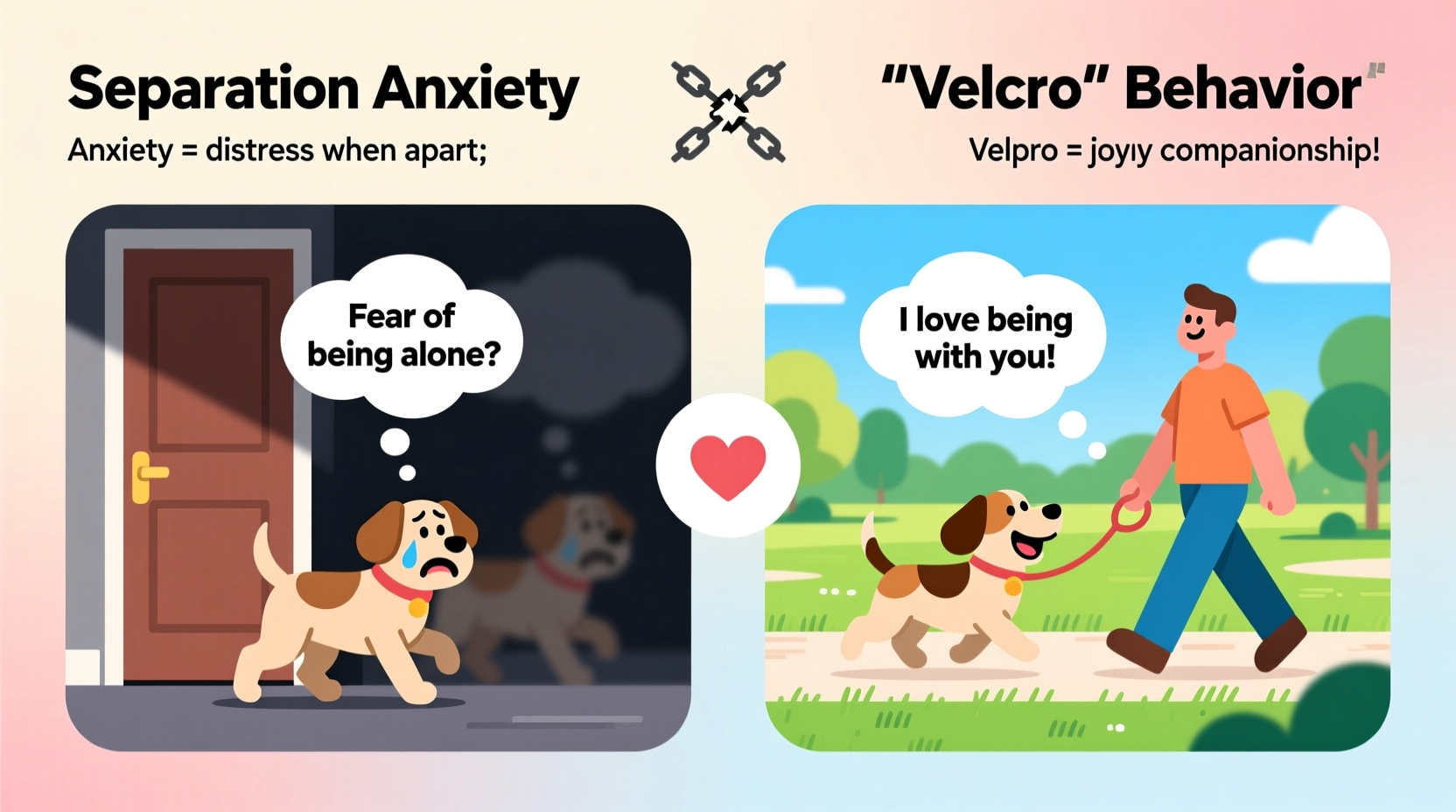
Dogs are naturally social animals, and their deep bond with humans often expresses itself in behaviors that can seem endearing—or overwhelming. One of the most common is a dog’s tendency to follow their owner from room to room, hovering at their heels like a furry shadow. While this loyalty may feel flattering, it raises an important question: Is this normal attachment, or a sign of something deeper? Understanding the difference between healthy companionship, “velcro behavior,” and clinical separation anxiety is essential for fostering a balanced, confident dog.
This distinction isn’t just academic—it impacts how you respond. Misreading clinginess as affection when it's rooted in anxiety can reinforce distress. Conversely, overcorrecting natural bonding might damage trust. By exploring the psychological roots, behavioral cues, and practical interventions, you can support your dog in becoming more emotionally resilient while preserving the closeness you both cherish.
The Science Behind Canine Attachment
Dogs evolved from pack-oriented wolves, relying on group cohesion for survival. Domestication amplified their ability to form strong attachments to humans, activating similar brain pathways involved in human parent-child bonding. Oxytocin—the so-called \"love hormone\"—surges in both dogs and owners during mutual gaze and physical contact, reinforcing emotional connection.
This biological foundation explains why many dogs seek proximity. But not all following behavior stems from the same motivation. The key lies in observing context, intensity, and associated signs of stress. A dog who calmly lies at your feet while you cook may be expressing contentment. One who paces, whines, or refuses to settle when you’re out of sight may be struggling with anxiety.
“Dogs don’t just follow us out of habit—they do it because we represent safety, resources, and emotional regulation.” — Dr. Patricia McConnell, Certified Applied Animal Behaviorist
Velcro Behavior: When Closeness Becomes Habit
Velcro behavior describes a dog’s persistent need to stay physically close to their owner, even in low-stress environments. These dogs may trail behind you into the bathroom, sleep pressed against your side, or growl if another pet approaches you. Unlike separation anxiety, velcro dogs typically remain calm when briefly left alone and don’t exhibit destructive behaviors.
This pattern often develops through unintentional reinforcement. Every time a dog receives attention—positive or negative—for staying close, the behavior strengthens. For example, petting a dog who nudges your leg under the dinner table, or allowing them on the couch simply because they won’t stop whining, teaches them that proximity equals reward.
Velcro tendencies are especially common in breeds selected for close human collaboration, such as herding dogs (Border Collies, German Shepherds) or companion breeds (Cavalier King Charles Spaniels, Shih Tzus). However, environment plays a crucial role. Dogs adopted from shelters or rehomed multiple times may develop hyper-attachment due to past instability.
Separation Anxiety: Beyond Normal Attachment
True separation anxiety is a clinical condition marked by intense distress when separated from a bonded person. It goes beyond wanting to be near you—it involves panic, helplessness, and physiological arousal. Symptoms include:
- Excessive vocalization (barking, howling, whining) when left alone
- House soiling despite being house-trained
- Destructive chewing, particularly around doors or windows
- Pacing, drooling, or trembling
- Self-injury from frantic escape attempts
These behaviors usually begin within minutes of departure and persist until the owner returns. In contrast, boredom-related destruction tends to occur sporadically and may involve random objects. Separation anxiety is triggered specifically by perceived abandonment, not just solitude.
Research suggests that up to 20% of dogs seen in veterinary behavior clinics suffer from separation anxiety, though prevalence in the general population is likely lower. Risk factors include early life trauma, abrupt changes in routine, or a history of rehoming. Dogs with generalized anxiety disorders are also more susceptible.
Key Differences: Velcro Behavior vs. Separation Anxiety
| Feature | Velcro Behavior | Separation Anxiety |
|---|---|---|
| Behavior When Alone | Calm; may nap or play independently | Distressed; shows signs of panic |
| Response to Brief Absences | Unbothered by short separations | Anxious even during brief departures |
| Destructive Behavior | Rare or absent | Common, focused on exit points |
| Vocalization | Minimal or attention-seeking only | Intense, prolonged, panic-driven |
| Physical Signs of Stress | Absent | Present (panting, drooling, trembling) |
| Treatment Approach | Behavior modification, independence training | Gradual desensitization, possible medication |
How to Encourage Healthy Independence
Whether dealing with mild velcro habits or early signs of anxiety, fostering confidence starts with structured routines that build self-reliance. The goal isn’t to reduce bonding but to ensure it doesn’t come at the expense of emotional balance.
Step-by-Step: Building Independent Confidence
- Create a Safe Space: Designate a quiet area with a bed, toys, and water. Use a crate or baby gate if needed, but never as punishment. Feed meals here to create positive associations.
- Practice Short Departures: Leave the room for 10 seconds without fanfare. Return only if your dog remains calm. Gradually increase duration over days.
- Ignore Attention-Seeking: When your dog nudges or blocks your path, wait for them to sit or lie down before acknowledging them. Reward calmness, not persistence.
- Use Puzzle Toys: Engage your dog mentally with treat-dispensing puzzles or frozen Kongs. This redirects focus and builds tolerance for solitude.
- Train a “Stay” Command: Begin with 5-second stays while you step back. Reward compliance. Increase distance and duration slowly.
Checklist: Promoting Balanced Attachment
- ✅ Provide daily mental enrichment (training, scent games, puzzle feeders)
- ✅ Establish consistent routines for feeding, walks, and rest
- ✅ Avoid reinforcing clingy behavior with attention
- ✅ Practice leaving the house without emotional goodbyes
- ✅ Use calming aids (Adaptil diffusers, Thundershirts) if anxiety is present
- ✅ Consult a certified animal behaviorist for severe cases
Real-Life Example: From Shadow to Self-Assured
Mia, a 3-year-old rescue Border Collie, followed her owner Sarah from room to room, whined when she closed a door, and barked nonstop during Zoom meetings if Sarah turned away. Initially, Sarah interpreted this as devotion. But when she tried to leave Mia alone for even 10 minutes, the dog chewed through a drywall corner and injured her paw.
A veterinary behaviorist diagnosed mild separation anxiety compounded by velcro conditioning. The treatment plan included daily off-leash hikes for mental fatigue, structured “place” training, and a gradual desensitization program. Sarah began leaving the house for 30 seconds, returning before Mia panicked, and slowly increased the time over six weeks.
She also stopped letting Mia on the couch uninvited and started rewarding her for lying quietly on her bed during work hours. Within three months, Mia could stay alone for two hours with only soft music playing. Her following behavior didn’t disappear—but it became a choice, not a compulsion.
“Confidence isn’t built by never leaving your dog—it’s built by teaching them they can handle being alone.” — Dr. Karen Overall, Veterinary Behavioral Medicine Specialist
When to Seek Professional Help
While many cases improve with consistent training, some dogs require professional intervention. Consider consulting a veterinarian or certified animal behaviorist if:
- Your dog self-harms when left alone
- Behavior worsens despite training efforts
- Symptoms interfere with your work or quality of life
- You suspect underlying medical issues (e.g., cognitive dysfunction in seniors)
In moderate to severe cases, veterinarians may prescribe anti-anxiety medications like fluoxetine (Reconcile) or clomipramine (Clomicalm) alongside behavioral therapy. These are not quick fixes but tools to lower arousal enough for learning to occur.
Frequently Asked Questions
Is it bad if my dog follows me everywhere?
Not necessarily. Many dogs enjoy companionship and find comfort in proximity. It becomes problematic only if it’s driven by anxiety, interferes with their ability to relax, or leads to distress when separated. Observe your dog’s body language: relaxed posture and willingness to settle independently suggest healthy bonding.
Can I train my dog not to follow me?
You can’t—and shouldn’t—eliminate following entirely. Instead, train your dog to be comfortable both near you and at a distance. Focus on building confidence through independence exercises, mental stimulation, and structured rewards for calm behavior.
Do certain breeds follow their owners more?
Yes. Breeds historically selected for close human cooperation—such as Retrievers, Shepherds, and Toy breeds—tend to form stronger attachments and may exhibit more following behavior. However, individual temperament and upbringing play a larger role than breed alone.
Conclusion: Fostering Connection Without Dependency
Your dog’s desire to be near you is a testament to the powerful bond you share. But true companionship thrives on mutual trust, not dependency. By distinguishing between affectionate closeness and anxiety-driven attachment, you empower your dog to feel secure whether you’re in the room or down the hall.
Start small: reward moments of independence, introduce structured downtime, and be patient with setbacks. Emotional resilience grows gradually, like muscle. With consistency and compassion, you can nurture a dog who chooses to follow you—not because they fear being apart, but because they love being together.




 浙公网安备
33010002000092号
浙公网安备
33010002000092号 浙B2-20120091-4
Comments
No comments yet. Why don't you start the discussion?