
It’s a familiar scene: you step out of the shower, towel wrapped around you, only to be greeted by your dog enthusiastically licking your face. While this behavior may seem odd or even unhygienic to some, it’s deeply rooted in canine instincts, social bonding, and sensory perception. Understanding why dogs do this—and whether it’s safe—can help you make informed decisions about allowing or discouraging the habit.
Dogs rely heavily on their sense of smell and taste to interpret the world. After a shower, your scent profile changes dramatically. Your dog detects these shifts through chemical cues left on your skin and breath, prompting a response that often includes licking. This act is rarely random; it’s a complex form of communication shaped by evolution, emotion, and learned behavior.
The Science Behind Post-Shower Licking
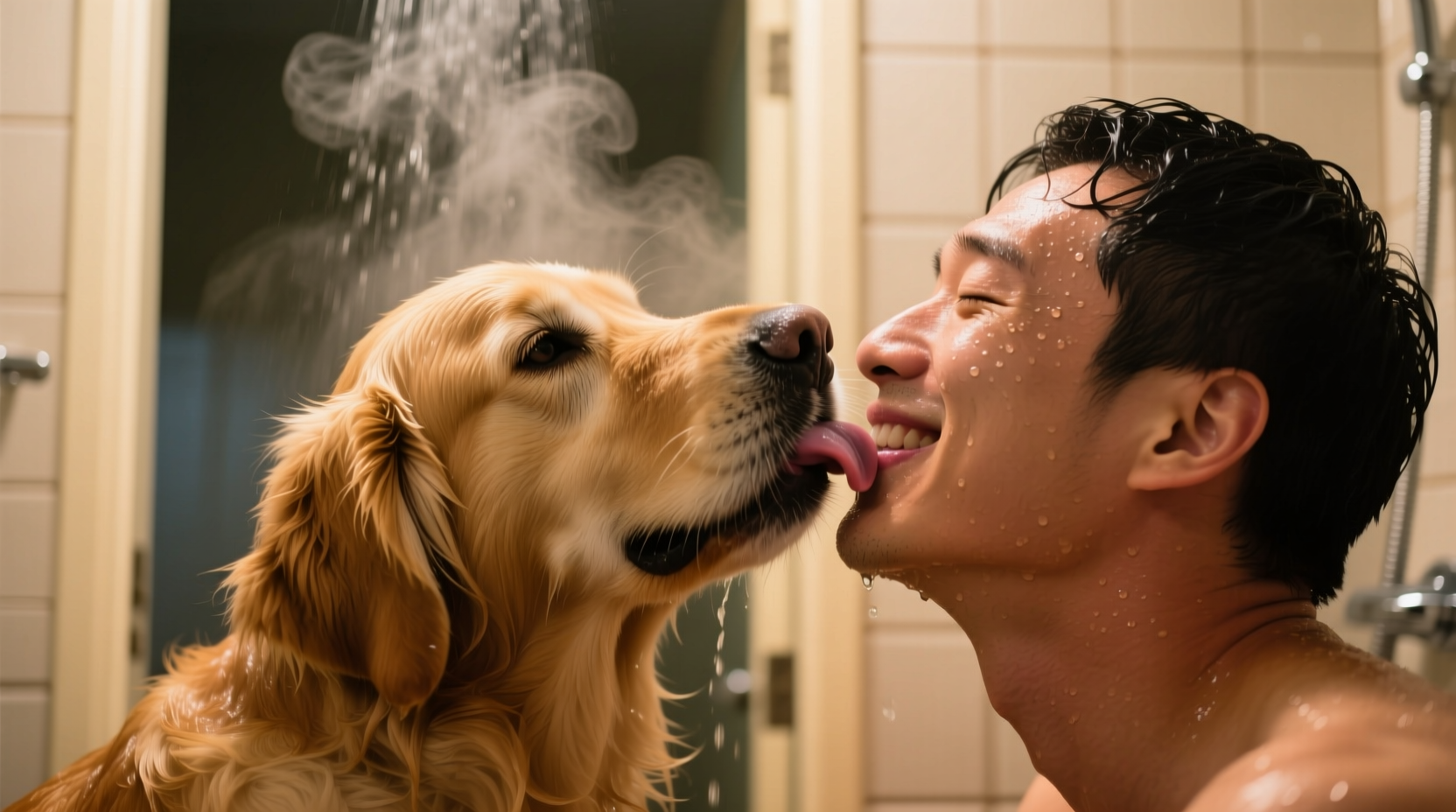
When you shower, you wash away natural oils, sweat, and environmental residues—substances that carry information for your dog. Canines have up to 300 million olfactory receptors (compared to about 6 million in humans), making them exceptionally sensitive to subtle changes in body chemistry. The post-shower “clean” scent is foreign to them, which can trigger investigative behaviors like sniffing and licking.
Licking also involves the vomeronasal organ, a specialized sensory structure in the dog’s mouth that processes pheromones and other chemical signals. When your dog licks your face, they’re not just tasting—they’re gathering data about your emotional state, health, and recent activities.
This behavior is further reinforced by positive associations. If your dog receives attention, affection, or treats after licking, they learn that the action leads to rewards. Over time, this becomes a conditioned response, especially if it occurs consistently after showers.
Social and Emotional Reasons Dogs Lick Faces
In the wild, puppies lick their mother’s face to encourage her to regurgitate food—a survival mechanism. Adult wolves and dogs also use licking as a submissive gesture, acknowledging hierarchy within the pack. When your dog licks your face, they may be expressing respect, seeking reassurance, or reinforcing social bonds.
For domesticated dogs, humans are part of their social group. Licking serves as a calming signal and a way to reduce tension. After a shower, when your appearance and scent change temporarily, your dog might feel uncertain. Licking helps them re-establish familiarity and connection.
“Licking is one of the most versatile behaviors in a dog’s communication toolkit. It can signal affection, submission, curiosity, or even stress.” — Dr. Karen Becker, Integrative Veterinarian
Additionally, endorphins released during licking create a pleasurable sensation for the dog, making the act self-rewarding. This explains why some dogs persist in licking even when gently rebuffed.
Health and Hygiene Considerations
While occasional face licking is generally harmless, there are legitimate concerns about bacterial transmission. A dog’s mouth contains bacteria such as Pasteurella, Capnocytophaga, and Salmonella, which can pose risks—especially to individuals with compromised immune systems, young children, or those with open wounds on the face.
The risk increases if your dog has poor oral hygiene, eats feces, or licks unsanitary surfaces. Although serious infections from dog saliva are rare, documented cases exist. For example, a 2018 case study published in Emerging Infectious Diseases reported a man developing sepsis from Capnocytophaga canimorsus after being licked by his dog.
| Risk Factor | Description | Prevention Strategy |
|---|---|---|
| Bacterial Transfer | Dog saliva can carry zoonotic pathogens | Avoid licking near mouth, eyes, nose; wash face after contact |
| Poor Dental Health | Plaque buildup increases harmful bacteria | Regular teeth brushing and veterinary dental checkups |
| Open Wounds | Breaks in skin increase infection risk | Discourage licking if you have cuts, acne, or dermatitis |
| Immunocompromised Individuals | Higher susceptibility to infection | Limit direct facial contact with pets |
Moreover, some human skincare products contain ingredients toxic to dogs if ingested in large amounts. Retinoids, salicylic acid, and certain essential oils found in lotions or cleansers can be harmful if transferred via licking.
Should You Stop Your Dog From Licking Your Face?
The answer depends on your personal comfort level, household health conditions, and your dog’s behavior. There’s no universal rule, but several factors should guide your decision:
- Hygiene standards: If you or family members are sensitive to germs, minimizing face licking is prudent.
- Dog’s habits: A dog that licks everything—including garbage or animal waste—is a higher-risk candidate for transmitting pathogens.
- Training goals: Allowing face licking may reinforce pushy or obsessive behaviors over time.
- Emotional impact: Abruptly stopping a long-standing bonding ritual can confuse or distress your dog if not managed carefully.
If you choose to discourage face licking, consistency is key. Reacting differently each time (sometimes allowing it, sometimes not) confuses your dog. A better approach is to establish a clear boundary and offer an alternative behavior, such as sitting for a treat or bringing a toy.
Step-by-Step Guide to Managing Post-Shower Licking
If you want to reduce or redirect your dog’s face-licking habit, follow this structured training plan:
- Observe the Pattern: Note exactly when and how your dog initiates licking. Does it happen the moment you exit the bathroom? Is it accompanied by jumping or whining?
- Interrupt Early: As soon as you see the behavior starting, say “Wait” or “Sit” in a calm but firm tone.
- Redirect Attention: Offer a chew toy or toss a treat to the floor to shift focus away from your face.
- Reinforce Alternatives: Reward calm behaviors like sitting quietly nearby. Use high-value treats initially to strengthen the association.
- Practice Consistency: Everyone in the household must respond the same way. Mixed signals will delay progress.
- Gradually Increase Difficulty: Once your dog waits calmly while you dry off, slowly reintroduce proximity without triggering licking.
- Maintain Long-Term Habits: Continue rewarding desired behavior weekly to prevent regression.
This process typically takes 2–6 weeks, depending on the dog’s age, temperament, and prior training history.
Real-Life Example: Managing a Licking Habit in a Rescue Dog
Sarah adopted Max, a three-year-old mixed breed, from a shelter. He had a strong habit of licking her face intensely after she showered. Initially, she found it endearing, but over time, it became overwhelming—especially when she had a cold sore or was wearing retinol cream.
Concerned about hygiene and Max’s growing insistence, Sarah consulted a certified dog trainer. She began using a red rubber Kong filled with frozen peanut butter (xylitol-free) immediately after stepping out of the shower. She placed it on the bathroom mat before opening the door. Within two weeks, Max ran straight to the Kong instead of her face. By week four, the licking had stopped entirely.
The success came not from punishment, but from replacing an unwanted behavior with a more appropriate, satisfying alternative. Max still received attention—he just earned it differently.
Expert Recommendations and Best Practices
Veterinary behaviorists emphasize that eliminating licking isn’t always necessary. Instead, they advocate for managing risk while preserving the human-animal bond.
“You don’t need to eliminate all physical contact, but you should set boundaries based on health and mutual respect. Teach your dog what behaviors earn rewards—and which don’t.” — Dr. Sophia Yin, Late Animal Behavior Specialist
Key best practices include:
- Brushing your dog’s teeth regularly to reduce harmful oral bacteria.
- Using pet-safe skincare products to minimize toxin exposure.
- Scheduling annual vet exams to monitor overall health.
- Teaching basic obedience commands like “Leave it” and “Go to your mat” for better control.
Frequently Asked Questions
Is dog saliva really dangerous?
While dog saliva contains bacteria, the risk of serious infection is low for healthy adults. However, people with weakened immune systems, infants, and those with open facial wounds should avoid direct contact. Practicing good hygiene—like washing your face after being licked—reduces risk significantly.
Why does my dog only lick me after I shower and not other times?
The scent change is the primary trigger. Soaps, shampoos, and hot water alter your natural odor, prompting your dog to investigate. They may also associate the post-shower routine with attention, making it a learned behavior tied to that specific moment.
Can I train my dog to stop licking without damaging our bond?
Absolutely. Dogs thrive on clear communication. When you replace licking with another rewarded behavior—like sitting or fetching a toy—the bond often strengthens because interactions become more predictable and positive.
Final Thoughts: Balancing Affection and Safety
Your dog’s urge to lick your face after a shower is a blend of instinct, affection, and curiosity. It’s a testament to the deep social connection they share with you. However, modern living requires balancing natural behaviors with health awareness and household harmony.
You don’t have to choose between affection and safety. With thoughtful management, you can preserve the closeness you share while setting boundaries that protect everyone involved. Whether you decide to allow limited licking or redirect the behavior entirely, consistency and compassion are your most powerful tools.




 浙公网安备
33010002000092号
浙公网安备
33010002000092号 浙B2-20120091-4
Comments
No comments yet. Why don't you start the discussion?