
Dogs do many things that seem strange to us—rolling in grass, chasing their tails, and yes, staring intently while defecating. If you’ve ever caught your dog locking eyes with you mid-poop, you’re not alone. While it might feel awkward or even bizarre, this behavior is surprisingly common and deeply rooted in canine psychology, social dynamics, and evolutionary instincts. Understanding why your dog stares at you during such a vulnerable moment can deepen your bond and ease any confusion about what’s really going on.
This article explores the science and behavior behind this curious habit, breaking down the emotional, psychological, and biological factors at play. Whether your dog gazes softly or watches with intense focus, there’s meaning behind those eyes—and it’s rarely about embarrassment or mischief.
The Vulnerability Factor: Safety in Numbers
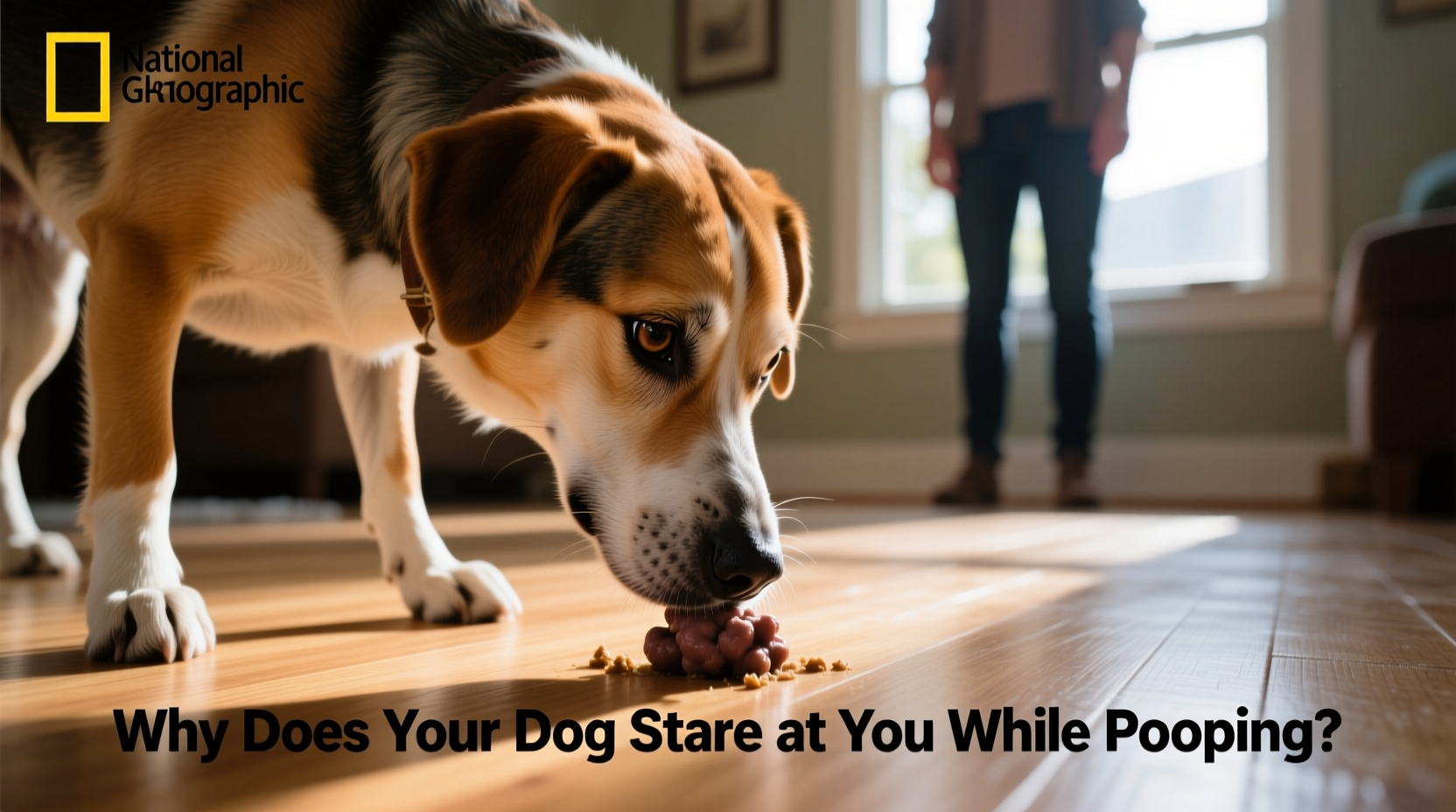
Defecation is one of the most vulnerable moments in a dog’s day. In the wild, animals are exposed when squatting—unable to run quickly or defend themselves. This instinctual awareness remains strong in domestic dogs, despite generations of living safely indoors. When your dog looks at you while pooping, they may be checking for protection.
Dogs view their human companions as part of their pack. By maintaining eye contact, they’re silently asking: *Are we safe? Is anything approaching? Can I relax?* It’s not a request for praise—it’s a survival signal rooted in trust. The gaze serves as a silent communication tool, ensuring that their environment remains secure while they’re physically compromised.
Trust and Bonding: The Emotional Connection
Contrary to popular belief, prolonged eye contact between dogs and humans isn’t always a sign of dominance. In fact, mutual gazing releases oxytocin—the “love hormone”—in both species. A 2015 study published in Science found that when dogs and owners stared into each other’s eyes, oxytocin levels spiked significantly, mirroring the bonding seen between mothers and infants.
So when your dog looks at you while eliminating, they may be reinforcing an emotional connection. They’re not just tolerating your presence—they’re including you in an intimate moment. For a dog, allowing someone to witness a private bodily function is a high-level act of trust. Think of it as the canine version of letting someone see you without makeup or in pajamas—only more biologically significant.
“Eye contact during elimination is often a sign of deep attachment. Dogs don’t expose vulnerability lightly. When they do it in front of you, it means they see you as a safe base.” — Dr. Karen Becker, Integrative Veterinarian and Animal Behavior Specialist
Instinct Meets Domestication: Evolutionary Roots
To understand this behavior fully, we need to look back at how dogs evolved from wolves. Wild canids typically avoid eye contact during elimination to remain inconspicuous to predators. However, domestication has reshaped these instincts. Over thousands of years, dogs have adapted to live closely with humans, developing new social cues and dependency patterns.
In domestic settings, dogs rely on humans not only for food and shelter but also for environmental assessment. Unlike their wild ancestors, modern dogs often eliminate in open areas (like sidewalks or yards) under human supervision. This changes the dynamic: instead of hiding, they seek reassurance. Staring becomes a way to outsource vigilance.
Additionally, dogs have learned that certain behaviors earn positive reinforcement. If you’ve ever praised your dog after they finish going potty, they may now associate the entire process—including eye contact—with approval. Over time, the stare could become a conditioned response, anticipating a treat or verbal reward.
Is My Dog Asking for Approval?
Possibly. While dogs don’t experience shame or pride in the human sense, they are highly attuned to social feedback. Your reaction matters. If you tend to say “Good boy!” or offer affection immediately after they finish, your dog may begin making eye contact as part of a behavioral sequence: *eliminate → look at owner → receive reward.*
This doesn’t mean the stare starts as manipulative. More likely, it begins as a natural check-in and evolves into a learned interaction. The dog connects the dots: looking at you correlates with positive outcomes. As a result, the behavior becomes reinforced, even if you never explicitly trained it.
| Motivation | Signs to Watch For | What You Can Do |
|---|---|---|
| Vulnerability & Safety Check | Stiff posture, scanning surroundings, quick glances | Stand calmly nearby; avoid sudden movements |
| Emotional Bonding | Soft eyes, relaxed body, tail slightly wagging | Return gentle eye contact; speak soothingly |
| Seeking Reward | Intense stare, waiting after finishing, sitting promptly | Reward only after completion to reinforce timing |
| Anxiety or Discomfort | Tense muscles, whining, difficulty pooping | Consult vet; rule out medical causes |
When the Stare Signals Something Else: Health and Anxiety Clues
While most staring during elimination is normal, it can occasionally point to underlying issues. If your dog seems unusually fixated, distressed, or struggles to defecate, consider possible health problems such as constipation, anal gland issues, or gastrointestinal discomfort.
Similarly, anxiety-driven staring may occur in dogs with past trauma or poor socialization. These dogs might lock eyes intensely, not out of trust, but out of hyper-vigilance. They’re not bonding—they’re monitoring for danger.
Mini Case Study: Max, the Rescue Terrier Mix
Max, a 3-year-old terrier mix adopted from a rural shelter, had a habit of staring unblinkingly at his owner during bathroom breaks. At first, Sarah thought it was endearing. But she noticed he wouldn’t defecate unless she stood directly behind him, facing outward.
After consulting a behaviorist, she learned that Max likely spent time fending for himself outdoors before rescue. Eliminating was dangerous, and his stare wasn’t affectionate—it was strategic. He used Sarah as a shield, relying on her to watch for threats while he focused on the task.
Through gradual desensitization and creating a predictable potty routine in a quiet backyard corner, Max began to relax. Over time, his stare softened, and he started glancing around confidently instead of fixating on Sarah. The change signaled growing confidence and reduced fear.
How to Respond: Practical Steps for Owners
You don’t need to stop your dog from staring—it’s usually harmless and even heartwarming. But how you respond can shape future behavior and strengthen trust. Follow this step-by-step guide to handle the moment wisely.
- Stay Calm and Present: Avoid turning away or laughing, which might confuse or unsettle your dog. Instead, stand quietly nearby, signaling safety.
- Use Soft Eye Contact: Briefly return the gaze with relaxed eyes. Blink slowly to show non-aggression.
- Avoid Immediate Interaction: Don’t pet or talk during elimination. Wait until they’re finished to offer praise.
- Reinforce Completion, Not the Act: Reward after they stand up and move away. This encourages timely potty habits without reinforcing mid-poop attention-seeking.
- Observe Patterns: Note when the staring increases—during walks, at home, in new places. Context helps identify triggers.
- Rule Out Medical Issues: If elimination seems painful or infrequent, schedule a vet visit to check for blockages or infections.
Checklist: Is Your Dog’s Staring Normal?
- ✅ Body is relaxed during elimination
- ✅ Eyes are soft, not wide or dilated
- ✅ Defecates regularly without straining
- ✅ Responds well to calm presence
- ✅ No signs of pain (whining, crouching for long periods)
- ✅ Behavior is consistent across environments
If all boxes are checked, the staring is almost certainly a sign of trust. If several are unchecked, further evaluation may be needed.
Frequently Asked Questions
Is it bad if my dog stares at me while pooping?
No, it’s not bad. In most cases, it’s a natural expression of trust, vulnerability, and social bonding. As long as your dog isn’t showing signs of distress or physical discomfort, the behavior is completely normal.
Should I look back at my dog when they’re pooping?
Yes, but gently. Direct, prolonged staring can be perceived as confrontational in dog language. Instead, offer soft eye contact with slow blinks to communicate calmness and reassurance. Look away periodically to avoid pressure.
My dog never used to stare—now they do. Is something wrong?
Not necessarily. Changes in behavior can stem from increased attachment, a new environment, or subtle shifts in routine. However, if the change coincides with accidents, reluctance to go, or anxiety, consult your veterinarian or a certified behaviorist.
Conclusion: Seeing Beyond the Awkwardness
The next time your dog locks eyes with you while doing their business, resist the urge to laugh or look away. That gaze is a quiet testament to the bond you share—a moment where instinct, emotion, and trust converge. Far from being weird, it’s one of the purest forms of canine communication: *I’m vulnerable, and I choose to be this way in front of you because I trust you.*
Understanding this behavior transforms a potentially awkward moment into a meaningful connection. By responding with patience, consistency, and awareness, you reinforce your role as a safe, reliable companion in your dog’s world.




 浙公网安备
33010002000092号
浙公网安备
33010002000092号 浙B2-20120091-4
Comments
No comments yet. Why don't you start the discussion?