
Dogs are deeply expressive animals, and their behaviors—no matter how odd they may seem—are often rooted in instinct, communication, or emotional need. One such behavior that puzzles many pet owners is the intense eye contact a dog gives while defecating. It’s not uncommon for dogs to lock eyes with their humans during this vulnerable moment, leaving owners wondering: Why is my dog staring at me while pooping? Is this normal? Should I be worried?
The truth is, this behavior is more common—and more meaningful—than most people realize. Far from being random or awkward, a dog’s gaze during elimination can reveal a great deal about its trust, awareness, and social bond with you. In this article, we’ll explore the science and psychology behind this behavior, break down possible motivations, and help you determine when it's harmless and when it might signal an underlying issue.
Understanding Canine Body Language During Elimination
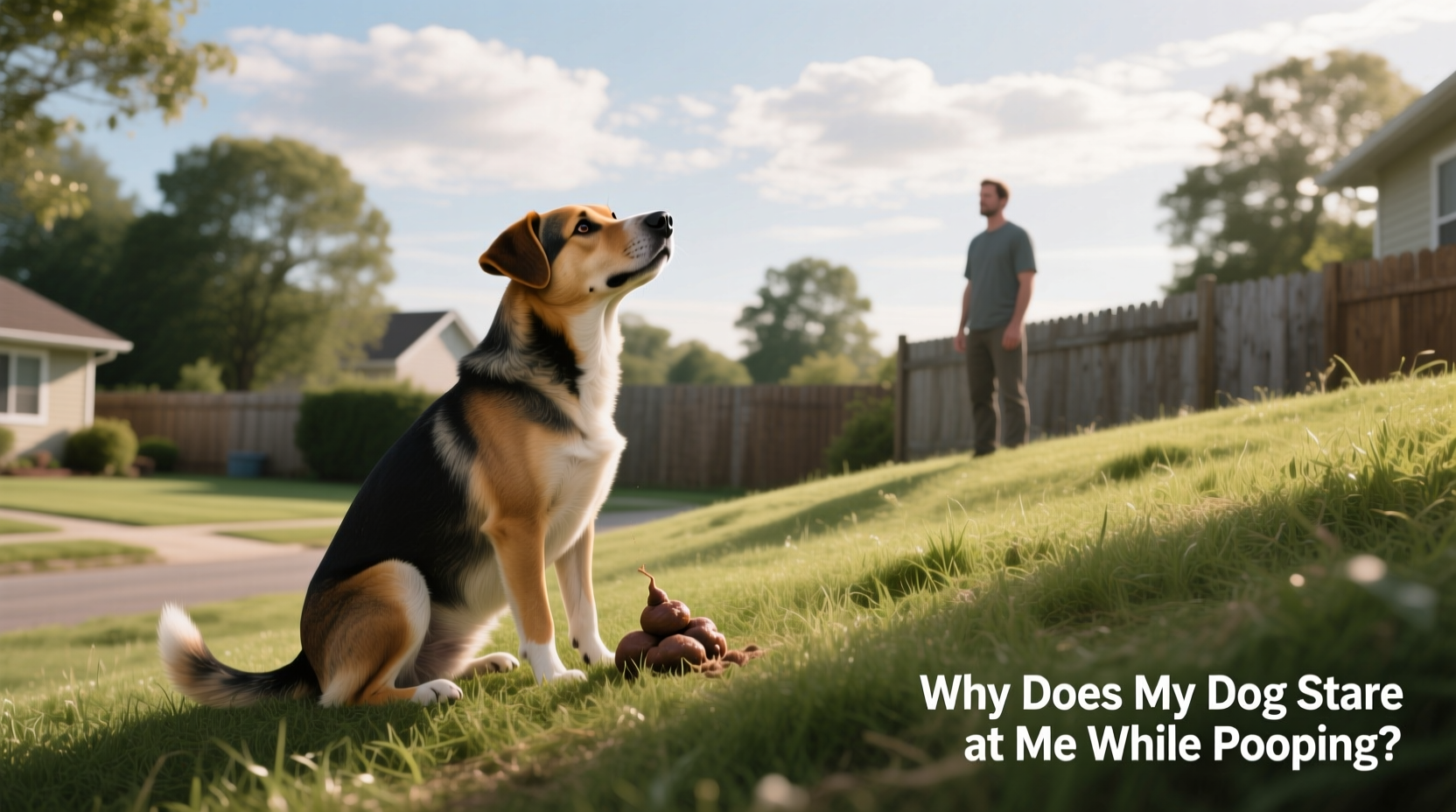
Dogs rely heavily on body language to communicate, and eye contact is one of their most powerful tools. While humans may associate prolonged staring with aggression or discomfort, in the canine world, it often conveys something entirely different—especially in familiar, trusted relationships.
When a dog defecates, it enters a physically vulnerable state. Unlike humans, who typically eliminate in private, domesticated dogs often do so in open spaces, sometimes right in front of their owners. This exposure makes them acutely aware of their surroundings. By maintaining eye contact, your dog may be doing several things simultaneously: checking for safety, seeking reassurance, or reinforcing social connection.
Studies in canine cognition suggest that dogs view their human companions as part of their social pack. According to Dr. Brian Hare, founder of the Duke Canine Cognition Center, “Dogs look to humans for cues in uncertain situations, much like children look to parents.” This dependency explains why your dog might glance up mid-poop—not out of habit, but as a form of real-time communication.
Possible Reasons Your Dog Stares at You While Pooping
There is no single explanation for this behavior, but several well-supported theories shed light on what your dog might be thinking. Most reasons are benign and even positive indicators of your relationship.
1. Seeking Reassurance and Safety
Defecation requires relaxation, both physically and mentally. For a dog, letting go in an open environment demands a sense of security. If your dog looks at you while pooping, it may be confirming that you’re nearby and vigilant—essentially saying, “You’ve got my back, right?” This is especially common in rescue dogs or those with anxiety, who have learned to rely on their humans for environmental monitoring.
2. Bonding Through Eye Contact
Contrary to popular belief, direct eye contact between dogs and humans can strengthen emotional bonds. Research published in *Science* magazine found that mutual gazing between dogs and owners increases oxytocin levels—the “love hormone”—in both species. So, when your dog stares at you during a private moment, it may be engaging in a subtle act of affection and connection.
3. Instinctual Pack Behavior
In the wild, canids remain alert during elimination to avoid predators. A subordinate animal might look to the pack leader for cues about safety. In a domestic setting, your dog sees you as the leader. The stare could be an instinctive check-in: “Is the coast clear?” This behavior is more pronounced in breeds with strong pack instincts, such as Siberian Huskies or German Shepherds.
4. Habit Reinforced by Attention
If you’ve ever reacted to your dog’s stare—by making eye contact, talking, or even laughing—you may have unintentionally reinforced the behavior. Dogs are masters of operant conditioning; if staring gets a response, they’re likely to repeat it. Over time, this becomes a ritual, even if the original reason (e.g., fear) has faded.
5. Medical or Behavioral Discomfort
While most staring is normal, persistent, intense, or distressed eye contact during elimination can indicate pain or gastrointestinal issues. If your dog appears tense, whimpers, or strains excessively, the stare may be a plea for help. Conditions like constipation, anal gland impaction, or spinal pain can make defecation uncomfortable, prompting your dog to seek comfort through eye contact.
“Eye contact during elimination isn’t just behavioral—it’s often a window into your dog’s emotional state. When combined with relaxed body language, it’s usually a sign of trust. But if it’s paired with signs of distress, it warrants closer attention.” — Dr. Sophia Yin, Veterinarian and Animal Behavior Specialist
When Should You Be Concerned?
Most of the time, your dog staring at you while pooping is completely normal. However, certain red flags suggest the behavior may stem from discomfort or illness. Use the following checklist to assess whether further action is needed.
✅ Normal Signs (No Cause for Concern)
- Soft, relaxed eyes and body posture
- Staring briefly, then returning focus to the task
- No straining, vocalizing, or difficulty passing stool
- Regular bowel movements with normal consistency
- Behavior occurs consistently across different environments
⚠️ Warning Signs (Worth Investigating)
- Intense, wide-eyed stare with tension in the face or body
- Vocalizations (whining, grunting) during defecation
- Straining for more than 30 seconds without results
- Visible discomfort, such as hunched posture or reluctance to move
- Sudden onset of staring when it wasn’t present before
- Changes in stool (diarrhea, blood, mucus)
| Behavior | Normal? | Action Recommended |
|---|---|---|
| Calm eye contact, relaxed posture | Yes | None – this is typical bonding behavior |
| Staring with tense muscles or tail tuck | No | Monitor closely; consult vet if persistent |
| Whining or pacing before/after pooping | No | Schedule veterinary exam |
| Looking at you only at home, not outside | Yes | Indicates comfort in familiar environment |
| Begins suddenly after age 5 | Potentially concerning | Rule out pain or cognitive changes |
Real-Life Example: Max the Rescue Terrier
Max, a 4-year-old Jack Russell Terrier mix, was adopted from a rural shelter where he had lived in a crowded kennel with minimal human interaction. After moving in with his new family, he exhibited several anxious behaviors—including staring intently at his owner, Lisa, every time he defecated in the backyard.
Lisa initially found the behavior strange and even slightly unnerving. She consulted a certified dog trainer, who explained that Max was likely using eye contact as a coping mechanism. Having come from an unpredictable environment, he needed confirmation that he was safe during vulnerable moments.
The trainer advised Lisa to stand quietly nearby during walks, maintain soft eye contact, and speak in a calm voice once Max finished. Over three months, Max’s stare became less intense and more relaxed. Eventually, he would glance up briefly and return to business without hesitation—signs of growing confidence.
This case illustrates how a seemingly odd habit can reflect deeper emotional needs—and how patience and understanding can lead to behavioral improvement.
How to Respond: A Step-by-Step Guide
If your dog stares at you while pooping, your reaction can either reinforce security or inadvertently increase anxiety. Follow this timeline to respond appropriately:
- Stay Calm and Present: Stand a few feet away during elimination. Avoid hovering, which can stress some dogs, but don’t walk away abruptly.
- Maintain Soft Eye Contact: If your dog looks at you, offer a gentle blink or soft gaze in return. This signals acknowledgment without challenge.
- Avoid Talking or Touching Mid-Poop: Interrupting the process can cause your dog to hold it in, leading to digestive issues over time.
- Reinforce After Completion: Once your dog finishes, praise calmly (“Good potty”) and offer a small treat if desired. This rewards the entire sequence, not just the stare.
- Monitor for Changes: Keep notes on frequency, posture, and demeanor. Sudden shifts may indicate health problems.
Frequently Asked Questions
Is it bad if my dog won’t poop unless I’m watching?
Not necessarily. Many dogs prefer to eliminate when their guardian is present because they feel safer. As long as your dog can eventually go unattended when needed (e.g., at a boarding facility), this dependence is usually harmless. If it causes distress during separation, consider working with a trainer on independence training.
Do all dogs do this, or is it breed-specific?
No single breed is more prone to staring while pooping, but individual temperament plays a role. Highly bonded, people-oriented dogs—such as Golden Retrievers, Cavalier King Charles Spaniels, or Border Collies—are more likely to maintain eye contact. Independent breeds like Shiba Inus may avoid eye contact altogether.
Can staring while pooping be a sign of dominance?
No. Dominance-related staring typically occurs in confrontational contexts, involves stiff posture, and is sustained aggressively. The stare during elimination is usually soft, brief, and accompanied by relaxed body language—indicating trust, not challenge.
Final Thoughts: Trust, Not Trouble
Your dog’s stare during pooping is rarely a cause for alarm. More often, it’s a quiet testament to the bond you share—a silent acknowledgment that you are their safe place, even in moments of vulnerability. Rather than questioning the behavior, consider what it reveals about your dog’s emotional world.
That said, vigilance matters. Just as laughter can mask pain in humans, a loving gaze can sometimes hide discomfort in dogs. Stay attuned to changes in routine, posture, and expression. When in doubt, consult your veterinarian. Health and behavior are deeply intertwined, and early intervention can prevent minor issues from becoming serious ones.




 浙公网安备
33010002000092号
浙公网安备
33010002000092号 浙B2-20120091-4
Comments
No comments yet. Why don't you start the discussion?