
Dogs communicate in ways that don’t always involve barking or tail wagging. One behavior that can unsettle pet owners is when their dog fixates on a blank wall for minutes at a time. At first glance, it might seem harmless—perhaps your dog is just zoning out. But repeated or prolonged staring episodes could signal underlying physical or psychological issues. While occasional inactivity may stem from boredom, persistent wall-staring warrants closer inspection. Understanding the difference between benign idleness and a potential medical red flag is essential for responsible pet care.
Understanding Canine Behavior: Normal vs. Abnormal Staring
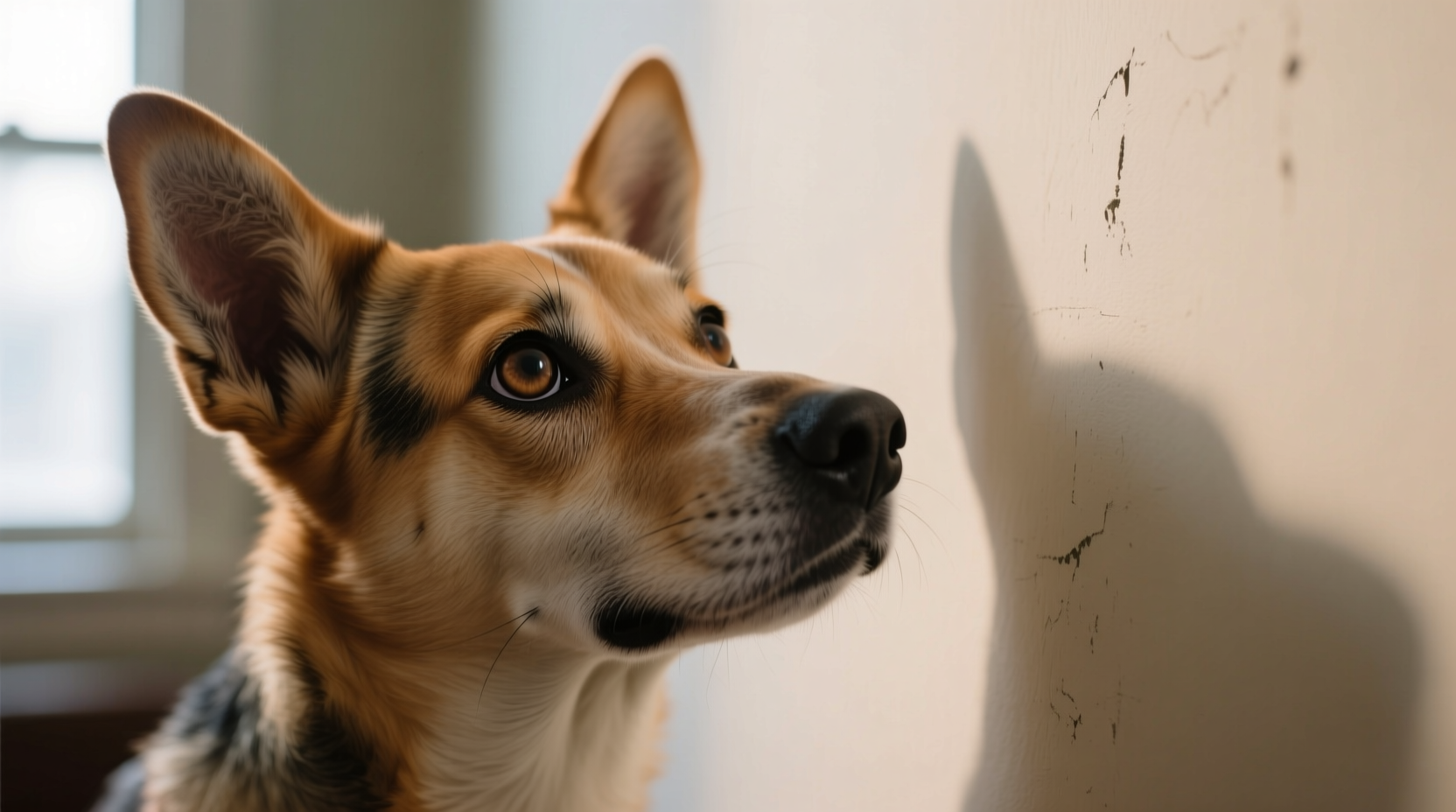
Dogs process their environment differently than humans. They rely heavily on scent, sound, and movement to interpret stimuli. A brief moment of stillness while observing a shadow, dust particle, or subtle noise is not uncommon. However, true \"staring\" involves fixed, unblinking focus on an object—or lack thereof—for extended durations, often accompanied by a trance-like state.
Normal staring typically lasts only seconds and occurs sporadically. It may follow a sudden sound or visual cue. In contrast, abnormal staring is repetitive, prolonged (lasting more than 30 seconds), and often unresponsive to external stimuli such as calling the dog’s name or offering treats.
Dr. Karen Becker, a proactive veterinarian and animal health advocate, explains:
“Dogs don’t stare without reason. If there’s no stimulus, the behavior should raise a question—not panic, but curiosity followed by observation.”
Potential Causes of Wall-Staring in Dogs
Wall-staring can originate from behavioral, environmental, or medical sources. The key is identifying patterns and associated symptoms.
Boredom and Understimulation
Inadequate mental and physical stimulation is one of the most common reasons dogs develop odd habits. Dogs left alone for long periods without toys, walks, or social interaction may resort to repetitive behaviors like licking, pacing, or staring at walls simply to occupy their minds.
This form of self-soothing often occurs during predictable times—such as mid-afternoon when the household is quiet. These dogs usually respond quickly when engaged and show no signs of confusion or disorientation afterward.
Anxiety and Compulsive Disorders
Like humans, dogs can develop anxiety-related compulsive behaviors. Repetitive actions such as tail-chasing, excessive licking, or staring into space may serve as coping mechanisms for stress. Common triggers include separation anxiety, changes in routine, or past trauma.
Obsessive-Compulsive Disorder (OCD) in dogs manifests through ritualistic behaviors performed out of context. A dog with OCD may stare at a corner daily at the same time, regardless of distractions. These actions are difficult to interrupt and may escalate if ignored.
Neurological Conditions
Prolonged staring spells can be a symptom of partial (focal) seizures. Unlike generalized seizures that involve convulsions, focal seizures affect only a small part of the brain and may present subtly—through eye fixation, lip-smacking, or twitching—without full-body involvement.
These episodes typically last 30 seconds to two minutes. Afterward, the dog may appear confused, disoriented, or temporarily blind—a phase known as the post-ictal period. Seizures can result from epilepsy, brain tumors, infections, or metabolic imbalances.
Cognitive Dysfunction Syndrome (CDS)
Older dogs may develop canine dementia, clinically referred to as Cognitive Dysfunction Syndrome. Similar to Alzheimer’s in humans, CDS affects memory, learning, and perception. Symptoms include confusion, altered sleep cycles, house soiling, and aimless wandering or staring.
A 2020 study published in *Frontiers in Veterinary Science* found that over 60% of dogs aged 11–16 years exhibit at least one sign of cognitive decline. Wall-staring is frequently reported among owners of senior dogs.
Sensory Issues
Dogs experiencing vision or hearing loss may appear to stare at walls due to misinterpretation of sensory input. For example, a dog with failing eyesight might perceive shadows or light reflections as moving objects. Similarly, auditory hallucinations linked to hearing degeneration could prompt fixation on a sound source that doesn’t exist.
How to Differentiate Boredom from Medical Concerns
Telling the difference between boredom-induced behavior and a neurological issue requires careful observation. Use the following checklist to assess your dog’s condition:
📋 **Wall-Staring Assessment Checklist**- Does the episode last less than 30 seconds?
- Can you easily get your dog’s attention during or after?
- Is the behavior situational (e.g., happens when left alone)?
- Are there other symptoms (tremors, drooling, confusion, accidents)?
- Has the frequency increased over time?
- Is your dog older than 8 years?
- Have there been recent environmental changes or stressors?
If most answers point to situational, short-duration episodes with easy redirection, boredom or mild anxiety is likely. However, if episodes are frequent, unresponsive, or paired with physical symptoms, veterinary evaluation is critical.
Comparative Table: Behavioral vs. Medical Causes
| Factor | Boredom/Anxiety | Medical Condition (Seizure, CDS) |
|---|---|---|
| Duration | Variable, often short | Consistently 30+ seconds |
| Responsiveness | Responds to voice or touch | Unresponsive during episode |
| Frequency | Occasional, tied to downtime | Daily or multiple times per day |
| Post-Episode Behavior | Normal immediately after | Confused, tired, disoriented |
| Age of Onset | Any age, especially under-stimulated | Common in seniors (8+ years) |
| Other Symptoms | None or mild anxiety signs | Drooling, tremors, pacing, house soiling |
When to See a Veterinarian: A Step-by-Step Guide
If wall-staring persists or worsens, take systematic steps to determine its cause and ensure your dog receives appropriate care.
- Document the Behavior: Record dates, times, duration, and any triggers (e.g., after napping, during storms). Note whether your dog seems aware before and after.
- Video Evidence: Use your phone to capture an episode. This helps vets distinguish between zoning out and a seizure.
- Schedule a Veterinary Exam: Begin with a general check-up. Blood work can rule out metabolic causes like liver disease or hypoglycemia.
- Neurological Evaluation: If seizures are suspected, your vet may refer you to a veterinary neurologist for advanced imaging (MRI or CT scan).
- Cognitive Screening: For older dogs, vets use tools like the Canine Cognitive Dysfunction Rating (CCDR) scale to assess mental decline.
- Behavioral Consultation: If no medical cause is found, a certified animal behaviorist can evaluate for anxiety or OCD and recommend therapy or medication.
Early diagnosis significantly improves outcomes, especially in cases involving seizures or cognitive decline.
Real-Life Example: Max, the Senior Terrier
Max, a 12-year-old Jack Russell Terrier, began staring at the kitchen wall every evening around 7 PM. His owner, Lisa, initially thought he was chasing dust motes. But when the episodes lasted over a minute and were followed by Max walking into furniture, she grew concerned.
After recording a video and visiting her vet, blood tests ruled out organ dysfunction. An MRI revealed early-stage brain atrophy consistent with Cognitive Dysfunction Syndrome. With a treatment plan including a prescription diet (Senolytic-supportive), supplements (SAM-e and omega-3s), and structured daily routines, Max’s episodes decreased by 70% within eight weeks.
Lisa also introduced puzzle feeders and short obedience drills to stimulate Max’s mind. “He’s not cured,” she says, “but he’s more present. I wish I hadn’t waited so long to act.”
Treatment and Management Options
Effective management depends on the root cause.
For Boredom and Anxiety
- Increase daily exercise (walks, fetch, agility)
- Introduce food-dispensing toys and scent games
- Practice positive reinforcement training
- Consider pheromone diffusers (Adaptil) or calming music
For Seizure Disorders
Veterinarians may prescribe anticonvulsants such as:
- Phenobarbital
- Levetiracetam (Keppra)
- Potassium bromide
For Cognitive Dysfunction
Therapeutic strategies include:
- Veterinary diets enriched with antioxidants (e.g., Hill’s Prescription Diet b/d)
- Supplements: Medium-chain triglycerides (MCT oil), vitamin E, selenium
- Daily mental exercises and consistent routines
- Medications like selegiline (Anipryl)
Frequently Asked Questions
Can dogs have mini-strokes that cause staring spells?
Yes, although less common than in humans, dogs can suffer strokes or transient ischemic attacks (TIAs). These may lead to sudden neurological deficits, including fixed gaze, imbalance, or head tilt. Immediate veterinary assessment is crucial.
Is wall-staring ever normal in puppies?
Occasional stillness is normal as puppies process new environments. However, repetitive or vacant staring is not typical and should be monitored. Neurological issues can occur at any age, though they’re rarer in young dogs without trauma or congenital conditions.
What can I do at home to reduce my dog’s staring episodes?
Start with enriching your dog’s environment: add chew toys, rotate activities, increase walk variety, and introduce training games. For older dogs, night lights and non-slip flooring can reduce nighttime confusion. Always consult your vet before assuming the cause is behavioral.
Conclusion: Pay Attention—Your Dog Is Communicating
Your dog’s stare may seem insignificant, but it’s a form of communication. Whether it’s a cry for engagement or a symptom of an internal struggle, ignoring it risks missing a treatable condition. Boredom can be resolved with enrichment; anxiety with patience and support; and medical issues with timely intervention. The line between quirky habit and health alert is thinner than many realize.
Take action today: observe closely, document honestly, and partner with your veterinarian. Your dog relies on you to interpret what they cannot express in words. By staying attentive and responsive, you ensure not just longer life—but better quality of life.




 浙公网安备
33010002000092号
浙公网安备
33010002000092号 浙B2-20120091-4
Comments
No comments yet. Why don't you start the discussion?