
It’s a familiar scene: you speak to your dog, perhaps asking if they want a walk or calling their name, and instantly, their head tilts to one side—ears perked, eyes wide, full of curiosity. This endearing gesture tugs at heartstrings and has become a hallmark of canine charm. But beyond the cuteness, there’s real science at play. The head tilt isn’t just a trick for attention; it’s a complex behavior rooted in biology, auditory processing, and social cognition. Understanding why dogs do this reveals deeper insights into how they perceive the world—and how deeply attuned they are to human communication.
The Auditory Explanation: Tuning Into Sound
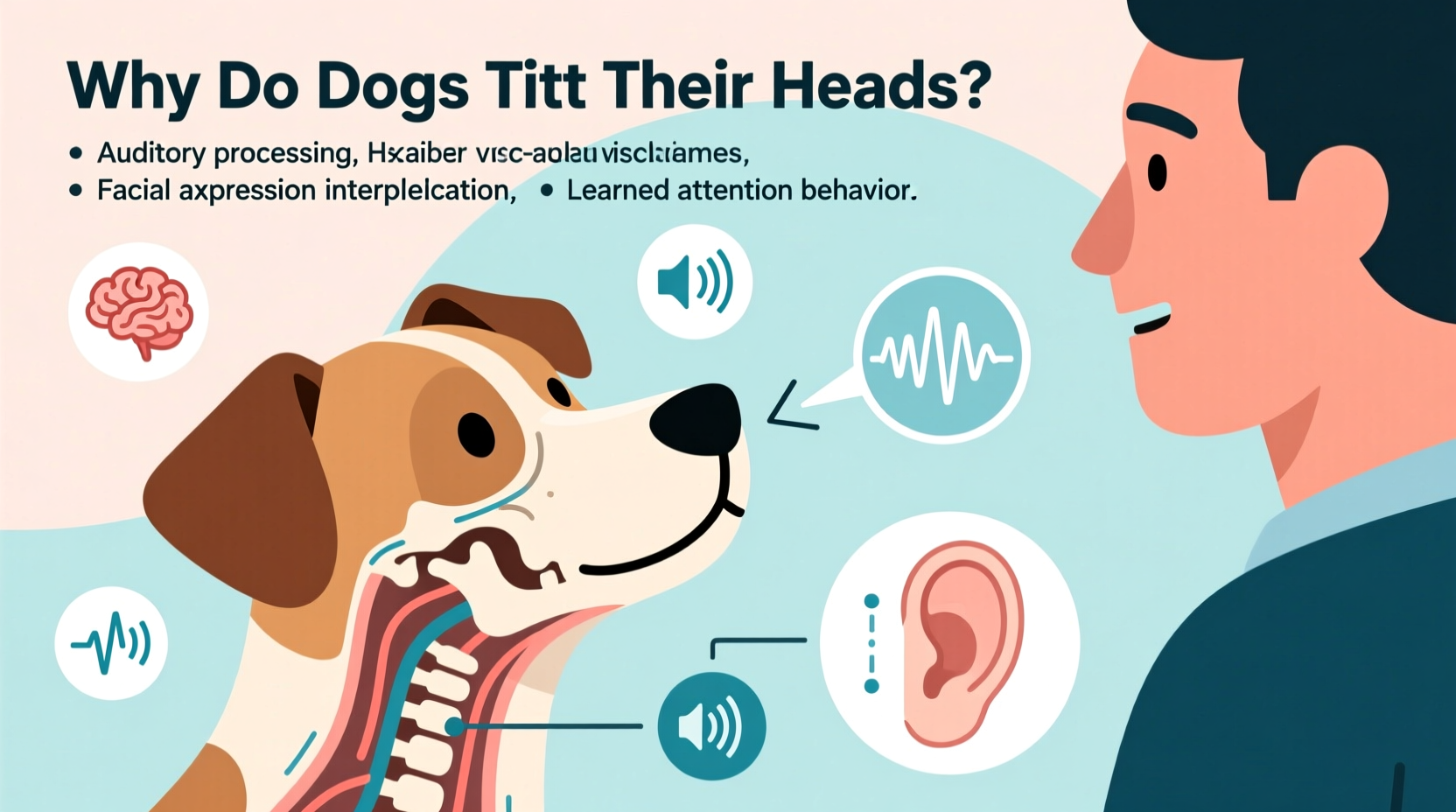
Dogs rely heavily on their hearing, which is far more sensitive than ours. They can detect frequencies up to 65,000 Hz (compared to humans’ 20,000 Hz), and they use subtle sound cues to interpret their environment. When a dog tilts its head while you’re speaking, one primary reason may be related to optimizing sound reception.
In breeds with long, floppy ears or dense facial fur, such as Cocker Spaniels or Basset Hounds, the ear flaps can partially obstruct sound waves entering the ear canal. By tilting their head, dogs may adjust the position of their ears to better capture the direction and tone of your voice. This small movement helps them pinpoint where a sound is coming from and improves clarity—much like cupping a hand behind your ear to hear better.
Additionally, dogs process vocal intonations differently than humans. They don’t understand words in the same linguistic way we do but instead focus on pitch, rhythm, and emotional tone. A head tilt might help them isolate specific syllables or inflections that signal whether you're happy, scolding, or offering a treat.
Visual Perspective Adjustment
Just as sound plays a role, so does vision. Many dog breeds have muzzles that partially block their line of sight, especially when looking up at a person standing or sitting across from them. When a dog tilts its head, it may be shifting its muzzle out of the way to get a clearer view of your face.
Facial expressions are critical in dog-human communication. Dogs are remarkably skilled at reading human faces—studies show they can distinguish between happy and angry expressions and even recognize individual people by sight. By adjusting their angle, they gain better access to your eyes, mouth, and overall expression, helping them interpret your emotional state and intentions more accurately.
This visual adjustment is especially common in brachycephalic breeds (like Pugs or Bulldogs) and dolichocephalic breeds (like Collies or Greyhounds), both of which have skull shapes that affect forward vision. The tilt compensates for anatomical limitations, allowing for enhanced social observation.
Cognitive Engagement and Word Association
Perhaps one of the most fascinating explanations involves cognitive processing. Research suggests that some dogs, particularly those trained extensively or highly socialized, may associate specific words with actions or rewards. When they hear a word they’ve learned—like “walk,” “treat,” or “park”—they engage mentally, trying to confirm context and meaning.
A study conducted at Eötvös Loránd University in Budapest explored this phenomenon by training dogs to retrieve specific toys by name. Researchers observed that dogs often tilted their heads when owners asked them to fetch an object, especially when the command was unfamiliar or ambiguous. The behavior increased during moments of mental effort, suggesting the tilt correlates with active listening and memory recall.
“Head tilting appears more frequently in dogs with larger vocabularies. It may reflect heightened attention and neural engagement when processing known words.” — Dr. Claudia Fugazza, Canine Cognition Researcher
This implies that the head tilt isn’t merely reflexive—it could be a visible sign of concentration. Just as a person might cock their head slightly when puzzling over a riddle, dogs may use the gesture to aid comprehension during complex auditory tasks.
Social Reinforcement and Learned Behavior
While biological factors explain the origin of the head tilt, social reinforcement likely amplifies its frequency. Most dog owners react positively when their pet tilts its head—cooing, smiling, or offering praise. Over time, dogs learn that this behavior elicits affection and attention.
This creates a feedback loop: the dog tilts its head naturally in response to sound or curiosity, receives positive reinforcement, and gradually begins performing the action more deliberately to achieve the desired reaction. In essence, what may begin as a functional behavior becomes partly performative—a way for dogs to bond with their humans and communicate empathy.
Some trainers report that dogs who live in highly interactive households exhibit head tilts more often than those in quieter environments. This supports the idea that the behavior is not only instinctual but also shaped by experience and relationship dynamics.
Real-Life Example: Max the Border Collie
Consider Max, a five-year-old Border Collie trained in advanced obedience and object naming. His owner routinely uses verbal commands for games involving toy retrieval. During training sessions, Max consistently tilts his head when asked to identify a new toy among familiar ones. Once he selects the correct item, he receives a treat and enthusiastic praise.
Over time, Max began tilting his head even before commands were fully spoken—anticipating the request. His owner noticed the behavior rarely occurred during casual conversation but spiked during structured interactions. This pattern suggests that Max associates the head tilt with focused listening and reward anticipation, reinforcing both cognitive engagement and learned performance.
When Head Tilting May Signal Health Concerns
While occasional head tilting is normal and healthy, persistent or uncontrolled tilting—especially if accompanied by other symptoms—can indicate medical issues. A dog that constantly leans to one side, loses balance, or shows signs of discomfort may be suffering from an ear infection, vestibular disease, or neurological disorder.
Vestibular disease, which affects the inner ear and balance system, often causes dogs to tilt their heads involuntarily. Other warning signs include circling, nausea, rapid eye movements (nystagmus), and difficulty standing. If your dog suddenly starts tilting their head without the usual playful context, consult a veterinarian promptly.
| Normal Head Tilt | Potential Problem Sign |
|---|---|
| Occurs occasionally during conversation | Constant or involuntary tilting |
| Dog maintains balance and coordination | Loss of balance or stumbling |
| Responsive to commands and alert | Lethargic or disoriented |
| No pain or discomfort shown | Scratching ears, whining, or head shaking |
Actionable Tips for Dog Owners
Understanding the reasons behind head tilting allows you to enhance communication and strengthen your bond with your dog. Here are practical steps you can take:
- Use consistent verbal cues: Dogs learn through repetition. Use clear, consistent words for commands to help your dog build stronger associations.
- Encourage face-to-face interaction: Kneel or sit at your dog’s level when speaking. This reduces the need for excessive head tilting and improves mutual visibility.
- Monitor ear health: Regularly check your dog’s ears for wax buildup, odor, or redness—especially in floppy-eared breeds prone to infections.
- Avoid over-rewarding the tilt: While it’s tempting to praise every adorable gesture, ensure you’re rewarding intentional behaviors like obeying commands, not just the tilt itself.
- Engage in sound-based games: Play games that involve identifying named toys or responding to different tones to stimulate auditory processing.
Checklist: Is Your Dog’s Head Tilt Normal?
- Does the tilt happen mainly during conversation or when hearing interesting sounds? → Likely normal
- Is your dog alert, balanced, and responsive? → Likely normal
- Does the behavior occur intermittently, not continuously? → Likely normal
- Are there no signs of ear scratching, discharge, or imbalance? → Likely normal
- Has there been a sudden change in frequency or control of the tilt? → Consult a vet
Frequently Asked Questions
Do all dogs tilt their heads?
No, not all dogs do. The behavior varies by breed, individual personality, and level of socialization. Some dogs never develop the habit, while others do it frequently. Breeds with longer muzzles or those highly attuned to human speech tend to display it more often.
Can I train my dog to tilt its head on command?
Yes—many trainers use shaping techniques to teach the head tilt as a trick. Using a treat held slightly above and to the side of the dog’s head encourages natural movement. Paired with a verbal cue and reward, this can become a trained behavior. However, avoid encouraging excessive tilting if your dog has ear or balance issues.
Is head tilting a sign of intelligence?
Not directly, but it can correlate with attentiveness and learning ability. Dogs that tilt their heads during word recognition tasks often have higher-than-average vocabularies and strong social-cognitive skills. It reflects engagement more than raw intelligence.
Conclusion: More Than Just Cute—A Window Into Canine Mind
The head tilt is far more than a charming quirk. It’s a multifaceted behavior woven from evolutionary adaptation, sensory optimization, and emotional connection. Whether your dog is fine-tuning their hearing, adjusting their view, concentrating on a command, or simply seeking your approval, each tilt offers a glimpse into their rich inner world.
By recognizing the science behind this gesture, you deepen your understanding of how dogs interpret human language and emotion. You also become better equipped to distinguish between normal behavior and potential health concerns. Most importantly, you honor the profound bond between species—one that thrives on attention, communication, and shared moments of curiosity.




 浙公网安备
33010002000092号
浙公网安备
33010002000092号 浙B2-20120091-4
Comments
No comments yet. Why don't you start the discussion?