
Dog owners around the world know that moment: you say something—anything, really—and your dog instantly cocks their head to the side, one ear perked, eyes locked on yours, as if deciphering a complex riddle. It’s endearing, it’s mysterious, and for many, it raises a simple but persistent question: Why does my dog tilt its head when I talk to them? While the gesture may seem like pure charm, it’s rooted in a blend of biology, cognition, and social learning. This article decodes the science and behavior behind the head tilt, separating myth from fact and offering practical insights into what your dog might be thinking.
The Anatomy Behind the Tilt
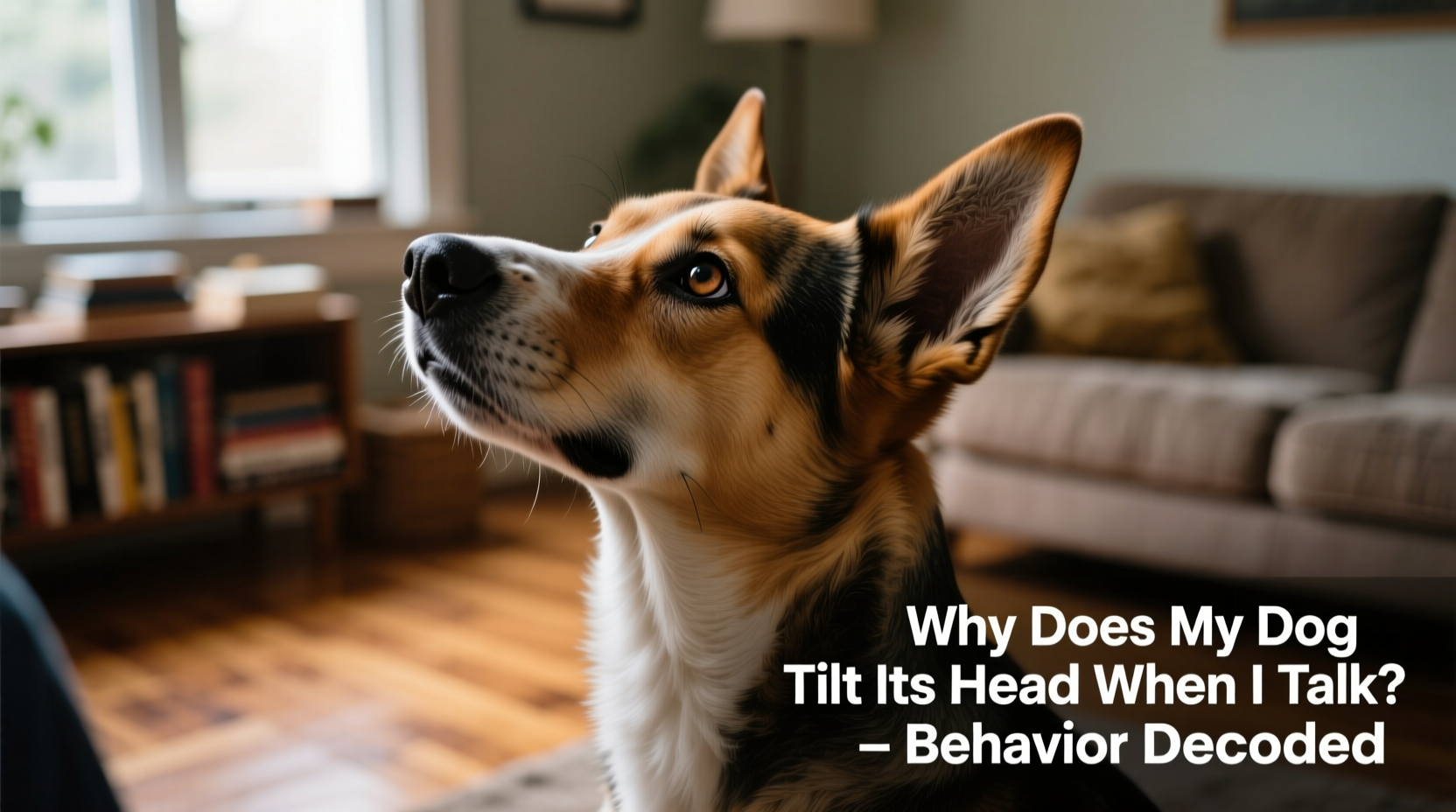
A dog’s head tilt isn’t just a quirky facial expression—it’s influenced by physical structure. Dogs have varying skull shapes, ear placements, and muzzle lengths, all of which affect how they perceive sound and sight. When a dog tilts its head, it’s often adjusting its auditory or visual field to better process stimuli.
For dogs with long muzzles or floppy ears, such as Basset Hounds or Cocker Spaniels, the muzzle can partially obstruct sound waves entering the ear canal. By tilting their head, they reposition their ears to capture sound more efficiently. Similarly, breeds with pronounced brow ridges or heavy facial fur may use the motion to improve their line of sight toward the speaker’s face.
Cognitive Processing and Sound Localization
One of the most supported scientific explanations for head tilting is sound localization. Dogs rely heavily on auditory cues to interpret their environment. When you speak, especially in a higher pitch or unfamiliar tone, your dog’s brain works to pinpoint where the sound is coming from and what it means.
By tilting their head, dogs shift their outer ears to better catch sound waves. This small adjustment can help differentiate between similar-sounding words or identify subtle changes in your vocal inflection. Research from *Animal Cognition* (2019) suggests that dogs use head tilting as a way to enhance auditory processing, particularly when listening to human speech patterns they’ve learned to associate with commands or rewards.
This behavior is more common in dogs trained to respond to verbal cues. For example, a Border Collie who has learned over 100 words may tilt its head not out of confusion, but as part of an active listening strategy—fine-tuning its attention to ensure accurate comprehension.
“Head tilting is a sign of focused auditory engagement. It’s not just cute; it’s functional.” — Dr. Stanley Coren, Professor of Psychology and canine behavior researcher
Social Reinforcement and Learned Behavior
While anatomy and cognition play key roles, social dynamics cannot be ignored. Many dogs learn that head tilting elicits positive reactions from humans—laughter, affection, treats. Over time, this behavior becomes reinforced through operant conditioning.
If every time your dog tilts its head you say “Aww!” or give them a treat, they begin to associate the action with reward. In some cases, the tilt may start as a genuine attempt to hear better but evolves into a deliberate “trick” performed to gain attention.
This doesn’t make the behavior any less authentic, but it does explain why some dogs seem to tilt their heads even when no new sounds are present—especially when they want something. It becomes part of their communicative toolkit, much like tail wagging or pawing.
Signs Your Dog’s Head Tilt Is Learned (Not Instinctive)
- Tilts head only when someone is looking at them
- Performs the tilt after failed attempts to get attention
- Does it in silence or when no one is speaking
- Repeats the motion multiple times in succession
Emotional Intelligence and Social Bonding
Dogs are remarkably attuned to human emotions. A study published in *Current Biology* found that dogs can recognize emotional expressions in human faces and voices. The head tilt may serve as both a perceptual adjustment and a social signal—a way of saying, “I’m listening, and I care.”
When you speak with emotional intensity—happy, sad, angry—your dog may tilt their head as part of an empathetic response. This gesture helps them read your facial expressions more clearly, especially around the mouth and eyes. Combined with soft eye contact and still body posture, the tilt often indicates deep engagement.
In multi-dog households, this behavior is more commonly observed in the most socially bonded pet—the one who spends the most time near the owner or responds fastest to their voice. These dogs develop heightened sensitivity to human communication cues, making them more likely to exhibit attentive behaviors like head tilting.
Mini Case Study: Max the Rescue Terrier
Max, a three-year-old mixed-breed terrier adopted from a shelter, rarely tilted his head during his first month home. His new owner, Sarah, spoke softly and avoided sudden movements to help him adjust. After six weeks of consistent training and bonding, Max began tilting his head whenever Sarah used his name or asked, “Want to go for a walk?”
Interestingly, he never did it during loud TV commercials or phone calls—only during direct interactions. A veterinarian confirmed Max had mild hearing asymmetry, likely from past ear infections. The tilt helped him locate Sarah’s voice more accurately. Over time, as trust grew, the frequency increased, suggesting both physiological need and emotional connection played roles.
When Head Tilting Warrants Concern
While occasional head tilting is normal, persistent or uncontrolled tilting can indicate medical issues. If your dog holds their head at a constant angle, loses balance, walks in circles, or shows signs of disorientation, it could point to an underlying condition such as:
- Ear infections (otitis externa or media)
- Vestibular disease
- Neurological disorders
- Brain tumors (rare but possible)
In these cases, the tilt is not voluntary or situational. It’s accompanied by other symptoms like nausea, eye flickering (nystagmus), or reluctance to move. Immediate veterinary evaluation is essential.
| Normal Head Tilt | Potentially Problematic Tilt |
|---|---|
| Occurs occasionally during conversation | Constant or involuntary tilt |
| Dog maintains balance and coordination | Loss of balance, falling, circling |
| Responsive to commands and environment | Lethargic, disoriented, or unresponsive |
| No odor or discharge from ears | Ear scratching, redness, or foul smell |
Step-by-Step Guide: Assessing Your Dog’s Head Tilt Behavior
To determine whether your dog’s head tilt is typical or concerning, follow this simple assessment process:
- Observe the trigger: Does the tilt happen only during speech, or randomly?
- Note the duration: Is it brief (a few seconds) or prolonged (minutes/hours)?
- Check for symmetry: Can your dog tilt both left and right, or only one side?
- Monitor other behaviors: Look for signs of discomfort, imbalance, or hearing loss.
- Test responsiveness: Call your dog’s name when they’re not looking. Do they turn correctly?
- Inspect the ears: Check for redness, wax buildup, or odor.
- Document findings: Keep a log for a week. Share it with your vet if concerned.
Frequently Asked Questions
Is head tilting a sign of intelligence in dogs?
Not directly. While intelligent dogs may tilt their heads more often due to heightened attention to verbal cues, the gesture itself reflects auditory focus and social awareness—not IQ. However, dogs that learn many words or commands may use the tilt as part of their listening strategy.
Do puppies tilt their heads too?
Yes, but less frequently than adult dogs. Puppies are still developing their auditory and spatial awareness. As they grow and learn human speech patterns, head tilting tends to increase. Early exposure to varied tones and words can encourage responsive listening behaviors.
Can I train my dog to stop tilting their head?
You can, but there’s no need unless it’s medically related. The head tilt is generally harmless and often a sign of engagement. If you’d like to reduce it (e.g., during photography), try redirecting attention with a command like “sit” or using a neutral tone when speaking casually.
Action Checklist: Supporting Healthy Communication With Your Dog
Use this checklist to foster clear, meaningful interaction while monitoring your dog’s well-being:
- ✅ Speak in consistent tones when giving commands
- ✅ Use hand signals alongside verbal cues for clarity
- ✅ Schedule annual ear exams with your vet
- ✅ Reward attentiveness without over-reinforcing cute gestures
- ✅ Watch for sudden changes in head positioning or balance
- ✅ Clean ears gently and regularly, especially in floppy-eared breeds
- ✅ Avoid shouting or abrupt noises that may cause stress
Conclusion: More Than Just Cute—It’s Communication
The head tilt is one of the most beloved quirks in dog behavior, but it’s far more than a photogenic pose. It’s a window into how dogs listen, learn, and connect with us. Whether driven by anatomy, cognition, or affection, this small gesture speaks volumes about the depth of the human-canine bond.
Understanding why your dog tilts their head empowers you to respond more thoughtfully—to nurture their curiosity, support their health, and deepen mutual trust. So next time they cock their head at your voice, remember: they’re not just being adorable. They’re trying to understand you, in the best way they know how.




 浙公网安备
33010002000092号
浙公网安备
33010002000092号 浙B2-20120091-4
Comments
No comments yet. Why don't you start the discussion?