
Most people have experienced that faint \"pop\" or \"click\" in their ears while swallowing—especially during a flight, after a cold, or even just while eating. For many, it’s a minor sensation that passes quickly. But when does this common occurrence signal something more serious? Understanding the mechanics behind ear popping and recognizing red flags can prevent complications like hearing loss, chronic pain, or long-term Eustachian tube dysfunction.
The human ear is a finely tuned system of air pressure regulation. When you swallow, tiny muscles activate in the back of your throat, opening a small canal that connects your middle ear to the back of your nose. This canal—the Eustachian tube—acts as a pressure valve. Its job is to equalize air pressure on both sides of the eardrum. When it opens briefly during swallowing, yawning, or chewing, you may hear or feel a pop. This is usually normal and often necessary for comfort and proper hearing.
How Swallowing Affects Ear Pressure
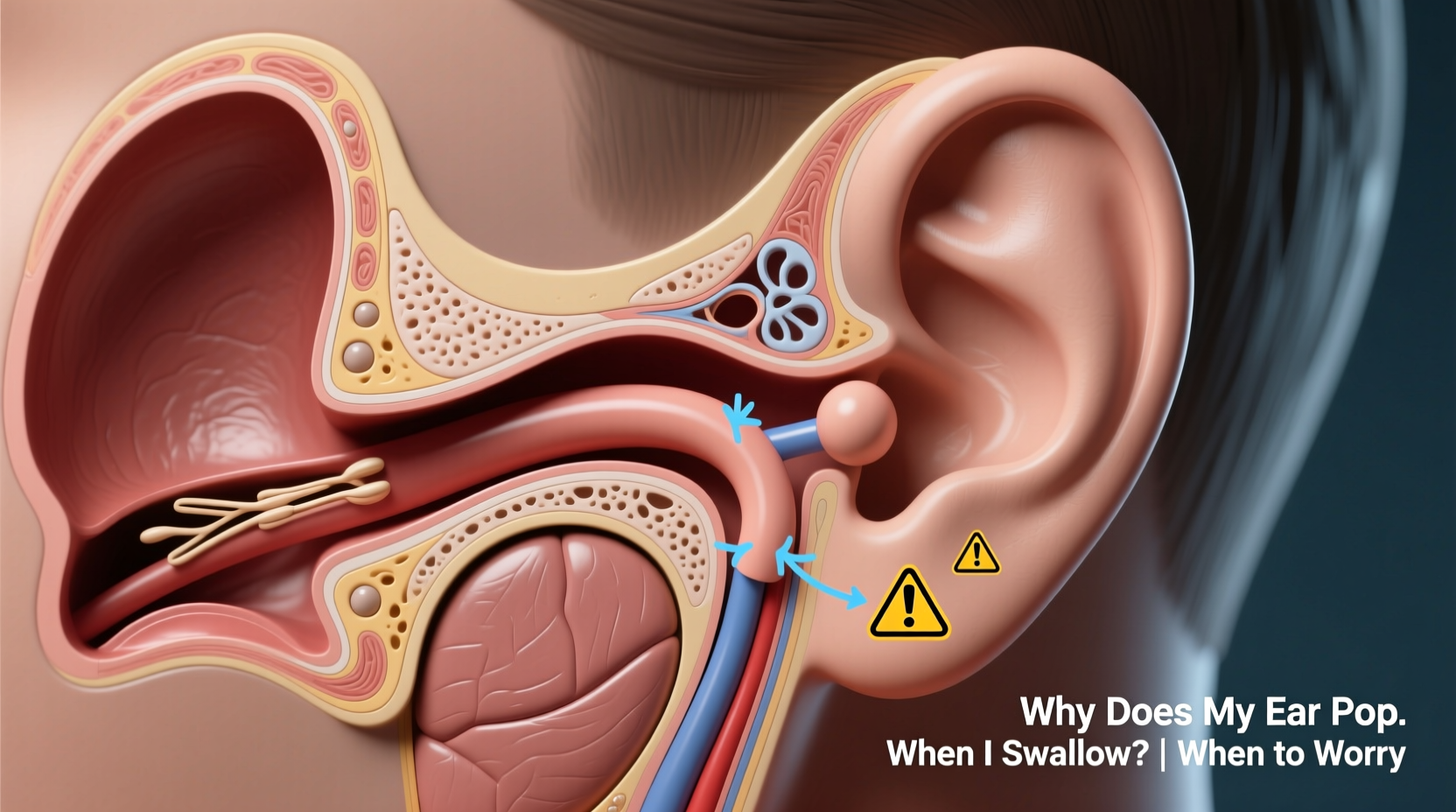
Swallowing triggers a coordinated muscular action involving the soft palate and the tensor veli palatini muscle. These muscles pull open the Eustachian tube, allowing air to flow between the middle ear and the nasopharynx (the upper part of the throat behind the nose). If the pressure inside the middle ear differs from atmospheric pressure—such as during altitude changes on an airplane or after nasal congestion—this equalization becomes noticeable.
In healthy individuals, the Eustachian tube opens and closes dozens of times per hour without conscious effort. However, the sensation intensifies when there’s a significant pressure imbalance. That’s why ear popping is more common during:
- Ascending or descending in elevation (e.g., driving through mountains)
- During takeoff and landing in airplanes
- After recovering from a cold or allergies
- While scuba diving
This process isn’t just about comfort—it protects the delicate structures of the inner ear. Without regular pressure equalization, the eardrum could bulge inward or outward, distorting sound transmission and potentially causing pain or temporary hearing muffling.
When Ear Popping Is Normal vs. Problematic
Occasional ear popping during swallowing is entirely normal. In fact, it’s a sign your Eustachian tubes are working as intended. However, certain patterns suggest underlying issues:
| Normal Ear Popping | Potentially Concerning Signs |
|---|---|
| Occurs only during pressure changes | Constant popping or crackling with no trigger |
| Resolves within minutes | Persists for days or weeks |
| Affects one or both ears intermittently | Accompanied by pain, muffled hearing, or fullness |
| No associated illness | Follows a recent cold, sinus infection, or allergy flare-up |
| Equalizes easily with swallowing or yawning | Fails to resolve despite attempts to \"pop\" the ears |
Recurrent or persistent ear popping, especially when paired with other symptoms, may point to Eustachian tube dysfunction (ETD), a condition affecting up to 1% of adults and significantly more children due to anatomical differences.
Common Causes of Persistent Ear Popping
Beyond routine pressure shifts, several conditions can lead to abnormal ear sensations during swallowing:
Nasal Congestion and Allergies
Inflammation from allergic rhinitis or viral infections swells the lining of the Eustachian tube, impairing its ability to open and close properly. Even mild congestion can trap fluid or create negative pressure in the middle ear, leading to frequent popping or a feeling of fullness.
Eustachian Tube Dysfunction (ETD)
ETD occurs when the tube fails to regulate pressure effectively. There are three main types:
- Obstructive ETD: The tube remains closed due to swelling or blockage.
- Patulous ETD: The tube stays abnormally open, causing autophony (hearing your own voice echo) and constant popping.
- Baro-challenge-induced ETD: Only problematic during pressure changes, such as flying or diving.
Sinus Infections
Acute or chronic sinusitis increases mucus production and inflammation near the Eustachian tube opening. This environment promotes bacterial growth and pressure imbalances, making ear popping painful rather than relieving.
Temporomandibular Joint (TMJ) Disorders
The jaw joint sits very close to the ear canal. TMJ disorders can refer pain or clicking sensations to the ear, mimicking or exacerbating ear popping during chewing or swallowing.
Earwax Buildup or Middle Ear Fluid
Excess cerumen (earwax) or fluid behind the eardrum can alter how sound and pressure are transmitted, creating unusual auditory feedback during swallowing.
“Persistent ear popping shouldn’t be dismissed, especially if it’s one-sided. It can indicate unresolved inflammation or early signs of chronic Eustachian tube dysfunction.” — Dr. Lena Patel, Otolaryngologist at Pacific Ear & Sinus Institute
Mini Case Study: Sarah’s Post-Cold Ear Issues
Sarah, a 34-year-old teacher, noticed her left ear wouldn’t “pop” normally after a severe spring allergy episode. For two weeks, she felt constant fullness and heard a rhythmic clicking every time she swallowed. Over-the-counter decongestants offered brief relief but didn’t resolve the issue.
She consulted an ENT specialist who diagnosed obstructive Eustachian tube dysfunction secondary to prolonged nasal inflammation. After a course of nasal corticosteroids and guided autoinflation exercises (using a special balloon device to gently force the Eustachian tube open), her symptoms resolved within three weeks.
Sarah’s case illustrates how a seemingly minor symptom can linger if the root cause—chronic inflammation—isn’t properly addressed. Early intervention prevented potential complications like serous otitis media (fluid buildup in the middle ear).
Step-by-Step Guide to Relieve Ear Popping at Home
If you're experiencing occasional ear popping due to pressure changes or mild congestion, try these evidence-based techniques:
- Perform the Valsalva Maneuver: Pinch your nose shut, close your mouth, and gently blow as if trying to exhale through your nose. Stop immediately if you feel pain. This forces air into the Eustachian tube.
- Try Toynbee’s Technique: Pinch your nostrils closed and swallow. This combines pressure manipulation with natural muscle activation.
- Use Nasal Decongestants: Short-term use (no more than 3–5 days) of oxymetazoline or pseudoephedrine can reduce swelling in nasal passages and Eustachian tube openings.
- Apply Warm Compresses: Place a warm towel over the affected ear to soothe discomfort and promote circulation.
- Stay Hydrated: Drink plenty of fluids to thin mucus and support mucosal health in the sinuses and throat.
- Practice Autoinsufflation: Use an Otovent-type balloon device (available over the counter) to safely inflate the Eustachian tube through controlled nasal blowing.
These methods work best when started early. If symptoms persist beyond a week despite home care, professional evaluation is recommended.
Checklist: When to See a Doctor
Monitor your symptoms closely. Seek medical attention if you experience any of the following:
- Ear popping lasting longer than 10–14 days
- Pain that worsens or becomes sharp/stabbing
- Hearing loss or persistent muffled hearing
- Dizziness, vertigo, or balance problems
- Drainage from the ear (yellow, bloody, or foul-smelling)
- Fever accompanying ear symptoms
- Symptoms occurring only on one side without clear cause
- History of recurrent ear infections or ear surgery
An otolaryngologist (ENT) can perform tests like tympanometry (measuring eardrum movement) or endoscopic examination to assess Eustachian tube function and rule out structural abnormalities.
FAQ: Common Questions About Ear Popping
Can ear popping damage my eardrum?
Rarely. Normal popping during swallowing poses no risk. However, aggressive attempts to equalize pressure—like forceful Valsalva maneuvers—can overpressurize the middle ear and, in extreme cases, cause rupture. Always use gentle techniques.
Why do I hear popping only on one side?
Asymmetrical Eustachian tube function is common. One side may respond slower due to minor anatomical variation, localized congestion, or past infection. If unilateral popping persists or causes discomfort, see a doctor to rule out blockages or nerve involvement.
Is ear popping a sign of an ear infection?
Not always. While ear infections (especially in children) often involve pressure changes and popping sensations, they typically come with additional signs: fever, intense pain, irritability, or drainage. Adults may experience low-grade pressure with chronic infections.
Conclusion: Listen to Your Body—and Act When Needed
Ear popping during swallowing is usually harmless—a quiet testament to your body’s remarkable ability to maintain equilibrium. But when it becomes persistent, painful, or disruptive, it’s worth paying attention. Ignoring chronic symptoms can lead to complications like hearing impairment, chronic middle ear effusion, or structural damage.
Simple lifestyle adjustments—staying hydrated, managing allergies, avoiding irritants like smoke—can go a long way in supporting ear health. When in doubt, consult a healthcare provider. Modern diagnostics and treatments, including steroid sprays, ventilation tubes, or minimally invasive procedures, offer effective solutions for those struggling with Eustachian dysfunction.




 浙公网安备
33010002000092号
浙公网安备
33010002000092号 浙B2-20120091-4
Comments
No comments yet. Why don't you start the discussion?