
As the holiday season approaches, twinkling Christmas lights bring warmth and cheer to homes across the country. But if you’ve noticed your extension cord growing warm—or worse, hot—while powering those festive strands, it’s time to pay attention. A slightly warm cord might be normal under load, but excessive heat is a red flag that could signal electrical overload, poor wiring, or even a fire hazard.
Understanding why this happens, what factors contribute to overheating, and when to take action can protect your home and family. This guide breaks down the science behind cord heating, outlines real-world scenarios, and provides practical steps to ensure your holiday lighting stays safe and efficient.
How Electricity Flows and Why Heat Builds Up
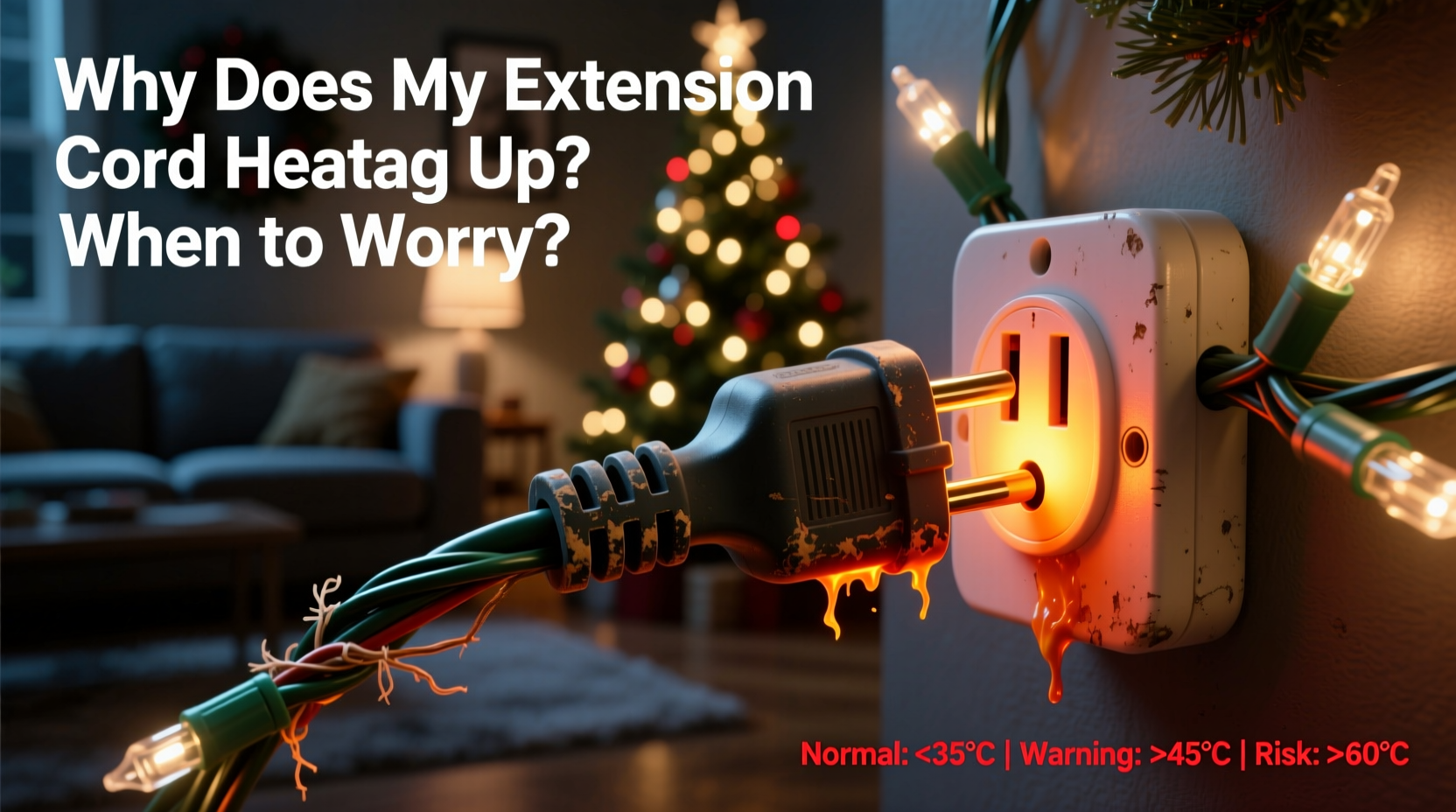
Every time electricity travels through a wire, resistance within the conductor converts some energy into heat. This is known as resistive heating or Joule heating. The amount of heat generated depends on three key variables: current (measured in amps), resistance (in ohms), and time. In simple terms, the more current flowing through a wire—and the longer it flows—the more heat is produced.
Christmas lights, especially older incandescent models, draw a noticeable amount of current. When multiple strings are connected end-to-end and powered through a single extension cord, the total amperage demand increases. If the cord isn’t rated to handle that load, its internal wires begin to overheat.
Wire gauge plays a critical role here. Lower-gauge cords (e.g., 14 AWG or 12 AWG) have thicker copper conductors and can safely carry more current than higher-gauge cords (like 18 AWG). Using an undersized cord for a high-wattage light display is one of the most common causes of overheating.
Common Causes of Extension Cord Heating with Christmas Lights
Not all heat indicates danger, but persistent or intense warmth suggests underlying issues. Below are the most frequent culprits:
- Overloading the circuit: Connecting too many light strings to one cord exceeds its safe capacity. Most standard 18 AWG extension cords are only rated for about 5–7 amps. Exceeding this leads to overheating.
- Daisy-chaining too many light sets: Manufacturers often limit how many incandescent strings can be connected in series (usually 3–5). Going beyond this multiplies the load on the first cord.
- Using indoor cords outdoors: Indoor-rated cords lack weather-resistant insulation. Exposure to moisture, cold, or physical stress increases resistance and failure risk.
- Poor cord quality: Cheap or damaged cords may use substandard copper or thin insulation, increasing resistance and reducing heat dissipation.
- Cord coiling: Leaving a cord tightly wound on a reel while in use traps heat. Coiled sections act like inductors and insulate themselves, preventing cooling.
- Faulty outlets or connections: Loose plugs, corroded contacts, or worn sockets increase resistance at connection points, generating localized heat.
“Any extension cord that feels hot to the touch during normal operation should be disconnected immediately. That’s not just inefficient—it’s potentially dangerous.” — James Rutherford, Licensed Electrician and NFPA Safety Consultant
When Should You Worry? Warning Signs and Risk Levels
Some warmth is expected when an extension cord powers a heavy load, but certain symptoms indicate a serious problem. Use the following table to assess your situation:
| Condition | Severity | Action Required |
|---|---|---|
| Slightly warm to the touch, evenly along length | Low | Monitor; likely normal under load |
| Warm near plug or outlet, cool elsewhere | Moderate | Check plug fit and outlet condition; replace if loose or discolored |
| Hot to touch (too hot to hold) | High | Unplug immediately. Do not reuse until inspected. |
| Visible melting, scorch marks, or smell of burning | Critical | Stop use permanently. Check outlet and circuit for damage. |
| Cord remains warm after lights are off | Critical | Indicates short circuit or grounding issue. Investigate wiring. |
If your cord exhibits any high- or critical-level symptoms, assume there is an active safety hazard. Continuing to use it risks insulation breakdown, short circuits, or electrical fires.
Step-by-Step Guide to Safe Holiday Lighting Setup
Preventing overheating starts with proper planning and execution. Follow these steps before plugging in your display:
- Calculate total wattage: Add up the wattage of all connected light strings. For example, ten 25-watt incandescent strands equal 250 watts. Divide by voltage (120V in the U.S.) to get amperage: 250 ÷ 120 ≈ 2.1 amps.
- Select the right cord: Choose an outdoor-rated extension cord with sufficient capacity. For loads under 5 amps, a 16 AWG cord may suffice. For 5–10 amps, use 14 AWG or 12 AWG.
- Avoid daisy-chaining: Plug light strings directly into the extension cord or use a power strip with surge protection instead of chaining multiple cords.
-
Tip: Never connect more than three incandescent light strings in series unless labeled otherwise by the manufacturer.
- Uncoil completely: Always fully unwind extension cords before use. Coiled cords trap heat and can overheat internally even if the surface feels cool.
- Inspect everything: Check cords, plugs, and lights for fraying, cracked insulation, bent prongs, or corrosion. Replace damaged components.
- Use GFCI outlets outdoors: Ground Fault Circuit Interrupter (GFCI) outlets cut power if they detect current leakage, reducing shock and fire risk.
- Test and monitor: Run the setup for 15–30 minutes initially. Touch the cord and plug to check for abnormal heat. Recheck after several hours of continuous use.
Real Example: A Close Call in Suburban Denver
In December 2022, a homeowner in Littleton, Colorado, set up his annual roofline display using two 100-light incandescent strands connected to an old indoor extension cord. He had reused the same cord for five years without issue, but this season added a third string and left the cord partially coiled on a plastic spool.
After four hours of operation, neighbors noticed a faint smoke odor. Firefighters arrived to find the cord’s insulation melted near the outlet, with charring on the wall plate. The circuit breaker had not tripped—the overload wasn’t large enough to trigger it, but the sustained heat caused gradual degradation.
The homeowner was unaware that newer LED replacements would have used 80% less power. By switching to LEDs and using a properly rated outdoor cord, he now runs a larger display safely. His experience underscores how small oversights compound into serious risks.
LED vs. Incandescent: How Bulb Type Affects Cord Temperature
The type of Christmas lights you use has a dramatic impact on electrical load and heat generation. Consider this comparison:
| Feature | Incandescent Lights | LED Lights |
|---|---|---|
| Wattage per 100 bulbs | 40–50 watts | 4–6 watts |
| Amperage (per 100 bulbs) | ~0.4 amps | ~0.05 amps |
| Heat output | High – bulbs get hot | Very low – cool to touch |
| Typical lifespan | 1,000–3,000 hours | 25,000–50,000 hours |
| Effect on extension cord | Significant heating under load | Minimal temperature rise |
Switching from incandescent to LED lights reduces strain on extension cords and household circuits. It also lowers energy bills and extends the life of your display. While the upfront cost is higher, LEDs typically pay for themselves within two to three seasons due to energy savings and durability.
Checklist: Safe Christmas Light & Extension Cord Practices
Use this checklist every year before installing your holiday lights:
- ✅ Calculate total wattage and amperage of all light strings
- ✅ Use outdoor-rated, grounded (3-prong) extension cords
- ✅ Match cord gauge to load (12–14 AWG for heavy use)
- ✅ Unwind cords completely before use
- ✅ Avoid daisy-chaining multiple extension cords
- ✅ Plug into GFCI-protected outlets when outdoors
- ✅ Inspect cords and lights for damage annually
- ✅ Limit incandescent string connections to manufacturer specs
- ✅ Consider upgrading to LED lights for efficiency and safety
- ✅ Monitor cord temperature during first few hours of use
Frequently Asked Questions
Is it normal for an extension cord to get warm?
Yes, mild warmth is normal when powering a moderate to heavy load. However, if the cord is hot enough to cause discomfort when touched, or if heat is concentrated at the plug or outlet, it’s a sign of overloading or poor connection and should be addressed immediately.
Can I leave Christmas lights plugged in overnight?
While modern LED systems are generally safe, experts recommend turning off holiday lights when you’re asleep or away from home. Timers are an excellent solution—they provide ambiance during evening hours and eliminate risk during unattended periods.
Why did my extension cord melt even though the lights work fine?
This usually occurs due to prolonged overheating from overloading, coiling, or using a cord with insufficient gauge. Even if the lights still function, the cord’s insulation may be compromised, increasing the risk of short circuits or fire. Discard and replace any visibly damaged cord.
Conclusion: Stay Festive, Stay Safe
Christmas lights should spark joy—not sparks. A heated extension cord is more than an inconvenience; it’s a potential warning sign of electrical stress that shouldn’t be ignored. By understanding the causes of overheating, recognizing danger signals, and taking preventive steps, you can enjoy a dazzling display without compromising safety.
Upgrade to LED lights, use properly rated cords, avoid overloading circuits, and never underestimate the importance of routine inspection. Small changes in how you set up your holiday lighting can prevent major hazards.




 浙公网安备
33010002000092号
浙公网安备
33010002000092号 浙B2-20120091-4
Comments
No comments yet. Why don't you start the discussion?