
Every holiday season, thousands of homeowners face the same frustrating moment: you plug in that final string of LED icicle lights—or the third set of vintage-style bulbs—and click. The breaker trips. The tree goes dark. The porch stays dim. You reset the breaker, try again, and it trips within seconds. It’s not a fluke. It’s physics—and often, preventable oversight.
This isn’t just an annoyance. A repeatedly tripping breaker signals real electrical stress—potentially overheating cords, degrading insulation, or straining outlets beyond safe limits. Ignoring it risks fire hazards, damaged equipment, and compromised circuit integrity. Understanding *why* this happens—and what to do about it—isn’t seasonal maintenance. It’s essential home safety.
The Core Problem: Overloaded Circuits, Not “Bad” Cords
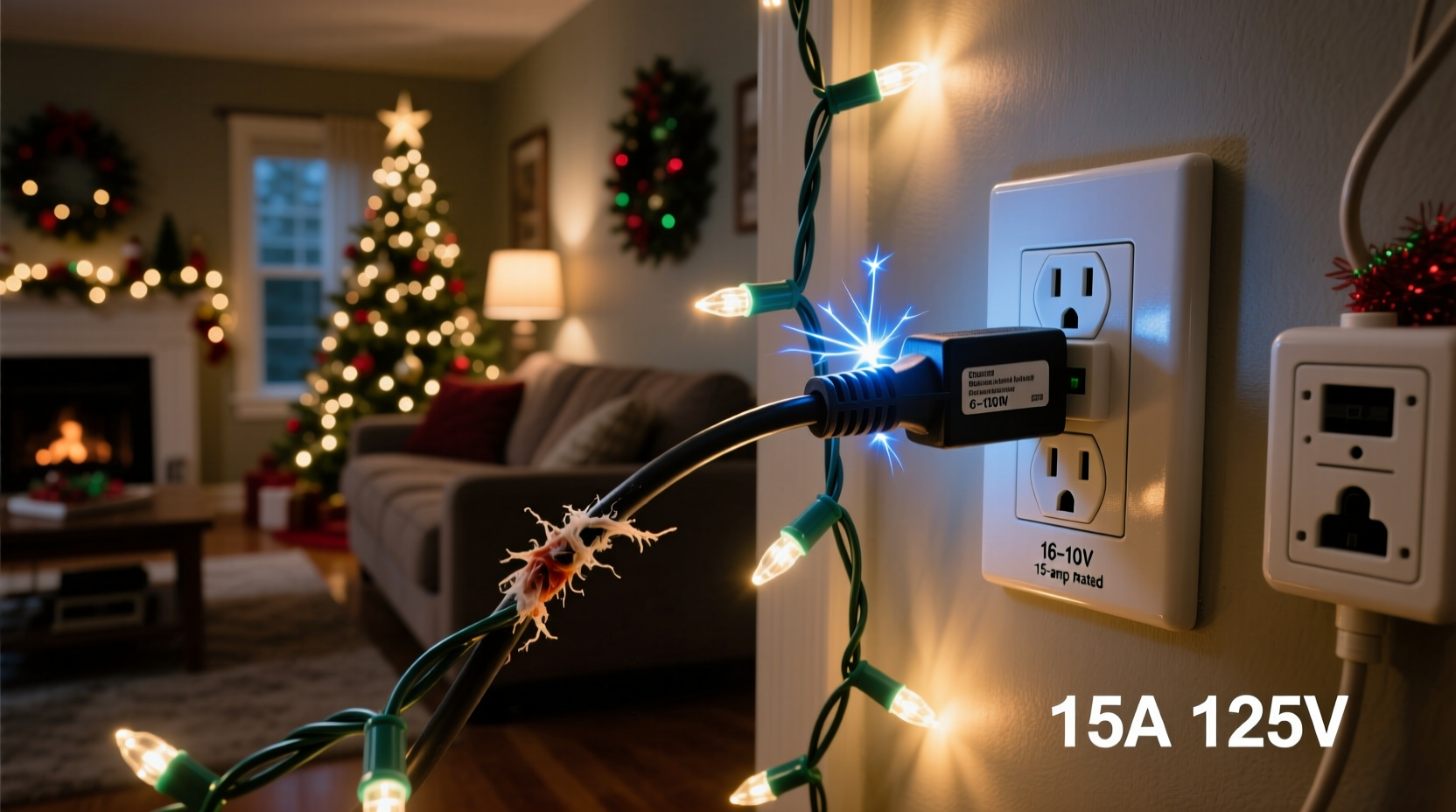
Extension cords don’t “cause” breakers to trip. They’re passive conductors. What triggers the breaker is an excessive current draw on the circuit—beyond its rated capacity. Most standard residential circuits in North America are 15-amp or 20-amp, serving multiple outlets across a room or zone. When you daisy-chain strings of lights onto one outlet—especially via an undersized or low-quality extension cord—you concentrate demand where the system wasn’t designed to handle it.
A 15-amp circuit can safely carry up to 1,800 watts (15 amps × 120 volts). A 20-amp circuit handles up to 2,400 watts. But electrical codes require a 20% safety margin for continuous loads—so the practical limit is 1,440 watts for a 15-amp circuit and 1,920 watts for a 20-amp. That margin exists for good reason: heat buildup increases exponentially as load approaches capacity.
Why Extension Cords Make It Worse—Not Better
Extension cords introduce three critical variables that compound circuit stress:
- Wire gauge limitations: Thinner wires (higher AWG numbers like 18 or 16) have higher resistance. When current flows through them, resistance converts electricity into heat—a phenomenon known as Joule heating. A 100-foot 18-gauge cord powering 800 watts can heat up 20–30°F above ambient temperature. That heat degrades insulation and increases resistance further, creating a dangerous feedback loop.
- Length-related voltage drop: Longer cords reduce voltage delivered to the lights. To maintain brightness, devices draw *more current* to compensate—pushing amperage closer to the breaker’s limit. A 50-foot 16-gauge cord can lose up to 5% voltage at full load; a 100-foot 18-gauge cord may lose 12% or more.
- Daisy-chaining risk: Plugging one extension cord into another multiplies resistance and voltage drop while obscuring total load visibility. UL prohibits daisy-chaining most outdoor-rated cords—and for good reason: each connection point adds resistance and potential arcing points.
Crucially, many consumers use indoor-rated cords (often 16- or 18-gauge) outdoors. These lack moisture resistance, UV stabilization, and cold-temperature flexibility—making them prone to cracking, shorting, and ground faults that trigger GFCI or AFCI breakers even before overload occurs.
Real-World Example: The Johnson Family Porch
In December 2023, the Johnsons in Portland, Oregon, installed 12 strands of pre-lit garlands (each 20 ft, incandescent), two net lights (12 ft × 12 ft), and four 3-ft LED reindeer figures—all powered from a single front-porch outlet. They used a 50-foot 16-gauge “heavy-duty” extension cord purchased from a discount retailer, then added a second 25-foot 18-gauge cord to reach the far side of the house.
Initially, only the first six garlands lit. As they added the seventh, the breaker tripped. Resetting allowed brief operation—until the lights warmed up and resistance increased. An electrician found the circuit was feeding five other outlets (including the garage door opener and a security camera), leaving only ~900 watts available for lighting. The total load exceeded 1,650 watts—well past the 1,440-watt safe limit. The 18-gauge cord was also cracked near the plug, exposing copper to damp siding.
Fix? They replaced the entire setup: installed a dedicated 20-amp GFCI-protected outdoor outlet, used a single 50-foot 12-gauge outdoor-rated cord, and switched all lights to UL-listed LED strings totaling under 300 watts. No more tripping—no more risk.
Step-by-Step: Diagnose & Resolve Safely
Follow this sequence—not skipping steps—to identify root cause and implement lasting solutions:
- Identify the circuit: Turn off the tripped breaker. Test all outlets and lights on that circuit. Map which rooms/outlets share it using a circuit tracer or by process of elimination.
- Calculate actual load: Check each light string’s label for wattage or amperage. Add them *plus* any other devices on the same circuit (garage openers, sump pumps, refrigerators). Don’t guess—use a plug-in power meter ($25–$40) for accuracy.
- Inspect cord specs: Find the AWG rating (e.g., “14 AWG”) printed on the cord jacket. Cross-reference with the National Electrical Code Table 400.5(A)(3) for maximum allowable amperage by length and gauge. For example:
- 12 AWG: up to 1,920W (16A) for ≤ 50 ft; 1,440W (12A) for 100–150 ft
- 14 AWG: up to 1,440W (12A) for ≤ 50 ft; 960W (8A) for 100–150 ft
- 16 AWG: max 840W (7A) for ≤ 50 ft—unsuitable for most outdoor lighting
- Evaluate connections: Look for warm plugs, discoloration, melted insulation, or loose prongs. Sniff for ozone or burnt plastic odor—signs of arcing.
- Reconfigure strategically: Distribute loads across multiple circuits. Use outlets in different rooms or on opposite sides of the house. Prioritize GFCI-protected outlets outdoors, and never power lights from kitchen or bathroom circuits (they’re often shared with high-draw appliances).
Do’s and Don’ts: Extension Cord Use for Holiday Lighting
| Action | Do | Don’t |
|---|---|---|
| Cord Selection | Use 12- or 14-gauge outdoor-rated cords (UL listed, “WT” or “W” suffix) for runs > 25 ft or > 800W loads | Use 16- or 18-gauge indoor cords outdoors—even if labeled “heavy duty” |
| Length Management | Choose the shortest cord possible for the job; uncoil fully before use | Leave cords coiled or partially wound during operation—it traps heat |
| Load Distribution | Power no more than 3–4 LED strings (≤ 200W total) or 1–2 incandescent strings (≤ 400W) per 14-gauge cord | Plug more than 5 light strings into one outlet, regardless of cord rating |
| Connection Safety | Use a heavy-duty, weatherproof outlet strip with built-in circuit breaker (e.g., 15A thermal cutoff) | Daisy-chain cords, use indoor power strips outdoors, or plug cords into surge protectors not rated for continuous load |
| Maintenance | Inspect cords annually for cracks, fraying, bent prongs, or corrosion; replace every 3 years if used seasonally | Store cords tightly wound in hot attics or damp basements—accelerates insulation breakdown |
Expert Insight: What Electricians See Year After Year
“Ninety percent of holiday-related breaker trips stem from one of three things: using undersized cords, ignoring cumulative circuit loads, or mixing old and new technology without recalculating. People think ‘LED = safe,’ but add ten 12W LED strings, a fog machine, and a blower fan on the same 15-amp circuit—and you’re at 1,320 watts before the tree lights even go on. Voltage drop and heat are silent killers. If your cord feels warm to the touch, it’s already operating outside safe parameters.”
— Carlos Mendez, Master Electrician & NFPA 70E Certified Trainer, Portland, OR
Frequently Asked Questions
Can I use a power strip instead of an extension cord?
Only if it’s specifically rated for outdoor use, has a built-in 15-amp circuit breaker, and is plugged directly into a GFCI outlet—not into another extension cord. Most indoor power strips lack thermal protection, weather sealing, and sufficient wire gauge. Using one outdoors voids UL listing and creates serious shock/fire hazards.
Why did my breaker trip *after* the lights were on for 20 minutes—not immediately?
This points to thermal overload, not instantaneous short-circuiting. As cords and connections heat up, resistance increases, drawing more current to maintain voltage. Breakers respond to sustained overcurrent—not peak surges—so delayed tripping is classic sign of marginal loading combined with poor heat dissipation. It’s especially common with coiled cords or cords run under rugs or mulch.
Are smart plugs or timers causing the issue?
Rarely—but they can contribute. Some low-cost smart plugs have internal relays rated for only 10 amps continuous. If your lighting load hits 12–14 amps, the relay contacts overheat and fail, sometimes tripping upstream breakers. Always verify relay ratings (listed on device or spec sheet) match your actual load—not just “works with Alexa.”
Conclusion: Safety Isn’t Seasonal—It’s Structural
Your home’s electrical system wasn’t designed for temporary, high-density decorative loads. Treating holiday lighting as a “set-and-forget” task ignores how physics, aging infrastructure, and incremental upgrades interact. That tripping breaker isn’t nagging you—it’s protecting you. Every time it clicks off, it’s preventing insulation meltdown, arc-fault ignition, or a compromised neutral connection that could electrify metal fixtures.
This season, invest 20 minutes in measurement, inspection, and redistribution—not just decoration. Replace worn cords. Verify gauge and rating. Map your circuits. Choose LED strings with clear wattage labels. And if your setup consistently pushes limits, consult a licensed electrician about adding a dedicated outdoor circuit. It’s not an expense—it’s insurance against loss, injury, or catastrophe.
Holiday joy shouldn’t come with anxiety. Light your home thoughtfully, power it responsibly, and let the warmth come from celebration—not overheated wires.




 浙公网安备
33010002000092号
浙公网安备
33010002000092号 浙B2-20120091-4
Comments
No comments yet. Why don't you start the discussion?