
It starts subtly—a faint flutter beneath your left or right eye that you feel more than see. Within hours or days, the twitch becomes persistent, drawing your attention every few seconds. You’re not alone. Millions experience random eyelid twitches, medically known as myokymia, at some point in their lives. While most cases are harmless and resolve on their own, recurring or prolonged twitching can signal underlying issues worth investigating. Understanding the triggers, knowing when it's time to consult a doctor, and learning how to manage symptoms empowers you to respond wisely rather than worry unnecessarily.
What Causes Random Eye Twitching?
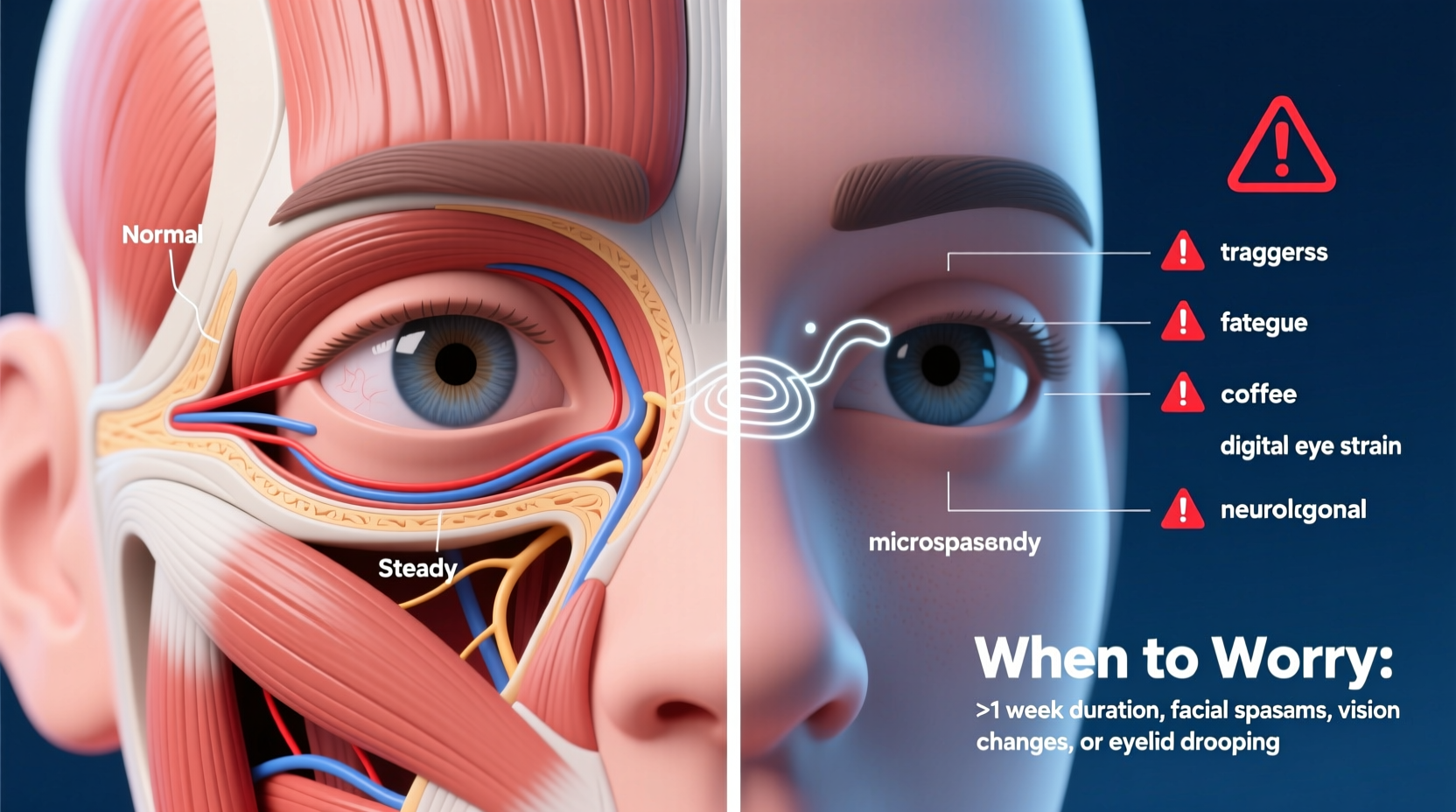
Eye twitching occurs when the orbicularis oculi muscle—the muscle around the eye—firing erratically due to nerve stimulation. This involuntary spasm is usually temporary and localized, affecting only one eye at a time, though both eyes can occasionally be involved. The root causes vary widely, from lifestyle factors to neurological conditions.
The most common contributors include:
- Stress: Elevated cortisol levels disrupt nervous system balance, increasing muscle excitability.
- Fatigue: Lack of quality sleep impairs neural regulation, making muscles more prone to spasms.
- Caffeine: Excessive intake overstimulates the central nervous system, triggering twitching.
- Dry eyes: Especially common with prolonged screen use; irritation prompts reflexive blinking and twitching.
- Nutritional imbalances: Deficiencies in magnesium, potassium, or calcium affect neuromuscular function.
- Allergies: Histamine release from eye rubbing can stimulate surrounding nerves.
When Should You Be Concerned?
Most eye twitches last a few minutes to several days and disappear without treatment. However, certain patterns suggest the need for medical evaluation. Persistent twitching beyond three weeks, spreading facial involvement, or accompanying symptoms could indicate a more serious neurological condition.
“While benign essential blepharospasm is rare, we see patients who delay care because they assume it’s just stress. Early diagnosis improves outcomes significantly.” — Dr. Lena Torres, Neuro-Ophthalmologist at Boston Vision Institute
Red flags include:
- Twitching that spreads to other parts of the face (e.g., mouth or cheek)
- Eyes closing involuntarily during spasms
- Noticeable facial weakness or drooping
- Redness, swelling, or discharge from the eye
- Symptoms worsening despite rest and lifestyle changes
If any of these occur, consult a neurologist or ophthalmologist promptly. Conditions such as hemifacial spasm, Bell’s palsy, multiple sclerosis, or Parkinson’s disease may present with similar early signs.
Practical Steps to Stop Eye Twitching
Before seeking medical help, try addressing modifiable lifestyle factors. Many people find relief through simple adjustments. Here’s a step-by-step guide to calming an overactive eyelid:
- Track your triggers: Keep a log for five days noting caffeine intake, sleep duration, screen time, and stress levels. Identify correlations with twitch intensity.
- Improve sleep hygiene: Aim for 7–8 hours nightly. Maintain a consistent bedtime and avoid screens 60 minutes before sleep.
- Limit stimulants: Cut back on coffee, energy drinks, and strong teas. Replace them with herbal alternatives like chamomile or rooibos.
- Use artificial tears: If dry eyes are suspected, apply preservative-free lubricating drops twice daily.
- Apply warm compresses: Soak a clean cloth in warm water and place it over closed eyes for 5 minutes, twice a day.
- Practice relaxation techniques: Try deep breathing, meditation, or gentle yoga to lower overall nervous system arousal.
Nutrition and Supplements That Help
Magnesium plays a critical role in muscle relaxation and nerve transmission. Studies show that subclinical magnesium deficiency affects nearly half of adults in developed countries, often contributing to muscle twitches. Other key nutrients include vitamin B12, potassium, and omega-3 fatty acids.
| Nutrient | Role in Eye Health | Dietary Sources |
|---|---|---|
| Magnesium | Regulates nerve signals and muscle contractions | Spinach, almonds, pumpkin seeds, black beans |
| Vitamin B12 | Supports myelin sheath integrity around nerves | Salmon, eggs, dairy, fortified cereals |
| Omega-3 Fatty Acids | Reduces inflammation and supports tear production | Fatty fish, flaxseeds, chia seeds, walnuts |
| Potassium | Balances electrolytes crucial for nerve function | Bananas, sweet potatoes, avocados, coconut water |
Real-Life Example: Sarah’s Recovery Journey
Sarah, a 34-year-old graphic designer, began experiencing right-eye twitching after transitioning to remote work. Initially dismissing it as tiredness, she noticed the twitch persisted for over two weeks, intensifying after late-night project deadlines. She was consuming four cups of coffee daily, sleeping fewer than six hours, and spending 10+ hours in front of screens.
After reading about potential causes, Sarah implemented changes: switching to decaf after noon, using blue-light filters, applying warm compresses, and taking a magnesium supplement. Within nine days, the twitching stopped completely. A follow-up eye exam revealed mild dry eye syndrome, which she now manages with regular breaks and hydration.
Her experience underscores how modern work habits can silently contribute to physical symptoms—and how targeted interventions often yield fast results.
Do’s and Don’ts for Managing Eye Twitching
| Do’s | Don’ts |
|---|---|
| Take frequent screen breaks using the 20-20-20 rule (every 20 minutes, look at something 20 feet away for 20 seconds) | Ignore worsening symptoms lasting more than three weeks |
| Stay hydrated—dehydration affects electrolyte balance | Overuse caffeinated beverages or alcohol |
| Get a comprehensive eye exam if dryness is suspected | Rub your eyes aggressively, especially with allergies |
| Consider a multivitamin if diet lacks key nutrients | Self-diagnose serious neurological conditions |
Frequently Asked Questions
Can eye strain from computers cause twitching?
Yes. Prolonged screen use reduces blink rate by up to 60%, leading to dry, irritated eyes. This irritation can trigger reflexive muscle activity, including twitching. Using artificial tears and following the 20-20-20 rule helps prevent this.
Is eye twitching a sign of anxiety?
Not directly, but chronic anxiety increases muscle tension and alters neurotransmitter balance, creating an environment conducive to twitching. Managing stress through mindfulness or therapy often reduces frequency.
Are children affected by eye twitching too?
Yes, though less commonly. In kids, twitching is often linked to fatigue, excessive screen time, or tic disorders. Most cases are transient. However, if tics persist or spread, evaluation by a pediatric neurologist is recommended.
Final Thoughts: Listen to Your Body
Your body communicates through subtle signals. An occasional eye twitch is rarely cause for alarm—it’s often a nudge to reassess your pace, rest more deeply, or hydrate better. But when the message persists, it deserves attention. By understanding what drives eyelid spasms and recognizing warning signs, you take control of your well-being rather than reacting in fear.
Start today: evaluate your caffeine intake, prioritize seven hours of sleep, and give your eyes a break. Small shifts often bring swift relief. And if the twitch lingers despite your efforts, don’t hesitate to seek professional insight. Your health is worth the conversation.




 浙公网安备
33010002000092号
浙公网安备
33010002000092号 浙B2-20120091-4
Comments
No comments yet. Why don't you start the discussion?