
Facial twitching—especially around the eye, cheek, or mouth—is a surprisingly common experience, particularly after long days, poor sleep, or periods of stress. While usually harmless, it can be distracting, uncomfortable, or even concerning if it persists. The most frequent trigger? Fatigue. When your body is exhausted, your nervous system becomes hyperexcitable, leading to involuntary muscle contractions. Understanding the science behind this phenomenon—and knowing how to respond—can help you manage symptoms effectively and restore balance to your body.
The Science Behind Facial Twitching and Fatigue
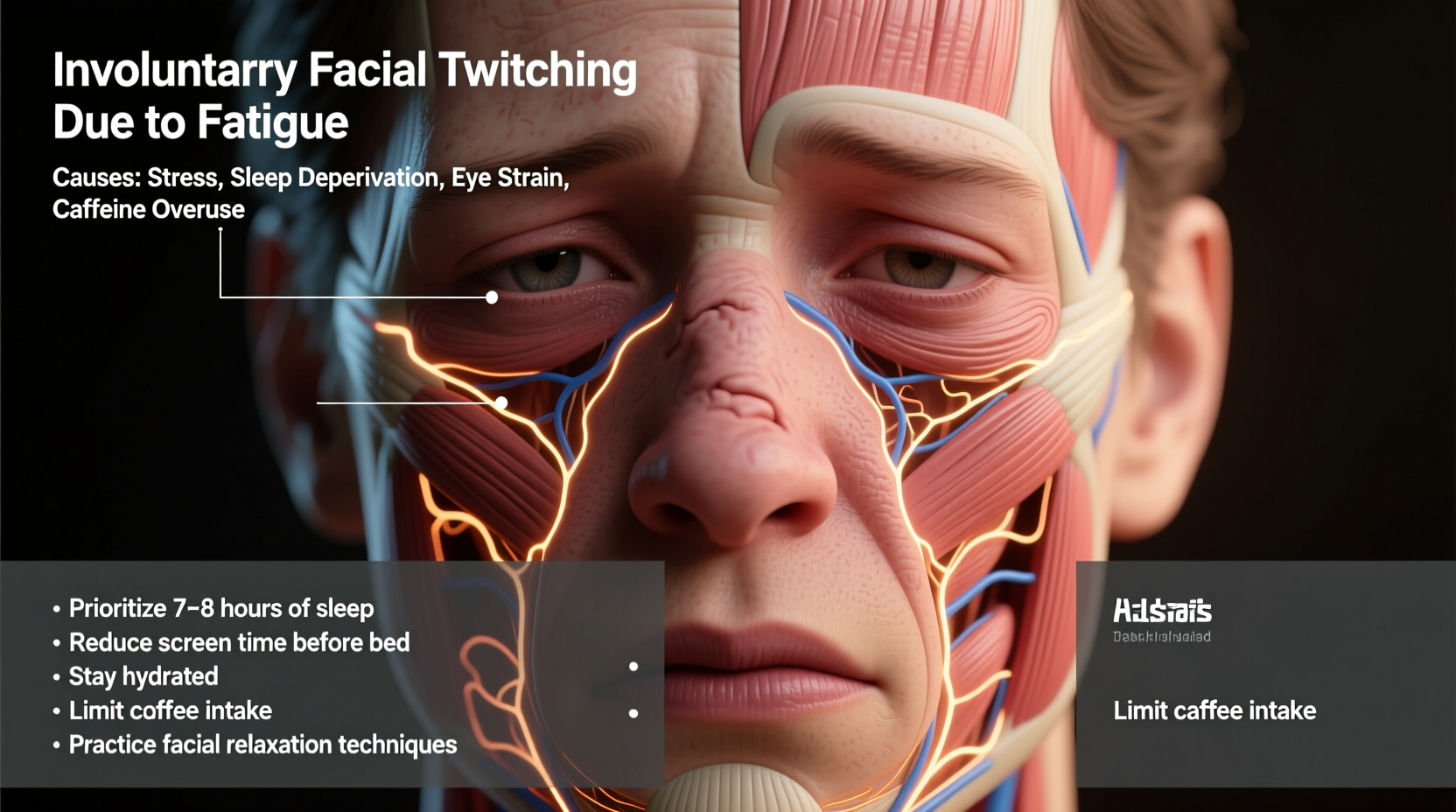
Facial twitching, medically known as fasciculation, occurs when small groups of muscle fibers contract spontaneously. These contractions are triggered by nerve signals that fire without conscious control. Under normal conditions, motor neurons regulate muscle activity with precision. However, when the body is fatigued, several physiological changes occur:
- Nervous system overactivity: Prolonged wakefulness or mental strain increases neural excitability, making nerves more prone to misfiring.
- Electrolyte imbalance: Dehydration and nutrient depletion—common during exhaustion—affect sodium, potassium, calcium, and magnesium levels, all critical for proper nerve-to-muscle signaling.
- Reduced inhibition in the brain: The central nervous system relies on inhibitory neurotransmitters like GABA to keep muscle activity in check. Sleep deprivation reduces their effectiveness, allowing random impulses to pass through unchecked.
Dr. Linda Chen, a neurologist at Boston NeuroCare Center, explains:
“Fatigue disrupts the delicate balance between excitation and inhibition in the nervous system. Even minor imbalances can cause benign fasciculations, especially in highly innervated areas like the face.”
The muscles most commonly affected include the orbicularis oculi (around the eye), buccinator (in the cheek), and mentalis (chin area). These regions have dense nerve endings and fine motor control, making them sensitive to neurological fluctuations.
Common Causes of Involuntary Facial Twitching Beyond Tiredness
While fatigue is a primary culprit, it rarely acts alone. More often, it combines with other lifestyle or medical factors to trigger twitching. Recognizing these co-factors helps identify root causes and improve outcomes.
| Cause | How It Contributes | Associated Symptoms |
|---|---|---|
| Stress & Anxiety | Increases cortisol and adrenaline, heightening neuromuscular sensitivity | Racing thoughts, insomnia, tension headaches |
| Caffeine Overconsumption | Stimulates nervous system, lowers seizure threshold | Jitteriness, heart palpitations, restlessness |
| Poor Sleep Quality | Disrupts neural recovery and neurotransmitter regulation | Daytime drowsiness, irritability, concentration issues |
| Vitamin Deficiencies (B12, D, Mg) | Impairs nerve conduction and muscle function | Fatigue, numbness, mood swings |
| Dry Eyes or Eye Strain | Irritates facial nerves connected to eyelid muscles | Burning sensation, blurred vision, redness |
In some cases, persistent twitching may signal underlying conditions such as Bell’s palsy, hemifacial spasm, or multiple sclerosis. However, these typically present with additional symptoms like facial weakness, drooping, or asymmetry—and are not solely tied to fatigue.
Effective Strategies to Reduce Facial Twitching
Addressing facial twitching requires both immediate relief and long-term lifestyle adjustments. The goal is to calm the nervous system, support neuromuscular health, and minimize irritants.
1. Prioritize Restorative Sleep
Sleep isn’t just about quantity—it’s about quality. Deep, uninterrupted sleep allows the brain to reset neural pathways and regulate motor signals. Aim for 7–9 hours per night, maintaining a consistent bedtime and wake time—even on weekends.
2. Rebalance Electrolytes and Hydration
Dehydration and electrolyte loss from sweating, caffeine, or poor diet can directly provoke muscle spasms. Increase intake of magnesium-rich foods (spinach, almonds, avocado), potassium sources (bananas, sweet potatoes), and consider a B-complex supplement if dietary intake is low.
3. Limit Stimulants
Caffeine, nicotine, and certain medications (like decongestants) act as CNS stimulants. Reducing consumption—even cutting back from four cups of coffee to one—can significantly decrease twitch frequency within days.
4. Practice Stress-Reduction Techniques
Chronic stress keeps the body in a state of sympathetic overdrive, increasing susceptibility to twitching. Incorporate daily practices such as:
- Diaphragmatic breathing (5 minutes morning and night)
- Mindful meditation using guided apps
- Gentle yoga or stretching routines
5. Apply Warm Compresses
For localized twitching, especially around the eye, a warm compress improves blood flow and relaxes tense muscles. Use a clean cloth soaked in warm water, apply gently for 5–10 minutes twice daily.
“Patients who combine hydration, sleep hygiene, and stress management see symptom resolution in 90% of benign facial twitch cases.” — Dr. Rajiv Mehta, Clinical Neurophysiologist
Step-by-Step Guide to Managing Facial Twitching
If you're currently experiencing twitching linked to fatigue, follow this 7-day action plan to regain control:
- Day 1: Log all symptoms, including location, duration, and potential triggers (caffeine, screen time, stress).
- Day 2: Eliminate or reduce caffeine and alcohol. Switch to herbal tea or water.
- Day 3: Establish a wind-down routine: no screens 60 minutes before bed, dim lights, read or stretch.
- Day 4: Begin gentle eye exercises and warm compress applications twice daily.
- Day 5: Introduce 5 minutes of box breathing (inhale 4 sec, hold 4 sec, exhale 4 sec, pause 4 sec).
- Day 6: Assess improvement. If twitching continues, review diet for magnesium/B12 deficiency signs.
- Day 7: Evaluate progress. If no change, consult a healthcare provider to rule out neurological causes.
This structured approach empowers you to take measurable steps rather than reacting passively to symptoms.
Real-Life Example: Sarah’s Experience with Eyelid Twitching
Sarah, a 34-year-old project manager, began noticing her left eyelid twitching after two consecutive weeks of late-night work and minimal sleep. Initially dismissing it as stress, she found the twitch persisted into weekends. Concerned, she started tracking her habits and discovered she was consuming three energy drinks daily and sleeping fewer than six hours a night.
Following a self-guided intervention—cutting caffeine, adding spinach and pumpkin seeds to her diet, and setting a phone curfew—her symptoms resolved within nine days. A follow-up with her GP confirmed no underlying condition. “I didn’t realize how much my body was screaming for rest,” she said. “Now I protect my sleep like it’s a meeting with the CEO.”
Her case illustrates how lifestyle factors compound fatigue-related twitching—and how targeted changes yield rapid results.
When to Seek Medical Attention
Most facial twitching resolves on its own with rest and lifestyle modifications. However, certain red flags warrant prompt evaluation by a neurologist:
- Twitching spreads to other facial areas or body parts
- Facial drooping, difficulty closing the eye, or slurred speech develops
- Spasms become constant or painful
- Symptoms last longer than 3 weeks despite self-care
Persistent unilateral twitching could indicate hemifacial spasm, often caused by vascular compression of the facial nerve. This condition may require imaging (MRI) and treatments such as Botox injections or microvascular decompression surgery.
FAQ: Common Questions About Facial Twitching
Can lack of sleep really cause my face to twitch?
Yes. Sleep deprivation alters neurotransmitter balance and increases nerve excitability, making muscle twitches more likely. Even one night of poor sleep can trigger an episode in sensitive individuals.
Is facial twitching a sign of something serious like a stroke?
Isolated, intermittent twitching due to fatigue is almost never a sign of stroke. Strokes typically involve sudden weakness, numbness, confusion, or speech difficulties—not isolated muscle twitches. However, any new neurological symptom should be evaluated if uncertainty exists.
Does screen time contribute to facial twitching?
Indirectly, yes. Excessive screen exposure leads to eye strain and dry eyes, which can irritate facial nerves and provoke eyelid spasms. Additionally, prolonged screen use often correlates with poor posture, reduced blinking, and delayed sleep onset—all contributing factors.
Conclusion: Take Control of Your Nervous System Health
Involuntary facial twitching when tired is a clear message from your body: it needs rest, balance, and care. While unsettling, it’s usually a temporary response to stressors that are within your control. By addressing sleep, nutrition, hydration, and mental well-being, you can stop the twitch before it starts.
Your nervous system governs every movement, thought, and sensation. Treating it with respect—not pushing through exhaustion—leads to better overall health and fewer disruptions. Start tonight: put down the coffee, turn off the screens, and give your body the recovery it deserves.




 浙公网安备
33010002000092号
浙公网安备
33010002000092号 浙B2-20120091-4
Comments
No comments yet. Why don't you start the discussion?