
The nose is one of the most challenging areas to perfect when applying foundation. Despite blending carefully, many people notice their makeup begins to separate, crease, or form visible lines within hours—especially on the sides and bridge of the nose. This common frustration isn’t just about product failure; it’s often tied to skin type, application technique, and environmental factors. Understanding the root causes and adopting professional strategies can transform your base from patchy to polished.
Why Foundation Separates on the Nose: The Science Behind It
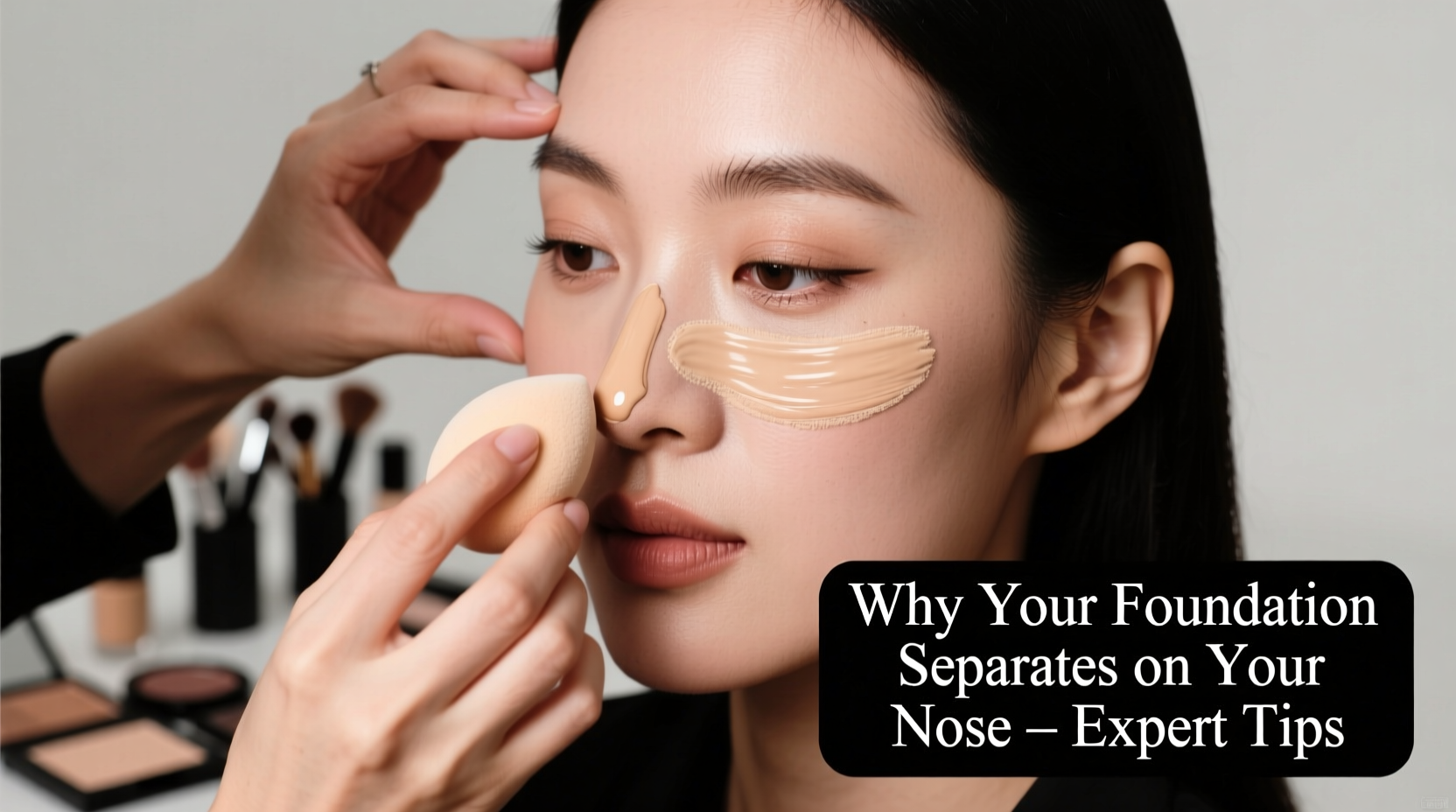
The nose sits at the center of the face and naturally produces more oil than other areas due to a high concentration of sebaceous glands. This oil buildup breaks down foundation over time, causing it to slide, separate, or oxidize unevenly. Additionally, the nose has dynamic movement—breathing, smiling, talking—which creates micro-motions that disrupt product adhesion. These movements are subtle but constant, contributing to breakdown along the nasolabial folds and sides of the nose.
Skin texture also plays a role. Enlarged pores, blackheads, or dry patches create an uneven surface. When foundation settles into these imperfections, it emphasizes them rather than blurring them. Over time, this leads to caking and separation, especially if products aren't properly layered or if incompatible formulas are mixed.
“Foundation separation on the nose is rarely about one single mistake—it's usually a combination of skincare prep, formula mismatch, and technique.” — Lila Chen, Celebrity Makeup Artist with 15+ years in editorial and film
Common Causes of Foundation Breakdown on the Nose
- Oily Skin: Excess sebum emulsifies foundation, leading to separation and shine.
- Poor Skincare Prep: Dehydrated or flaky skin prevents even application and accelerates cracking.
- Incompatible Product Mixing: Combining silicone-based primers with water-based foundations can cause pilling.
- Overloading Product: Too much foundation or concealer builds up in creases and moves with facial expressions.
- Wrong Formula Choice: Heavy, comedogenic formulas clog pores and increase slippage.
- Environmental Factors: Humidity, heat, and pollution degrade makeup integrity throughout the day.
Step-by-Step Guide to Prevent Foundation Separation
Follow this professional routine to ensure your foundation stays intact on the nose all day:
- Cleanse Thoroughly: Use a gentle foaming cleanser to remove dirt and excess oil without stripping moisture.
- Exfoliate Weekly: 2–3 times per week, use a chemical exfoliant (like salicylic acid) to smooth texture and unclog pores. Avoid harsh scrubs that irritate the skin.
- Hydrate Deeply: Apply a lightweight, non-comedogenic moisturizer. Allow it to absorb fully—wait at least 5 minutes before moving to the next step.
- Prime Strategically: Use a pore-filling primer only on the nose and T-zone. Opt for mattifying options with silica or clay if you're oily.
- Set Before You Start: Lightly press translucent powder onto the nose after moisturizing but before foundation. This creates a buffer against oil.
- Apply Foundation Correctly: Use a damp beauty sponge or stippling brush to press (not drag) foundation onto the nose. Build coverage gradually.
- Conceal After Foundation: Apply concealer only where needed and blend outward. Avoid layering thick concealer directly under foundation.
- Set Immediately: Use a small fluffy brush to apply setting powder just on the nose. Press gently with a sponge for longevity.
- Lock With Setting Spray: Finish with a fine mist of matte or hybrid setting spray to fuse layers together.
Do’s and Don’ts: Foundation Application for Oily Noses
| Do’s | Don’ts |
|---|---|
| Use oil-free, non-comedogenic products | Layer heavy creams under foundation |
| Blot oil during the day with tissue paper | Rub or wipe your nose aggressively |
| Choose long-wear or transfer-resistant formulas | Mix silicone and water-based products haphazardly |
| Reapply powder midday with a pressing motion | Touch up with liquid foundation over existing layers |
| Store makeup in a cool, dry place away from humidity | Keep expired or oxidized products in your kit |
Expert Product Pairing Tips for Lasting Wear
Not all foundations behave the same on the nose. The key is matching your formula to your skin’s behavior. Here’s how top artists approach product selection:
- For Oily Skin: Look for “matte,” “long-wear,” or “powder-infused” labels. Brands like Estée Lauder Double Wear, Fenty Pro Filt’r Soft Matte, and Make Up For Ever Ultra HD perform well under stress.
- For Dry Skin: Choose hydrating yet balanced formulas. Giorgio Armani Luminous Silk or NARS Sheer Glow offer radiance without sliding.
- For Combination Skin: Use dual-application techniques—matte foundation on the T-zone, dewier formulas on cheeks.
- Primers Matter: Laura Mercier Oil-Free Mattifying Primer or Smashbox Photo Finish Pore Minimizing Primer help control shine and blur texture.
- Setting Powders: Translucent powders with silica (e.g., Hourglass Veil Translucent Powder or RCMA No-Color Powder) lock makeup without chalkiness.
“I pre-set the nose with a light dusting of powder before foundation. It acts like a second skin and stops oil from creeping through too fast.” — Marcus Reed, Lead MUA at New York Fashion Week
Mini Case Study: From Midday Meltdown to All-Day Hold
Sophia, a 32-year-old marketing executive, struggled with her foundation separating by noon, particularly along the sides of her nose. She used a popular dewy foundation and applied it straight after moisturizer, blending with her fingers. Within two hours, she noticed visible streaks and required frequent touch-ups.
After consulting a makeup artist, she revised her routine: she began using a salicylic acid toner twice weekly, switched to a mattifying moisturizer for her T-zone, and started applying a pore-blurring primer only on her nose. She also changed her application tool to a dense stippling brush and allowed each layer to set before adding the next.
Within a week, Sophia reported no visible separation until late evening. Her confidence improved, and she reduced touch-ups from four times a day to once.
Checklist: How to Keep Foundation Intact on Your Nose
Use this daily checklist to stay ahead of separation:
- ✅ Cleanse with a pH-balanced cleanser
- ✅ Exfoliate 2–3x/week (chemical preferred)
- ✅ Apply oil-free moisturizer and wait 5 minutes
- ✅ Prime only the T-zone with a mattifying or pore-filling formula
- ✅ Pre-set nose with a light layer of translucent powder
- ✅ Use a stippling brush or damp sponge for application
- ✅ Blend foundation outward from the center of the face
- ✅ Set immediately with a pressed powder technique
- ✅ Finish with a matte or hybrid setting spray
- ✅ Carry blotting papers—not powder—for midday maintenance
Frequently Asked Questions
Can I use a different foundation just for my nose?
Yes, and many professionals do. Apply a matte, long-wear formula specifically on the T-zone while using a more luminous one on drier areas. This targeted approach balances finish and performance.
Why does my foundation separate even though I use primer?
Primer helps, but if it’s not compatible with your foundation (e.g., silicone-based primer under a water-based foundation), they may repel each other. Also, skipping the absorption phase or applying too much product can negate benefits.
Is there a way to fix separated foundation during the day?
Avoid adding more liquid foundation. Instead, blot the area gently with a tissue, then reapply a tiny amount of powder using a small brush. If needed, lightly spritz setting spray and let it dry without touching.
Final Thoughts: Mastery Starts With Precision
Foundation separation on the nose isn’t inevitable—it’s a solvable problem rooted in preparation, product synergy, and technique. By treating the nose as a high-maintenance zone requiring special attention, you gain control over shine, texture, and longevity. Small adjustments, like waiting for skincare to absorb or using the right tools, yield dramatic improvements.
Remember, flawless makeup isn’t about covering flaws perfectly the first time—it’s about creating a lasting result that withstands real life. Whether you’re heading into the office, attending an event, or filming a video, your foundation should work as hard as you do.




 浙公网安备
33010002000092号
浙公网安备
33010002000092号 浙B2-20120091-4
Comments
No comments yet. Why don't you start the discussion?