
A garage door that opens on its own is more than just a nuisance—it’s a serious safety and security concern. Whether it happens once or repeatedly, an unexplained activation can expose your home to intruders, put children or pets at risk, and damage the door mechanism over time. While modern garage doors are equipped with safety features and rolling code technology, malfunctions still occur due to electrical interference, mechanical faults, or overlooked vulnerabilities. Understanding why this happens—and how to fix it—is essential for every homeowner.
Common Causes of Unintended Garage Door Activation
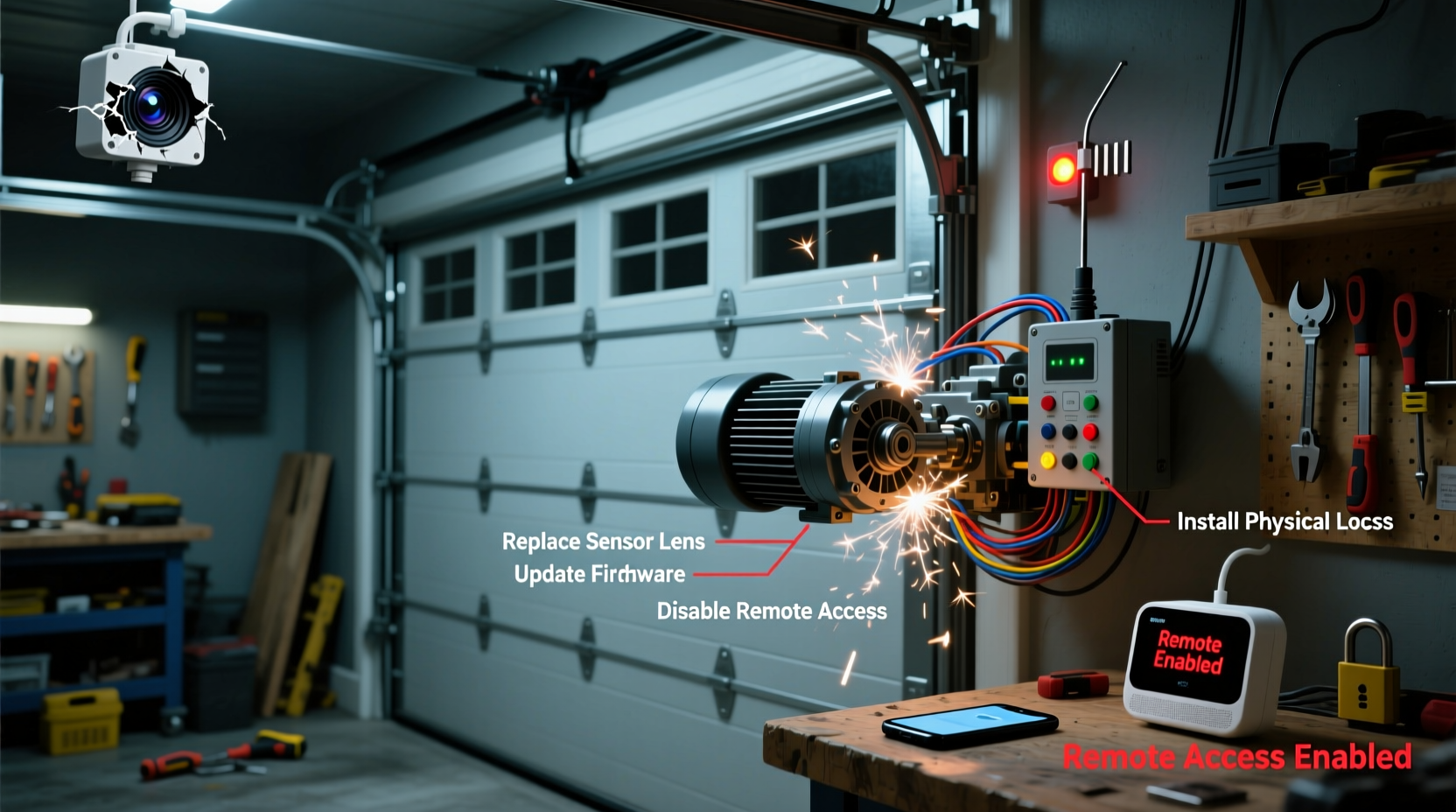
Garage doors operate through a combination of sensors, remote signals, and motorized mechanisms. When one component fails or miscommunicates, unintended operation can result. The following are among the most frequent technical and environmental triggers.
- Remote control interference: Nearby devices operating on similar radio frequencies—such as ham radios, baby monitors, or even neighboring garage openers—can accidentally trigger your opener.
- Faulty wall-mounted control panel: A short circuit or stuck button on the indoor control station may send continuous open signals.
- Wiring issues: Damaged or frayed wires between the motor unit and wall switch can create intermittent connections, mimicking button presses.
- Sunlight interference with safety sensors: Direct sunlight hitting the infrared safety sensors at certain angles can disrupt their signal, tricking the system into thinking an object is blocking the door—causing it to reverse or reopen.
- Malfunctioning logic board: The internal circuitry in older garage door openers can degrade over time, leading to erratic behavior including self-opening.
Security Vulnerabilities That Enable Unauthorized Access
Beyond mechanical glitches, some self-opening incidents stem from outdated security protocols. Older garage door systems used fixed codes, making them easy targets for “code grabbing.” Even newer models aren’t immune if not properly maintained.
Rolling Code vs. Fixed Code Systems
In the past, garage remotes transmitted the same numeric code each time they were used. Criminals could use inexpensive devices to capture and replay these signals—a method known as \"code grabbing.\" Modern openers use rolling code technology (also called Intellicode or Security+), where the code changes with every use. However, if your system is more than 15 years old, it may still rely on outdated encryption—or none at all.
“Many break-ins linked to garages involve exploitation of legacy opener systems. Upgrading isn't optional—it's a fundamental layer of home defense.” — Mark Delaney, Residential Security Consultant
Hacking and Signal Repeating Devices
Though rare, sophisticated intruders use relay attack tools to amplify and rebroadcast remote signals from nearby keys or key fobs left inside the house. This tricks the opener into thinking the authorized remote is present. These attacks typically require proximity but underscore the importance of signal hygiene and physical safeguards.
Step-by-Step Diagnostic Process
If your garage door opens unexpectedly, follow this structured troubleshooting sequence to identify and resolve the root cause.
- Observe when it happens: Note the time, weather conditions, and whether it occurs after other electronic activity (e.g., using a power tool).
- Disconnect the remote controls: Remove batteries from all handheld remotes and disable smart app access temporarily. Monitor the door for 24 hours.
- Test the wall button: Press and release the indoor wall switch. Listen for a click. If the button sticks or feels mushy, replace it immediately.
- Inspect wiring: Turn off power to the opener. Check the low-voltage wires running from the wall station to the motor unit for exposed conductors, pinches, or signs of rodent damage.
- Check sensor alignment: Ensure both safety sensors near the floor are clean, unobstructed, and facing each other directly. An LED light should be steady—not blinking—on each unit.
- Reset the opener: Unplug the unit for two minutes, then restore power. Reprogram all remotes and test functionality.
- Update firmware: For Wi-Fi-enabled openers, log into the manufacturer’s app and confirm you're running the latest software version.
Essential Security Fixes and Upgrades
Once immediate issues are ruled out, focus on long-term protection. The goal is to eliminate both accidental triggers and exploitable weaknesses.
Upgrade to a Modern Opener with Rolling Code Technology
If your opener was manufactured before 2010, consider replacement. New models feature encrypted rolling codes, built-in cameras, motion detection, and integration with smart home platforms like Google Home and Apple HomeKit.
Install a Secondary Locking Mechanism
Even if the door opens electronically, a manual lock adds a critical backup. Options include:
- Slide bolt locks that engage when the door is closed
- Electronic deadbolts activated via keypad or app
- Aftermarket auto-lock kits that engage after a set delay
Use a Faraday Pouch for Remote Keys
To prevent relay attacks, store spare remotes and car key fobs in a signal-blocking Faraday pouch. These small fabric sleeves lined with metallic mesh stop wireless signals from being intercepted.
| Fix | Effectiveness | Cost Range | DIY-Friendly? |
|---|---|---|---|
| Replace aging opener | ★★★★★ | $250–$500 | No (requires professional) |
| Realign safety sensors | ★★★★☆ | $0–$20 (cleaning tools) | Yes |
| Install Faraday pouch | ★★★★☆ | $10–$25 | Yes |
| Add secondary lock | ★★★★★ | $30–$100 | Moderate |
| Update firmware | ★★★☆☆ | Free | Yes |
Enable Two-Factor Authentication on Smart Openers
If your garage integrates with a mobile app, ensure two-factor authentication (2FA) is enabled. This prevents unauthorized access even if login credentials are compromised.
Real-World Example: The Case of the Midnight Opening
In suburban Columbus, Ohio, a homeowner noticed her garage door opening around 2:17 a.m. three nights in a row. No remotes were missing, and the sensors appeared aligned. She initially suspected a glitch, but after unplugging all remotes and observing continued activation, she called a technician.
The diagnosis revealed a corroded wire connecting the wall button to the opener. Moisture from seasonal humidity had degraded the insulation, causing periodic contact between wires. Each night, as temperatures dropped and condensation formed, the circuit briefly closed—signaling the door to open. Replacing the wiring eliminated the issue.
This case highlights how environmental factors can interact with aging components to create seemingly inexplicable behavior. Regular inspection—even in climate-controlled garages—can catch problems before they escalate.
Preventive Maintenance Checklist
Stay ahead of malfunctions with routine checks. Use this checklist monthly or seasonally:
- ✅ Test safety sensors by placing an object under the door path—door should reverse on contact.
- ✅ Inspect remote batteries for leakage or corrosion.
- ✅ Clean sensor lenses with a soft, dry cloth.
- ✅ Verify that the emergency release cord is intact and not tangled.
- ✅ Listen for unusual grinding, scraping, or clicking noises during operation.
- ✅ Confirm that the door reverses when moderate pressure is applied during closing.
- ✅ Review app logs (if applicable) for unrecognized access attempts.
Frequently Asked Questions
Can a power surge cause my garage door to open by itself?
Yes. Electrical surges from lightning or grid fluctuations can reset the opener’s logic board, triggering a default open command. Using a surge protector designed for garage door motors reduces this risk significantly.
Is it possible for neighbors to open my garage door accidentally?
With older fixed-code systems, yes—especially if multiple homes in a neighborhood use the same brand and model. Modern rolling code systems make this extremely unlikely, but signal interference from powerful transmitters (like amateur radio equipment) can still cause false activations.
Should I disconnect my garage door opener at night?
While inconvenient, disconnecting the opener eliminates remote risks temporarily. A better alternative is enabling an auto-lock feature or installing a physical lock that engages automatically after closure. For high-risk areas, combining digital and mechanical locks offers optimal protection.
Final Recommendations and Action Plan
Your garage is often the least monitored entry point to your home—but it shouldn’t be the weakest link. A door that opens by itself demands immediate attention. Start with diagnostics: rule out simple causes like stuck buttons or misaligned sensors. Then evaluate your system’s age and security capabilities. If your opener predates 2015, upgrading isn’t just about convenience; it’s a necessary step toward modern home safety standards.
Combine technological upgrades with basic habits: store remotes securely, inspect wiring annually, and treat your garage like any other exterior door—because that’s exactly what it is. With proactive maintenance and informed choices, you can eliminate random openings and ensure your garage remains a secure extension of your home.




 浙公网安备
33010002000092号
浙公网安备
33010002000092号 浙B2-20120091-4
Comments
No comments yet. Why don't you start the discussion?