
Waking up with a headache is more than just an unpleasant start to the day—it can disrupt your productivity, mood, and overall well-being. While many assume headaches are caused solely by stress or poor sleep, two often-overlooked factors play a critical role: hydration levels and pillow support. Both influence how your body recovers overnight, and imbalances in either can trigger morning discomfort. Understanding the interplay between hydration and spinal alignment during sleep helps pinpoint the root cause and implement effective, lasting solutions.
The Science Behind Morning Headaches
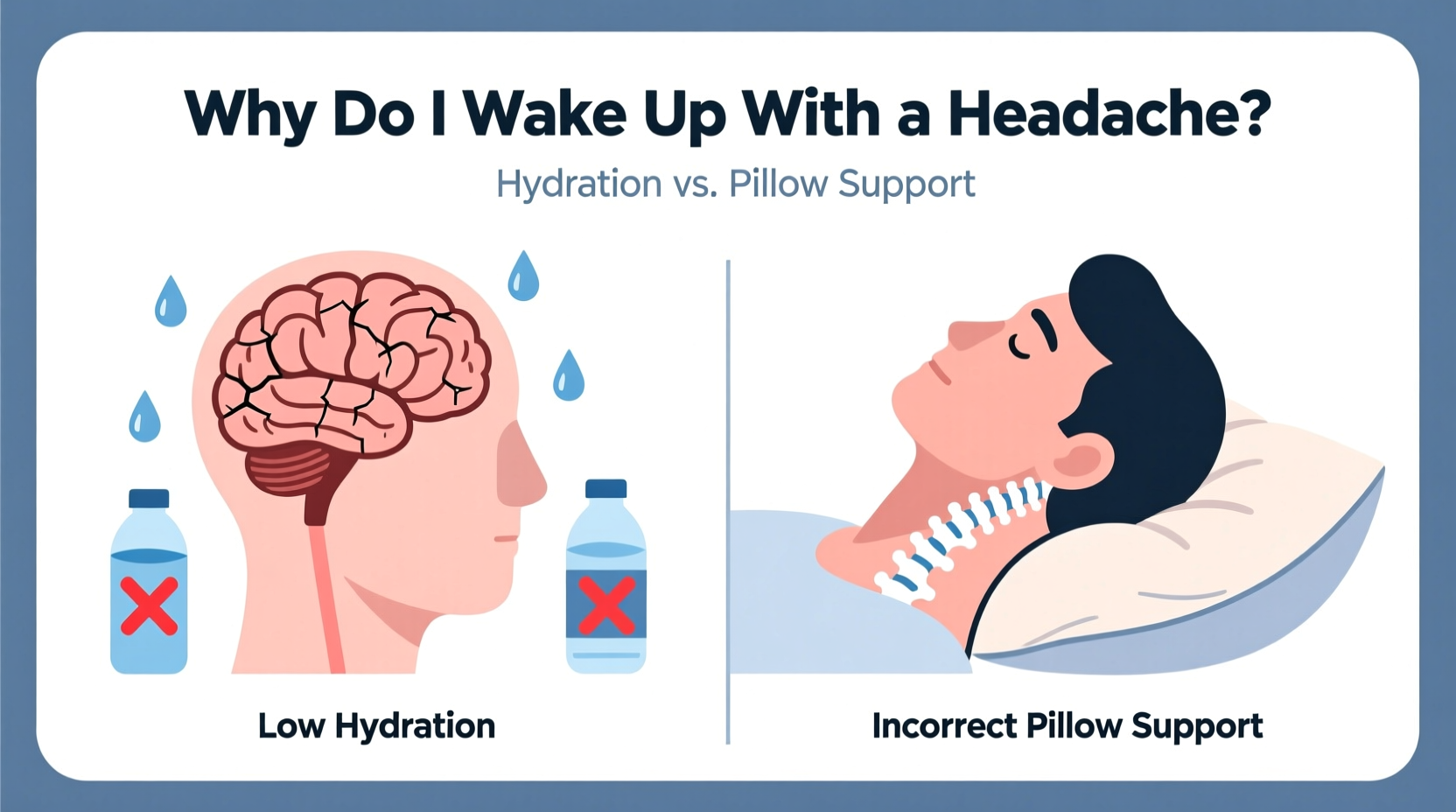
Morning headaches affect approximately 7% of the general population and are commonly linked to sleep-related disorders, dehydration, or musculoskeletal strain. During sleep, your body undergoes essential recovery processes, including fluid regulation and tissue repair. If these systems are compromised—by insufficient water intake or improper neck alignment—your brain may respond with pain signals upon waking.
Dehydration reduces blood volume, which in turn lowers oxygen flow to the brain. This triggers blood vessels to expand, increasing pressure and potentially causing a dull, throbbing headache. Meanwhile, poor pillow support misaligns the cervical spine, straining muscles and nerves in the neck and base of the skull—commonly resulting in tension-type headaches.
The challenge lies in distinguishing which factor—or combination—is responsible. Some individuals experience both issues simultaneously, making diagnosis tricky without careful observation and adjustment.
“Morning headaches are rarely random. They’re the body’s way of signaling imbalance—either physiological, like dehydration, or mechanical, such as poor spinal alignment.” — Dr. Lena Patel, Neurologist and Sleep Specialist
Hydration: The Silent Culprit Behind Waking Headaches
Water is fundamental to every bodily function, especially neurological regulation. Overnight, your body continues to lose moisture through respiration and minimal perspiration—even without physical activity. If you go to bed even slightly dehydrated, this fluid loss can intensify by morning, leading to increased intracranial pressure and headache onset.
Common signs that dehydration may be contributing to your morning headaches include:
- Dry mouth or throat upon waking
- Dark yellow urine first thing in the morning
- Fatigue or brain fog alongside the headache
- Headache relief within 30–60 minutes of drinking water
Chronic under-hydration is surprisingly common. Many people rely on coffee or sugary drinks during the day, which can have diuretic effects and exacerbate fluid loss. Additionally, alcohol consumption the night before significantly increases dehydration risk due to suppressed antidiuretic hormone (ADH) production.
How Much Water Do You Really Need?
General guidelines suggest about 2.7 liters (91 oz) for women and 3.7 liters (125 oz) for men daily from all beverages and foods. However, individual needs vary based on climate, activity level, diet, and health status. A more personalized approach involves monitoring urine color—aim for pale straw yellow—as a reliable hydration indicator.
To prevent nighttime dehydration without disrupting sleep with bathroom trips:
- Consume 70% of your daily water between waking and 6 p.m.
- Limit caffeine after 2 p.m., as it increases fluid excretion.
- Avoid alcohol close to bedtime; if consumed, drink a glass of water for every alcoholic beverage.
- Include water-rich foods like cucumbers, oranges, and soups in your evening meal.
Pillow Support: How Alignment Impacts Head and Neck Pain
Your pillow isn’t just for comfort—it plays a crucial role in maintaining proper spinal alignment while you sleep. When your head and neck are out of alignment, muscles in the upper back and base of the skull remain tense throughout the night, leading to chronic tension headaches.
The ideal pillow keeps your neck in a neutral position, meaning your spine forms a straight line from your lower back to your head—regardless of sleeping position. Misalignment occurs when:
- The pillow is too high, forcing the chin toward the chest
- The pillow is too flat, leaving the head tilted backward
- The material lacks support and collapses over time
Side sleepers often need thicker pillows to fill the gap between shoulder and ear, while back sleepers benefit from medium-height support that maintains the natural curve of the cervical spine. Stomach sleepers face the greatest challenge, as this position naturally hyperextends the neck unless using a very thin or contoured pillow.
| Sleep Position | Recommended Pillow Height | Best Materials | Risks of Poor Support |
|---|---|---|---|
| Back | Low to medium (4–5 inches) | Memory foam, latex | Snoring, tension headaches, forward head posture |
| Side | High (5–7 inches) | Dense memory foam, adjustable shredded foam | Nerve compression, shoulder pain, jaw clenching |
| Stomach | Very low or none | Soft down, gel-infused foam | Cervical strain, chronic neck pain, morning stiffness |
Real-Life Example: Sarah’s Breakthrough After Months of Pain
Sarah, a 38-year-old graphic designer, had been waking up with dull headaches three to four times a week for nearly six months. She assumed it was stress-related due to tight deadlines. After trying meditation and reducing screen time with little improvement, she consulted a sleep therapist who asked detailed questions about her bedtime routine.
The turning point came when she tracked her water intake and realized she drank less than 16 ounces daily, mostly in the morning. She also used a flat polyester pillow she’d had for five years. Following a two-week intervention—increasing water intake to 80 ounces daily and switching to a supportive memory foam pillow—her morning headaches decreased to once every few weeks. Within a month, they disappeared entirely.
Sarah’s case highlights how easily both hydration and pillow support can be overlooked, even by health-conscious individuals.
Hydration vs Pillow Support: How to Diagnose the Real Cause
Because both dehydration and poor pillow support can produce similar symptoms—dull ache at the base of the skull, stiffness, fatigue—it’s important to conduct a simple self-assessment.
Step-by-Step Diagnostic Timeline
- Week 1: Optimize Hydration
Increase daily water intake gradually. Avoid alcohol and excess caffeine. Note any changes in headache frequency or intensity upon waking. - Week 2: Evaluate Pillow Setup
Assess your current pillow’s height and firmness. Try a temporary substitute (like a rolled towel) to test improved alignment. Use a mirror to check neck position while lying down. - Week 3: Combine Both Adjustments
Maintain optimal hydration and use a properly supportive pillow. Keep a symptom journal tracking headache presence, severity, and timing. - Week 4: Review Results
If headaches resolve, continue the new habits. If not, consider other causes like sleep apnea, bruxism (teeth grinding), or underlying medical conditions.
This structured approach isolates variables and provides clarity on what’s truly driving the discomfort.
Comprehensive Checklist for Preventing Morning Headaches
Use this checklist nightly to reduce the risk of waking with a headache:
- ✅ Drink at least 16 oz of water between dinner and bedtime (unless contraindicated by a medical condition)
- ✅ Avoid alcohol or limit to one drink with extra water
- ✅ Use a pillow that supports neutral spinal alignment for your sleep position
- ✅ Replace old or flattened pillows (older than 18–24 months)
- ✅ Keep bedroom cool and humidified to reduce respiratory moisture loss
- ✅ Practice gentle neck stretches before bed to release muscle tension
- ✅ Monitor urine color as a hydration gauge throughout the day
Frequently Asked Questions
Can drinking water before bed cause headaches?
No—drinking moderate amounts of water before bed does not cause headaches. In fact, it helps maintain hydration overnight. However, excessive intake right before sleep may lead to nocturia (frequent urination), which disrupts sleep quality and indirectly contributes to morning discomfort.
How do I know if my pillow is the problem?
If you wake up with neck stiffness, shoulder tension, or a headache localized at the base of the skull, your pillow is likely a contributing factor. Perform the “ear-to-shoulder” test: lie on your side—if your ear isn’t aligned horizontally with your shoulder, your pillow is too high or too low.
Are there medical conditions that mimic dehydration or pillow-related headaches?
Yes. Conditions like sleep apnea, temporomandibular joint disorder (TMJ), and cervical spondylosis can present with similar symptoms. If headaches persist despite optimizing hydration and pillow support, consult a healthcare provider for further evaluation.
Conclusion: Take Control of Your Mornings
Waking up with a headache doesn’t have to be a normal part of your routine. By addressing two foundational elements—hydration and pillow support—you gain powerful leverage over a common but preventable issue. These adjustments require minimal cost or effort but deliver significant improvements in comfort, energy, and long-term health.
Start tonight. Refill your water bottle, assess your pillow’s condition, and commit to one small change. Track your progress for a week and notice the difference. Your body responds quickly to balance—give it the support and hydration it needs, and you’ll likely find yourself rising with clarity instead of pain.




 浙公网安备
33010002000092号
浙公网安备
33010002000092号 浙B2-20120091-4
Comments
No comments yet. Why don't you start the discussion?