
A garage door that reverses just before closing is more than an inconvenience—it’s a safety hazard and a sign something is wrong. Modern garage door openers are equipped with sensors and force settings designed to prevent injury or damage, but when these systems malfunction, they can cause premature reversal. Understanding why this happens—and how to fix it quickly—can save you time, money, and frustration.
This guide breaks down the most common causes of a reversing garage door, provides step-by-step solutions, and helps you restore reliable operation in under an hour in most cases. Whether you're dealing with misaligned sensors, mechanical resistance, or faulty settings, you’ll find actionable fixes here.
How Garage Door Safety Systems Work
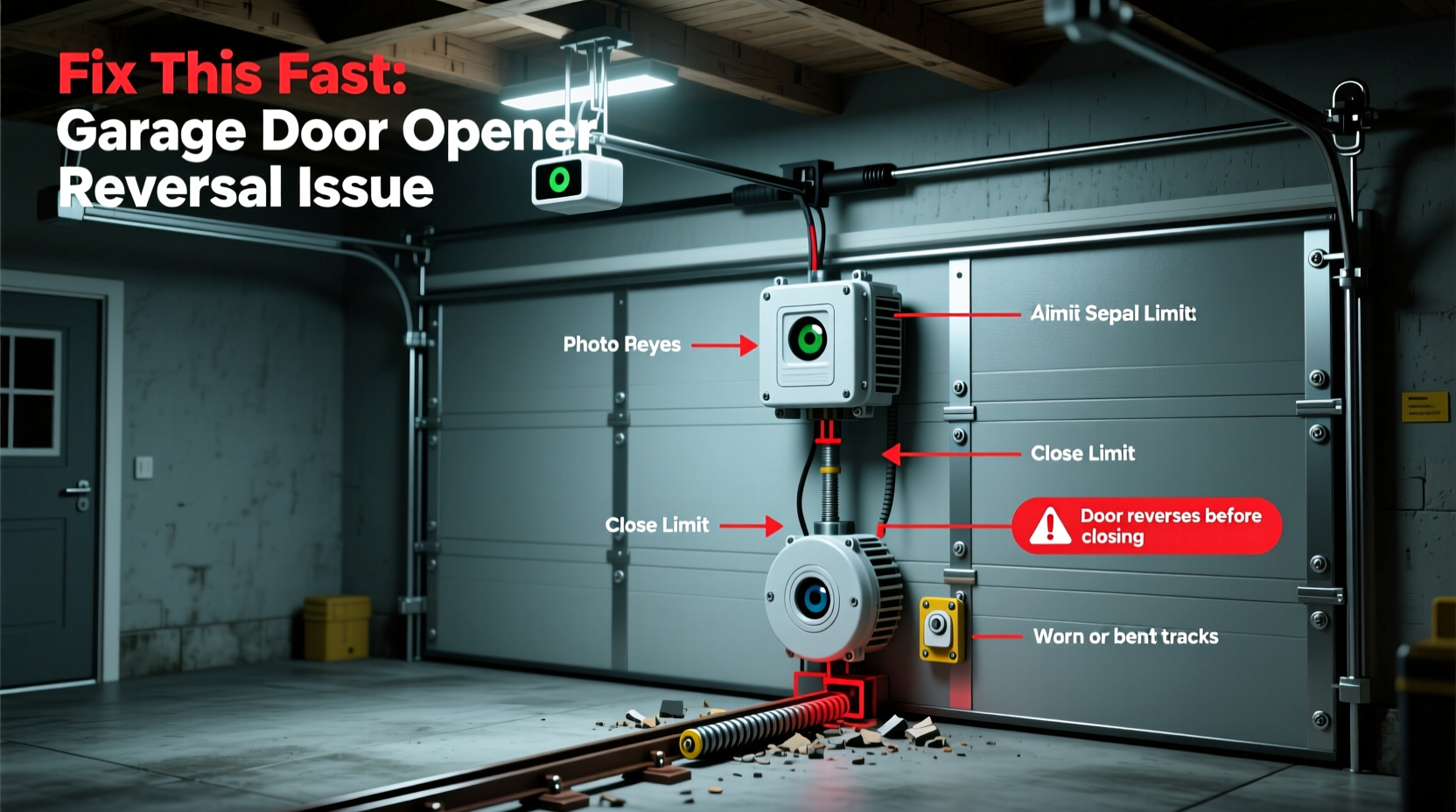
Since 1993, federal regulations require all garage door openers to include two critical safety features: photoelectric sensors and automatic reverse mechanisms. These systems work together to detect obstructions and stop or reverse the door if resistance is encountered.
- Photoelectric sensors: Small devices mounted on either side of the garage door near the floor. They emit an invisible beam across the opening. If the beam is interrupted, the door won’t close or will reverse immediately.
- Force sensitivity: The opener motor detects resistance during closing. If the door hits an object (or meets too much friction), it automatically reverses to prevent damage or injury.
When either system malfunctions, even slightly, it can trigger false reversals. The key is identifying whether the problem stems from alignment, obstruction, wear, or incorrect settings.
Common Causes of Premature Reversal
Several issues can trick your garage door opener into thinking there’s an obstruction. Here are the top culprits:
1. Misaligned or Dirty Safety Sensors
The most frequent cause of early reversal is sensor misalignment. Even a slight bump to the sensor housing—say, from a lawnmower or car door—can shift the beam enough to break the connection. Dust, cobwebs, or condensation on the lens can also block the signal.
2. Obstruction in the Door Path
Sometimes the issue is literal. A toy, box, or even a small animal in the doorway will interrupt the beam. But less obvious obstacles like warped flooring or debris along the track can also create resistance that triggers the reverse mechanism.
3. Mechanical Resistance or Binding
If the door doesn’t move smoothly along its track, the opener may interpret this as an obstruction. Worn rollers, loose hinges, or a damaged torsion spring increase friction and cause the motor to reverse prematurely.
4. Incorrect Force Settings
Garage door openers have adjustable force limits. If set too low, the door reverses at the slightest resistance—even normal friction. This often happens after power outages or if someone manually adjusted the controls without proper calibration.
5. Faulty Sensor Wiring or Damaged Cables
Over time, wires connecting the sensors to the opener can become frayed, chewed by rodents, or disconnected. A broken wire means no signal reaches the opener, mimicking a blocked beam.
“Over 70% of service calls for reversing garage doors are due to sensor alignment issues. It’s usually a five-minute fix.” — Mark Reynolds, Certified Door Technician (CDT), 15+ years in residential repair
Step-by-Step Fix: Diagnose and Repair in Under 60 Minutes
Follow this logical sequence to identify and resolve the root cause efficiently.
- Test the door manually. Disconnect the opener using the pull cord and operate the door by hand. It should lift and lower smoothly without sticking. If it binds, address mechanical issues first—lubricate tracks, inspect rollers, and check for bent sections.
- Inspect the sensor alignment. Look at the LED lights on each sensor. One emits a steady beam (usually amber), the other receives it (typically green when connected). If the receiving sensor’s light is flickering or off, realignment is needed.
- Clean the sensor lenses. Wipe both lenses with a soft cloth and glass cleaner. Remove any dirt, ice, or spider webs blocking the path.
- Adjust sensor position. Loosen the mounting bracket screws slightly. Center the sensors so they face each other directly. Tighten once the receiving LED glows steadily.
- Check for obstructions. Sweep the entire door path. Look for raised floor tiles, cords, or objects near the base of the door that might interfere.
- Test the auto-reverse function. Place a roll of paper towels under the door and close it. The door should reverse upon contact. If it doesn’t, force settings are too high. If it reverses too early, they’re too low.
- Adjust force and travel settings. Locate the adjustment screws or dials on the opener unit (usually labeled “up force,” “down force,” “limit up,” “limit down”). Turn the “down force” clockwise in quarter-turn increments until the door closes fully without reversing unnecessarily.
- Examine wiring. Trace the low-voltage wires from sensors to the opener. Look for cuts, kinks, or rodent damage. Replace damaged wires with 18-gauge stranded wire (standard for garage door sensors).
Troubleshooting Table: Symptoms vs. Solutions
| Symptom | Possible Cause | Recommended Fix |
|---|---|---|
| Door reverses immediately upon closing | Misaligned or dirty sensors | Realign and clean both sensors; verify LED status |
| Door closes halfway then reverses | Binding in track or worn hardware | Lubricate rollers and hinges; inspect for damage |
| Door reverses only at night or in cold weather | Condensation or thermal expansion affecting sensors | Clean lenses; ensure tight mounting to avoid vibration |
| Door works manually but not with opener | Incorrect force settings | Adjust “down force” setting incrementally |
| Sensor lights are completely off | Power interruption or wiring fault | Check connections; test continuity with multimeter |
Real-World Example: The Weekend Warrior’s Fix
Tom, a homeowner in suburban Ohio, noticed his garage door started reversing about six inches from the floor every evening. During the day, it worked fine. Frustrated, he called a technician who diagnosed the issue over the phone in two minutes: “Check your sensors when the garage cools down.”
Tom inspected them at dusk and found one sensor had shifted slightly after his son backed a bike into it earlier that week. The cooler evening temperatures caused minor contraction in the concrete floor, widening the misalignment gap. He realigned the sensor, tightened the bracket, and the door closed perfectly. Total time: 10 minutes. Cost: $0.
This case illustrates how environmental factors and minor impacts combine to create persistent problems that seem mysterious but have simple solutions.
Preventive Maintenance Checklist
Regular upkeep prevents most reversal issues before they start. Perform this checklist every 3–6 months:
- ✅ Clean sensor lenses with a microfiber cloth
- ✅ Verify sensor alignment by checking LED indicators
- ✅ Lubricate rollers, hinges, and tracks with silicone-based spray
- ✅ Test auto-reverse function with a cardboard tube
- ✅ Inspect wiring for frays or rodent damage
- ✅ Ensure the door balances properly when disengaged
- ✅ Tighten loose bolts on brackets and rails
- ✅ Check force settings if door seems hesitant to close
Frequently Asked Questions
Can I bypass the sensors to make the door close?
No. Bypassing or disabling safety sensors is illegal in most jurisdictions and voids your homeowner’s insurance in case of injury. These systems exist to prevent serious accidents, especially involving children or pets. Always fix the underlying issue instead.
Why does my garage door reverse only sometimes?
Intermittent reversal often points to loose wiring, fluctuating temperature effects on sensor alignment, or partial obstructions. For example, sunlight glare at certain times of day can temporarily blind infrared sensors. Check for environmental variables and secure all connections.
How do I know if my torsion spring is failing?
A failing spring causes uneven lifting, loud popping noises, or visible gaps in the coil. If the door feels extremely heavy when operated manually, or slams shut instead of lowering slowly, the spring likely needs professional replacement. Do not attempt to replace it yourself—torsion springs store lethal amounts of energy.
Final Thoughts: Act Fast, Stay Safe
A reversing garage door isn’t just annoying—it’s a warning. Ignoring it risks damage to the opener, potential injury, or complete failure when you need access most. The good news is that most causes are easy to diagnose and fix with basic tools and a little patience.
Start with the sensors—they’re responsible for the majority of issues. Then move through mechanical checks and calibration. With regular maintenance, your garage door should operate quietly, reliably, and safely for years.




 浙公网安备
33010002000092号
浙公网安备
33010002000092号 浙B2-20120091-4
Comments
No comments yet. Why don't you start the discussion?