
If your garage door begins to close but suddenly reverses direction before reaching the floor, it can be both frustrating and concerning. This behavior is not just a minor inconvenience—it’s often a sign that something in the system is malfunctioning or misaligned. While modern garage doors are designed with safety features that prevent them from closing on obstacles, these same mechanisms can trigger false reversals when components are dirty, damaged, or improperly adjusted.
Understanding the root causes behind this issue empowers homeowners to diagnose problems accurately and take appropriate action—whether it's a quick DIY fix or knowing when to call a professional. Below, we break down the most common reasons for premature reversal, how to troubleshoot each one, and steps to ensure long-term reliability of your garage door system.
How Garage Door Safety Sensors Work
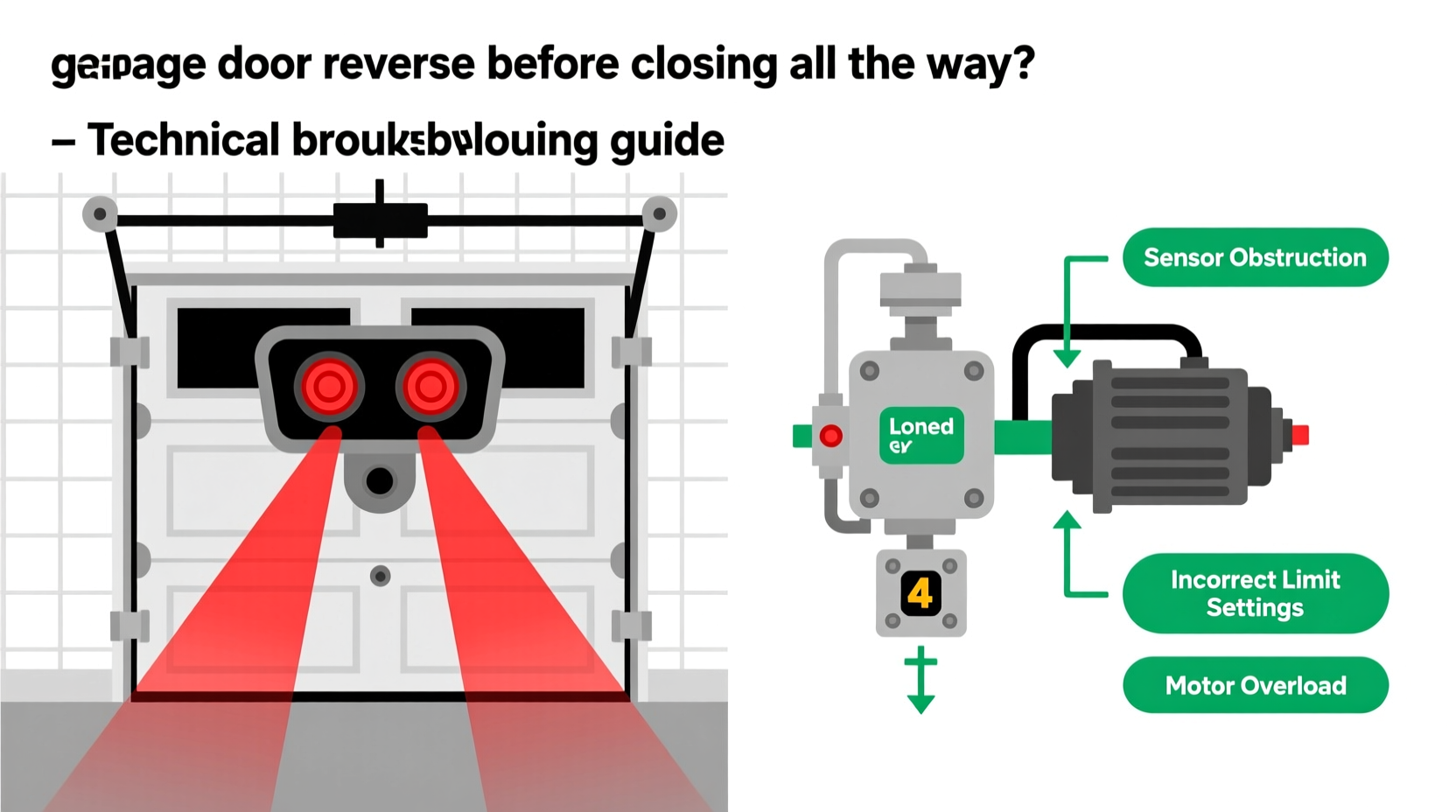
Since 1993, federal regulations have required all residential garage door openers to include photoelectric safety sensors. These small devices are mounted on either side of the garage door near the floor, typically about six inches above ground level. They emit an invisible infrared beam across the doorway. If anything interrupts that beam while the door is closing, the opener interprets it as an obstruction and automatically reverses the door to prevent injury or damage.
These sensors are essential for safety but are also among the most frequent culprits behind unintended reversals. When they become dirty, misaligned, or damaged, they may falsely detect an obstruction even when none exists. The indicator lights on the sensors usually provide clues: a steady green light means proper alignment, while a blinking or red light suggests interference or misalignment.
“Misaligned safety sensors account for nearly 60% of all premature garage door reversals reported to service technicians.” — National Garage Door Association Maintenance Report, 2023
Common Causes of Premature Reversal
A garage door reversing before full closure rarely happens without cause. While the symptom appears similar across cases, the underlying issues vary. Here are the top five reasons why this occurs:
1. Misaligned or Dirty Safety Sensors
Dust, grime, spider webs, or paint splatter can obscure the sensor lens, blocking the infrared beam. Even slight physical displacement—such as bumping the sensor during lawn work—can knock them out of alignment. When the beam isn’t received properly, the opener defaults to reversing.
2. Obstructions in the Door’s Path
Sometimes, the reversal is legitimate. Items like toys, tools, or debris along the track or threshold can interrupt the beam or physically block the door. Even subtle obstructions—like a warped floorboard or accumulated ice—can cause resistance that triggers the force sensitivity setting.
3. Incorrect Force Settings on the Opener
Garage door openers use internal mechanisms to detect resistance. If the downward force limit is set too low, the motor assumes it has encountered an obstacle and reverses—even if the only resistance comes from normal friction or cold weather stiffness. This is especially common in older units or after power outages that reset settings.
4. Track or Roller Problems
Bent tracks, worn rollers, or loose hardware create uneven movement. As the door binds or jerks during descent, the opener senses abnormal resistance and initiates a reversal. Listen for scraping, grinding, or popping sounds—they often precede mechanical failure.
5. Worn or Faulty Limit Switches
Limit switches tell the opener how far the door should travel before stopping. Over time, these can degrade or shift due to vibration. If the \"close\" limit switch malfunctions, the door may think it has reached its endpoint prematurely and reverse, thinking it completed the cycle incorrectly.
Troubleshooting Checklist: Step-by-Step Guide
Before calling a technician, perform this systematic inspection to identify and resolve the issue yourself. Most problems can be corrected in under 30 minutes with basic tools.
- Inspect for visible obstructions – Walk along the door’s path and remove any items that might interfere with closure.
- Check sensor alignment – Stand at a low angle and visually confirm both sensors are pointed directly at each other. Adjust gently until the status lights turn solid green.
- Clean the sensor lenses – Use a microfiber cloth and rubbing alcohol to wipe both ends of the sensor units.
- Test the reversal mechanism manually – Place a rolled-up towel under the door and attempt to close it. The door should reverse upon contact. If it doesn’t, contact a professional immediately—this indicates a dangerous safety flaw.
- Adjust the close-force setting – Locate the “down” force adjustment screw or dial on the opener (refer to your model’s manual). Turn it clockwise in quarter-turn increments until the door closes fully without reversing.
- Examine tracks and rollers – Look for dents, rust, or misalignment. Lubricate metal rollers and hinges with silicone-based spray every three months.
- Verify limit switch settings – If the door stops short, access the limit switch controls on the opener housing and increase the close limit slightly.
Do’s and Don’ts When Handling Garage Door Issues
| Do | Don't |
|---|---|
| Test the auto-reverse function monthly | Ignore blinking sensor lights |
| Keep the track clean and lubricated | Use oil-based lubricants (they attract dirt) |
| Align sensors carefully by hand | Force realignment with tools (can damage housing) |
| Replace frayed cables or cracked rollers promptly | Attempt to repair spring systems yourself |
| Hire certified technicians for electrical or spring work | Override safety features to make the door close |
Real-World Example: A Case of Misdiagnosis
Mark, a homeowner in suburban Ohio, noticed his garage door began reversing halfway down. He assumed the sensors were faulty and purchased replacements online. After installation, the problem persisted. Frustrated, he called a local technician who arrived within hours.
The technician first checked the sensors—clean and aligned. Then he placed a piece of wood under the door. The door reversed correctly, confirming the safety system worked. Next, he observed the closing motion closely and noticed a slight hesitation near the middle of the track. Upon inspection, one roller was cracked and binding against a bent section of rail.
Replacing the roller and straightening the track resolved the issue instantly. Mark learned that symptoms can mimic sensor failure when the real culprit lies in mechanical wear—a reminder that thorough diagnostics matter more than replacing parts blindly.
“Many customers replace sensors unnecessarily. Often, the real issue is mechanical resistance or incorrect force calibration.” — James Rivera, Certified Garage Door Technician (CGDT), 12 years of field experience
When to Call a Professional
While many reversal issues can be fixed independently, certain situations demand expert attention:
- Broken torsion springs – These operate under extreme tension and require specialized tools and training to handle safely.
- Frayed lift cables – Damaged cables can snap unexpectedly, posing serious injury risks.
- Electrical faults in the opener – Intermittent wiring, burnt connections, or unresponsive controls should be evaluated by a licensed electrician or technician.
- Repeated failures after DIY fixes – If adjustments don’t hold or the problem returns frequently, there may be deeper systemic wear.
Attempting repairs beyond your skill level compromises both functionality and safety. Certified professionals carry liability insurance, follow OSHA guidelines, and use calibrated equipment to restore optimal performance.
Frequently Asked Questions
Why does my garage door reverse only in the evening?
This pattern often points to temperature-related contraction or humidity affecting track alignment. It could also indicate intermittent electrical issues exacerbated by peak household energy usage. Check for condensation on sensors or loose wire connections that expand/contract with heat cycles.
Can sunlight interfere with garage door sensors?
Yes. Direct sunlight, especially during sunrise or sunset, can flood the sensor receiver with infrared light, overwhelming the signal from the paired unit. Install sun shields or reposition sensors slightly inward to reduce exposure. Some newer models include solar-filtering lenses.
Is it safe to disable the safety sensors temporarily?
No. Disabling or bypassing safety sensors violates federal safety standards and significantly increases the risk of injury or property damage. Never tape sensors together or cover the lenses to force the door closed. Address the root cause instead.
Preventive Maintenance Tips for Long-Term Reliability
Regular maintenance prevents most reversal issues before they start. Incorporate these practices into your seasonal home care routine:
- Quarterly: Inspect tracks, rollers, hinges, and mounting hardware for tightness and wear.
- Biannually: Test auto-reverse and balance the door. Disconnect the opener and lift the door manually—it should stay in place when opened halfway.
- Annually: Examine springs and cables for signs of fatigue. Have a technician inspect high-tension components.
- As needed: Lubricate moving parts with garage-door-specific silicone spray (never WD-40, which attracts dust).
Conclusion: Take Action Before Small Issues Become Big Problems
A garage door reversing before closing completely is more than a nuisance—it’s a warning sign. Whether caused by dirty sensors, mechanical resistance, or improper settings, ignoring the issue can lead to increased wear, security vulnerabilities, or even accidents. By understanding how the system works and performing regular checks, you maintain both convenience and safety.
Start today by walking through the troubleshooting checklist, cleaning the sensors, and testing the reversal function. Small investments in time and attention now can prevent costly repairs and downtime later. Share your experience or ask questions in the comments below—your insight might help another homeowner avoid a weekend of frustration.




 浙公网安备
33010002000092号
浙公网安备
33010002000092号 浙B2-20120091-4
Comments
No comments yet. Why don't you start the discussion?