
A garage door that reverses unexpectedly can be more than just an annoyance—it's a safety hazard and a sign of underlying mechanical or electrical problems. Modern garage doors are equipped with automatic reversal systems designed to prevent accidents, but when the system triggers without cause, it disrupts daily routines and raises concerns about reliability. Understanding the root causes behind this behavior is essential for maintaining both convenience and safety.
This article explores the most frequent reasons why a garage door reverses on its own, offering practical solutions, expert insights, and a step-by-step guide to troubleshooting. Whether you're dealing with misaligned sensors, worn components, or environmental interference, you'll find actionable advice to restore smooth operation.
How Garage Door Safety Sensors Work
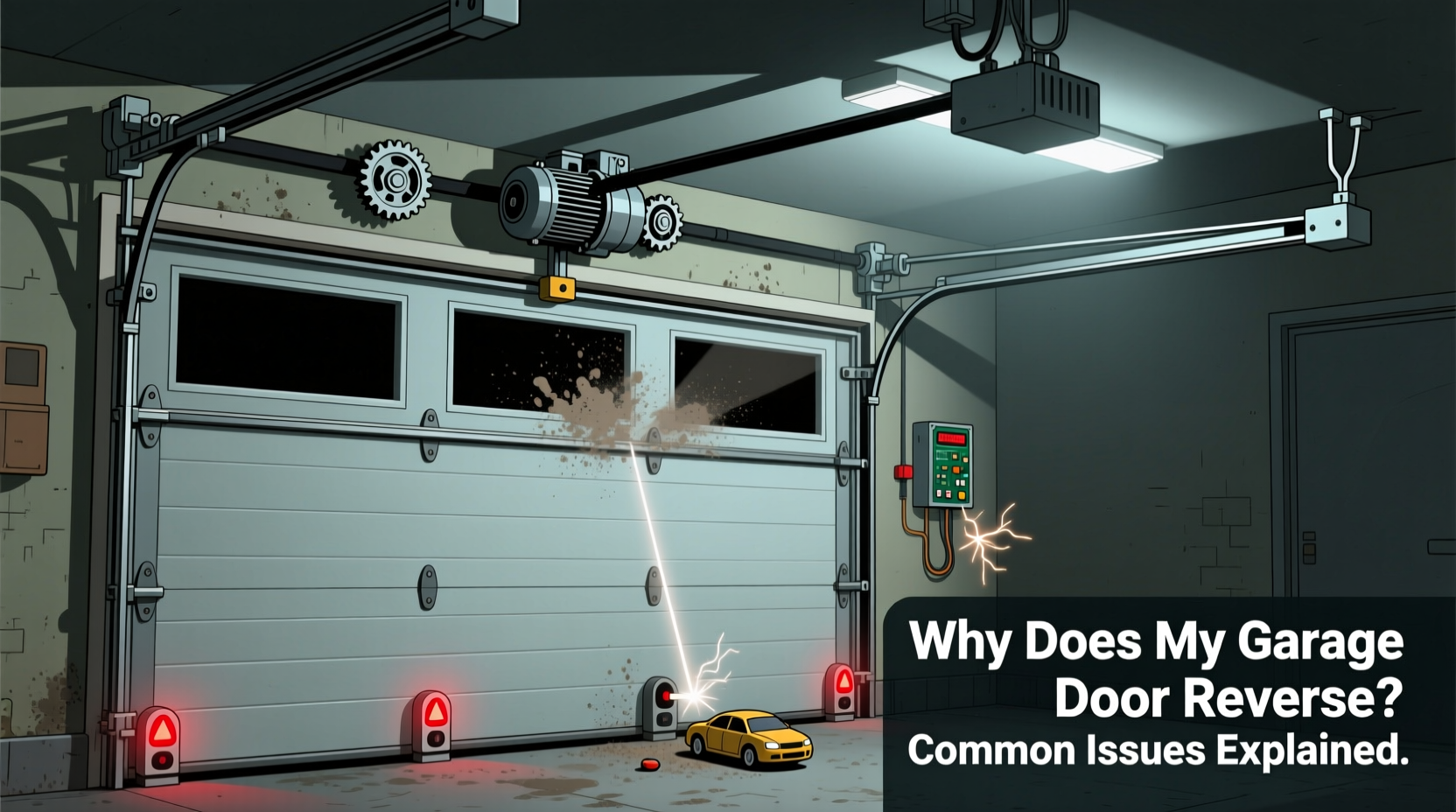
Since 1993, federal regulations require all residential garage door openers to include safety sensors—typically infrared beams located near the bottom of the door’s vertical tracks. These sensors create an invisible beam across the opening. If the beam is interrupted during closing, the door automatically reverses to prevent injury or damage.
While these sensors are highly effective, they are also sensitive to alignment, dirt, and electrical interference. Even minor disruptions—like dust buildup or slight shifting of the sensor housing—can trigger false reversals. Misdiagnosing the issue as a major mechanical fault when it’s simply a dirty lens is common among homeowners.
Sensors are wired directly to the opener motor unit and communicate status through indicator lights. A steady green light usually means proper alignment, while blinking or red lights suggest obstruction or misalignment. Always begin diagnostics here before investigating deeper mechanical causes.
Common Causes of Unprompted Reversal
Several factors can lead to spontaneous reversal. Identifying which applies to your situation streamlines repairs and prevents unnecessary part replacements.
1. Misaligned or Dirty Safety Sensors
Even a quarter-inch shift in sensor alignment can break the infrared beam. Vibrations from frequent use, accidental bumps, or foundation settling often cause misalignment. Similarly, accumulated dust, cobwebs, or condensation on the lens can block the signal.
2. Obstructions in the Door Path
Objects like toys, tools, or even snowdrifts near the threshold may not be visible from inside the house but still interrupt the sensor beam. Additionally, warped flooring or debris under the door edge can prevent full closure, prompting the reversal mechanism.
3. Worn or Binding Hardware
Rollers, hinges, and tracks endure constant stress. Over time, rollers wear out, tracks bend, or lubrication dries up, causing resistance during operation. When the opener detects excessive force (via internal torque sensors), it assumes an obstruction is present and reverses.
4. Faulty Limit Switch Settings
Limit switches tell the opener how far the door should travel when opening and closing. If set incorrectly, the door may attempt to close beyond its physical limit, press against the floor too hard, and trigger reversal due to perceived resistance.
5. Damaged or Loose Cables and Springs
Torsion or extension springs that are frayed, unbalanced, or broken create uneven tension. This imbalance forces the opener to work harder, again triggering safety-based reversal. Similarly, loose cables can snag or bind, mimicking obstruction conditions.
6. Electrical Interference or Opener Malfunction
In rare cases, electromagnetic interference from nearby electronics (e.g., Wi-Fi routers, power tools) can disrupt the opener’s logic board. Aging circuitry or moisture damage inside the motor unit may also cause erratic behavior, including random reversals.
“Over 60% of service calls for reversing doors turn out to be sensor-related issues. It’s always best to check alignment and cleanliness first.” — Mark Reynolds, Certified Garage Door Technician with 18 years of experience
Step-by-Step Guide to Diagnose and Fix the Problem
Follow this systematic approach to identify and resolve the cause of unexpected reversal.
- Inspect for Physical Obstructions
Walk along both sides of the door track and beneath the door. Remove any objects blocking the path or interfering with the floor seal. - Check Sensor Alignment
Stand at ground level and visually confirm both sensors face each other directly. Most models have LED indicators—ensure both glow steadily (usually green). If one blinks or is off, realign by loosening the mounting bracket screws, adjusting until the light stabilizes, then retightening. - Clean the Sensor Lenses
Use a microfiber cloth and non-abrasive cleaner to wipe both lenses. Avoid spraying liquid directly onto the unit; apply to the cloth instead. - Test Manual Operation
Disconnect the opener by pulling the emergency release cord. Manually lift and lower the door. It should move smoothly and stay in place at mid-height. Stiffness or drifting indicates hardware issues needing attention. - Examine Tracks and Rollers
Look for dents, bends, or rust on metal tracks. Ensure rollers spin freely and aren’t cracked. Lubricate tracks and roller bearings with silicone-based spray—never WD-40, which attracts dust. - Adjust Close Force and Limit Settings
Locate adjustment knobs or dials on the opener (refer to manual). Gradually increase the “close force” if the door stops prematurely. Adjust the “down limit” so the door seals fully without pressing excessively into the floor. - Inspect Springs and Cables
Look for gaps in torsion springs or sagging extension springs. Fraying or separation in cables requires immediate professional replacement due to high tension risks. - Reset the Opener (if applicable)
Some models benefit from a reset: unplug the unit for 30 seconds, then reconnect. This clears temporary electronic glitches.
Do’s and Don’ts: Maintenance Best Practices
| Do | Don't |
|---|---|
| Test auto-reverse monthly using a 2x4 or thick roll of paper | Ignore flickering sensor lights or inconsistent operation |
| Lubricate moving parts every 6 months with garage-door-specific grease | Over-tighten adjustment screws; small increments are safer |
| Keep tracks clean and free of debris | Attempt to repair or replace torsion springs yourself |
| Replace worn rollers before they seize or crack | Use oil-based lubricants that attract dirt and grime |
| Hire a certified technician for spring, cable, or opener replacement | Delay repairs when unusual noises or jerky motion occur |
Real-World Example: A Case of Persistent Reversal
Homeowner Sarah M. in Columbus, Ohio, reported her garage door reversing halfway down for weeks. She cleaned the sensors multiple times with no success. Frustrated, she called a technician who discovered the issue wasn’t with the sensors—but with the door’s balance.
Upon manual testing, the door dropped rapidly instead of lowering slowly and stopping mid-way. Further inspection revealed one torsion spring had lost tension due to metal fatigue. Once replaced, the door closed smoothly without triggering the safety reversal. The opener had been detecting abnormal resistance, not a blocked beam.
This case highlights the importance of comprehensive diagnosis. While sensors are the usual suspect, mechanical imbalances can mimic sensor failure symptoms.
Frequently Asked Questions
Why does my garage door reverse even when nothing is in the way?
This typically points to misaligned or dirty safety sensors, incorrect close-force settings, or mechanical resistance in the door system. Test sensor alignment first, then evaluate hardware movement and opener settings.
Can cold weather cause my garage door to reverse?
Yes. Temperature changes cause metal tracks to contract and wood frames to swell. Ice or snow buildup can obstruct the path. In winter, ensure the threshold is clear and consider increasing close-force slightly to compensate for stiffer movement—then readjust in warmer months.
Is it safe to disable the auto-reverse feature?
No. Disabling safety features violates building codes and creates serious injury risks, especially in homes with children or pets. Instead, fix the underlying cause. The auto-reverse system exists to prevent crushing accidents and must remain functional.
Preventative Maintenance Checklist
- ✅ Monthly: Clean sensor lenses and inspect for obstructions
- ✅ Quarterly: Test auto-reverse function with a 1.5-inch object on the floor
- ✅ Biannually: Lubricate rollers, hinges, and tracks with silicone spray
- ✅ Annually: Inspect springs, cables, and mounting hardware for wear
- ✅ Every 5 Years: Consider replacing rollers and weather seals
- ✅ As Needed: Adjust close-force and limit settings after seasonal shifts
When to Call a Professional
While many issues can be resolved DIY-style, certain situations demand expert intervention. High-tension torsion springs, damaged cables, malfunctioning logic boards, or persistent electronic errors require specialized tools and training. Attempting repairs without proper knowledge risks severe injury or further damage.
Additionally, if your door reverses inconsistently—working fine one day and failing the next—it may indicate intermittent wiring faults or failing internal components. These subtle electrical issues are difficult to diagnose without multimeters and technical schematics.
Certified technicians can perform load tests, measure amperage draw, and recalibrate safety thresholds accurately. They also ensure compliance with UL and ANSI safety standards post-repair.
Conclusion: Take Control of Your Garage Door’s Reliability
An unpredictable garage door undermines security, convenience, and peace of mind. By understanding the mechanics behind automatic reversal, you gain the power to diagnose common issues quickly and safely. Start with the simplest explanations—sensor alignment and cleanliness—before progressing to mechanical checks.
Regular maintenance isn’t just about preventing breakdowns; it extends the lifespan of your entire system and ensures optimal performance year-round. Small efforts today save costly repairs tomorrow.




 浙公网安备
33010002000092号
浙公网安备
33010002000092号 浙B2-20120091-4
Comments
No comments yet. Why don't you start the discussion?