
Hair that transforms into a frizzy halo the moment you step outside on a humid day is more than just frustrating—it’s a biochemical reaction in progress. While many people blame their hair type or styling habits, the real culprit lies in the interaction between your hair’s structure and the moisture in the air. Understanding this process isn’t just about vanity; it’s about mastering the science of your strands to achieve smoother, healthier-looking hair—regardless of the weather.
Frizz doesn’t discriminate. It affects straight, wavy, curly, and coily hair types, though its appearance and severity vary. The good news? With targeted strategies rooted in scientific understanding, managing frizz is not only possible but sustainable. This guide breaks down the molecular mechanics behind humidity-induced frizz and delivers actionable, research-backed solutions for lasting smoothness.
The Science Behind Hair Frizz in Humidity
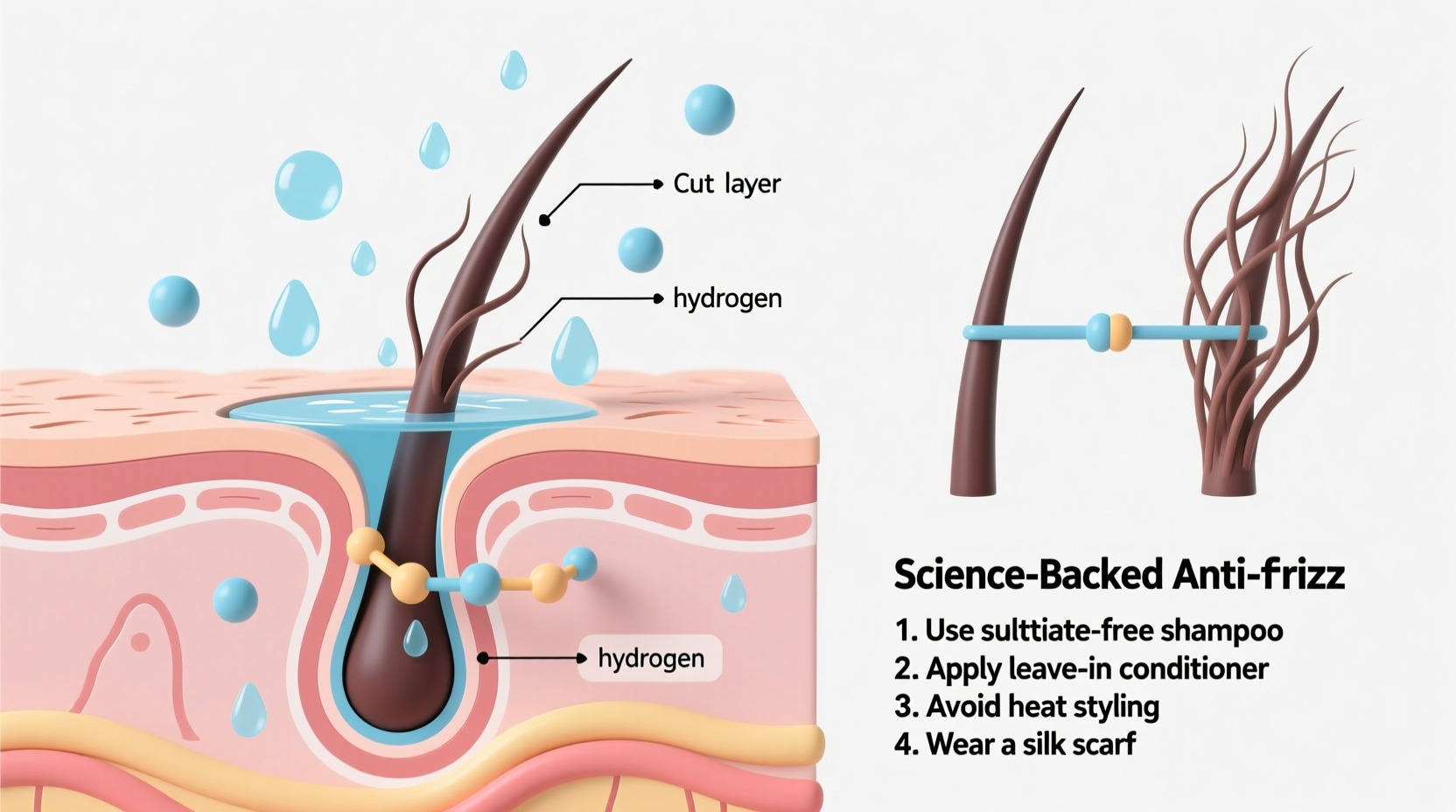
To understand why hair frizzes in humid conditions, we must first examine the structure of the hair shaft. Each strand consists of three layers: the cuticle (outer layer), cortex (middle layer), and medulla (innermost core). The cuticle acts like shingles on a roof, protecting the inner layers. When these cuticle cells lie flat and tightly closed, hair reflects light evenly and appears smooth.
Humidity disrupts this balance. Air with high relative humidity contains more water vapor. Hair, being hygroscopic, naturally absorbs moisture from the environment. Keratin proteins in the cortex contain amino acids with hydrophilic (water-attracting) side chains, particularly cysteine and glutamic acid. When water molecules penetrate the hair shaft, they form hydrogen bonds with these proteins, causing the cortex to swell.
This swelling forces the cuticle scales to lift, disrupting the smooth surface. As individual hairs absorb varying amounts of moisture, they expand unevenly, leading to misalignment and the fuzzy, voluminous look we know as frizz. Curly and porous hair types are especially vulnerable because their cuticles are naturally more raised and their structure allows faster moisture absorption.
“Hair is like a sponge—it responds dynamically to environmental humidity. The key to controlling frizz is managing how much moisture enters and exits the hair shaft.” — Dr. Michelle Henry, Board-Certified Dermatologist and Hair Specialist
Why Some Hair Types Are More Prone to Frizz
Not all hair reacts to humidity equally. Several structural and biological factors influence susceptibility:
- Porosity: High-porosity hair has gaps or cracks in the cuticle due to chemical processing, heat damage, or genetic factors. These openings allow rapid moisture absorption and loss, making such hair highly reactive to humidity.
- Curl Pattern: Curly and coily hair has a more elliptical cross-section and natural twists, which create more surface area for moisture interaction. The asymmetrical shape also makes it harder for sebum (natural scalp oil) to coat the entire strand, leaving mid-lengths and ends dry and vulnerable.
- Damaged Cuticles: Mechanical stress from brushing, chemical treatments (coloring, relaxing), and heat styling compromise the cuticle. Once damaged, the protective barrier weakens, increasing frizz potential.
- Low Sebum Production: Fine or low-density hair may not distribute natural oils effectively, resulting in drier strands that seek moisture from the air.
Science-Backed Anti-Frizz Strategies
Effective frizz control goes beyond smoothing products. It requires a multi-pronged approach that addresses moisture balance, cuticle integrity, and environmental protection. Below are seven evidence-based methods to reduce and prevent frizz.
1. Seal the Cuticle with Acidic Rinses
The cuticle responds to pH changes. Alkaline environments (pH >7) cause cuticle scales to open, while acidic conditions (pH 4.5–5.5) help them lie flat. Most tap water is slightly alkaline, which can contribute to frizz over time.
Using a final rinse with diluted apple cider vinegar (1 part vinegar to 4 parts water) or a citric acid spray temporarily lowers the hair’s pH, sealing the cuticle and reducing moisture penetration. A 2019 study published in the *International Journal of Trichology* found that acidic rinses improved hair smoothness and reduced static by up to 30%.
2. Use Humectants Strategically
Humectants like glycerin, hyaluronic acid, and propylene glycol attract moisture. However, their effectiveness depends on climate:
| Humid Climate | Dry Climate |
|---|---|
| Avoid high-glycerin products—they pull excess moisture from the air, worsening frizz. | Beneficial—they draw moisture into dry hair. |
| Opt for occlusive agents instead (e.g., silicones, oils). | Combine humectants with sealants to lock in hydration. |
In high humidity, humectants can backfire. Instead, use occlusive ingredients that form a protective film.
3. Apply Leave-In Conditioners with Film-Forming Polymers
Products containing hydroxyethylcellulose, polyquaternium-7, or PVP create a breathable barrier around the hair shaft. These polymers bind to keratin and resist washout, reducing water absorption by up to 40%, according to research from *Journal of Cosmetic Science*.
Apply leave-in conditioners to damp hair to “lock in” optimal moisture levels before exposure to humid air.
4. Limit Heat Styling and Use Protective Tools
Excessive heat damages the cuticle, increasing porosity and frizz. When using heat tools, always apply a heat protectant containing silicones (e.g., dimethicone) or ceramides. These form a thermal shield, reducing protein degradation.
Set flat irons and blow dryers below 350°F (177°C) to minimize keratin denaturation. Use diffusers on low heat to dry curly hair gently, preserving curl definition and minimizing disruption.
5. Choose the Right Oils and Butters
Natural oils differ in molecular weight and spreading ability. Lightweight oils like argan and grapeseed spread easily and provide shine without buildup. Heavier oils like castor or shea butter are better for sealing moisture in thick, coarse, or high-porosity hair.
A 2020 study in *Skin Research and Technology* showed that coconut oil penetrates the hair shaft better than mineral or sunflower oil, reducing protein loss during washing and improving tensile strength.
Step-by-Step Anti-Frizz Hair Routine
Follow this daily and weekly regimen to maintain smooth, hydrated hair even in muggy conditions:
- Wash with sulfate-free shampoo every 2–3 days to preserve natural oils. Focus cleansing on the scalp only.
- Rinse with cool water to close the cuticle and enhance shine.
- Apply a deep conditioner or mask weekly, focusing on ends. Leave on for 15–20 minutes under a warm towel to boost penetration.
- Blot hair gently with a microfiber towel or cotton T-shirt. Never rub—this causes friction and cuticle lifting.
- Apply a leave-in conditioner or anti-frizz serum to damp hair. Use a wide-tooth comb to detangle from ends upward.
- Style with a heat protectant if using hot tools. Allow hair to air-dry partially before applying heat.
- Refresh next-day hair with a spritz of water and a dime-sized amount of serum. Avoid re-washing frequently, which strips moisture.
Real-Life Example: Maria’s Monsoon Transformation
Maria, a graphic designer in Miami, struggled with her curly hair turning into an unmanageable puff within minutes of stepping outside during summer. Despite trying multiple serums and gels, nothing lasted more than an hour.
After consulting a trichologist, she learned her hair had high porosity due to frequent bleaching. Her routine included a glycerin-heavy gel that attracted too much moisture in the humid air. She switched to a regimen featuring a coconut oil pre-wash treatment, a low-pH conditioner, and a polymer-based curl cream without glycerin.
Within two weeks, her curls stayed defined for over 48 hours, even during afternoon thunderstorms. The key change? Replacing moisture-seeking ingredients with protective ones suited to her environment.
Anti-Frizz Checklist
Use this checklist to evaluate and improve your current hair care strategy:
- ✅ Use sulfate-free, pH-balanced shampoo
- ✅ Incorporate a weekly deep conditioning treatment
- ✅ Apply leave-in conditioner or anti-frizz serum on damp hair
- ✅ Avoid high-glycerin products in humid climates
- ✅ Use heat protectant before styling with hot tools
- ✅ Sleep on a silk pillowcase or use a satin bonnet
- ✅ Limit brushing; use fingers or wide-tooth comb instead
- ✅ Store hair products away from humidity (e.g., not in the shower)
Frequently Asked Questions
Can drinking more water reduce hair frizz?
No. While internal hydration supports overall hair health, frizz is primarily caused by external moisture interacting with the hair shaft. Drinking water won’t directly affect surface frizz, though chronic dehydration can lead to brittle, dry hair that’s more prone to damage.
Are silicones bad for frizz-prone hair?
No—silicones are among the most effective frizz fighters. Dimethicone, cyclomethicone, and amodimethicone form a waterproof barrier that prevents humidity absorption. Concerns about buildup are often overstated; most modern silicones are water-soluble or easily removed with mild clarifying shampoos used once a month.
Does cutting hair regularly prevent frizz?
Regular trims (every 8–12 weeks) help eliminate split ends, which can worsen the appearance of frizz. However, cutting doesn’t change the hair’s texture or porosity. It’s a maintenance step, not a cure.
Final Thoughts: Take Control of Your Hair’s Response to Humidity
Frizz isn’t a flaw—it’s a signal. It tells you that your hair is interacting with its environment in a predictable, scientific way. By understanding the role of keratin, moisture, and cuticle health, you shift from fighting frizz to managing it intelligently.
The most effective anti-frizz routines are personalized. They consider your hair’s porosity, your climate, and your lifestyle. What works in a dry desert climate may backfire in a tropical city. The goal isn’t glassy, lifeless hair, but rather strong, moisturized strands that move freely without puffing up at the first sign of moisture.




 浙公网安备
33010002000092号
浙公网安备
33010002000092号 浙B2-20120091-4
Comments
No comments yet. Why don't you start the discussion?