
Humidity turns sleek, styled hair into a frizzy halo almost instantly. If you've ever stepped outside on a muggy day only to find your blowout vanished within minutes, you're not alone. Frizz isn't just frustrating—it's deeply rooted in the science of hair structure and environmental interaction. Understanding why it happens is the first step toward controlling it. This article breaks down the biology and chemistry behind frizz, explains how moisture disrupts your strands, and delivers actionable, science-backed strategies to keep hair smooth, even in oppressive humidity.
The Science Behind Hair Frizz in Humidity
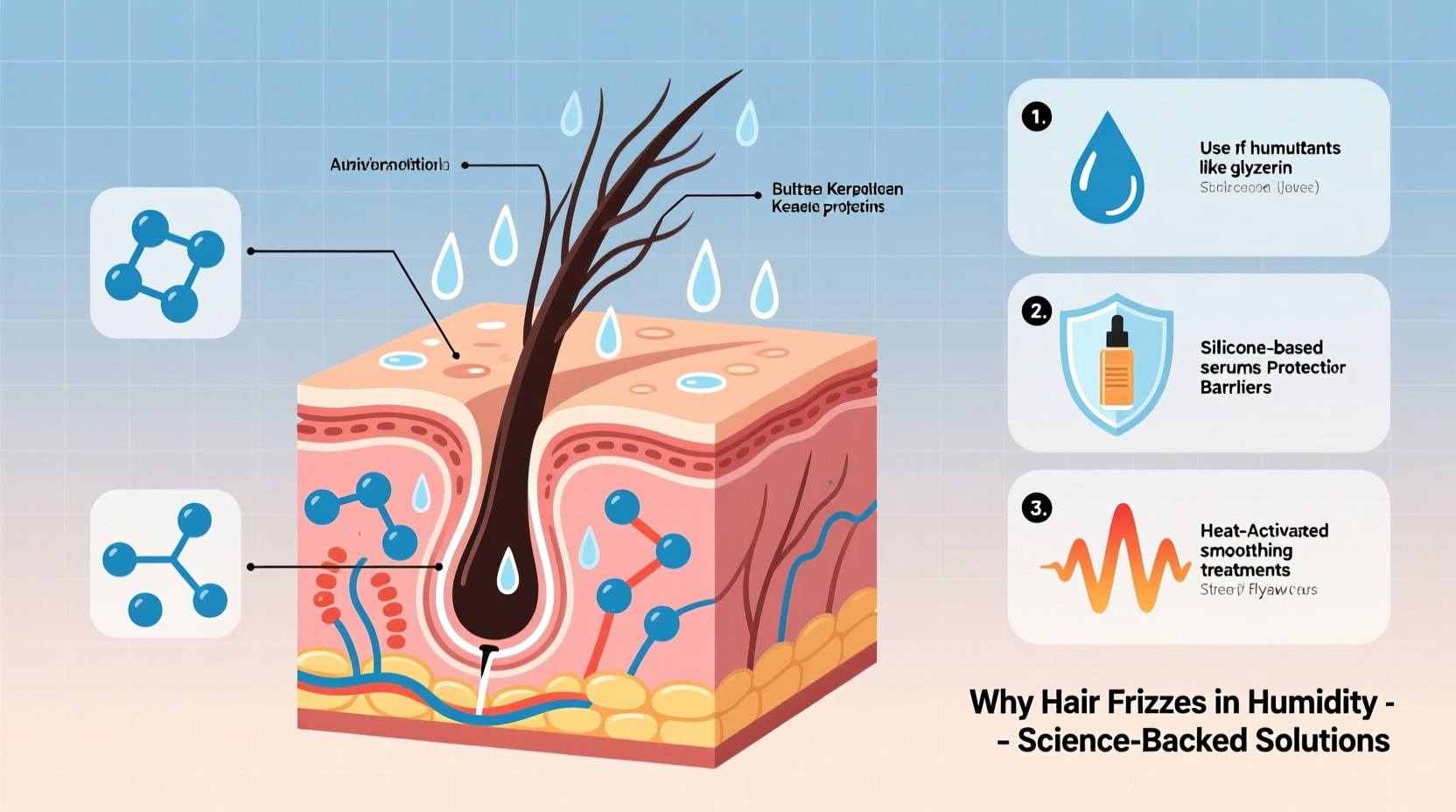
Hair is primarily made of keratin, a fibrous protein structured in layers. The outermost layer, the cuticle, acts like shingles on a roof—when flat and sealed, it reflects light and protects the inner cortex. When this layer lifts or becomes damaged, moisture from the air penetrates the hair shaft, triggering structural changes that lead to frizz.
In humid conditions, the air contains high levels of water vapor. Hair is hygroscopic, meaning it naturally absorbs moisture from its surroundings. As water molecules enter the cortex, they form hydrogen bonds with keratin chains, causing them to swell and change shape. This swelling disrupts the hair’s natural alignment, leading to uneven strand expansion and the familiar puffiness of frizz.
Curly and wavy hair types are especially prone because their asymmetrical shape makes hydrogen bonding more erratic when exposed to moisture. Even straight hair can frizz if the cuticle is compromised due to heat damage, chemical processing, or overwashing.
“Hair behaves like a sponge in humid environments. The more porous the hair, the faster it absorbs ambient moisture—and the quicker frizz sets in.” — Dr. Michelle Lee, Trichologist and Cosmetic Scientist
How Humidity Breaks Down Your Hair’s Defense System
Healthy hair maintains a balance between moisture absorption and retention. But several factors weaken this equilibrium:
- Damaged Cuticles: Chemical treatments, frequent heat styling, and UV exposure lift cuticle scales, increasing porosity.
- Natural Porosity: Some people have inherently porous hair, making it more susceptible to moisture uptake.
- Low Lipid Content: The scalp produces sebum, which coats hair and repels water. Coarser or tightly curled textures often lack even sebum distribution, leaving mid-lengths and ends vulnerable.
When humidity exceeds 60%, the concentration gradient between the air and hair drives rapid moisture diffusion into the cortex. This causes hydrogen bonds to reform in new, irregular configurations—essentially “resetting” the hair into a frizzy state. Unlike disulfide bonds (which require chemicals or heat to break), hydrogen bonds are temporary but highly responsive to environmental shifts.
Science-Backed Solutions to Tame Flyaways
Effective frizz control doesn’t rely on heavy silicones alone. Modern hair science emphasizes a multi-pronged approach: sealing the cuticle, modulating moisture exchange, and reinforcing structural integrity.
1. Use Humidity-Blocking Ingredients
Look for products containing these scientifically proven actives:
- Cyclopentasiloxane and Dimethicone: Volatile silicones that coat the hair, creating a hydrophobic barrier against moisture. They evaporate slowly, leaving a lightweight shield.
- Polyquaternium-7: A cationic polymer that binds to negatively charged hair surfaces, reducing static and improving manageability.
- Hydrolyzed Wheat Protein: Penetrates slightly into the cortex to reinforce weakened areas and reduce swelling under humid conditions.
2. Seal the Cuticle with Acidic Rinses
The cuticle lies flat at a slightly acidic pH (around 4.5–5.5). Alkaline shampoos can raise the pH, lifting cuticle scales. To counteract this, use a final rinse with diluted apple cider vinegar (1 part vinegar to 4 parts water) or a citric acid-based toner. This closes the cuticle, reducing porosity and limiting moisture penetration.
3. Limit Hygroscopic Humectants in High Humidity
While humectants like glycerin, sorbitol, and propylene glycol help retain moisture in dry climates, they become counterproductive in high humidity by continuously pulling water from the air. Opt for formulations labeled “humidity-resistant” or “anti-frizz” that replace aggressive humectants with film-forming agents.
4. Apply Heat Strategically
Flat irons and blow dryers aren’t the enemy—they can be tools for frizz prevention. Heat breaks hydrogen bonds, allowing you to reconfigure the hair into a smoother shape. When followed by rapid cooling (using a cool shot on your dryer), new hydrogen bonds lock in place. The key is using heat protectants and avoiding excessive temperatures (>400°F) that cause long-term damage.
5. Sleep on Silk or Satin
Cotton pillowcases create friction that disrupts the cuticle and induces static. Silk or satin reduces surface resistance by up to 70%, minimizing mechanical stress overnight. This simple switch helps maintain smoothness and prolongs styling results.
Do’s and Don’ts: Frizz Control at a Glance
| Do | Don’t |
|---|---|
| Use sulfate-free shampoos to preserve natural oils | Wash hair daily—overwashing strips protective lipids |
| Apply leave-in conditioner to damp hair for even distribution | Apply heavy creams to dry hair—they won’t absorb evenly |
| Reapply anti-humidity serum before going outdoors in muggy weather | Rub towel-dry hair vigorously—use a microfiber towel or cotton T-shirt instead |
| Refresh styles with a steamer or light mist + re-blow dry on cool setting | Brush dry curly hair—it disrupts curl pattern and increases frizz |
| Trim split ends every 8–12 weeks to prevent further damage | Ignore signs of over-processing—brittle hair absorbs more moisture |
Step-by-Step Routine for Humidity-Resistant Hair
A consistent routine maximizes protection. Follow this sequence for best results:
- Cleanse Gently: Use a sulfate-free shampoo no more than 2–3 times per week. Focus on the scalp, not ends.
- Condition Thoroughly: Apply a rich conditioner from mid-length to ends. Leave for 3–5 minutes before rinsing with cool water to seal the cuticle.
- Treat Weekly: Once a week, use a deep conditioning mask with ceramides or shea butter to restore lipid content.
- Apply Leave-In Product: On towel-dried hair, apply a dime-sized amount of leave-in conditioner or anti-frizz cream.
- Seal with Serum: Add 1–2 drops of silicone-based serum to block humidity. Avoid roots to prevent greasiness.
- Style with Protection: Use a heat protectant before blow-drying or flat ironing. Dry completely using tension and directional airflow.
- Lock It In: Finish with a light-hold, humidity-resistant hairspray focused on the perimeter where flyaways emerge.
Real-Life Example: Managing Frizz in Miami Summers
Sophia, a graphic designer living in Miami, struggled with her thick, wavy hair turning into an unmanageable cloud every summer. Despite expensive keratin treatments, frizz returned within weeks. After consulting a trichologist, she adjusted her routine based on scientific principles:
- Switched to a shampoo with pH 5.0 to maintain cuticle integrity.
- Replaced her glycerin-heavy curl cream with a dimethicone-based styling balm.
- Started blow-drying with a concentrator nozzle and finishing with a cool shot.
- Began sleeping on a silk pillowcase and wearing a satin-lined cap during workouts.
Within three weeks, her hair stayed smooth for up to four days, even in 85% humidity. She no longer relied on flat ironing daily. Her experience underscores that sustainable frizz control comes from understanding hair behavior—not just masking symptoms.
Frequently Asked Questions
Can drinking more water reduce hair frizz?
No—internal hydration improves overall health but doesn’t directly affect hair moisture. Hair gets its hydration externally. Drinking water won’t prevent environmental moisture absorption that causes frizz.
Are natural oils effective against humidity?
Some are. Coconut oil has been shown in studies to reduce protein loss and limit water absorption when applied before washing. However, heavier oils like castor or olive oil can sit on the surface and attract dust or buildup, potentially worsening texture in high humidity. Use lighter oils sparingly on ends only.
Do hair masks really help with frizz?
Yes—if formulated correctly. Masks containing ceramides, fatty acids, and hydrolyzed proteins replenish the intercellular cement of the cuticle, reducing porosity. Use once weekly for cumulative benefits. Look for ingredients like behentrimonium methosulfate or cetyl alcohol, which improve slip and detangling.
Expert Insight: What Dermatologists Recommend
“The most effective anti-frizz regimens combine occlusion, reconstruction, and environmental defense. Think of it like skincare: cleanse gently, repair the barrier, then apply a protective layer.” — Dr. Alan Zhou, Board-Certified Dermatologist specializing in hair disorders
He emphasizes that consistency matters more than any single product. “Patients who see lasting improvement follow a closed-loop system: they protect hair during sleep, shield it from humidity, and avoid compounding damage through heat or chemicals.”
Conclusion: Take Control of Your Hair, No Matter the Weather
Frizz isn’t a flaw—it’s a physical response to environmental conditions, governed by predictable biochemical rules. By aligning your hair care with the science of moisture dynamics, cuticle health, and polymer technology, you can achieve smoothness that lasts. It’s not about eliminating humidity; it’s about equipping your hair to resist it. Start by auditing your current products for humidity-fighting ingredients, refine your drying technique, and prioritize cuticle integrity. Small, informed changes compound into dramatic improvements. Smooth, confident hair isn’t reserved for perfect weather days—it’s achievable every day, with the right knowledge.




 浙公网安备
33010002000092号
浙公网安备
33010002000092号 浙B2-20120091-4
Comments
No comments yet. Why don't you start the discussion?