
It’s a common frustration: you style your hair with care, feel confident all day, then check the photos and see nothing but flat, lifeless strands. You’re not imagining it—lighting plays a massive role in how your hair appears in photographs. The way light hits your hair can either enhance its texture and volume or wash it out completely, making even the fullest blowout look limp. Understanding the science behind this phenomenon and learning how to manipulate light can transform your appearance in photos.
The issue isn’t just about bad angles or poor styling—it’s often about where the light is coming from, how intense it is, and how it interacts with your hair’s natural shape and color. Flat lighting flattens dimension, while strategic lighting enhances depth, separation, and body. Whether you're taking selfies, getting professional portraits, or posing at events, mastering lighting techniques can make all the difference.
The Science Behind Flat-Looking Hair in Photos
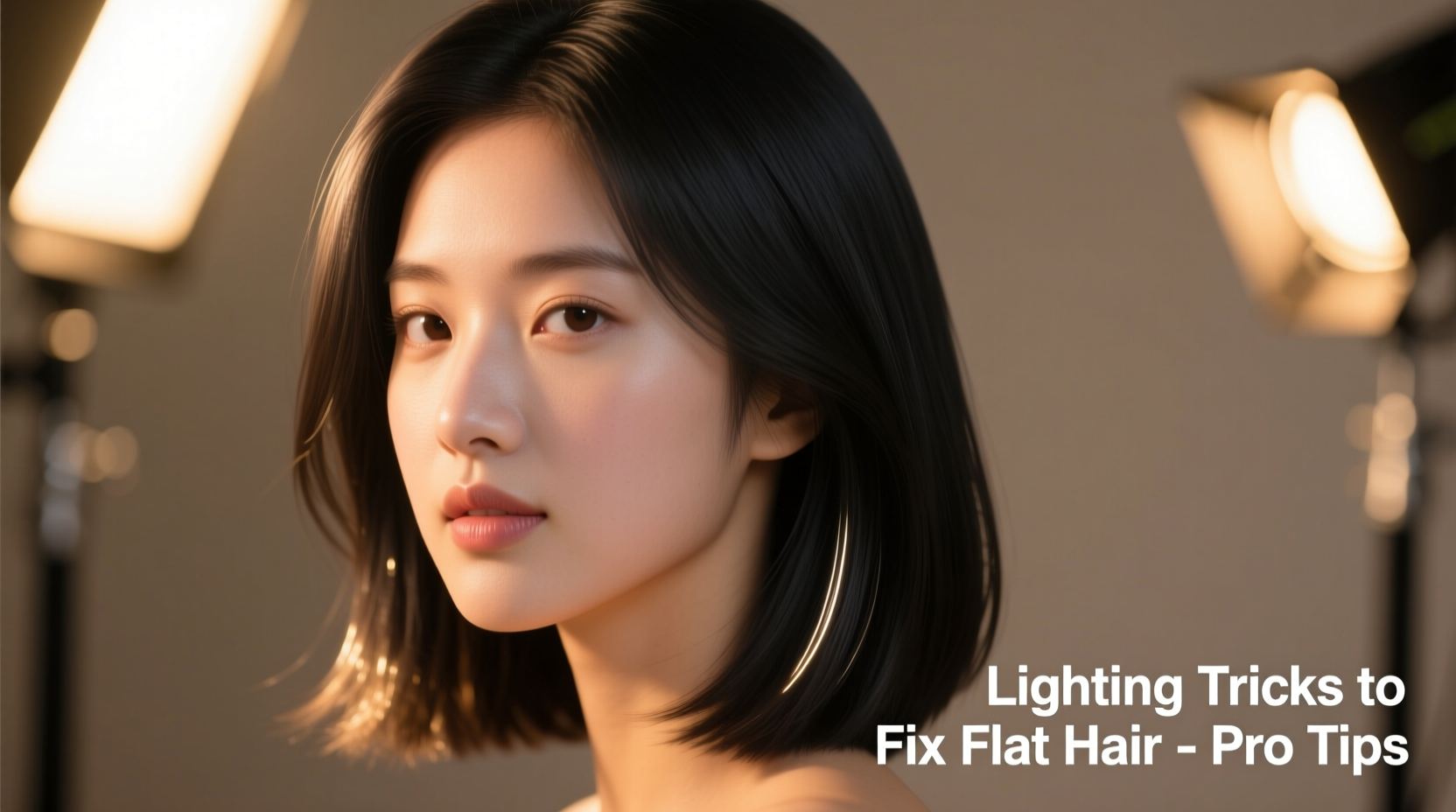
Hair gains visual volume through contrast—light reflecting off some strands while others fall into shadow. When lighting is too even or frontal, that contrast disappears. Without shadows to define shape, hair loses its three-dimensional quality and appears flat. This is especially true with on-camera flash or direct overhead lighting, both of which eliminate depth by illuminating every surface uniformly.
Digital cameras also have a narrower dynamic range than the human eye. They struggle to capture subtle gradients in tone and texture, particularly in high-gloss or dark hair. What looks voluminous in real life may appear compressed and dull in an image due to limited tonal variation. Additionally, smartphone cameras often apply aggressive noise reduction and sharpening, further smoothing out fine details like individual curls or waves.
Another factor is background brightness. If the background is significantly lighter or darker than your hair, the camera’s metering system may under- or overexpose your hair, washing out highlights or crushing shadows. This loss of detail contributes to the flat effect.
“Lighting doesn’t just illuminate—it sculpts. In photography, volume is created by contrast, not product.” — Lena Torres, Celebrity Portrait Photographer
Key Lighting Mistakes That Flatten Hair
Avoiding common lighting pitfalls is half the battle. These errors are easy to make but dramatically impact how your hair reads in photos:
- Frontal lighting only: Placing the main light source directly in front eliminates shadows, removing depth cues.
- Overhead lighting: Harsh ceiling lights create unflattering top-down illumination that collapses volume at the crown.
- Using on-camera flash: Direct flash flattens features and causes hotspots, especially on shiny or dark hair.
- Shooting in flat daylight: Overcast skies provide even lighting but lack directional contrast needed for texture.
- Ignoring hair color and tone: Light interaction varies by pigment; blonde hair reflects more, while black hair absorbs light, requiring different approaches.
Lighting Techniques to Add Volume and Dimension
The goal is to sculpt your hair using directional light. By controlling where light falls and where shadows form, you can visually lift roots, emphasize layers, and enhance wave patterns.
Use Side Lighting to Create Depth
Position your main light source at a 45-degree angle to your face and slightly above eye level. This creates a gradient across your head, with one side illuminated and the other softly shaded. The transition between light and shadow gives the illusion of fullness and structure.
For natural light, stand near a large window with your shoulder turned toward it. For artificial setups, use a softbox or diffused lamp placed to your side. Avoid hard shadows by diffusing the light with a sheer curtain or white bed sheet.
Incorporate Backlighting for Separation
A backlight—or “hair light”—is positioned behind you, aimed at the back of your head. It catches the outer edges of your hair, creating a glowing rim that separates your hair from the background. This technique instantly adds lift and prevents your hair from blending into darker backdrops.
You don’t need studio equipment. A second lamp placed behind a chair or even sunlight streaming through a window behind you can act as a natural backlight. Just ensure it’s not too bright, or it will cause lens flare or overexposure.
Bounce Light with Reflectors
To balance strong side or backlighting, use a reflector on the opposite side of your face to fill in shadows. A white foam board, silver card, or even a light-colored wall can bounce light back onto the shadowed side of your hair, preserving detail without flattening contrast.
For maximum volume, position the reflector slightly below eye level. This lifts shadows under the jawline and cheekbones, which in turn makes the underside of your hair appear fuller.
Modify Natural Light Intelligently
Natural light is ideal but must be shaped. Midday sun is harsh and overhead—avoid it. Instead, shoot during the “golden hour” (shortly after sunrise or before sunset) when light is warm and comes at a low angle, wrapping beautifully around your silhouette.
If shooting midday, find open shade—a covered patio or the shadow of a building. This provides even, diffused light without the flattening effect of direct sun. Use a white umbrella or sheer fabric to further soften the light if needed.
Do’s and Don’ts: Lighting Setup Comparison
| Scenario | Do | Don’t |
|---|---|---|
| Selfies near a window | Turn 45° to the window; use opposite wall as reflector | Face the window straight on |
| Outdoor midday photos | Stand in open shade; use reflector below face | Pose directly under bright sun |
| Indoor artificial lighting | Use softbox at 45°; add backlight behind head | Rely only on ceiling lights or on-camera flash |
| Golden hour portraits | Position sun behind you for natural rim light | Shoot with sun directly overhead |
Step-by-Step Guide: Setting Up Flattering Hair Lighting at Home
You don’t need a professional studio to achieve great results. Follow this simple routine to set up effective lighting for better-looking hair in photos:
- Evaluate your space: Identify natural light sources (windows) and existing lamps. Note their direction and intensity.
- Choose your key light: Pick one primary source—ideally a north-facing window or a soft lamp. Place it at a 45-degree angle to your face.
- Add a backlight: Position a second light (or use sunlight) behind and slightly above your head. Ensure it’s less intense than the key light.
- Introduce a reflector: Place a white board or foam core on the opposite side of your key light to fill shadows gently.
- Test and adjust: Take sample shots. If hair still looks flat, increase the angle of the key light or move the reflector lower to lift shadows.
- Style and shoot: Once lighting is balanced, style your hair as usual. Slightly tousled roots and loose waves photograph best under dimensional lighting.
Real Example: Transforming a Flat-Hair Photo Session
Sophie, a lifestyle blogger, noticed her Instagram photos consistently made her thick wavy hair look flat and heavy. She used only front-facing window light and relied on her phone’s flash indoors. After consulting a photographer, she restructured her setup.
She began positioning herself at an angle to her living room window, added a small LED panel behind her head, and used a white poster board as a reflector. The change was immediate: her waves appeared bouncier, her part looked deeper, and her overall volume increased dramatically—even though she hadn’t changed her hairstyle.
Within two weeks, her engagement rose by 35%. Followers commented on her “great new hair days,” unaware the transformation came from lighting, not product.
Essential Checklist for Voluminous Hair in Photos
Before every photo session, run through this checklist to ensure optimal lighting and presentation:
- ☑ Position key light at 45° angle to face
- ☑ Use a backlight or rim light behind the head
- ☑ Employ a reflector to fill shadows without flattening contrast
- ☑ Avoid overhead or direct frontal lighting
- ☑ Shoot in golden hour or open shade outdoors
- ☑ Style hair with slight root lift (use texturizing spray if needed)
- ☑ Tilt chin up slightly and pull hair forward off shoulders
- ☑ Review test shots for shadow balance and highlight detail
Frequently Asked Questions
Can I fix flat-looking hair in post-processing?
Yes, to an extent. Use editing tools to increase contrast, clarity, and dehaze selectively on the hair area. Boost shadows slightly to recover lost detail. However, avoid oversharpening, which creates unnatural halos. Prevention through proper lighting is always more effective than correction.
Does hair color affect how lighting should be used?
Absolutely. Lighter hair reflects more light and can handle stronger backlighting without blowing out. Darker hair absorbs light, so it benefits from a brighter key light and careful shadow management. Red and auburn tones glow beautifully under warm golden-hour light, while ash blondes look best in cooler, diffused daylight.
What if I only have overhead lighting at home?
Overhead lighting is challenging but not impossible to work with. Place a desk lamp on the floor angled upward toward your face to create dramatic side lighting. Alternatively, sit directly under the overhead light with a reflector in your lap to bounce light back up into your hair. Avoid bare bulbs—diffuse with a white sheet or lampshade.
Final Thoughts: Lighting Is Your Secret Styling Tool
Your hair’s appearance in photos depends less on the products you use and more on how light shapes it. By understanding the principles of directional lighting—side, back, and fill—you gain control over how volume and texture are perceived. These techniques work whether you’re using a smartphone or a DSLR, indoors or outside.
Start small. Adjust your position relative to a window. Experiment with a second light source. Notice how subtle changes affect your hair’s presence in the frame. With practice, you’ll develop an instinct for lighting that enhances not just your hair, but your entire photographic presence.




 浙公网安备
33010002000092号
浙公网安备
33010002000092号 浙B2-20120091-4
Comments
No comments yet. Why don't you start the discussion?