
Coughing is a natural reflex designed to clear your airways, but when it triggers a sharp or throbbing headache, it can be alarming. These types of headaches—often called \"cough headaches\"—can range from brief and harmless to symptoms of a more serious underlying condition. While many cases are benign and resolve on their own, others may signal neurological issues that require prompt evaluation. Understanding the difference between primary and secondary cough headaches is key to knowing when to rest easy—and when to see a doctor.
What Happens in Your Body When You Cough?
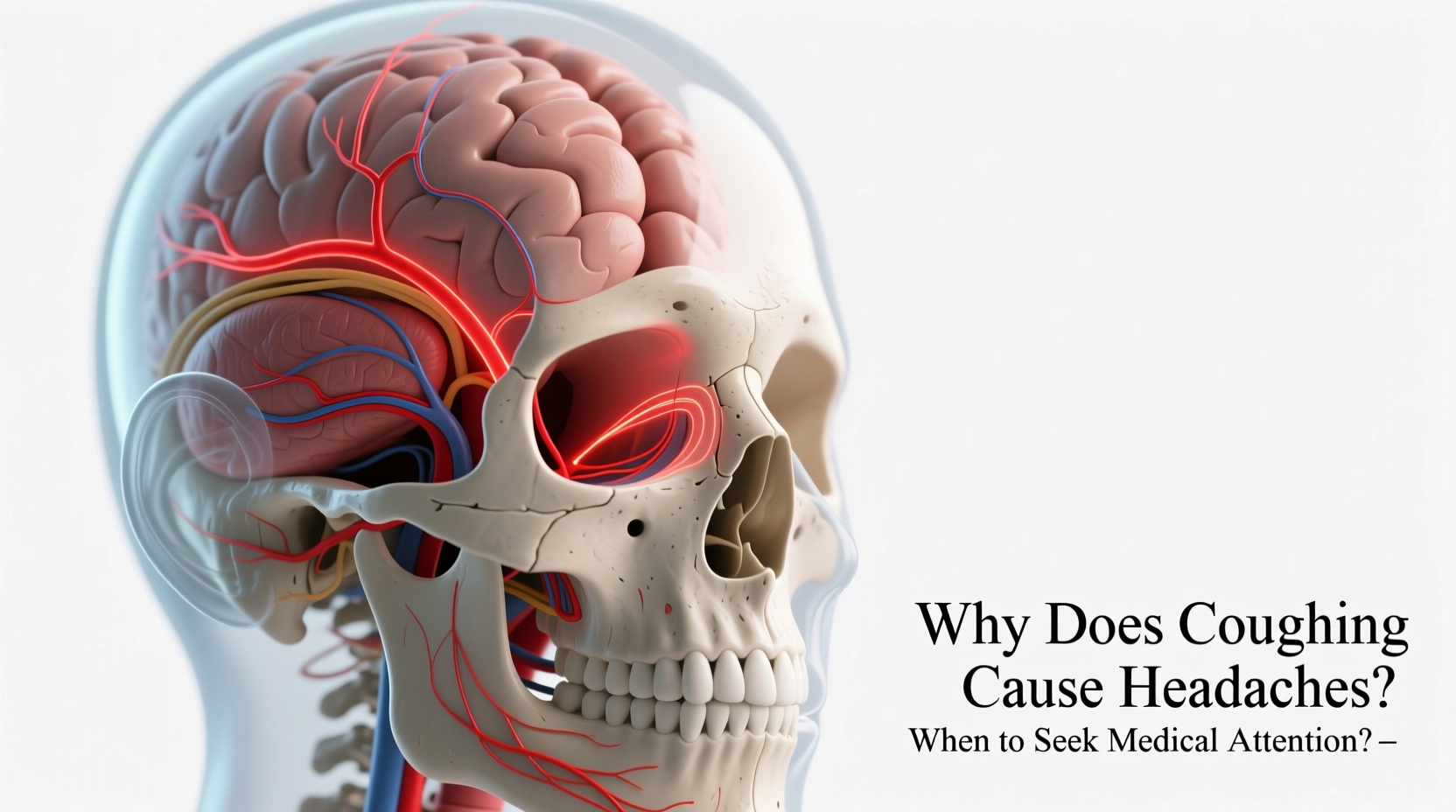
When you cough, your body undergoes a rapid increase in intrathoracic and intra-abdominal pressure. This pressure is transmitted upward into the chest and head, temporarily raising pressure inside the skull (intracranial pressure). In most people, this change is fleeting and uneventful. But for some, the sudden shift can trigger pain in the head, especially if there’s pre-existing sensitivity or structural vulnerability.
The brain itself doesn’t feel pain, but surrounding tissues—such as blood vessels, nerves, and the dura mater (the protective membrane around the brain)—are highly sensitive. A forceful cough can stretch or irritate these structures, leading to what feels like a sudden jolt of pain, typically at the back of the head or across the forehead.
Primary vs. Secondary Cough Headaches: What’s the Difference?
Not all cough-induced headaches are the same. Medical professionals classify them into two main categories: primary and secondary. Recognizing which type you might be experiencing helps determine whether medical attention is necessary.
Primary Cough Headache
This is the more common and less concerning form. Primary cough headaches are thought to result from temporary changes in intracranial pressure during coughing. They are typically:
- Sudden and sharp in onset
- Felt at the back of the head (occipital region), though sometimes across the forehead
- Lasting from a few seconds to several minutes
- Occurring only during or right after coughing, sneezing, straining, or bearing down
- Affecting people over 40 more frequently, though they can occur at any age
These headaches tend to come on without warning, are often bilateral (on both sides), and usually don’t leave lingering symptoms. They may happen once and never return—or recur with every bout of illness involving coughing.
Secondary Cough Headache
These are far more serious. Secondary cough headaches stem from an underlying structural problem in the brain. Common causes include:
- Chiari malformation (a congenital issue where part of the brain extends into the spinal canal)
- Brain tumors
- Intracranial hypotension (low cerebrospinal fluid pressure)
- Spinal fluid leaks
- Subdural hematomas (bleeding between the brain and its covering)
Unlike primary cough headaches, secondary ones may persist beyond the coughing episode, worsen over time, and be accompanied by other neurological symptoms.
“Cough headaches that last longer than a few minutes, increase in intensity, or are associated with dizziness or imbalance should never be ignored. They warrant neuroimaging.” — Dr. Lena Patel, Neurologist, Johns Hopkins Medicine
Warning Signs That Demand Medical Attention
While occasional brief headaches triggered by coughing are generally not dangerous, certain red flags suggest a need for immediate evaluation. The presence of any of the following symptoms increases the likelihood of a secondary cause:
| Symptom | What It Might Indicate | Urgency Level |
|---|---|---|
| Headache lasting more than 5–10 minutes after coughing stops | Possible structural brain issue | High – See a doctor promptly |
| Dizziness, loss of balance, or coordination problems | Chiari malformation or cerebellar involvement | High – Requires MRI |
| Nausea or vomiting with the headache | Increased intracranial pressure | Moderate to High |
| Double vision, slurred speech, or weakness | Neurological deficit | Emergency – Seek care immediately |
| New onset after age 50 | Higher risk of tumor or vascular issue | Moderate – Should be evaluated |
Real-Life Example: Recognizing a Hidden Condition
Mark, a 52-year-old teacher, began experiencing intense headaches every time he coughed during a winter cold. At first, he dismissed them as normal sinus pressure. But after two weeks, the headaches persisted even without coughing. He also started feeling slightly off-balance when walking and noticed blurred vision when looking to the side.
Concerned, he visited a neurologist who ordered an MRI. The scan revealed a Chiari Type I malformation—where the lower part of the brain extends into the spinal canal, causing pressure changes during straining. With surgical intervention, Mark’s symptoms resolved completely. His case underscores how seemingly routine symptoms can mask serious conditions when red flags are overlooked.
When Should You Get Checked?
It’s wise to consult a healthcare provider if your cough-related headaches meet any of the following criteria:
- They’ve started recently, especially after age 50.
- They’re becoming more frequent or severe over time.
- They last longer than a few minutes after the cough ends.
- You experience additional symptoms such as dizziness, fainting, numbness, or vision changes.
- You have a history of head injury or known brain/spinal conditions.
- The headache wakes you from sleep or occurs without obvious triggers later on.
Your doctor will likely perform a neurological exam and may recommend imaging—most commonly an MRI—to rule out structural abnormalities. In some cases, a CT scan may be used initially, but MRI provides superior detail for soft tissue and brain anatomy.
Step-by-Step Guide: What to Do If You Have Cough Headaches
If you're concerned about headaches brought on by coughing, follow this practical sequence:
- Monitor Symptoms: Track frequency, duration, intensity, and any accompanying signs like dizziness or nausea.
- Reduce Triggers: Treat the cause of your cough—whether it’s a cold, allergies, or acid reflux—to minimize strain.
- Use Supportive Techniques: Sit while coughing if possible, and brace your abdominal muscles gently to reduce pressure spikes.
- See a Doctor: Schedule an appointment with your primary care physician or a neurologist if red flags are present.
- Undergo Recommended Testing: Follow through with MRI or other diagnostics if advised.
- Follow Treatment Plan: Whether it’s medication for primary headaches or surgery for a structural issue, adhere to medical guidance.
Treatment Options Based on Diagnosis
Treatment depends entirely on whether the cough headache is primary or secondary.
For Primary Cough Headaches
These often don’t require treatment beyond reassurance. However, if they’re frequent or disruptive, doctors may prescribe preventive medications such as:
- Indomethacin (an NSAID specifically effective for this condition)
- Propranolol (a beta-blocker)
- Acetazolamide (which reduces cerebrospinal fluid production)
These are typically taken short-term and discontinued once symptoms resolve.
For Secondary Cough Headaches
Treatment targets the underlying cause:
- Chiari malformation: May require decompression surgery to create more space for the brain.
- Brain tumor: Depending on size and location, options include surgery, radiation, or monitoring.
- CSF leak: Often treated with epidural blood patches or surgical repair.
- Subdural hematoma: May resolve on its own or require drainage.
Early diagnosis significantly improves outcomes, particularly in cases involving tumors or progressive structural issues.
Prevention and Daily Management Tips
While not all cough headaches can be prevented, you can reduce your risk by managing contributing factors:
- Treat respiratory infections early: Don’t ignore persistent coughs; see a doctor if they last more than two weeks.
- Manage chronic cough conditions: Asthma, GERD (acid reflux), and postnasal drip are common culprits.
- Avoid straining: Use stool softeners if constipated to prevent excessive bearing down.
- Stay hydrated: Thins mucus and reduces coughing fits.
- Use proper cough technique: Support your abdomen and avoid explosive coughs when possible.
FAQ: Common Questions About Cough Headaches
Can a sinus infection cause headaches when I cough?
Yes. Sinus congestion increases pressure in the facial sinuses, which can amplify discomfort during coughing. However, true sinus headaches are usually accompanied by facial tenderness, nasal discharge, and fever. Unlike primary cough headaches, they don’t strike instantly with each cough and tend to linger.
Is it normal for a cough headache to affect just one side of the head?
Primary cough headaches are usually bilateral, especially in the back of the head. Unilateral (one-sided) pain, particularly if persistent, could suggest another headache disorder like migraine or cluster headache, or a localized structural issue. Evaluation is recommended.
Can children get cough headaches?
It’s rare. Most pediatric cough headaches are benign and linked to colds or allergies. However, if a child experiences severe, recurrent headaches with coughing and shows signs of developmental delay, balance issues, or vomiting, prompt pediatric neurological assessment is essential to rule out congenital conditions like Chiari malformation.
Final Thoughts: Listen to Your Body
A headache triggered by coughing isn’t always a cause for alarm—but it shouldn’t be automatically dismissed either. Your body uses symptoms like these to communicate potential imbalances or vulnerabilities. While most cases are harmless and self-limiting, the possibility of an underlying neurological condition means vigilance matters.
Don’t wait for symptoms to escalate. If your headaches persist beyond the duration of a cold, worsen over time, or come with other neurological signs, seek medical evaluation. Advances in imaging and neurology mean that even serious conditions can be managed effectively when caught early.




 浙公网安备
33010002000092号
浙公网安备
33010002000092号 浙B2-20120091-4
Comments
No comments yet. Why don't you start the discussion?