
That sharp, clean, unmistakably festive pine scent isn’t just nostalgia—it’s chemistry in action. Within 48 to 72 hours of bringing a fresh-cut evergreen into your home, many people notice the aroma intensifying, sometimes lingering for over a week—even after the tree has visibly dried or begun shedding needles. It’s not imagination. It’s not “just the tree.” And it’s not always harmless. Understanding why this happens requires looking beyond holiday cheer into plant physiology, indoor air quality science, and the subtle interplay between temperature, humidity, and volatile organic compounds released from coniferous wood and resin.
The Science Behind the Scent Surge
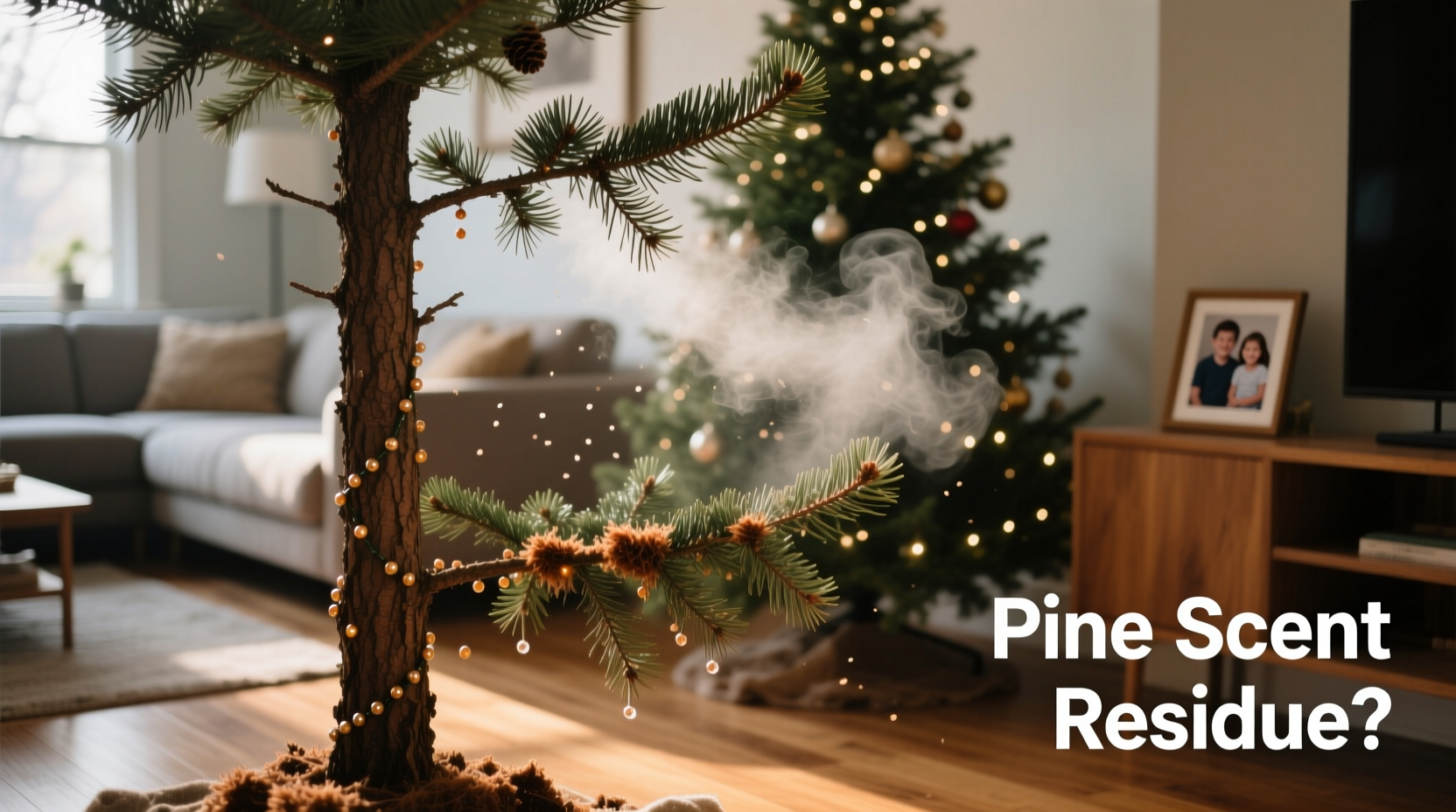
Contrary to common belief, the strongest pine fragrance doesn’t emerge the moment you drag the tree through the door. It peaks several days later—typically on day two or three—due to a cascade of biological and physical changes triggered by the transition from cold outdoor conditions to warm, dry indoor air.
Live evergreens like Fraser firs, Balsam firs, and Douglas firs produce defensive compounds called terpenes—primarily α-pinene, β-pinene, limonene, and camphene. These molecules are stored in specialized resin ducts beneath the bark and within needle cuticles. When the tree is cut, its vascular system begins to seal off; sap flow slows, and cellular stress increases. In response, resin production ramps up temporarily. But more critically, the warm indoor environment (often 68–75°F) accelerates the evaporation rate of these low-molecular-weight terpenes.
Crucially, terpenes are highly volatile: they readily shift from liquid (in resin) to gas (in air) at room temperature. As ambient humidity drops—especially with forced-air heating systems circulating dry air—the surface moisture on needles and bark evaporates faster, exposing more resin-rich tissue and increasing the surface area available for terpene release. Studies published in Atmospheric Environment confirm that indoor concentrations of α-pinene can spike 3–5× higher 48 hours post-installation compared to initial placement, correlating directly with measurable drops in relative humidity below 30%.
Why It Lasts Longer Than You Expect
The persistence of the pine aroma—sometimes detectable for 8–12 days—isn’t just about ongoing terpene emission. It’s also about adsorption, re-emission, and material interaction.
Terpenes don’t simply float away. They adhere (adsorb) to porous indoor surfaces: upholstery fibers, carpet pile, drywall texture, and even dust particles. Over time, these adsorbed molecules slowly desorb back into the air—a process accelerated by rising temperatures, airflow from HVAC systems, or even foot traffic disturbing settled dust. This creates a “secondary emission” effect: the scent returns subtly, even as the tree itself becomes less fragrant.
Additionally, certain terpenes react with indoor ozone (O₃), especially near older electronics or laser printers. This reaction forms secondary organic aerosols (SOAs)—tiny airborne particles that carry scent and can deposit on walls and fabrics. While generally low-risk in short bursts, these compounds contribute to the layered, long-tail character of the pine odor.
What the Smell Tells You About Tree Health & Safety
A strong, consistent pine aroma is usually a sign of freshness—but it’s not infallible. A tree that smells intensely “green” and resinous early on may be deceptively stressed. Conversely, a faint or absent scent *after* day three could indicate one of two things: either the tree was harvested weeks ago (and its resin ducts have already sealed), or it’s drying too rapidly—raising fire risk.
According to the National Fire Protection Association (NFPA), dry Christmas trees account for an average of 160 home fires annually in the U.S., causing $10 million in property damage. A key indicator? Loss of both scent *and* needle flexibility. Healthy, hydrated trees retain volatile compounds longer—and their needles bend without snapping. Once the scent fades abruptly and needles become brittle, flammability increases significantly.
“The pine scent is nature’s built-in freshness gauge—but only if interpreted alongside tactile cues. If you can’t smell it *and* the branches snap like twigs, that tree has crossed into hazardous territory.” — Dr. Lena Torres, Forest Pathologist, USDA Forest Service
Do’s and Don’ts: Managing Pine Aroma & Indoor Air Quality
While pleasant in moderation, concentrated terpenes can irritate sensitive individuals—especially those with asthma, migraines, or chemical sensitivities. High indoor concentrations may also interact with cleaning products (e.g., bleach + limonene = chloroform formation in trace amounts). Here’s how to balance festive atmosphere with air quality awareness:
| Action | Why It Works | Risk If Ignored |
|---|---|---|
| Cut ¼ inch off trunk before placing in water | Reopens xylem vessels for optimal water uptake—keeping cells hydrated and slowing premature resin hardening | Tree absorbs <70% less water; dries 2–3× faster |
| Maintain 1–2 inches of water in stand daily | Prevents sap seal formation at base; sustains transpiration and moderates terpene release rate | Trunk seals within 6–12 hours; scent spikes then collapses unpredictably |
| Keep tree >3 ft from heat sources | Reduces localized temperature gradients that accelerate volatile emissions and drying | Needle loss increases 40%; VOC concentration doubles near vents |
| Run bathroom/kitchen exhaust fans intermittently | Removes terpene-laden air without over-drying the whole house | Odor compounds accumulate, potentially reacting with indoor ozone |
| Avoid scented candles or plug-ins near the tree | Prevents unintended chemical reactions (e.g., terpenes + aldehydes = respiratory irritants) | Increased VOC complexity raises risk of eye/nose/throat irritation |
Real-World Example: The Portland Fir Incident
In December 2022, a Portland, Oregon family reported an unusually intense, almost medicinal pine odor filling their bungalow three days after installing a locally sourced Noble fir. Concerned it signaled mold or chemical contamination, they contacted an indoor air quality specialist. Testing revealed α-pinene levels at 215 µg/m³—well above the typical residential baseline of 15–40 µg/m³ but still below occupational exposure limits.
Investigation showed two contributing factors: first, the tree had been stored outdoors at near-freezing temps for five days pre-purchase, then placed directly into a 74°F living room with 22% RH (heating system running continuously). Second, the family had lined the tree stand with cedar mulch—unbeknownst to them, cedar contains high concentrations of thujone, which synergizes with pine terpenes to amplify perceived intensity.
The solution wasn’t removal—it was mitigation: relocating the tree 6 feet from the furnace vent, adding a cool-mist humidifier set to 42% RH, and replacing cedar mulch with untreated burlap. Within 36 hours, perceived odor intensity dropped by ~60%, and terpene levels normalized to 58 µg/m³. The family kept the tree for 14 days with no safety incidents—proving that understanding the mechanism allows for intelligent coexistence with the scent.
Step-by-Step: Optimizing Your Tree’s Aroma Profile
You can influence *when*, *how strongly*, and *how long* the pine scent lasts—not by suppressing it entirely, but by guiding its release for maximum enjoyment and minimal disruption.
- Pre-Installation Hydration (Day −1): Soak the freshly cut trunk in a bucket of room-temperature water for 4–6 hours before bringing it indoors. This saturates xylem tissue and delays the stress-induced terpene surge.
- Initial Placement (Day 0): Position the tree in the coolest, most humid room possible (e.g., a basement rec room vs. a sun-drenched living room). Avoid south-facing windows and HVAC registers.
- Water Discipline (Days 1–3): Check water level twice daily. Refill before it drops below ½ inch. Add 1 tsp white vinegar per quart of water—this slightly acidifies the water, inhibiting bacterial biofilm that clogs water uptake and triggers accelerated resin oxidation.
- Humidity Calibration (Days 2–5): Use a digital hygrometer. Target 40–45% RH. If below 35%, run a humidifier 3–4 feet from the tree (not directly above). If above 50%, use brief exhaust fan cycles to prevent mold spore growth on damp needles.
- Scent Transition (Days 6+): As the aroma softens, gently mist lower branches with water + 2 drops of pure fir needle essential oil (not synthetic “pine” fragrance). This extends the sensory experience without adding combustion risks or VOC load.
FAQ
Does spraying the tree with water reduce the pine smell?
No—light misting actually *enhances* short-term scent release by cooling needle surfaces and temporarily increasing vapor pressure gradients. However, heavy saturation promotes mold and decay, which introduces musty, unpleasant odors that compete with and ultimately overwhelm the pine notes.
Can artificial trees cause a similar pine-like smell?
Rarely—and only if they’re made from PVC blended with fragrance additives or stored with scented sachets. Most “pine-scented” artificial trees emit vanillin or synthetic pinene analogs, which lack the complex terpene profile of real trees and degrade faster. Their scent is typically strongest on unpacking and fades within hours, not days.
Is the pine smell harmful to pets?
For most dogs and cats, ambient terpene levels from a healthy tree pose no acute risk. However, ingestion of needles or sap can cause gastrointestinal upset or mild neurotoxicity (especially in cats, due to their inefficient glucuronidation pathway). The scent itself isn’t toxic—but it *can* attract curious animals to investigate the tree, increasing ingestion risk. Keep pets supervised and provide alternative enrichment during peak aroma days.
Conclusion
The pine scent lingering in your home days after setting up the tree is far more than seasonal ambiance—it’s a dynamic, measurable interaction between living plant chemistry and your indoor environment. It reflects hydration status, air quality conditions, and even subtle shifts in household temperature and humidity. Rather than treating it as background noise—or worse, a problem to mask with artificial fragrances—you now hold the knowledge to read its signals, shape its behavior, and coexist with it intentionally. Whether you savor every resinous note or prefer a more subdued presence, understanding the “why” transforms passive observation into informed stewardship. Your tree isn’t just decoration. It’s a temporary ecosystem—and you’re its most attentive caretaker.




 浙公网安备
33010002000092号
浙公网安备
33010002000092号 浙B2-20120091-4
Comments
No comments yet. Why don't you start the discussion?