
A clicking or popping sound in the jaw during chewing is more common than many realize. While occasional noise might not signal a serious problem, persistent or painful clicking can indicate underlying dysfunction in the temporomandibular joint (TMJ). This joint connects your jawbone to your skull and plays a crucial role in speaking, chewing, and facial expressions. When it doesn’t function smoothly, you may hear or feel clicks, pops, or even experience pain, limited movement, or locking. Understanding the root causes and knowing when to seek help can prevent long-term complications.
Understanding the Temporomandibular Joint (TMJ)
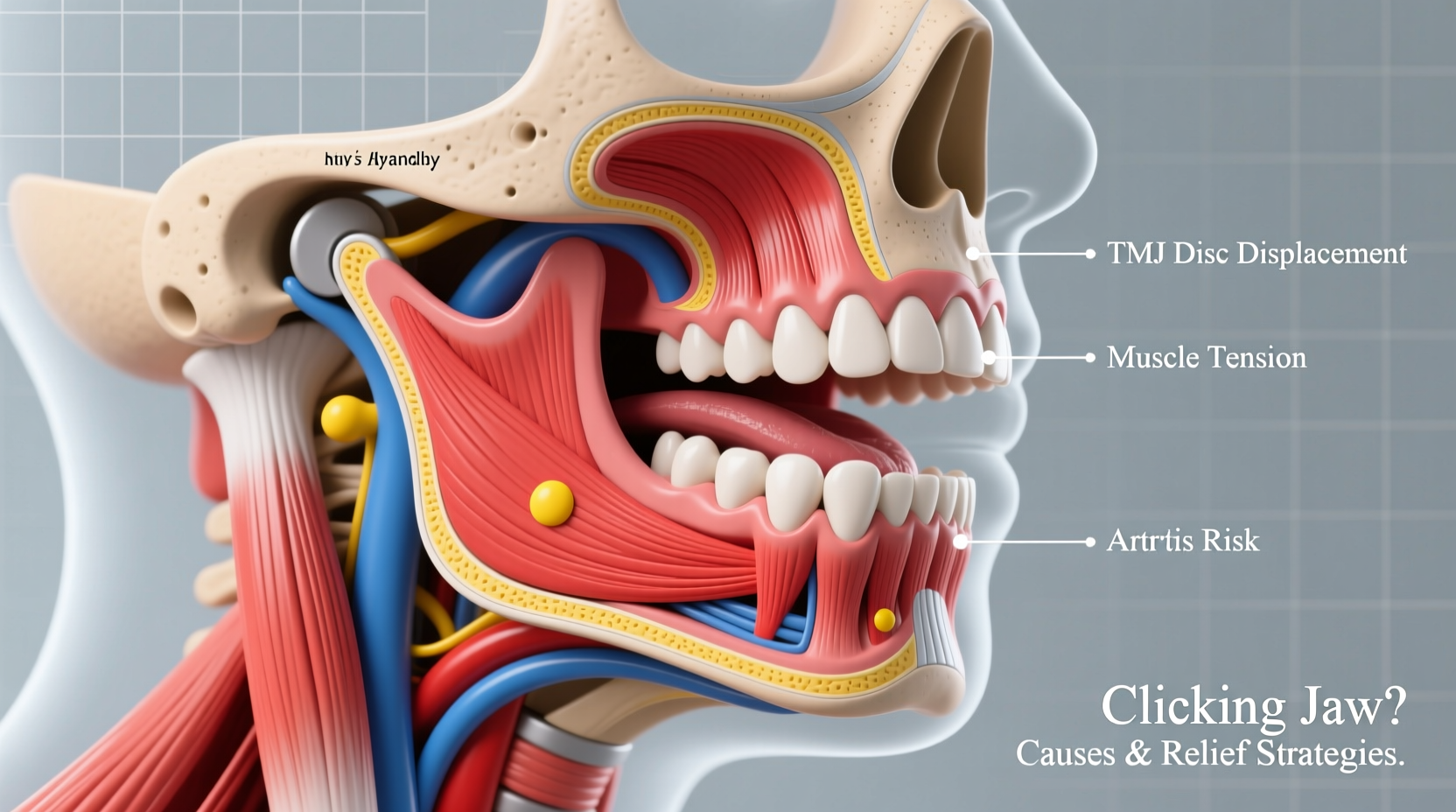
The temporomandibular joint is one of the most complex joints in the human body. Unlike simpler hinge joints, the TMJ allows for both rotational and sliding movements, enabling the jaw to open, close, move forward, backward, and side-to-side. A small disc of cartilage sits between the mandible (jawbone) and the temporal bone of the skull, acting as a cushion and facilitating smooth motion.
When this disc becomes displaced, inflamed, or worn down, or when the muscles surrounding the joint are strained, the joint’s movement can become irregular. This often results in audible or palpable clicking, popping, or grating sounds—especially during chewing, yawning, or talking.
“Up to 10 million Americans are affected by TMJ disorders at any given time, with women being more commonly diagnosed than men.” — National Institute of Dental and Craniofacial Research
Common Causes of Jaw Clicking During Chewing
Jaw clicking isn't always a sign of serious pathology, but recurring or painful symptoms should not be ignored. Below are the most frequent contributors:
- Disc displacement: The articular disc within the TMJ can shift out of place, causing a temporary obstruction that snaps back into position with a click.
- Muscle tension or spasms: Stress-induced clenching or grinding (bruxism) tightens the jaw muscles, increasing pressure on the joint.
- Arthritis: Osteoarthritis or rheumatoid arthritis can degrade the joint surfaces, leading to friction and noise.
- Joint inflammation: Trauma, infection, or autoimmune conditions may inflame the TMJ, impairing smooth motion.
- Poor posture: Forward head posture from prolonged screen use misaligns the spine and jaw, altering joint mechanics.
- Dental misalignment: Malocclusion (improper bite) forces the jaw to compensate during chewing, straining the joint.
- Excessive gum chewing or nail-biting: Repetitive motions fatigue the joint and surrounding tissues.
Potential Complications If Left Untreated
While mild clicking without pain may resolve on its own, untreated TMJ dysfunction can progress and lead to more severe consequences:
- Chronic pain: Persistent discomfort in the jaw, face, neck, or ears can develop, sometimes mimicking sinus or dental pain.
- Reduced jaw mobility: The joint may begin to lock, making it difficult to open the mouth fully.
- Tooth wear: Bruxism associated with TMJ issues can erode enamel, increase sensitivity, and cause fractures.
- Headaches and migraines: Tension from jaw muscles can trigger tension-type headaches or exacerbate existing migraines.
- Hearing changes: Due to the proximity of the TMJ to the ear canal, some patients report tinnitus or muffled hearing.
- Sleep disruption: Nocturnal teeth grinding can interfere with sleep quality and contribute to daytime fatigue.
When to See a Healthcare Provider
Seek professional evaluation if you experience:
- Pain during jaw movement
- Frequent locking of the jaw
- Clicking accompanied by swelling or redness
- Dizziness or ringing in the ears alongside jaw symptoms
- Difficulty eating or speaking due to jaw stiffness
Evidence-Based Remedies and Treatment Options
Most cases of jaw clicking can be managed conservatively, especially when addressed early. Treatment depends on the underlying cause and severity of symptoms.
1. Self-Care and Lifestyle Adjustments
Simple behavioral changes can significantly reduce strain on the TMJ:
- Eat soft foods to minimize chewing effort.
- Avoid extreme jaw movements like wide yawning or shouting.
- Practice stress management techniques such as meditation or deep breathing to reduce clenching.
- Apply warm compresses to relax tense muscles or cold packs to reduce inflammation.
- Improve ergonomics at work—align your computer screen at eye level and support your lower back.
2. Physical Therapy and Exercises
Targeted exercises can improve joint alignment and muscle coordination. A physical therapist specializing in orofacial therapy may recommend:
- Resisted opening: Place your thumb under your chin and gently resist as you open your mouth slowly.
- Lateral jaw movement: Slide your jaw side to side without tilting your head, repeating 5 times per side.
- Tongue-up technique: Rest your tongue on the roof of your mouth while keeping teeth slightly apart to encourage proper jaw rest position.
3. Dental Interventions
If malocclusion or bruxism is contributing to the issue, a dentist may suggest:
- Occlusal splints or night guards: Custom-fitted devices worn at night to prevent grinding and reposition the jaw.
- Bite adjustment: Minor reshaping of tooth surfaces to improve alignment.
- Orthodontic treatment: Braces or aligners to correct structural imbalances.
4. Medical Treatments
In moderate to severe cases, medical intervention may be necessary:
- NSAIDs: Over-the-counter medications like ibuprofen can reduce inflammation and pain.
- Muscle relaxants: Prescribed short-term for acute muscle spasms.
- Corticosteroid injections: Delivered directly into the joint to reduce severe inflammation.
- Surgery: Reserved for cases with structural damage unresponsive to conservative care, such as arthroscopy or joint replacement.
“Non-surgical treatments resolve symptoms in over 80% of TMJ disorder patients. Surgery should only be considered after exhaustive conservative efforts.” — Dr. Robert Katz, Oral and Maxillofacial Surgeon
Checklist: What You Can Do Today to Reduce Jaw Clicking
Take immediate steps to support jaw health with this practical checklist:
- ✅ Avoid chewing gum or tough foods like steak or hard candies.
- ✅ Practice mindful relaxation to reduce daytime clenching.
- ✅ Apply a warm towel to your jaw for 10 minutes twice daily.
- ✅ Maintain neutral head and neck posture while using digital devices.
- ✅ Schedule a dental checkup to assess for bruxism or bite issues.
- ✅ Begin gentle jaw stretches as described above.
- ✅ Keep a symptom journal noting when clicking occurs and any triggers.
Real-Life Example: Sarah’s Experience with TMJ Relief
Sarah, a 34-year-old graphic designer, began noticing a distinct clicking in her right jaw while eating. Initially, she dismissed it as harmless. But over three months, the clicking became painful, especially in the mornings. She also developed frequent tension headaches and had trouble opening her mouth wide during meals.
After consulting her dentist, she was diagnosed with TMJ disorder linked to nighttime bruxism and poor workstation ergonomics. She was fitted with a custom night guard and referred to a physical therapist. Within six weeks of consistent home exercises, improved posture, and stress-reduction practices, her clicking reduced significantly, and the pain disappeared. Follow-up visits confirmed improved joint function.
Sarah’s case highlights how combining professional care with self-management can yield excellent outcomes—even for persistent symptoms.
Do’s and Don’ts: Managing Jaw Clicking
| Do’s | Don’ts |
|---|---|
| Use a warm compress to relax jaw muscles | Chew on one side exclusively |
| Eat soft, nutritious foods | Yawn widely without supporting your jaw |
| Practice good posture throughout the day | Rest your chin on your hand for long periods |
| Stay hydrated to maintain joint lubrication | Ignore worsening pain or locking |
| See a specialist if symptoms persist beyond 2–3 weeks | Self-treat with aggressive jaw manipulation |
Frequently Asked Questions
Is jaw clicking always a sign of TMJ disorder?
No. Occasional, painless clicking is common and may not indicate a disorder. However, if it becomes frequent, painful, or limits jaw movement, it could be a sign of TMJ dysfunction and warrants evaluation.
Can stress really cause jaw clicking?
Yes. Emotional stress often leads to unconscious teeth clenching or grinding, particularly during sleep. This increases muscle tension around the TMJ, potentially displacing the joint disc and causing clicking. Managing stress through mindfulness, exercise, or therapy can have a direct positive impact on jaw symptoms.
Will jaw clicking go away on its own?
In mild cases, especially those triggered by temporary factors like chewing hard food or minor injury, the clicking may resolve without treatment. However, chronic or worsening symptoms typically require intervention to prevent progression.
Conclusion: Take Action Before It Gets Worse
Jaw clicking when chewing may seem minor, but it can be an early warning sign of TMJ dysfunction. Ignoring it risks developing chronic pain, limited mobility, and secondary issues like headaches or tooth damage. The good news is that most cases respond well to conservative, non-invasive strategies—especially when addressed early.
By adjusting daily habits, practicing targeted exercises, and seeking timely professional guidance, you can restore smooth jaw function and prevent long-term complications. Don’t wait for pain to escalate. Start implementing these remedies today and protect your oral and overall health.




 浙公网安备
33010002000092号
浙公网安备
33010002000092号 浙B2-20120091-4
Comments
No comments yet. Why don't you start the discussion?