
It’s a familiar sound: the pop, click, or crackle in your jaw every time you take a bite. For many, this is just an odd quirk—something mildly annoying but not painful. But when jaw cracking becomes frequent, uncomfortable, or accompanied by other symptoms, it may signal an underlying issue requiring professional attention. The temporomandibular joint (TMJ), which connects your jawbone to your skull, is one of the most complex joints in the body. When it functions smoothly, you barely notice it. But when something goes awry, even simple actions like chewing, speaking, or yawning can become sources of discomfort.
This article explores the science behind jaw cracking during chewing, identifies common causes, highlights warning signs that demand a dental visit, and provides practical steps to maintain jaw health. Whether you’ve noticed this recently or have lived with it for years, understanding what’s happening—and when to act—can prevent long-term complications.
Understanding the Temporomandibular Joint (TMJ)
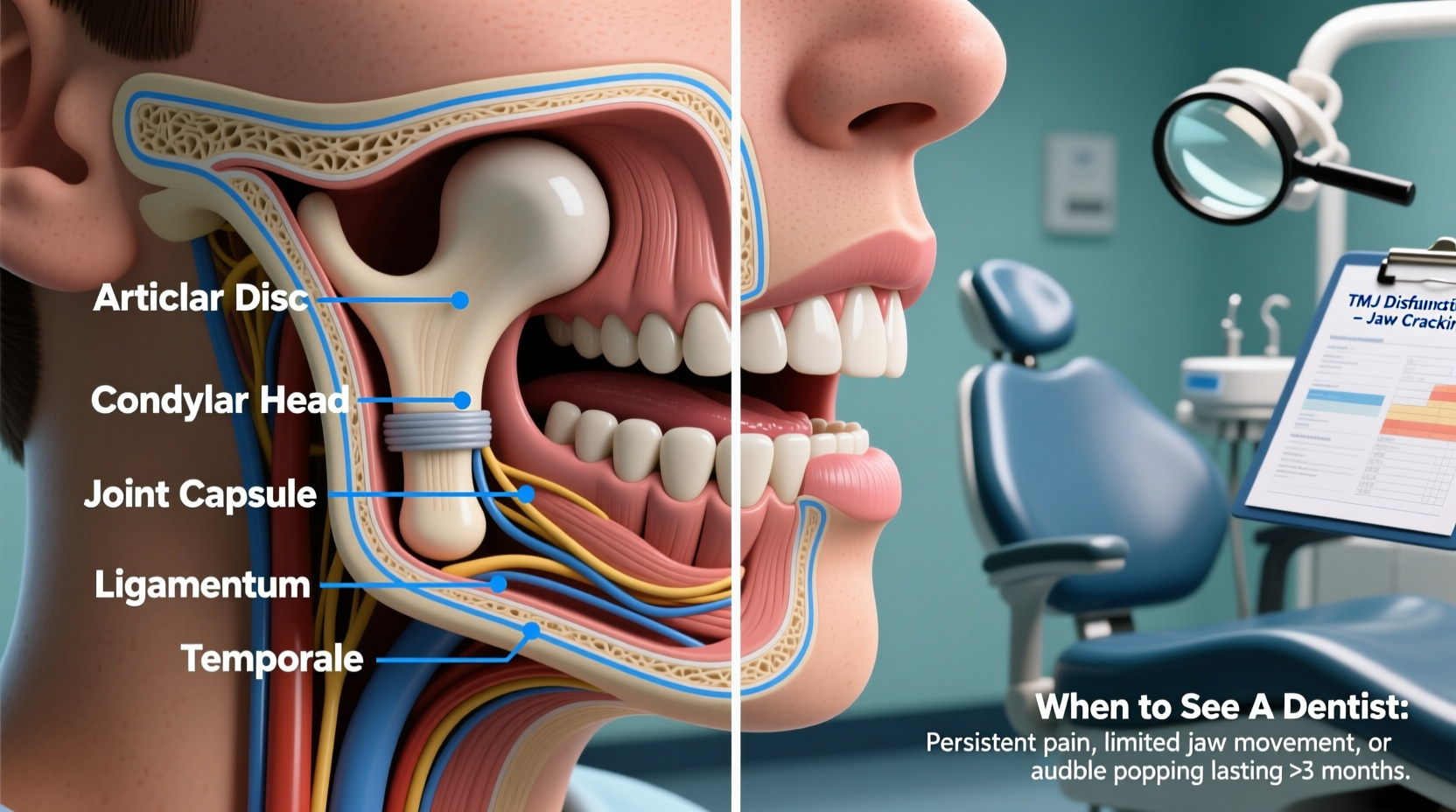
The temporomandibular joint acts like a hinge, allowing your jaw to move up and down, side to side, and forward and back. Each person has two TMJs—one on each side of the face—located just in front of the ears. These joints are unique because they combine rotational and sliding motions, making them essential for chewing, talking, and facial expressions.
Inside each joint is a small disc of cartilage that cushions the bones and ensures smooth movement. When this disc becomes misaligned, inflamed, or worn, abnormal sounds such as clicking, popping, or cracking can occur. These noises are medically referred to as *crepitus*. While occasional crepitus is common and often harmless, persistent or painful jaw sounds warrant closer evaluation.
“Over 10 million Americans experience TMJ-related symptoms at some point. Many dismiss jaw noise as normal, but chronic clicking can be an early sign of joint dysfunction.” — Dr. Linda Harper, Oral & Maxillofacial Specialist
Common Causes of Jaw Cracking During Chewing
Jaw cracking isn’t always a red flag. In fact, many people experience it without pain or limitation. However, understanding the root cause helps determine whether intervention is needed. Below are the most frequent explanations:
- Disc displacement: The articular disc within the TMJ can shift out of place, causing a popping sensation as the jaw opens or closes. This is one of the leading causes of consistent clicking.
- Muscle tension or clenching: Stress-induced teeth grinding (bruxism) tightens the jaw muscles, increasing pressure on the joint and leading to audible cracking.
- Arthritis: Osteoarthritis or rheumatoid arthritis can degrade the joint surfaces, resulting in rough movement and grinding sounds.
- Joint laxity: Some individuals naturally have looser ligaments, making their TMJs more prone to popping without pain.
- Previous injury: A past jaw trauma—even if seemingly minor—can alter joint mechanics and lead to long-term noise or instability.
- Poor bite alignment: Misaligned teeth or an uneven bite can force the jaw into unnatural positions, straining the joint over time.
When Jaw Cracking Becomes a Concern
Not all jaw noise requires treatment. If the sound is infrequent, painless, and doesn’t interfere with daily function, it’s likely benign. However, certain symptoms indicate that the issue extends beyond simple joint noise and may involve temporomandibular joint disorder (TMD).
TMD encompasses a range of conditions affecting the jaw joint and surrounding muscles. According to the American Dental Association, about 15% of adults suffer from TMD symptoms severe enough to affect quality of life.
Red Flags That Require Professional Evaluation
If you experience any of the following, it’s time to schedule a dental consultation:
- Pain or tenderness in the jaw, especially during chewing
- Difficulty opening or closing the mouth fully
- Jaw locking—either open or shut
- Frequent headaches or earaches without another explanation
- Facial swelling near the joint area
- Clicking that has worsened over time or started after an injury
- Changes in how your upper and lower teeth fit together
Real-Life Example: Sarah’s Experience
Sarah, a 34-year-old graphic designer, first noticed her jaw cracking during lunch meetings. At first, it was subtle—just a soft pop when she bit into an apple. Over six months, the sound grew louder and began to hurt. She started avoiding chewy foods and noticed morning headaches. After her dentist diagnosed her with anterior disc displacement, Sarah received a custom night guard and underwent physical therapy. Within three months, her symptoms improved significantly. “I didn’t think a little jaw noise could turn into constant pain,” she said. “Getting help early made all the difference.”
Diagnosis and Treatment Options
Dentists and oral specialists use a combination of clinical examination and imaging to assess TMJ health. During a visit, your provider will likely:
- Palpate the jaw muscles and joints for tenderness
- Listen for sounds during jaw movement
- Measure your mouth’s range of motion
- Order imaging such as X-rays, CT scans, or MRIs if structural damage is suspected
Treatment depends on the severity and underlying cause. Most cases respond well to conservative, non-invasive approaches.
Effective Treatment Strategies
| Treatment | How It Helps | Duration/Use |
|---|---|---|
| Occlusal splint (night guard) | Reduces clenching and protects teeth and joints | Nightly wear, 3–6 months minimum |
| Physical therapy | Strengthens muscles, improves joint mobility | 2–3 sessions per week for 4–8 weeks |
| Pain relievers (NSAIDs) | Reduces inflammation and discomfort | Short-term, as needed |
| Corticosteroid injections | Decreases joint inflammation in severe cases | Occasional, under supervision |
| Behavioral modifications | Addresses habits like gum chewing or nail biting | Ongoing lifestyle adjustment |
In rare cases where conservative treatments fail and structural damage is confirmed, surgical options such as arthroscopy or joint replacement may be considered. However, surgery is reserved for advanced TMD and is not recommended without thorough evaluation.
Prevention and Self-Care: A Daily Checklist
Even if your jaw cracking isn’t currently painful, adopting preventive habits can protect joint health and stop minor issues from progressing. Use this checklist to support long-term TMJ wellness:
- ✔ Avoid chewing gum or tough foods like beef jerky
- ✔ Practice stress-reduction techniques (meditation, deep breathing)
- ✔ Keep your teeth slightly apart—not clenched—throughout the day
- ✔ Apply warm compresses to the jaw for 10 minutes if stiffness occurs
- ✔ Sleep on your back to reduce jaw pressure
- ✔ Limit wide yawns; support your jaw with your hand if needed
- ✔ Stay hydrated—joint lubrication depends on fluid balance
Step-by-Step Guide to Reducing Jaw Strain
If you’re already experiencing symptoms, follow this five-step approach to ease discomfort and promote healing:
- Track triggers: For one week, note when cracking or pain occurs and what you were doing (e.g., eating, yawning, stress). This helps identify patterns.
- Modify diet: Switch to soft foods (soups, mashed potatoes, smoothies) for 7–10 days to give the joint a rest.
- Apply heat: Use a warm towel on the jaw area for 10 minutes, 2–3 times daily to relax muscles.
- Practice gentle stretches: Open your mouth slowly until you feel slight tension, hold for 5 seconds, then close. Repeat 5 times, twice daily.
- Schedule a dental checkup: Even if symptoms improve, get a professional assessment to rule out progressive damage.
Frequently Asked Questions
Is jaw cracking always a sign of a serious problem?
No. Occasional, painless jaw popping is common and often harmless. Studies show up to 40% of healthy adults experience some degree of TMJ noise without dysfunction. The concern arises when cracking is accompanied by pain, limited movement, or worsening over time.
Can children develop jaw cracking issues?
Yes, though less commonly. Children who grind their teeth, have jaw injuries, or exhibit jaw-opening tics may develop joint noise. Pediatric dentists can evaluate growth patterns and intervene early if needed.
Will jaw cracking go away on its own?
In mild cases related to temporary strain or stress, yes—symptoms often resolve with rest and self-care. However, if the cause is structural (like disc displacement), the noise may persist or worsen without treatment.
Conclusion: Listen to Your Jaw, Act Before Pain Escalates
Your jaw’s sounds are more than just background noise—they’re signals from your body. While occasional cracking during chewing is usually nothing to fear, ignoring persistent or painful symptoms can lead to chronic discomfort, limited jaw function, and even permanent joint damage. The key is awareness: knowing when a pop is normal and when it’s a warning sign.
Dental professionals are trained to diagnose and manage TMJ disorders effectively. Early intervention can mean the difference between a quick fix and long-term disability. Don’t wait until eating becomes painful or your jaw locks mid-bite. Take action now—review the checklist, try the self-care steps, and schedule a dental evaluation if red flags appear.




 浙公网安备
33010002000092号
浙公网安备
33010002000092号 浙B2-20120091-4
Comments
No comments yet. Why don't you start the discussion?